Outdoor Garden Wall Art: 15 Ideas for a Better Backyard
Stand in your backyard for a second. Now look at your fence, your shed wall, or that empty brick space by your patio. Kind of blank, right? That blank space is wasted potential. A few pieces of outdoor garden wall art can turn that dull corner into the spot everyone notices first.
I’ve spent years helping friends and family style small yards and tight patios, and the fastest, cheapest way to make a garden feel finished is always the same: add art to the walls, not just the ground. Most people fill their garden with pots and furniture and forget the vertical space completely. That’s a mistake, and it’s an easy one to fix.
This article walks through the best materials for outdoor use, where to place your art, how to install it safely on different wall types, and the mistakes that ruin most garden wall art setups. By the end, you’ll know exactly what to buy and where to put it.
What Counts as Outdoor Garden Wall Art?
Outdoor garden wall art is any decorative piece made to hang on an exterior wall, fence, or gate. This includes metal sculptures, ceramic tiles, mosaic panels, wooden signs, and weatherproof canvas prints. The key word is “outdoor.” A piece made for your living room will not survive rain, frost, or direct sun. Real outdoor garden wall art is built to handle all of that without fading, rusting, or cracking.
People search for this kind of decor for a few clear reasons. Some want to hide an ugly fence. Some want a focal point above a patio seating area. Others are simply tired of a garden that looks green but feels empty. Whatever your reason, the goal is the same: art that survives outside and still looks good years later.
Choosing the Right Material for Your Climate
The material you pick matters more than the design. A beautiful piece that rusts or fades within a season is money wasted. This is what holds up outside, year after year.
Metal Wall Art
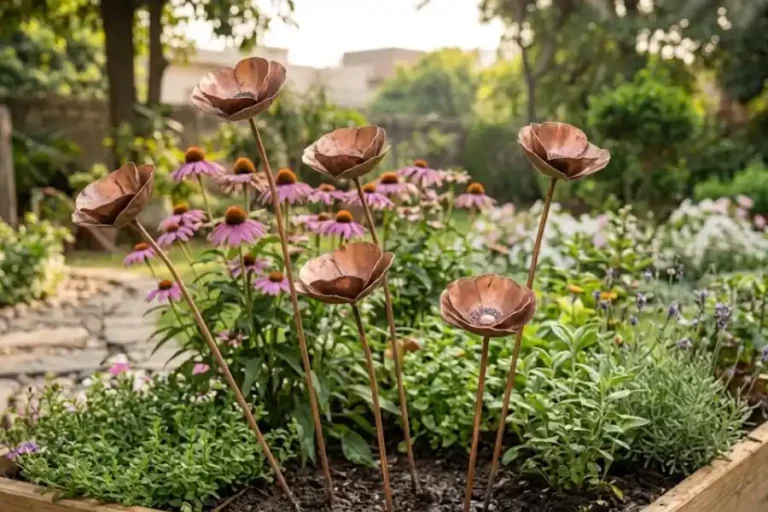
Metal is the most popular choice for outdoor garden wall art, and for good reason. Aluminum and powder-coated steel resist rust and hold their color for years. Look for pieces labeled “weatherproof coating” or “powder-coated finish.” Avoid raw iron unless you want a rustic, rusted look on purpose, similar to the deliberate patina you see on corten steel garden edging, since untreated iron will rust uncontrollably in a humid climate.
Ceramic and Stone
Ceramic tiles and cast stone plaques are heavy, durable, and almost impossible to damage with weather. They’re a strong choice for walls that get full sun or heavy rain, like a south-facing patio wall. The tradeoff is weight, so make sure your mounting hardware can support them.
Weatherproof Canvas
UV-protected canvas prints have improved a lot in recent years. They give you the flexibility of photo-style art (flowers, butterflies, landscapes) in a format that survives outside. Check for “UV-protected” and “waterproof” in the product description, and expect to bring these indoors during severe storms or heavy snow, since canvas is less tough than metal or stone.
Wood
Wood signs and carvings add warmth but need the most upkeep. If you choose wood, pick cedar or teak, and reseal it once a year to stop water damage and cracking.
How to Choose the Right Size and Style
This is the step most people skip, and it’s the reason so many garden walls end up looking cluttered or awkward instead of intentional.
- Measure the wall first. A single piece should cover roughly one-third to two-thirds of the open wall space. Too small and it looks lost. Too big and it overwhelms the area.
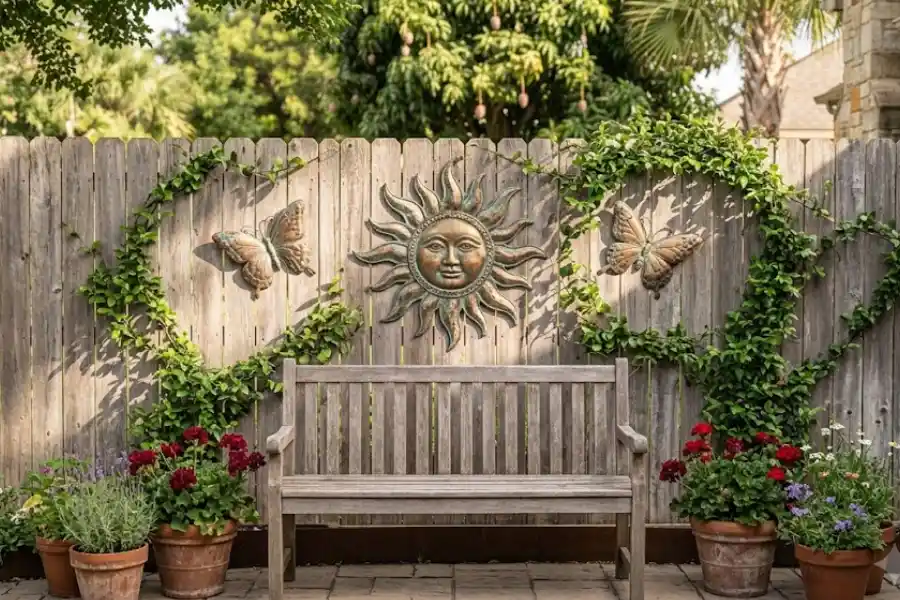
- Match the style to your garden’s mood. A cottage garden suits floral or butterfly designs. A modern patio suits geometric metal shapes. A rustic yard suits distressed wood or sun and moon motifs, which you can easily color-coordinate with your seating using a coat of durable outdoor garden furniture paint.
- Think in odd numbers. Groups of three or five smaller pieces almost always look more balanced than groups of two or four.
- Consider sightlines. Place your main piece where you’ll see it most, from your kitchen window, your patio chair, or your front path, not just where there’s empty space.
Best Places to Hang Outdoor Garden Wall Art
Where you hang your art changes how much impact it has. Here are the spots that give you the best return for the least effort.
- Above a garden bench or seating area. This creates an instant focal point for anyone sitting down.
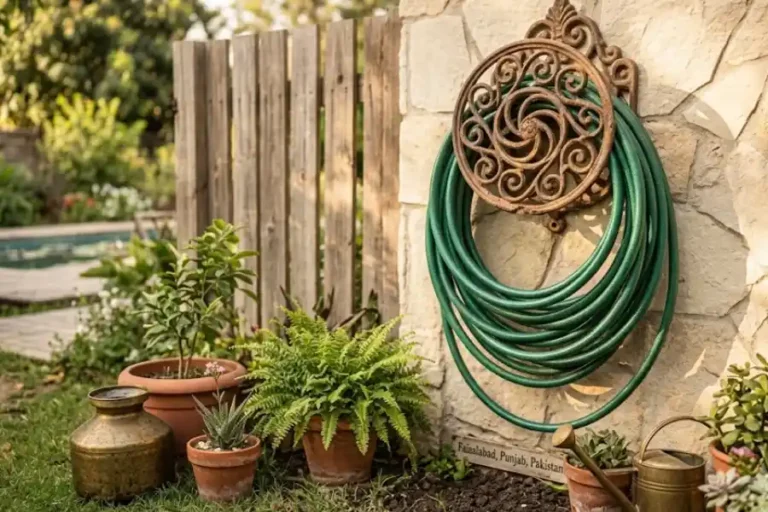
- On a plain fence line. Fences are usually the largest blank surface in a yard, and metal art especially stands out against wood or vinyl fencing.
- Beside your front door or gate. A welcome sign or sun medallion here makes a strong first impression for visitors.
- On a shed or garage wall. These structures are often ignored, but a single striking piece can turn a shed from an eyesore into a design feature.
- Tucked among climbing plants. Metal art nestled into vines or climbing roses creates a layered, established look, even in a new garden.
How to Install Wall Art on Different Surfaces
Installation trips people up more than design does. Getting it wrong means loose art, damaged walls, or pieces that fall in the first storm. Below is the right way to do it, based on your wall type.
Brick or Stone Walls
Use a masonry drill bit and plastic wall anchors rated for outdoor use. Never rely on adhesive strips alone on brick, since temperature swings weaken the glue over time.
Wood Fences
Wood screws work well here, but always check that the fence panel itself is sturdy. A screw into a rotting or thin panel won’t hold heavier metal art.
Vinyl Siding
Avoid drilling directly into vinyl, since it can crack. Use specialty siding hooks designed to hang under the panel’s lip instead.
Stucco
Stucco needs a masonry anchor as well, but drill carefully and slowly to avoid cracking the surface around the hole.
A good rule I always follow: if you’re unsure whether a wall can hold the weight, choose a lighter piece or add a second anchor point. It’s a five-minute extra step that prevents a broken piece and a damaged wall.
Common Mistakes That Ruin Outdoor Garden Wall Art
- Buying indoor art for outdoor use. Always confirm the product is rated for outdoor exposure before buying.
- Ignoring wind exposure. Lightweight metal pieces can rattle or blow loose in high-wind areas. Choose heavier gauge metal or extra anchors if your yard is exposed.
- Overcrowding the wall. One strong piece almost always beats five small mismatched ones.
- Skipping maintenance. Even weatherproof pieces benefit from a quick rinse and wipe-down twice a year to remove dirt, pollen, and salt buildup near coastal areas.
- Placing art where sprinklers hit it directly. Constant water exposure speeds up wear, even on rust-resistant metal.
Budget Guide: What You Should Expect to Pay
Prices for outdoor garden wall art vary widely based on size and material. As a general guide:
- Small metal accents (butterflies, dragonflies, birds): affordable, usually under $30 each
- Mid-size statement pieces (suns, moons, large florals): moderate pricing, often $40 to $120
- Large focal pieces or cast stone plaques: higher investment, frequently $150 and up
A smart approach is to buy one strong mid-size or large piece as your focal point, then fill in around it with a few small, affordable accents. This gives you a designed look without a big upfront cost.
Frequently Asked Questions
Does outdoor garden wall art rust over time?
It can, unless it has a proper weatherproof or powder-coated finish. Always check the product description for rust-resistant coating before buying, especially if you live somewhere humid or rainy.
Can I use indoor wall art outside if I seal it?
It’s not recommended. Sealants wear off with sun and rain exposure, and most indoor materials will still warp or fade underneath. It’s safer and cheaper long-term to buy art made specifically for outdoor use.
How high should I hang garden wall art?
Eye level works for pieces near seating areas. For larger fence or shed displays, centering the piece slightly above eye level often creates a more balanced, gallery-style look.
What’s the best outdoor garden wall art for small spaces like balconies?
Lightweight metal accents or a single small ceramic piece work best. They add personality without overwhelming a tight space, and they’re easy to move if you rearrange your layout later.
Final Thoughts
A garden isn’t finished until its walls have something to say. The right outdoor garden wall art turns a plain fence, a bare shed, or an empty patio corner into the part of your yard people remember most. Start with one strong piece, place it somewhere you’ll see it often, and build outward from there. Small changes to your vertical space make a bigger difference than most people expect.