Outdoor Garden Pot Grouping Ideas: 9 Easy Layouts for Any Patio
You bring home one lovely pot. You set it by the door. It looks a little lonely. So you buy two more, and now the corner looks like a plant sale. Sound familiar?
The fix is not more pots. It is a better plan. With the right outdoor garden pot grouping ideas, even cheap planters can look like a designer chose them. In this post, you will see nine easy layouts, simple spacing rules, and the mistakes that make pot clusters look messy. Each idea works on a patio, porch, deck, or balcony.
The Quick Answer: How to Group Outdoor Pots
Here is the short version. Use it as a checklist.
- Group pots in odd numbers, like three or five.
- Mix three heights: tall, medium, and low.
- Pick one color or one material to tie the pots together.
- Leave a small gap around big pots so each one can be seen.
- Put plants with the same sun and water needs in the same group.
- Place the biggest pot first, then build around it.
The odd-number rule comes up again and again with designers. The team at Garden Studio Design told Livingetc that the eye likes odd numbers, and that grouping pots is a smart move whenever your space allows it.
Why Grouping Pots Works Better Than Scattering Them
A single pot is a dot. A group is a scene. Fine Gardening points out that even a simple pair of pots can lift an outdoor space. Pots set around a patio or deck also make the area feel softer and cozier.
Groups have other perks too:
- Pots that sit close together shade each other’s sides, so the soil dries out a little slower.
- You can water everything in one trip.
- You can mix plants that would never share one pot or bed.
- You can swap one pot each season without redoing the whole look.
Before You Start: Check Sun, Weight, and Water
A little planning saves a lot of lifting later.
- Watch the sun. Spend one day noting which spots get full sun, part sun, or shade. Match your plants to the light, not the other way around.
- Set big pots first. A large pot full of wet soil is very heavy. Put it in its final spot before you fill it.
- Keep water close. If the hose does not reach, you will skip watering. Place thirsty pots near the tap.
- Plan for drainage. Standing water rots roots and stains stone. Raise heavy pots on garden pot feet so water can drain and air can move underneath.
- Check the floor. On a deck or balcony, use trays under pots to protect the surface. On a balcony, also check the weight limit with your building manager.
Nine Outdoor Garden Pot Grouping Ideas to Try
1. The Classic Trio
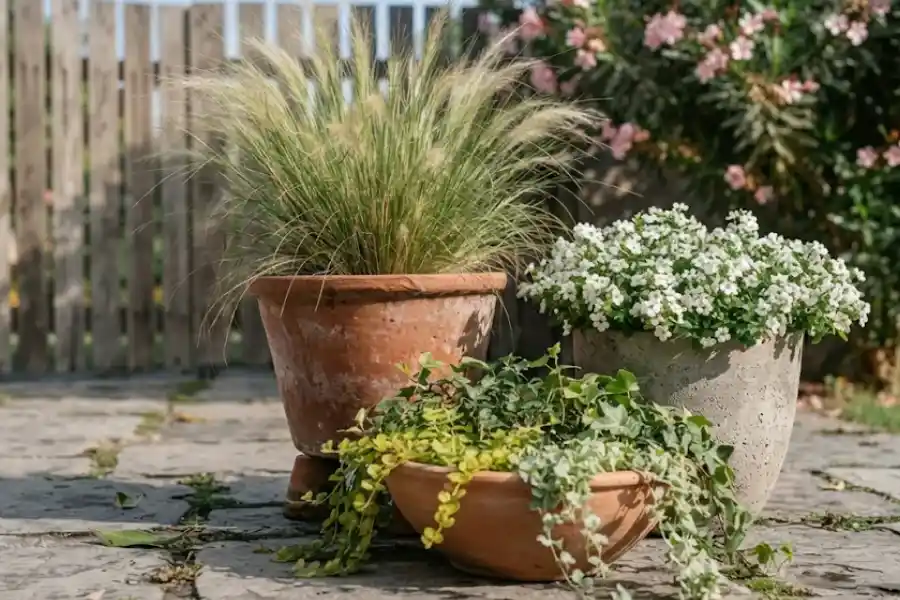
Three pots in a loose triangle is the easiest layout there is. Choose one tall pot, one medium pot, and one short pot. Put the tall one at the back and the short one at the front. Turn the group so no two pots form a straight line. Straight lines look stiff. Triangles look natural.
Try this: Use one color for all three pots, but change the size.
2. The Stair-Step
Pots of the same size look flat, so build height on purpose. Small pots can sit on a bench, a wooden crate, a stack of bricks, or a plant stand. Horticulture magazine suggests this trick for making small pots fit a large space. Hide the stand behind leafy plants so the pots seem to float.
Try this: Set the tallest pot in back, a medium pot on a stand, and a low bowl in front.
3. One Color Family
Color is the fastest way to make a mixed group look planned. Fine Gardening shows groups where a hot color, like red, is calmed by cool green leaves. You can also stay in one shade, such as all pinks or all whites and silvers.
Try this: Pick pots in one color and plants in two colors.
4. One Plant Per Pot
Adam Dooling, a curator at the New York Botanical Garden, calls this style chic. Instead of cramming many plants into one pot, you group several pots with one plant each. AARP shares his tip. Garden designer Rochelle Greayer also likes one plant type per pot, since it makes care and arranging easier.
Try this: Line up three pots of different ornamental grasses, or three kinds of succulents.
5. Thriller, Filler, Spiller
This is a classic recipe for a reason. The thriller is a tall plant that draws the eye. The filler is a round, bushy plant that fills the middle. The spiller is a trailing plant that spills over the edge. One mix from Dooling uses begonias, coleus, and sweet potato vine.
You can plant all three in one wide pot. You can also spread them across three pots in the same group.
Try this: Put the thriller in the tallest pot, the filler in the middle pot, and the spiller in a low bowl.
6. Matching Pots, Different Plants
When your plants are mixed, matching pots keep the look calm. Garden Studio Design gives a handy rule. A pot with lots of texture looks best with a simple shrub, like boxwood. A plain pot can take a fun pop of color, like lavender.
Try this: Buy three pots in the same style and let the plants do the talking.
7. The Herb and Kitchen Cluster
Herbs love to live near the kitchen door. Group basil, parsley, thyme, and rosemary in small pots so you can snip a handful while dinner cooks. Give mint its own pot, because it spreads fast. Choose herb garden pots outdoors with drainage holes. Terracotta is a good pick, since it lets air and moisture pass through.
Keep thirsty herbs like basil and parsley together. Keep woody herbs like rosemary and thyme together, because they like drier soil.
Try this: Make a cluster of five small pots on a low table by the door.
8. The Entryway Frame
Two matching tall pots on each side of a door look neat and welcoming. To keep the look from feeling too stiff, add one low pot on a single side.
Space matters here. A designer quoted by Homes & Gardens says that if large pots would touch, a single bigger pot or a raised bed is the better choice. She suggests leaving at least one pot width between pots so each one stands out.
Try this: Place a tall evergreen in each pot and a low bowl of flowers at the side.
9. The Corner Cluster for Small Spaces
A corner is the best spot on a tight patio or balcony. Put the tallest pot in the back corner. Add a medium pot beside it, and a low pot in front. Then go up. Wall hooks, rails, and tiered stands give you more room without using floor space.
Houzz notes that a few large containers make more impact than many tiny ones in medium and large spaces. On a very small balcony, choose a few mid-size pots and skip the tiny ones. For more ways to use a tight space, see these apartment patio decor ideas.
Try this: Use one tall planter, one mid-size pot, and one hanging basket.
How to Choose Your Anchor Pot
Every group needs a star. This is the biggest pot, and it sets the size for everything else. A large bowl planter, like the Crescent Garden Orinoco large bowl planter, can hold a big plant and give the whole group a strong center.
Once you have your anchor, pick two smaller pots in the same color family. Then add plants with different shapes. Pair a spiky plant with a round one, and a leafy plant with a trailing one.
Simple Numbers to Remember
- Count: Use three or five pots.
- Space: Leave about one pot width between large pots. Small pots can sit close.
- Height: Make one pot clearly taller than the rest so it leads the eye.
- Color: A good rule of thumb is three colors or fewer in one group.
- Light: Put sun lovers like lavender, rosemary, and sedum together. Put shade lovers like ferns, hostas, and begonias together.
Mistakes That Make Pot Groups Look Messy
- Too many tiny pots. They look like clutter. Choose fewer, bigger pots.
- All the same height. The group looks flat and dull.
- Even numbers and straight lines. The look feels stiff and planned in the wrong way.
- Mixing sun lovers with shade lovers. One of them will struggle.
- Crowding. Pots that touch hide each other.
- Skipping drainage. Soggy roots kill plants fast.
- Never changing it. A group that stays the same all year gets boring.
Easy Care Tips for Grouped Pots
- Water by touch. Push a finger two inches into the soil. If it feels dry, water.
- Feed during the growing season. Pots hold less soil than a garden bed, so nutrients run out faster.
- Turn the pots. Rotate them every few weeks so all sides get light.
- Swap seasonal plants. Keep an evergreen like boxwood as the base, and change the flowers each season.
- Protect clay in winter. Move clay pots to a sheltered spot during a hard freeze, since they can crack.
Frequently Asked Questions
How many pots should I group together?
Three is the easiest number, and five works well in a bigger space. Odd numbers look more natural than even ones.
How far apart should grouped pots be?
For large pots, leave about one pot width between them. Small pots can sit close together or even touch, as long as each plant has room to grow.
Do all the pots in a group need to match?
No. Match one thing, like the color, the material, or the shape. That one link is enough to tie the group together.
What plants go well together in a pot group?
Pick plants that like the same sun and water. Lavender, rosemary, and sedum suit dry, sunny spots. Ferns, hostas, and begonias suit shade.
How do I group pots on a small balcony?
Use a corner, go up with hooks and tiered stands, and pick a few mid-size pots instead of many tiny ones. Always check the weight limit first.
Final Thoughts
Good pot groups follow a few simple rules. Use odd numbers. Mix heights. Tie the pots together with one color or one material. Leave room for each pot to breathe. Start with one big anchor pot, then build around it.
You do not need a big budget or a big yard. Pick one of these outdoor garden pot grouping ideas, set up your trio or corner cluster this weekend, and adjust it as the plants grow. A few small changes can turn a lonely pot into a spot you want to sit in all summer.