21 Best Rock Garden Plants for Sun and Shade Spots
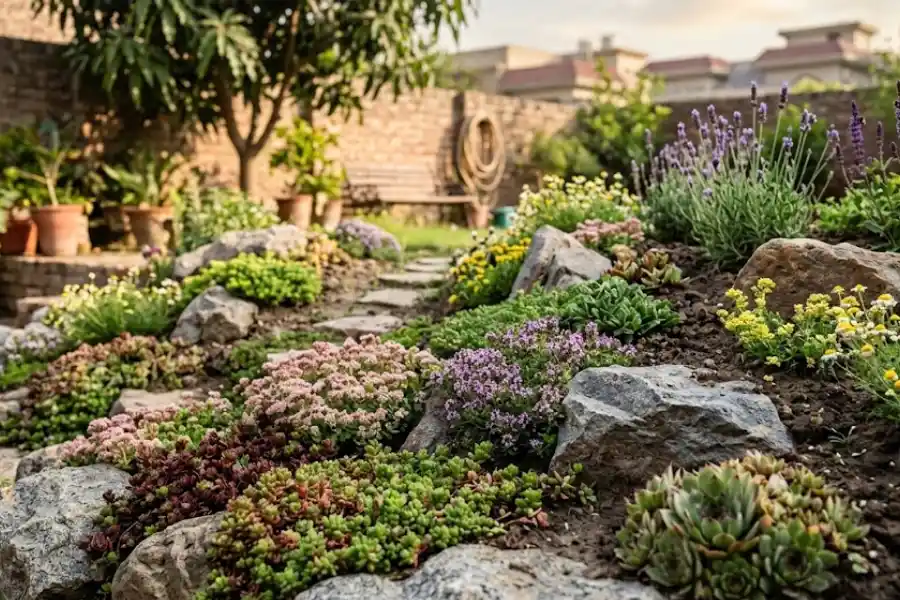
A pile of rocks in your yard looks sad and empty. Add the right rock garden plants, and that same space turns into something people stop and stare at. The tricky part is picking plants that survive in thin, rocky soil instead of dying within a season.
This list sorts the best rock garden plants by sun and shade, so you can match plants to the spot you have. You will also learn how to plant them, how to avoid the most common mistakes, and how to keep them alive for years with almost no work. And if the stones themselves are still an open question, our guide to river rock landscaping covers how to arrange them before anything goes in the ground.
What Makes a Plant a Good Fit for a Rock Garden?
Not every plant belongs in a rock garden. Most garden plants want rich, moist soil. Rock garden plants want the opposite. They come from mountains, cliffs, and dry, rocky slopes, so they are built to survive in lean soil with fast drainage.
A good rock garden plant usually shares these traits:
- Small roots that do not need deep soil
- Drought tolerance once it settles in
- A low, spreading, or mounding shape
- Little to no need for fertilizer
- Comfort in dry, gritty, fast-draining soil
If a plant needs constant watering or rich compost, it will struggle in a rock garden. Keep that in mind as you build your list.
Check These 3 Things Before You Pick a Plant
Skipping this step is the number one reason rock garden plants fail. Before you buy anything, check the following.
- Your hardiness zone. This tells you if a plant can survive your coldest winter temperatures. Every plant label lists a zone range.
- Your sunlight. Watch your rock garden spot for a full day. Six or more hours of direct sun counts as full sun. Less than that is partial shade.
- Your soil drainage. Pour a cup of water on the soil. If it disappears in a few seconds, drainage is good. If it sits there, you need to fix the soil first.
Once you know these three things, picking plants becomes much easier.
Rock Garden Plants for Full Sun
Most rock gardens sit in open, sunny spots, so this is where you will use the largest share of your rock garden plants. These varieties prefer heat and dry soil over shade and moisture, the kind of conditions you get with dark, heat-holding stones like black garden rocks.
1. Sedum (Stonecrop)
Sedum is often the first plant people recommend for a rock garden, and for good reason. Its thick, fleshy leaves store water, so it barely needs watering once established.
- Zones: 3-9
- Sun: Full sun
- Height: 3 to 24 inches, depending on the type
- Bloom time: Summer through fall
2. Hens and Chicks (Sempervivum)
These form tight rosettes that look almost hand-painted. Each main plant, the hen, grows small babies, the chicks, around its base.
- Zones: 3-8
- Sun: Full sun
- Height: 2 to 6 inches
- Bloom time: Summer, though most people grow them for the foliage
3. Creeping Thyme
Creeping thyme spreads into a low, fragrant mat that fills the gaps between rocks and stepping stones. Crush a leaf and it smells like the herb from your kitchen, because it is the same plant family.
- Zones: 4-9
- Sun: Full sun
- Height: 2 to 4 inches
- Bloom time: Late spring to summer
4. Candytuft (Iberis sempervirens)
Candytuft stays green all year and explodes with white flowers in spring. It looks especially good spilling over the edge of a rock or low wall.
- Zones: 3-9
- Sun: Full sun
- Height: 6 to 12 inches
- Bloom time: Spring
5. Aubrieta
Aubrieta covers itself in small purple or pink flowers each spring. After it blooms, trim it back and it will often flower a second time.
- Zones: 4-8
- Sun: Full sun
- Height: 3 to 6 inches
- Bloom time: Spring, with a possible repeat bloom
6. Creeping Phlox
Few rock garden plants put on a show like creeping phlox in spring. It covers itself in pink, purple, or white flowers so thick you barely see the leaves.
- Zones: 3-9
- Sun: Full sun
- Height: 4 to 6 inches
- Bloom time: Early to mid spring
7. Basket of Gold (Aurinia saxatilis)
This plant lives up to its name. Bright yellow flowers cover it in spring, and it looks stunning cascading down a rock wall.
- Zones: 3-10
- Sun: Full sun
- Height: 6 to 12 inches
- Bloom time: Spring
8. Ice Plant (Delosperma)
Ice plant gets its name from tiny cells on the leaves that sparkle like frost in sunlight. The flowers themselves come in hot pink, orange, and yellow.
- Zones: 5-9
- Sun: Full sun
- Height: 3 to 6 inches
- Bloom time: Late spring through fall
9. Yarrow
Yarrow handles poor soil, drought, and neglect better than almost any other flowering plant. Flat clusters of tiny flowers attract bees and butterflies.
- Zones: 3-9
- Sun: Full sun
- Height: 12 to 24 inches
- Bloom time: Summer
10. Russian Sage
Russian sage brings height and movement to a rock garden with its silvery stems and purple flower spikes. Deer tend to leave it alone.
- Zones: 4-9
- Sun: Full sun
- Height: 2 to 4 feet
- Bloom time: Summer through fall
11. Lavender
Lavender needs dry soil and full sun to truly thrive, which makes a rock garden close to its ideal home. The scent and the pollinators it attracts are a bonus.
- Zones: 5-9
- Sun: Full sun
- Height: 1 to 3 feet
- Bloom time: Summer
12. Blue Fescue
This small ornamental grass adds texture and color without ever needing to flower. Its blue-gray blades stay attractive most of the year.
- Zones: 4-8
- Sun: Full sun
- Height: 8 to 12 inches
- Bloom time: Grown mainly for foliage, not flowers
A quick tip from experienced rock gardeners: plant your tallest rock garden plants, like Russian sage or lavender, toward the back or center of larger rocks. This gives smaller, low-growing plants room to spread without getting shaded out.
Rock Garden Plants for Shade
Not every rock garden sits in full sun. If your rocks sit under trees or on the shady side of the house, these rock garden plants will still hold up well. For even more shade-friendly options beyond this list, our full roundup of garden plants for shade covers 40 additional picks.
13. Hellebore (Lenten Rose)
Hellebore blooms in late winter, when almost nothing else is flowering. Its dark green leaves stay attractive all year, even after the flowers fade.
- Zones: 4-9
- Sun: Partial to full shade
- Height: 12 to 18 inches
- Bloom time: Late winter to early spring
14. Columbine
Columbine produces delicate, nodding flowers in shades of red, purple, yellow, and blue. It self-seeds gently, so a few plants can slowly fill a shady rock bed.
- Zones: 3-9
- Sun: Partial shade
- Height: 12 to 24 inches
- Bloom time: Late spring
15. Coral Bells (Heuchera)
Coral bells are grown mostly for their foliage, which comes in colors like purple, amber, and lime green. Tiny bell-shaped flowers appear on tall, thin stems.
- Zones: 4-9
- Sun: Partial shade
- Height: 8 to 18 inches
- Bloom time: Late spring to summer
16. Bugleweed (Ajuga)
Bugleweed might be the toughest ground cover on this entire list. It grows in sun, shade, clay, sand, and rocky soil without complaint.
- Zones: 3-9
- Sun: Full sun to full shade
- Height: 3 to 6 inches
- Bloom time: Spring
17. Foamflower (Tiarella)
Foamflower sends up soft, spiky blooms above heart-shaped leaves. It spreads slowly and looks especially good tucked into shady rock crevices.
- Zones: 3-8
- Sun: Partial to full shade
- Height: 6 to 12 inches
- Bloom time: Spring
18. Dwarf Rock Ferns
Small, low-growing ferns fit naturally into shady rock crevices, where their roots can tuck between stones. They add a soft, green texture next to the harder shapes of rock and foliage plants.
- Zones: Varies by species, most fall between 3-8
- Sun: Partial to full shade
- Height: 4 to 10 inches
- Bloom time: Grown for foliage, not flowers
Small Shrubs That Add Height and Shape
A rock garden made only of low, flat plants can look a little flat too. A few small shrubs add height and keep the garden looking good all year, filling the gaps between your other rock garden plants.
19. Dwarf Juniper
Dwarf juniper stays low and spreads sideways, hugging the ground and rocks below it. It stays green through winter, which helps your rock garden look alive all year.
- Zones: 3-9
- Sun: Full sun
- Height: 6 to 12 inches
- Bloom time: Grown for evergreen foliage
20. Dwarf Mugo Pine
This small pine grows into a neat, rounded mound instead of a tall tree. It gives a rock garden a more permanent, “landscaped” feel.
- Zones: 2-7
- Sun: Full sun
- Height: 2 to 4 feet
- Bloom time: Grown for evergreen foliage
21. Rock Cotoneaster
Rock cotoneaster grows sideways along the ground in a flat, layered pattern. Bright red berries appear in fall and often stay through winter.
- Zones: 5-8
- Sun: Full sun to partial shade
- Height: 2 to 3 feet, spreading wide
- Bloom time: Small flowers in spring, berries in fall
How to Plant and Care for Rock Garden Plants
Buying good rock garden plants is only half the job. How you plant and water them in the first year decides whether they survive.
Fix the Soil First
Most rock garden plants die from soggy roots, not cold or heat. Before planting, mix your native soil with compost and coarse material like pumice or gravel, roughly one-third each. This gives roots something to grip while letting water drain fast.
Water Deeply for the First Year
New rock garden plants need consistent water while their roots grow deep enough to find moisture on their own.
- Year one: Water deeply, especially during hot spells.
- Year two: Cut back to watering only when temperatures climb above 75°F.
- Year three and beyond: Most established rock garden plants need little or no extra watering.
Space Plants for Airflow
It is tempting to plant close together for instant color. Resist that urge. Crowded rock garden plants trap moisture against their leaves, which leads to rot. Leave enough room for each plant to reach its full mature width.
Common Mistakes to Avoid With Rock Garden Plants
Even experienced gardeners run into these problems. Avoiding them from the start saves you time, money, and dead plants.
- Using rich garden soil. Rock garden plants prefer lean, gritty soil, not the dark, fertile soil used for vegetables.
- Fertilizing too often. Extra fertilizer often produces weak, floppy growth instead of the tight, compact shape these plants are known for.
- Ignoring drainage. Standing water kills more rock garden plants than cold winters do.
- Mixing sun and shade plants together. A plant that wants full sun will struggle if a taller neighbor blocks its light.
- Skipping the zone check. A plant that looks perfect in the store can still be the wrong choice if it cannot survive your winter.
Frequently Asked Questions About Rock Garden Plants
How many plants do I need for a rock garden?
There is no fixed number. A general starting point is one plant for every 12 to 18 inches of open soil, but leave extra room for spreading types like creeping thyme or sedum, since they fill in fast.
Do rock garden plants need fertilizer?
Most rock garden plants do not need regular fertilizer. Their natural habitat is poor, rocky soil, so heavy feeding can actually cause weak, leggy growth.
Can rock garden plants grow in pots or containers?
Yes. Many rock garden plants, especially sedum, hens and chicks, and creeping thyme, do very well in shallow pots or troughs filled with gritty, fast-draining soil. For more inspiration on arranging plants this way, take a look at our container garden ideas.
What is the difference between a rock garden and a xeriscape?
A rock garden focuses on rocks and small alpine or drought-tolerant plants arranged in a naturalistic way. A xeriscape is a broader term for any landscape designed to need very little water, which can include a rock garden as one part of it.
When is the best time to plant a rock garden?
Early spring or early fall works best in most climates. Both seasons offer cool temperatures and natural rainfall, which helps new rock garden plants settle in before extreme heat or cold arrives.
Final Thoughts
A great rock garden is not about cramming in as many plants as possible. It is about choosing a handful of tough, well-matched rock garden plants and giving them the lean soil, sunlight, and drainage they want. Start with two or three easy varieties, like sedum, creeping thyme, or hens and chicks, and expand once you see what thrives in your yard. In a season or two, that pile of rocks will look like it was always meant to be a garden.