Garden Window: Costs, Pros, Cons and Best Plants (2026)
Picture a sunny glass nook above your kitchen sink, full of fresh basil. Now picture the same nook fogged up, leaking, and costing you $4,000. Both can happen with a garden window.
This article shows you the good and the bad before you spend a dollar. By the end, you will know what a garden window is, what it costs, where it works best, which plants grow well in it, and how to avoid the mistakes that cause the most regret.
What Is a Garden Window?
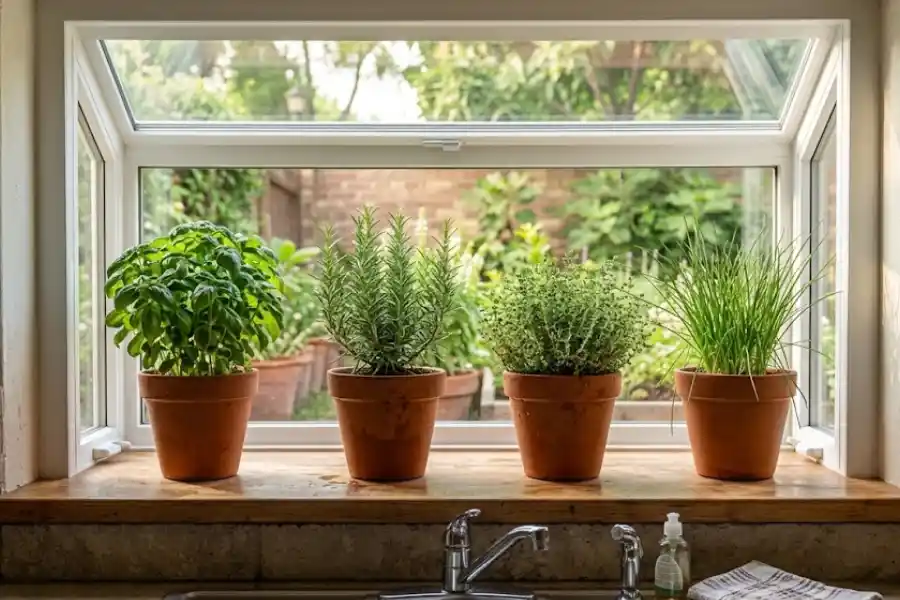
A garden window is a small window that sticks out from the wall of your home. It has glass on the front, the sides, and the top. That design lets it work like a mini greenhouse. It also has a wide shelf at the bottom where you can set your plants.
Most people put a garden window in the kitchen, often above the sink. You can also use one in a bathroom, a breakfast nook, or any room that needs more light. It is a simple way to enjoy indoor outdoor living even in a small space.
The side panes often open with a crank or a tilt. This lets fresh air flow in for you and your plants.
Garden Window vs. Bay Window: What Is the Difference?
People mix these two up all the time. Both stick out from the house, but they are not the same.
- Garden window: A small box shape with glass on top. It is built for plants.
- Bay window: A bigger unit with angled sides and a solid roof. It is built for seating and wide views.
- Box bay window: A square bay with a roof on top. It looks a lot like a garden window, but it handles rain better.
Here is something most other articles skip. Andersen Windows says it does not sell a glass-top garden window because this design is known for leaking at the top. Its suggested replacement is a box bay window. That tells you something important about the weak spot of this window style.
Garden Window Pros and Cons
A garden window is great for some homes and a poor fit for others. Here is a fair look at both sides.
The Good Things
- More light: The glass on three sides can brighten a dim kitchen fast.
- Fresh herbs all year: You can snip basil or chives without leaving the house.
- More room: The wide shelf gives you space that a flat window cannot.
- Better airflow: Side vents let you cool the room without opening a door.
- A fresh look: It adds depth and charm to a plain wall.
The Not So Good Things
- Higher cost: It costs more than a standard window, and the install is harder.
- Leak risk: The top and the seams need perfect sealing.
- Foggy glass: Moisture can build up between the panes if the seal fails.
- Lower energy savings: Extra glass can lose heat faster than a standard window.
- Hard to clean: You have to reach around plants and into corners.
How Much Does a Garden Window Cost?
Prices change by size, frame, glass, and where you live. Still, the big cost sites land in a similar range.
- This Old House says the average is about $3,000, and most projects run from $1,500 to $5,000 per window.
- HomeAdvisor puts the average near $2,500. It says a pro adds 20% to 35% on top of the window price.
- Angi lists wood frames at about $1,200 to $3,800 and fiberglass at about $1,100 to $3,200, installed.
Fixing a garden window later is not free either. Angi puts repairs at roughly $175 to $650 per window.
What Pushes the Price Up?
- Size: Bigger units cost more to build and to install.
- Frame material: Vinyl is usually the cheapest. Wood costs more and needs more care.
- Opening sides: Windows with vents that open cost more than fixed ones.
- Glass type: Low-E or gas-filled glass costs extra but helps with heat.
- Wall work: Cutting a bigger hole or fixing the framing adds labor.
Get at least three written quotes. Ask each one to list the window, the labor, the trim, and the removal of the old window as separate lines. That makes it easy to compare.
Where Should You Put a Garden Window?
Light is the big deal here. A beautiful garden window facing the wrong way will only grow tired plants.
- South-facing: This is the best choice. It gets the most sun, and many herbs need about six hours of direct light a day.
- East-facing: Good morning sun that is gentler. Great for most herbs and leafy plants.
- West-facing: Strong afternoon sun. Good for sun lovers, but it can get hot in summer.
- North-facing: The dimmest option. Stick with shade-friendly plants, or skip the idea.
Also look at what is outside. A tree, a fence, or a neighbor’s wall can block the sun. Make sure the window will not stick out into a path where people walk. Check your local building rules and ask your installer if you need a permit.
Best Plants for a Garden Window
Match your plants to your light. This one step does more for your success than any other trick.
For Bright, Sunny Windows
- Basil, rosemary, thyme, and oregano
- Parsley and chives
- Succulents and small cacti
- Geraniums
Short on shelf space? You can move extra herbs outside and try an herb garden on a balcony too.
For Shadier Windows
- Mint, parsley, and chives, which are forgiving herbs
- Microgreens, which grow fast and need little room
- Pothos and snake plants if you want green without cooking
For a Pop of Color
Nasturtiums are a fun pick. They trail over the edge, and you can eat both the flowers and the leaves in salads.
Pet safety tip: Some herbs and houseplants are toxic to cats and dogs. Check each plant before you bring it home.
How to Care for Plants in a Garden Window
- Water with care. A simple rule is to water when the soil feels dry about one inch down. Basil likes moist soil, while oregano prefers drier soil.
- Use pots that drain. Herbs hate sitting in water, so pick herb garden pots with drainage holes. Clay pots drain well and help prevent soggy roots.
- Turn your plants. Rotate pots now and then so every side gets light.
- Watch the shelf weight. Wet soil and clay pots are heavy. Ask the maker for the shelf’s weight limit before you load it up.
- Protect plants from extremes. In summer, a thin curtain or shade can stop hot sun from scorching leaves through the glass. On freezing nights, slide plants back from the cold glass.
Common Garden Window Problems and Easy Fixes
Fogging Between the Panes
Foggy glass between the layers usually means the seal has failed. You cannot wipe it away. Check your warranty first, because the maker may cover a replacement.
Water Leaks
Leaks often start at the top or the seams. Poor flashing and weak sealing are common causes. Look for stains, soft trim, or peeling paint, and call a pro early. Small leaks turn into big repairs fast.
Sagging
A window that is not supported well can sag over time. This is one more reason a skilled installer matters.
Heat Loss
Glass loses heat faster than a solid wall. Look for double-pane glass with a Low-E coating. Thick curtains or cellular shades at night can also help.
Should You Install a Garden Window Yourself?
For most people, no. The job involves cutting the wall, supporting the weight, and sealing the top and sides perfectly. Angi says a professional crew can often finish in about a day, and it advises against doing it yourself without real experience. A small mistake at the seal can cost you far more than the labor you saved.
7 Questions to Ask Before You Buy
- Does the quote include flashing, sealing, and trim?
- Is the top sloped so water runs off?
- What glass type is included, and is Low-E available?
- How long is the warranty on the frame and the glass seal?
- What is the weight limit of the shelf?
- Does the price include removing and hauling away the old window?
- Do I need a permit, and who gets it?
Frequently Asked Questions
Is a garden window the same as a greenhouse window?
Yes. People use both names for the same thing: a small glass box that sticks out from the wall and holds plants.
Do garden windows leak?
They can. The glass top and the seams are the weak spots. Good flashing, careful sealing, and a skilled installer lower the risk a lot.
Are garden windows energy efficient?
Not always. They have more glass, so they can lose heat faster than a standard window. Low-E glass and night shades help.
What direction is best for a garden window?
South-facing is best because it gets the most sun. East and west can work well too. North is the hardest for plants.
Can I put a garden window in any room?
Yes, if the wall can support it and you have enough outside space. The kitchen is the most popular spot, but bathrooms and living areas work too.
Does a garden window add value to a home?
It can make a home feel brighter and more special to some buyers. But no one can promise you will get your money back, so buy it because you will enjoy it.
Final Thoughts
A garden window can turn a plain wall into the favorite spot in your home. It brings in light, fresh air, and a little green life. It also asks for a bigger budget and more care than a standard window.
Choose the right wall, pick a strong installer, and match your plants to your light. Do those three things, and your garden window will give you years of fresh herbs and a brighter kitchen.