Growing an Herb Garden on a Balcony: What Beginners Get Wrong
Three summers ago, I killed four basil plants in one month. My balcony got six hours of sun. I bought good pots. I followed every tip I found online. The plants still turned brown and died.
The problem wasn’t my balcony. It was the advice. Most articles about growing an herb garden on a balcony tell you to “just add sun and water.” That advice skips the real reasons balcony herbs fail: wind, weight limits, and the wrong soil.
This article covers all of it. It shows you how to match herbs to your light, protect them from wind, and keep them alive for a full season instead of a few weeks. Whether you have a wide balcony or a narrow ledge outside a window, you can grow fresh herbs there.
Most balcony herb gardens don’t fail because of bad luck. They fail because of wind, weight, and watering mistakes that almost no one warns you about.
Why a Balcony Herb Garden Works So Well
A balcony is a great spot for herbs. Most culinary herbs come from the Mediterranean. They grow best in tight spaces, average soil, and strong sun, which is exactly what many balconies offer. You don’t need a big yard, just the same basics covered in our small balcony garden for beginners guide: a few pots, the right herbs, and about fifteen minutes a day.
Step 1: Study Your Balcony Before You Buy Anything
Most articles skip this step, and that’s a big reason balcony herb gardens fail in the first month. Before you buy a single pot, spend two or three days watching your balcony.
Check Your Sunlight
Sunlight decides which herbs will survive.
- Full sun, six or more hours a day: basil, rosemary, thyme, oregano, sage
- Partial sun, three to five hours a day: parsley, chives, cilantro, mint
- Mostly shade, under three hours a day: mint and chives can still survive, though growth will be slower
Watch your balcony from morning to evening. Note when the sun hits it and when it slips into shade. A south-facing balcony usually gets the most light. A north-facing balcony often stays in partial shade for most of the day.
Check the Wind
Balconies, especially above the second floor, often get much stronger wind than a ground-level garden. Wind dries out soil fast and can snap stems or knock over pots. If your balcony feels breezy even on a calm day, plan for it now instead of losing plants later.
Check the Weight Limit
This step gets skipped the most, and it matters. Wet soil is heavy. A single large pot filled with wet soil and plants can weigh 30 pounds or more. Most residential balconies can hold roughly 40 to 60 pounds per square foot, but this changes with a building’s age and design. Check your lease or ask your building manager before you fill your balcony with pots. Spread the weight out, and place your heaviest pots near the wall of your apartment, where the balcony is best supported, not out at the railing edge.
Step 2: Choose the Right Pots and Soil
Once you know your light, wind, and weight limits, you can pick containers that fit your space, whether that’s basic plastic nursery pots or the more decorative herb garden pots for outdoor use many balcony gardeners prefer once their herbs are established.
- Pot size: Most herbs need a pot at least 8 to 10 inches wide and deep. Rosemary and sage need more room, closer to 12 inches, since their roots spread out over a season.
- Drainage: Every pot needs a hole in the bottom. Without one, water sits in the soil and rots the roots. This is the single biggest cause of dead balcony herbs.
- Material: Plastic and fabric grow bags are lighter than ceramic or clay, which matters if your balcony has weight limits. Clay pots dry out faster in the sun, so those plants may need more frequent watering.
- Soil: Skip garden soil. It compacts in containers and drains poorly. Use a bagged potting mix instead. It’s lighter and made to hold the air pockets that plant roots need.
Step 3: Choose Herbs That Match Your Balcony
Once you understand your balcony’s light, picking herbs becomes simple.
Best Herbs for a Sunny Balcony
- Basil: fast-growing, loves heat, needs regular watering
- Rosemary: drought-tolerant, needs less water than most herbs
- Thyme: low and spreading, good for the edge of a pot
- Oregano: spreads well and forgives missed waterings
- Sage: sturdy, handles wind better than soft-leaved herbs
Best Herbs for a Shadier Balcony
- Mint: grows in partial shade and spreads fast, so give it its own pot
- Parsley: tolerates some shade, though it’s slow to start from seed
- Chives: hardy, and comes back year after year in many climates
- Cilantro: prefers cooler temperatures and light shade in hot climates
One herb deserves its own warning: mint. It spreads through underground runners and will take over any pot it shares with other plants. Always give mint its own container.
Step 4: Plant From Seeds or Starter Plants
Seeds cost less, but they take longer. Some herbs need two to three weeks just to sprout. If you’re new to growing herbs, buy young starter plants instead. They are already established and forgive beginner mistakes more easily than seeds do.
Group herbs with similar water needs in the same pot. Mediterranean herbs like rosemary, thyme, oregano, and sage prefer to dry out between waterings. Basil, parsley, and cilantro like steadier moisture. Mixing a thirsty herb with a drought-tolerant one usually means one of them struggles.
Step 5: Water and Feed Your Herbs the Right Way
Overwatering kills more balcony herbs than underwatering does.
- Check the soil before you water. Push a finger about an inch into the pot. If it feels dry, water. If it still feels damp, wait a day.
- Water until it runs out the drainage hole. This flushes out salt buildup and reaches the full root system.
- Feed lightly. Herbs grown for flavor don’t need heavy fertilizer, and too much can make the leaves taste weaker. A diluted liquid fertilizer once every three to four weeks is plenty during the growing season.
Step 6: Protect Your Herbs From Wind and Heat
This is the step most articles leave out completely, and it’s often the real reason balcony herbs struggle.
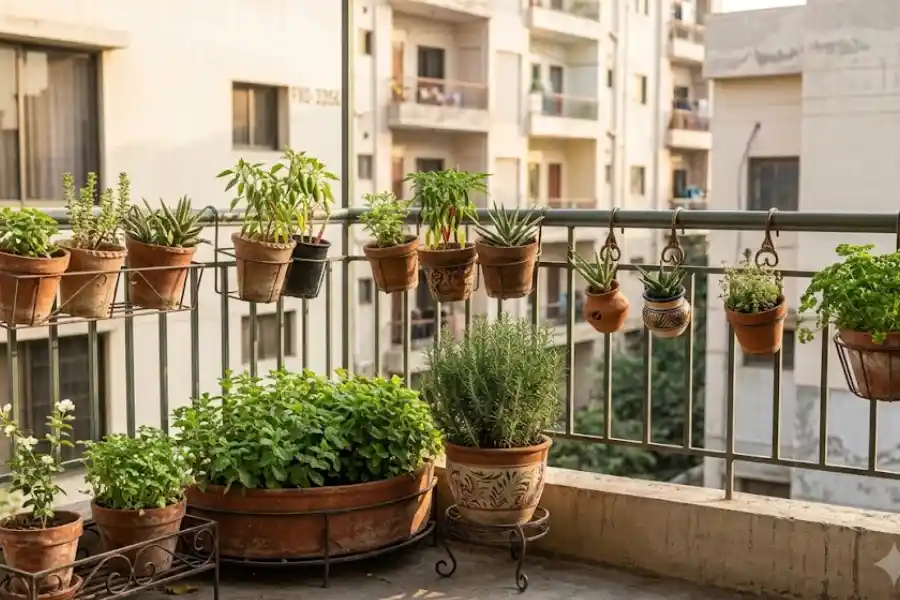
- Group pots together. Plants placed close together block wind for each other and shade each other’s soil, which slows evaporation.
- Keep pots low and wide instead of tall and narrow. Tall, narrow pots tip over easily in gusts.
- Watch for reflected heat. Balconies near a sunny wall or window can get much hotter than the surrounding air, especially in the afternoon. If leaves look scorched despite regular watering, move the pots a few inches away from the wall.
- Add a light windbreak if needed, whether that’s a simple trellis, a row of sturdier plants like rosemary, or one of these outdoor privacy screen ideas, many of which double nicely as windbreaks for container plants.
Step 7: Harvest Herbs the Right Way So They Keep Growing
Harvesting isn’t just about getting herbs for dinner. Done right, it also pushes the plant to grow fuller and produce more leaves.
- Never take more than one-third of a plant at once. Taking more can shock it and slow regrowth.
- Cut just above a leaf node, the point where leaves branch off the stem. This encourages the plant to branch out instead of just growing taller.
- Harvest often, not just when you need herbs. Regular light trimming keeps most herbs, especially basil, producing new growth all season.
Common Problems and Easy Fixes
- Yellow leaves: usually a sign of overwatering or poor drainage. Check that the pot has a drainage hole, and let the soil dry out more between waterings.
- Leggy, stretched-looking plants: a sign of too little light. Move the pot to the sunniest spot on the balcony, or accept slower growth from shade-tolerant herbs like mint and chives.
- Small bugs on the leaves: likely aphids or spider mites. Mix a few drops of dish soap into a spray bottle of water and spray the leaves. Check again after a few days.
- Mint taking over its pot: mint outgrows containers quickly. Repot it into a larger container each spring, or divide it and share the extra cuttings.
- Herbs dying in winter: tender herbs like basil won’t survive frost. Bring the pots inside near a sunny window, or treat basil as a one-season plant and start fresh in spring. Hardy herbs like rosemary, thyme, and sage can often survive mild winters outdoors if grouped together and shielded from wind.
Frequently Asked Questions
What are the easiest herbs to grow on a balcony?
Mint, chives, and rosemary are some of the easiest herbs for beginners. They tolerate missed waterings and forgive uneven care better than basil or cilantro.
Do I need full sun to grow herbs on a balcony?
No. Many herbs, including mint, parsley, and chives, grow well with just three to five hours of sun a day. Full sun herbs like basil and rosemary grow faster with six or more hours.
How much weight can my balcony hold?
Most residential balconies support roughly 40 to 60 pounds per square foot, but this varies by building. Check your lease or ask your building manager before adding several large pots.
Can I grow herbs on a north-facing balcony?
Yes, though your options are more limited. Shade-tolerant herbs like mint, parsley, and chives usually do better than sun-loving herbs like basil or rosemary in low light.
How often should I water balcony herbs?
Check the soil instead of following a fixed schedule. You may need to water daily in hot, windy weather, or only every few days in cooler conditions.
Can herbs survive winter on a balcony?
Hardy herbs like rosemary, thyme, and sage can often survive mild winters outdoors, especially when grouped together for wind protection. Tender herbs like basil should be brought inside or replanted each spring.
Your Balcony Can Grow More Than You Think
A herb garden on a balcony doesn’t need a lot of space or a lot of experience. It needs the right light match, a pot with real drainage, and a little attention to the wind and weight that most articles never mention. Start with two or three herbs you actually cook with. Once you see how easy they are to keep alive, adding more becomes the fun part.