Garden Bathtub: Costs, Sizes, and 3 Ways to Use One
Search for “garden bathtub” and you will get a surprise. Some results show a big soaking tub for a bathroom. Some show a tub sitting in a yard. Others show flowers growing out of an old tub.
So which one is a real garden bathtub? All three, really. That is why so many people buy the wrong thing or skip a key step.
This post explains each type in simple words. You will see what each one costs, what can go wrong, and how to choose. Let’s start with the basics.
What Is a Garden Bathtub?
The term has three common meanings. Here they are.
- The garden tub. A big, roomy soaking tub inside a bathroom. In the United States, this is the most common meaning.
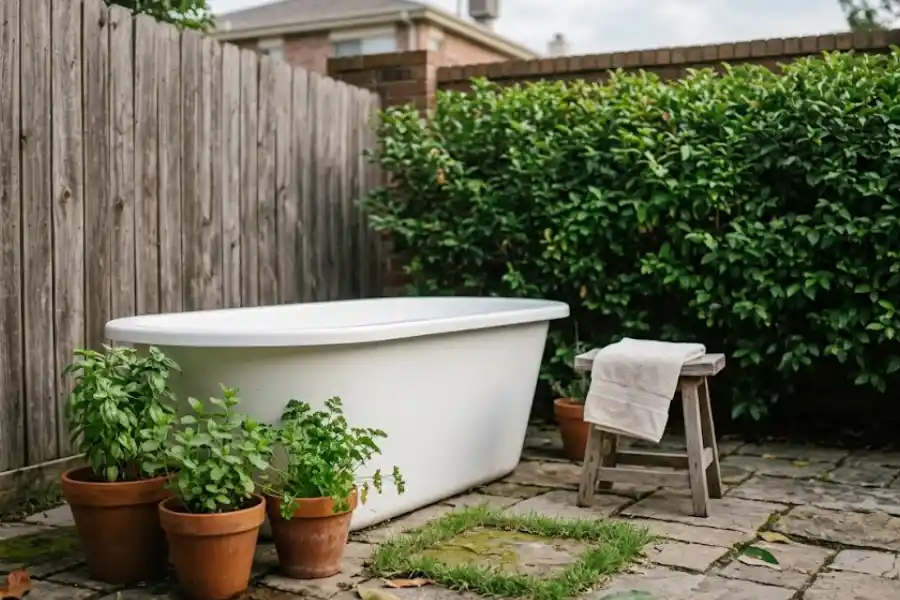
- The outdoor bathtub. A real tub set up in a yard, on a deck, or in a quiet corner of a garden.
- The bathtub planter or pond. An old tub reused to grow plants or hold a small water garden.
Pick the one that fits your goal and jump to that part. Or read all three. You may find a plan you did not expect.
The Indoor Garden Bathtub: A Roomy Soaker for Your Bathroom
A garden bathtub, often called a garden tub, is a large soaking tub. It is wider and longer than a standard tub and shower combo, and the sides are taller too. Many are freestanding, which means you can walk all the way around them. You may also hear it called a soaking tub, an oval tub, or a freestanding tub.
Why Is It Called a Garden Tub?
Many sources trace the name to Europe. Wealthy families placed big tubs near a window with a view of the garden. Later, the name stuck to large, fixed-in-place tubs in American homes. You do not need a garden to own one.
How Big Is a Garden Tub?
A basic garden tub is about 60 inches long, 42 inches wide, and 24 inches tall. Newer freestanding models often run 54 to 72 inches long and 30 to 40 inches wide.
Measure your room before you shop. Measure the doors and stairs too. A great tub that will not fit through the door is a very costly mistake.
What Are Garden Tubs Made Of?
- Acrylic: Lighter and cheaper. It also comes in many shapes.
- Enameled cast iron: A classic choice. It lasts for decades, but it is very heavy.
- Stone resin: A newer choice. It keeps bathwater warm longer than acrylic or fiberglass.
- Fiberglass: Often the lowest price. It can scratch or fade sooner than the others.
How Much Does a Garden Tub Cost?
Prices change by brand, material, and city. Basic acrylic tubs often start around $1,000. Premium stone resin and cast iron tubs can reach $3,000 to $5,000 or more. That is before installation. Plumbing work can add another $1,000 or more. Ask for at least two local quotes before you decide.
Garden Tub Pros and Cons
The good:
- You can sink in until the water covers your body.
- It can look like a work of art in the room.
- The shapes are comfortable.
- It feels great for sore muscles and slow evenings.
The not so good:
- It costs more than a standard tub.
- It needs a lot of floor space.
- It is heavy, so you may need a pro to install it.
- It uses a lot of water.
Three Checks Most Articles Skip
These three checks can save you money and stress.
- Check the weight. A gallon of water weighs about 8 pounds. A 50 gallon bath is about 400 pounds of water. Add the tub and the person inside. If the bathroom is upstairs, ask a pro to check the floor first.
- Check your hot water. Many home water heaters hold 40 to 50 gallons. A very big tub can run out of hot water before it fills. Look at the tub’s listed capacity before you buy.
- Check the faucet plan. A freestanding tub needs a floor mounted or wall mounted faucet. That can change your plumbing bill. Ask your plumber early.
Garden Tub vs. Soaking Tub
A soaking tub is the big category. It means any tub made for long soaks. A garden tub is one kind of soaking tub, and it is usually larger. So every garden tub is a soaking tub. But not every soaking tub is a garden tub.
Are Garden Tubs Outdated?
The old style from the 1990s, with a tiled platform and a big step up, can look dated. But clean, freestanding soaking tubs are still popular. If you want a tub you will really use, choose comfort and shape first. Trends come second.
The Outdoor Garden Bathtub: Soaking Under the Sky
A hot bath in a leafy yard sounds like a dream. A garden bathtub outdoors can be just that, if you plan it well. Here is what to think about.
Pick the Spot
Garden designers suggest a private spot that is still close to the house. Privacy and drainage are the two big factors. Sit where the tub will go and look around. What can the neighbors see? A fence, a hedge, or a simple outdoor privacy screen can fix that.
The ground must be flat and strong. A full tub is very heavy. A small paver patio, a gravel pad, or a concrete slab all work well.
Water and Heat
- Garden hose: The cheapest way. The water is cold, though.
- Hot and cold taps: A plumber can add an outdoor spigot that gives both hot and cold water.
- Fixed plumbing: The most costly choice, but also the easiest to use.
- Fire heat: Some people heat a steel tub over a wood fire. This takes real care. The tub must be steel, and it must sit on a very stable base. Keep kids and pets away, and always test the water before you step in.
Where the Bathwater Goes
Drainage is the part people forget. Bathwater can soak into your garden if the soil drains well. Sandy soil is best. Heavy clay holds water and makes puddles. Slope the drain pipe away from your house so water does not pool near the foundation.
Use a gentle, biodegradable soap. Used bathwater can water plants, but it should not soak down into groundwater. Some cities also have rules about draining bathwater onto the ground. Check before you plan.
Keep It Clean and Safe
- Use a cover to keep out leaves and bugs.
- Drain the tub after each soak so mosquitoes cannot breed.
- Add low, warm path lights. Skip bright lights right around the tub.
- Use a stone step or a non slip mat for getting in and out.
Quick tip: Before you spend money, call your local building department. Rules for outdoor plumbing, drains, and digging differ from town to town. Also call 811 before you dig. It is free, and it helps you avoid hitting a buried line.
Garden Bathtub Planter: Turn an Old Tub Into a Raised Bed
A garden bathtub planter is one of the easiest upcycle projects around. It works like a roomy container garden. An old tub holds lots of soil and already has a drain. The raised height means less bending for your back. The tall sides can also keep small animals out. Check salvage yards, online ads, and reuse stores for a tub.
How to Set It Up
- Pick the spot first. Most vegetables want six to eight hours of sun. Tubs are heavy, so place it before you fill it. Tilt it a little so the drain end sits lower.
- Check the drain. Keep it open. If your tub has no drain, add several drainage holes with the right bit for the material. Go slowly.
- Skip the gravel layer. Some advice online says to add stones at the bottom. Many gardeners say stones can slow drainage instead. A clear drain and good soil work better.
- Fill with potting mix. Do not use heavy garden soil. It packs down and holds too much water. Mix in some compost for food.
- Plant and water. Water until it runs out of the drain. Add a layer of mulch to keep the soil from drying out too fast.
Best Plants for a Bathtub Planter
- Herbs: Basil, parsley, and chives do well. Mint is a smart pick too, because the tub keeps its roots from spreading.
- Salad greens: Lettuce, spinach, and mustard greens grow fast.
- Veggies: Most tubs hold a foot or more of soil. That is enough for tomatoes and peppers.
- Flowers: Marigolds and trailing flowers look lovely spilling over the edge.
Mix tall and short plants for a fuller look.
Is a Garden Bathtub Planter Safe for Food?
Maybe. Very old tubs can have lead in the paint or glaze. Never use a tub that once held chemicals. If you want to grow food, test the surface with a lead test kit from a hardware store. If you are not sure, grow flowers instead.
Winter Care
Plants in a tub get colder than plants in the ground. In cold areas, pick plants that are hardy two zones colder than yours. Add mulch in the fall. You can also bury the tub up to its rim for extra protection.
Garden Bathtub Pond: A Tiny Water Garden
A garden bathtub pond is simple and fun. It can take just an afternoon.
- Set the tub on level ground. A tilted pond looks odd and can spill.
- Plug the drain. Use a stopper made for the job, then seal it with waterproof silicone.
- Add a ramp. Stack rocks or bricks inside so frogs, bees, and birds can climb out.
- Fill and plant. Add pond plants in pots. If you plan to add fish, let tap water sit for a day or use a water conditioner.
A small pump keeps the water moving. That helps stop mosquitoes. Part shade also helps keep algae down.
Which Garden Bathtub Is Right for You?
- You want a daily soak: Choose an indoor garden tub. Check the weight, the hot water supply, and the faucet plan first.
- You want a weekend escape on a small budget: Try an outdoor tub with a garden hose and a privacy screen.
- You want fresh herbs or flowers: A garden bathtub planter is cheap and easy.
- You want to help wildlife: Build a tub pond with a ramp and a few pond plants.
7 Costly Garden Bathtub Mistakes to Avoid
Most garden bathtub problems come from skipped planning. Watch out for these.
- Not measuring the path. Doors, hallways, and stairs can block a big tub.
- Ignoring floor strength. A full tub weighs hundreds of pounds.
- Forgetting hot water. A big tub can drain your water heater fast.
- Draining water near your house. Slope it away from the foundation.
- Skipping the privacy test. Sit in the spot and see what the neighbors see.
- Using garden soil in a planter. It is too dense and drains poorly.
- Leaving water standing. It invites mosquitoes. Drain it or keep it moving.
Frequently Asked Questions
What is a garden bathtub?
A garden bathtub is a tub linked to a garden in some way. Most often it means a large, roomy soaking tub for the bathroom. It can also mean a tub placed outdoors, or an old tub reused as a planter or pond.
How big is a garden tub?
A basic one is about 60 by 42 inches and 24 inches tall. Many freestanding models run 54 to 72 inches long.
Do garden tubs have jets?
Most modern ones do not. They are made for soaking. Some whirlpool styles do have jets, so check the product details.
Can you put a garden bathtub outside?
Yes. You need a private spot, a strong base, a water plan, and a drainage plan. Check local rules first, especially if you want hot water plumbing.
Is a garden bathtub planter safe for vegetables?
It depends on the tub. Old tubs can have lead in the paint or glaze. Test the surface or grow flowers if you are unsure.
Do I need drainage holes in a tub planter?
Yes. Good drainage helps prevent root rot. Most tubs already have a drain. Keep it open.
Final Thoughts
A garden bathtub can be a bathroom upgrade, a backyard retreat, or a pretty home for plants. The best choice depends on your space, your budget, and how you will use it.
Whatever garden bathtub you choose, plan for weight, water, and drainage first. Do that, and the fun part gets much easier. Now pick your path and start small.