Best Aquatic Plants for Garden Ponds (Plus What to Avoid)
A pond without plants is just a hole full of water. Add the right plants, though, and that same hole turns into a living, breathing little world with clear water, happy fish, and frogs that stick around. I’ve helped set up more backyard ponds than I can count, and the number one mistake I see is this: people buy plants because they look pretty in the store, not because they belong in a pond.
This article fixes that. Below, you’ll find the best aquatic plants for garden ponds, sorted by the job each one does, plus a few popular plants you should skip entirely (most articles won’t tell you this part).
Why Aquatic Plants Matter More Than You Think
Pond plants earn their spot for more reasons than looks. They’re the cleaning crew, the shade, and the food source all rolled into one. They soak up extra nutrients in the water before algae can use them, which means less of that thick, green “pea soup” look by midsummer. They also block sunlight from hitting the water directly, and algae needs sunlight to grow.
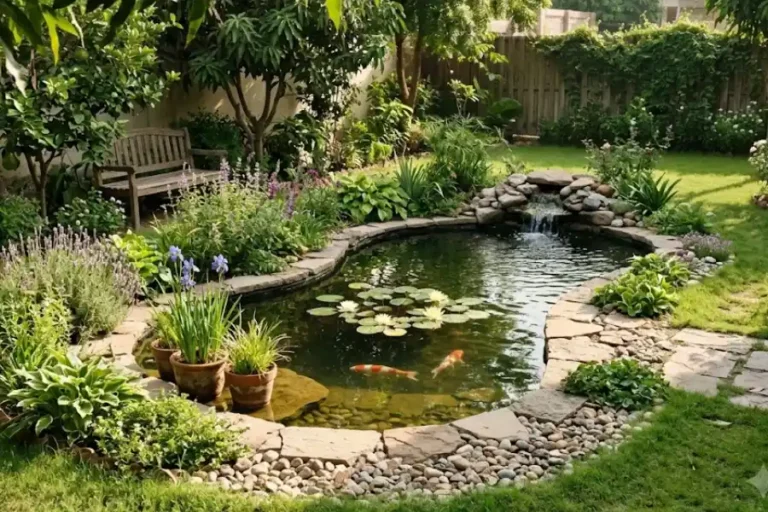
A good rule of thumb: aim to cover about 60 to 80 percent of your pond’s surface with plants. That might sound like a lot, but it’s the sweet spot where algae struggles and your fish get plenty of shade and hiding spots.
The 3 Types of Pond Plants Every Pond Needs
Most articles just throw a list of plants at you. That’s not that helpful, because pond plants aren’t interchangeable. Each type has a specific job, and a healthy pond needs all three.
1. Oxygenating (Submerged) Plants
These grow fully underwater. You won’t see much of them above the surface, but they’re working hard the whole time, releasing oxygen, absorbing nutrients, and giving fish a place to lay eggs or hide from herons.
2. Floating Plants
These sit right on top of the water with roots dangling below. No soil needed. They spread fast, shade the water, and are often the quickest fix if your pond is turning green.
3. Marginal (Edge) Plants
These grow in shallow water or wet soil around the pond’s border. They’re the ones with the flowers and tall stems you see and enjoy. They also help soften the hard edge between pond and garden, and their roots hold soil in place so it doesn’t wash into the water.
Best Oxygenating Plants for Garden Ponds
- Hornwort: No roots, no soil, no fuss. Just drop a handful in and it floats freely underwater, pulling out excess nutrients as it grows. It’s one of the easiest oxygenators for beginners because you genuinely cannot mess it up.
- Anacharis (Elodea): A fast-growing underwater plant that fish love to nibble on. It roots in loose soil at the pond bottom, but it grows so well it barely needs any help.
- Vallisneria (Tapegrass): Long, ribbon-like leaves that sway gently underwater. It handles both sun and shade well, which makes it flexible for ponds that don’t get full sun all day.
- Parrot’s Feather: Feathery underwater growth with soft green tips that sometimes poke above the surface. It spreads quickly, so keep an eye on it and trim when needed.
Best Floating Plants for Garden Ponds
- Water Lettuce: Soft, velvety leaves that form little rosettes, looking a lot like a floating head of lettuce. It shades the water fast and is a top pick if algae is already a problem.
- Amazon Frogbit: Small, round leaves similar to a mini lily pad, with trailing roots that pull nutrients straight from the water. Gentle and easy to control compared to some other floaters.
- Water Hyacinth: Lavender flowers and thick, glossy leaves. It’s one of the best natural water cleaners out there, though it spreads quickly and needs regular thinning.
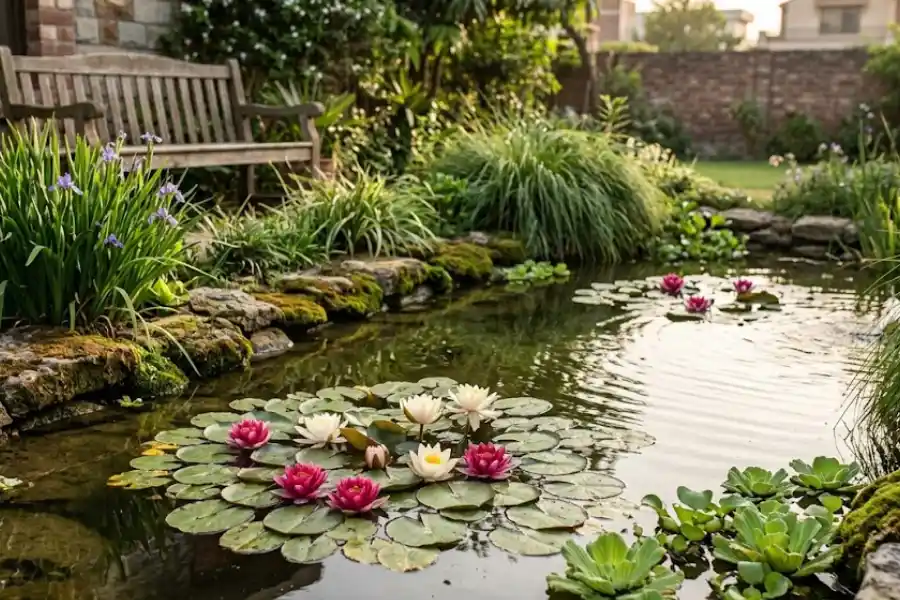
- Hardy Water Lily: The classic pond flower. Its wide pads shade the water below, and unlike the plants above, it needs to be rooted in a pot on the pond floor rather than floating loose.
Best Marginal Plants for Garden Ponds
- Blue Flag Iris: Tall stalks with striking blue-purple flowers in late spring. Its strong roots help hold pond edges together, which matters if you’ve got soil banks instead of rock or liner.
- Pickerel Weed: Bright purple flower spikes that keep blooming for months on end. Bees and butterflies show up for this one constantly.
- Japanese Sweet Flag: A grass-like plant that stays low and neat, perfect for softening the hard line where pond meets lawn. Comes in green or golden-yellow varieties.
- Creeping Jenny: Bright, trailing leaves that spill over rocks and edging like a green (or golden) waterfall. Great for hiding an ugly pond liner edge.
- Cardinal Flower: Tall stems topped with vivid red blooms. If you want hummingbirds visiting your pond, this plant alone will do the job.
Planting Depth Cheat Sheet
One question I get asked constantly is “how far down do I plant this?” Here’s a simple breakdown so you’re not guessing:
- Marginal plants (iris, pickerel weed, sweet flag): 0 to 6 inches of water above the roots, or just wet soil at the pond’s edge.
- Floating plants (water lettuce, frogbit, hyacinth): No planting depth needed. They sit right on the surface.
- Water lilies: 12 to 24 inches below the surface, depending on the variety. Smaller lilies prefer the shallower end of that range.
- Oxygenators (hornwort, anacharis, vallisneria): Anywhere from a few inches to several feet. Most aren’t picky as long as they get some light.
Warning: Aquatic Plants to Avoid
This is the part most articles skip, and it matters. Some of the most commonly sold “pond plants” are banned or restricted in parts of the United States because they choke out lakes, rivers, and streams when they escape a backyard pond.
- Water Hyacinth: Beautiful, but illegal to plant in several states because it spreads into wild waterways fast. Check your state’s rules before buying, and never dump extra plants into a natural pond, lake, or creek.
- Parrot’s Feather: Restricted or banned in some regions for the same reason. It escapes ponds easily during flooding and takes over natural waterways.
- Non-native cattails and certain invasive irises: These can look almost identical to safe native species but spread aggressively and crowd out everything else. Always buy from a reputable nursery and ask specifically for native species when you can.
A good rule for any pond owner: never release pond plants (or fish) into a wild lake, river, or wetland. What seems like a harmless backyard trim can become a serious problem for local ecosystems miles away.
How Many Plants Does Your Pond Need?
For a small backyard pond (100 to 300 gallons), start with 1 water lily, 3 to 4 bunches of oxygenators, 2 to 3 floating plants, and 4 to 6 marginal plants around the edge. For larger ponds, simply scale up in that same rough ratio, and remember the 60 to 80 percent surface coverage goal from earlier. It’s always easier to add more plants later than to remove an overcrowded mess.
Simple Tips to Keep Your Pond Plants Thriving
- Use aquatic soil or planting baskets made for ponds, not regular potting soil, which floats and clouds the water.
- Top pots with a layer of gravel so fish don’t dig up the soil while exploring.
- Thin out fast growers like water hyacinth and creeping Jenny every few weeks so they don’t take over.
- Most marginal and oxygenating plants survive winter just fine if their roots sit below the ice line. Floating tropicals like water lettuce usually need to be treated as annuals in colder zones.
- Skip the fertilizer unless a plant looks genuinely unhealthy. Extra nutrients in pond water almost always feed algae faster than they feed your plants.
Frequently Asked Questions
Do pond plants need soil to grow?
Not always. Floating plants like water lettuce and frogbit need no soil at all. Marginal plants and water lilies do best in aquatic soil, ideally inside a planting basket.
Will pond plants survive winter?
Most hardy varieties, like blue flag iris, hornwort, and water lilies, survive winter as long as their roots stay below the ice. Tropical floaters like water hyacinth usually die off in freezing temperatures and need to be replaced each spring.
How do I stop algae without chemicals?
Add more plants. Floating plants and water lilies block sunlight, and oxygenators soak up the nutrients algae feeds on. Reaching that 60 to 80 percent coverage goal is usually enough to keep algae under control naturally.
Are pond plants safe for fish?
Yes, and most fish benefit from them. Plants give fish shade, shelter from predators like herons, and in some cases, a snack. Just avoid the invasive species listed above, since they can harm the wider ecosystem if they escape.
How many plants should I buy for a small pond?
For a pond under 300 gallons, aim for roughly 1 water lily, a few bunches of oxygenating plants, 2 to 3 floating plants, and several marginal plants around the border. Add more over time as you see what your pond needs.
A pond filled with the right mix of aquatic plants takes care of itself without much fuss. Start with one plant from each category above, and you’ll notice clearer water and a livelier pond within just a few weeks.