Modern Garden Design: 9 Simple Steps for a Sleek, Easy Yard
Have you ever seen a modern garden and thought, “I want that, but where do I even start?” You are not alone. Many people believe this style needs a huge budget and a team of experts. It does not.
The truth is simple. A modern garden is all about calm. It uses clean lines, a few strong plants, and a space that is easy to enjoy. You can build one in a tiny yard, on a balcony, or in a big backyard.
This article walks you through the whole process in plain words. Along the way, we will look at what makes this style special, how to plan it, which plants to pick, how to save money, and which mistakes to avoid. Let’s get started.
What Is a Modern Garden?
A modern garden is a neat outdoor space built around simple shapes and a clear purpose. Think straight paths, square paving stones, and quiet colors. Nothing is there just to fill space.
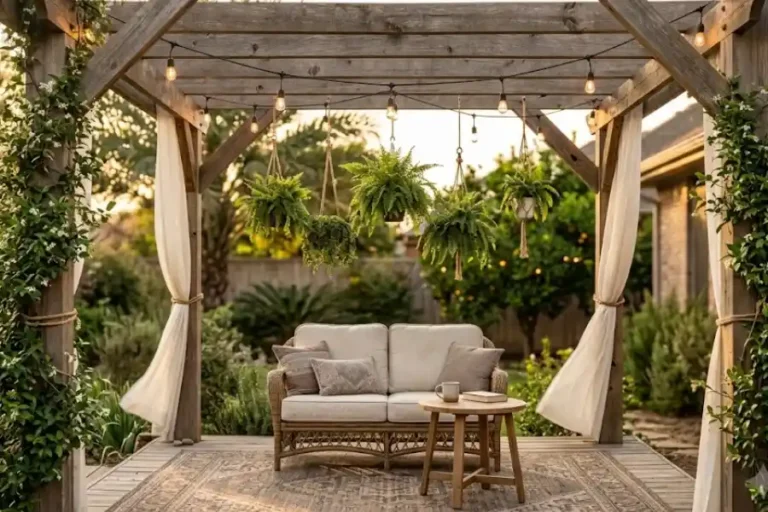
Designers often treat the yard as an extra room of the house. The patio is the living room. The path is the hallway. This idea helps the indoors and outdoors feel like one place.
Most modern garden designs share these traits:
- Clean, straight lines
- Simple shapes, such as squares and rectangles
- A small set of materials used again and again
- Soft, calm colors with a few bold touches
- Plants chosen for their shape and texture more than their flowers
- Furniture and lighting that are simple and useful
Modern Garden vs. Traditional Garden: What Is the Difference?
A traditional garden often has curved beds, many kinds of flowers, and lots of color. It can look lovely, but it can also feel busy. A modern garden does the opposite. It keeps things calm and planned.
Here is a quick way to see the difference:
- Shape: Traditional gardens use soft curves. Modern ones use straight lines and clear angles.
- Plants: Traditional gardens mix many types. Modern ones use fewer plants, repeated in groups.
- Color: Traditional gardens are bright and mixed. Modern ones lean on greys, whites, and greens.
- Feel: Traditional gardens feel cozy and full. Modern ones feel open and peaceful.
Is a Modern Garden Really Low Maintenance?
Mostly, yes, but not completely. Because a modern garden has fewer plants and more hard surfaces, there is less to prune, feed, and weed. Still, every garden needs some care. Paving needs cleaning. Hedges need trimming. New plants need water, especially in their first year.
Plan for a little work each week and you will be fine. Skip it for months and even the sleekest space will look tired.
9 Steps to Create a Modern Garden
Step 1: Decide How You Will Use the Space
Start with your daily life, not with pretty pictures. Do you want a place to eat dinner outside? A quiet corner to read? Room for kids or a dog? Write a short list of what matters most.
Then match each use to the right spot. A dining area works best near the kitchen door. A quiet seat can go farther away, where it feels private. This one step saves money, because you only build what you will use.
Step 2: Study Your Sun, Soil, and Wind
Spend a few days watching your yard. Notice where the sun falls in the morning, at noon, and in the evening. Check where water pools after rain. Feel where the wind blows hardest. Look at your soil too. Is it sandy, heavy, or somewhere in between?
These details decide which plants will thrive and which will struggle. A plant in the wrong spot will never look sleek, no matter how nice the pot is.
Step 3: Sketch a Simple Plan
You do not need fancy software. Graph paper or a free design app works well. Draw the edges of your yard, your house, and any trees you want to keep. Then add paths, a seating area, and beds in simple shapes.
Keep the angles square. If the plan looks calm on paper, it will look calm in real life. For a large or tricky yard, a landscape designer can help you avoid costly errors.
Step 4: Pick a Small Set of Materials
This is the secret of the modern look. Choose three or four materials and repeat them. For example, you could use large grey pavers, dark metal, warm wood, and pale gravel. Repeating materials makes a space feel planned and peaceful.
If you can, buy stone and gravel from your own region. It fits the setting and may cost less to ship.
Step 5: Build the Hard Parts First
In a modern garden, patios, paths, walls, and fences are the stars. Plants play a supporting role. So build these parts first. Here are a few tips:
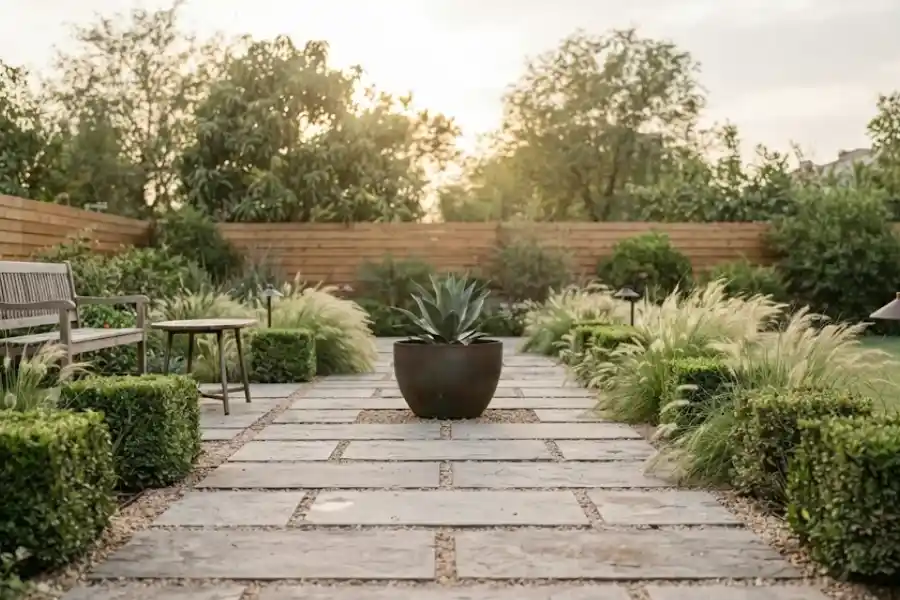
- Use large square or rectangular pavers, and leave neat gaps between them. Browsing a few paver patio designs can help you pick a layout you like.
- Make paths straight and wide enough for two people to walk side by side.
- Try horizontal fence boards for a fresh, current look.
- Use walls to add height, hide an ugly view, or create seating.
Step 6: Choose Plants With Strong Shapes
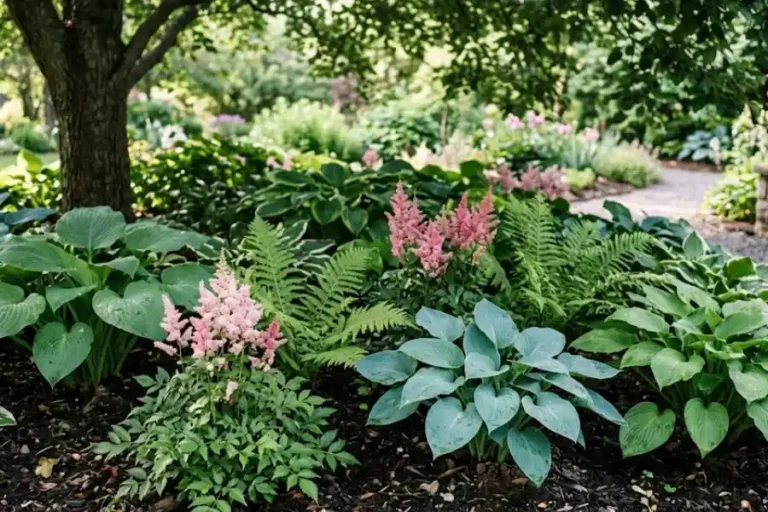
Fewer plants will give you more impact. Pick plants for their form, texture, and leaf color. Then repeat the same few plants in groups so the whole space feels connected. You will find a full list of good choices in the plant section below.
Step 7: Add One Clear Focal Point
Your eye needs a place to rest. A large pot, a simple sculpture, a water bowl, or one special tree can do the job. Place it at the end of a path or across from your seating area. One strong focal point beats five small ones.
Step 8: Light It Up
Good lighting lets you enjoy your garden after dark and keeps paths safe. Keep it soft and low. Small LED lights along a path look neat. For a more polished finish, try architectural lighting for modern garden paths and walls. A spotlight aimed up at a tree or wall adds drama. Solar lights save energy and are easy to install, though they can be dimmer than wired ones.
Step 9: Plan for Care Before You Finish
Think about upkeep now, not later. Group plants that need the same amount of water. Add drip irrigation or set a simple watering routine. Spread mulch to hold in moisture and block weeds. A garden that is easy to care for stays beautiful for longer.
Quick rule: If an item in your design does not have a job, leave it out. Less really is more here.
Best Plants for a Modern Garden
The best plants for this style have clear shapes and look good all year. Here are some reliable choices. Always check that a plant suits your climate zone and light before you buy it.
- Ornamental grasses: They add soft movement and texture. They look great next to hard stone.
- Boxwood and yew: These evergreens can be clipped into tidy balls, cubes, or low hedges.
- Agave and yucca: Bold, spiky, and tough. They suit dry, sunny spots.
- Japanese maple: A small tree with a graceful shape and rich leaf color.
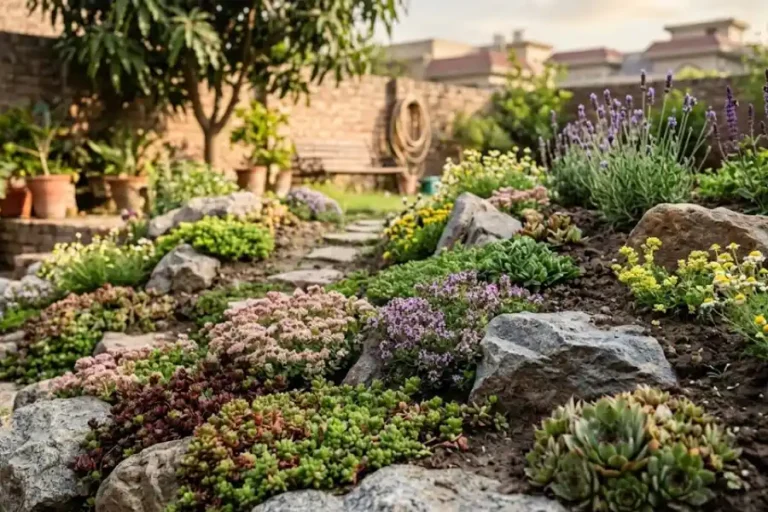
- Sedum and other low ground covers: They fill gaps between pavers and keep weeds down.
- White-flowering plants, such as hydrangeas: They bring gentle color without breaking the calm look.
Here is a pro tip. Pair a fine, wispy plant with a bold, sharp one. A feathery grass next to an agave is a classic mix because the two shapes make each other stand out.
Modern Garden Ideas for Small Spaces
A small yard, patio, or balcony can be a great modern garden. Having less room forces you to be choosy, and that fits this style perfectly. Try these ideas:
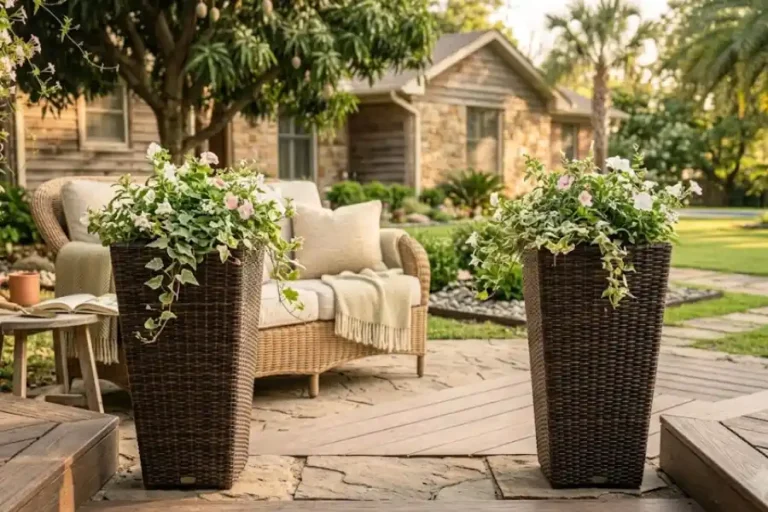
- Use a few big pots, not many small ones. Large pots look calmer and cleaner, and most good container garden ideas follow the same rule.
- Grow up. A trellis or wall planter adds green without using floor space.
- Pick one main floor material. This makes a small area feel bigger.
- Add a slatted screen. It gives privacy while still letting in light and air.
- Choose smart seating. Fixed benches or folding chairs save space.
Be careful not to overfill. Small spaces get crowded very fast.
How to Build a Modern Garden on a Budget
Cost worries many people, so here are some smart ways to save money without losing the look.
- Build in phases. Do the patio this year and the planting next year. The garden does not have to be finished in one go.
- Use gravel. It often costs less than paving and drains water well.
- Paint what you already have. A coat of dark or neutral color on an old fence can change the whole feel.
- Start with small plants. They cost less and will grow to fill the space.
- Repeat the same plant. Buying many of one type is often cheaper, and repeating plants is part of the style anyway.
- Do the easy jobs yourself. Spreading gravel, planting, and mulching are great DIY tasks. Hire help for heavy digging, electrical work, and large walls.
For any work you hire out, ask for a few written quotes first. Prices can vary a lot.
How to Make a Modern Garden Better for Nature
Today, a good modern garden does more than look sharp. It also cares for the planet. Many design experts now talk about gardens that are kind to the climate and to wildlife. You do not need to be an expert to join in. Small choices add up:
- Look after your soil. Healthy soil grows stronger plants. Add compost and avoid digging more than you need to.
- Choose native and drought-tolerant plants. They need less water and often help local bees and birds.
- Water smartly. Drip lines put water right at the roots, so less is lost to the air.
- Let rain soak in. Gravel and gaps between pavers allow water to drain into the ground. A simple rain garden design can also catch runoff from your roof.
- Use LED or solar lights. They use much less power.
6 Common Mistakes to Avoid
- Making it feel cold. Too much stone and metal can feel harsh. Soften the space with plants, wood, and soft outdoor fabrics.
- Using too many materials or colors. Stick to a short list so the design stays calm.
- Ignoring scale. Huge pavers can overwhelm a tiny entry. Tiny plants can vanish in a big border.
- Forgetting how big plants will grow. Read the plant tag and leave enough room for full size.
- Skipping drainage. Standing water ruins plants and damages paving.
- Choosing materials that cannot handle your weather. If your winters are freezing, pick materials that can survive the cold and thaw cycle.
A Simple Care Schedule
A little regular care keeps everything crisp. Use this easy plan:
- Every week: Sweep paths, clear fallen leaves, pull weeds, and check your pots.
- Every month: Trim hedges, check your watering system, wipe down furniture, and refresh any water feature.
- Each season: Wash stained paving, top up mulch, prune shrubs, and test your lights.
Frequently Asked Questions
What is the difference between a modern and a contemporary garden?
People often use the two words in the same way. Strictly speaking, “modern” points to a design style that grew in the 20th century, while “contemporary” means whatever is popular right now. In real life, both focus on clean lines and simple, calm spaces.
How much does a modern garden cost?
It depends on your yard size, your materials, and whether you hire help. Hard features such as stone, metal, and large walls usually cost the most. Plants usually cost less. A phased plan, gravel paths, and some DIY work can bring the price down a lot.
What colors work best?
Greys, whites, tans, and black work well, along with the greens and blues that plants and sky bring. Many designers add one bold pop of color, such as a bright pot or chair, for a touch of surprise.
Can I still grow flowers?
Yes. Just choose a few kinds and repeat them in groups. Stick to one or two colors so the space stays calm.
Does this style suit a small yard?
Absolutely. Small yards often look best with simple designs. Use a few large pots, one main floor material, and one focal point.
Final Thoughts
A modern garden is not about spending more. It is about choosing less and choosing well. Pick a few good materials. Plant with purpose. Keep your lines clean and your plan simple.
You do not have to do everything at once. This weekend, measure your space, sketch a rough plan, and decide how you want to use it. That small first step will make the rest feel easy.