Garden Plants for Shade: 40+ Picks for Every Shady Spot
You walk past that shady corner every day. Nothing grows there. The grass gave up years ago. It just sits there, bare and a little sad.
Here is the good news. That “dead zone” is not dead at all. It is just waiting for the right plants. Shade is not a curse. It is a different kind of garden. It has its own rules. It also has its own beauty. Once you know what to plant, a shady spot can become the prettiest part of your yard.
This article covers the best garden plants for shade, and why each one works. We will also cover two things most plant lists skip. First, how to tell your shade types apart. Second, how to deal with dry, root-filled soil under big trees. That second part kills more new shade plants than anything else. So let’s fix it, step by step.
Not All Shade Is the Same
Before you buy a single plant, watch your yard for one full day. Shade comes in more than one type. There are different levels. Each one needs different plants for shade to survive and grow well.
- Light shade: Your spot is open to the sky. But a wall, fence, or tree blocks the direct sun for most of the day. It still gets plenty of bright light.
- Partial shade: You get three to six hours of direct sun each day. This usually happens in the morning or late afternoon. Midday sun is the strongest. So afternoon shade is easier on plants than morning shade.
- Dappled shade: Sunlight filters through tree leaves all day. It is like light through a lace curtain. It is never fully dark. It is never fully bright, either.
- Full or dense shade: This means less than two to three hours of direct sun a day. You often find it under thick trees, a porch roof, or dense shrubs. It is the hardest spot to plant. But it is far from hopeless.
Once you know your shade type, you can stop guessing. A hosta that loves dappled shade might sulk in dense shade under a spruce tree. Matching the plant to the real light level is the biggest reason some shade gardens thrive. It is also why others fail.
Dry Shade vs. Moist Shade: The Part Most Plant Lists Skip
Few sources explain this part well. Shade and “dry shade” are not the same problem.
Say your shady spot sits under a big tree, like a maple, oak, or pine. That tree’s roots steal water before your new plants get a single sip. This is called dry shade. It is the toughest growing spot in the whole garden. Shade next to a wall or fence is different. That kind of shade tends to stay damp. Damp shade brings its own problems, like slugs and soggy roots. If a spot stays wet long after the rain stops, it may be worth planning as a proper rain garden design instead of a standard bed.
Quick tip: When you plant under a tree, build a small ring of soil around each plant. Make it like a shallow bowl. Fill that bowl with water instead of just splashing the surface. This sends water straight down to the roots. It stops greedy tree roots from grabbing it first.
Skip this step, and even tough shade plants can struggle in their first summer. This one habit often makes or breaks a new shade garden.
The Best Garden Plants for Full Shade
These are the workhorses of any shade garden. They handle little to no direct sun. They still look great all season.
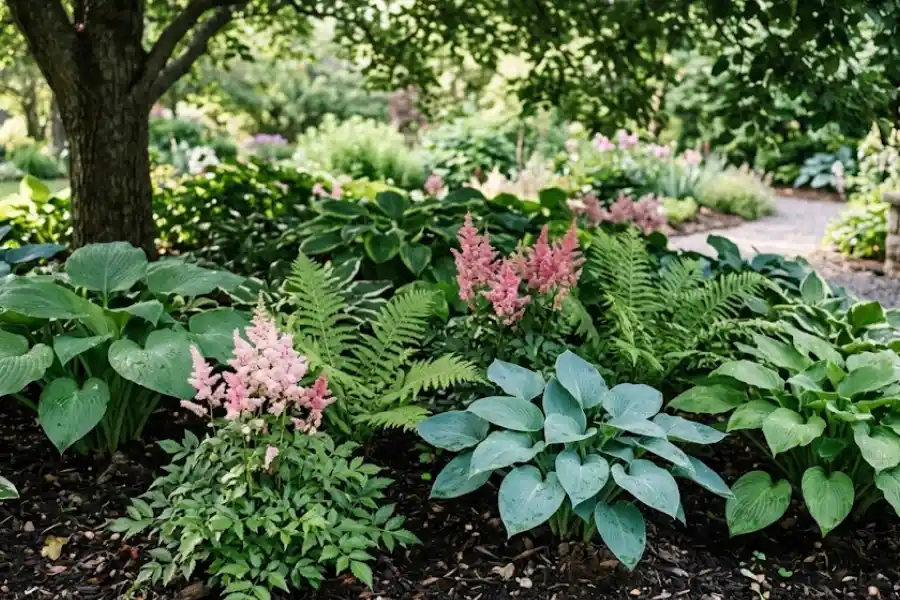
- Hostas: The classic pick, for good reason. Big, bold leaves in green, blue, or gold. They return every year and fill in fast.
- Ferns: Soft and feathery, ferns give any shady bed that classic woodland garden look. Try Japanese painted fern for silver-blue color, or Boston fern for a full, lush look.
- Astilbe: Feathery flower plumes in pink, red, or white. They bloom right as spring flowers fade, so the color keeps going.
- Hellebore (Lenten Rose): One of the few plants that blooms in late winter. It often blooms right through snow. The leaves stay green all year.
- Solomon’s Seal: Tall, arching stems. Small white bell flowers hang underneath. It has a quiet, graceful look. Deer tend to leave it alone.
- Brunnera: Heart-shaped leaves, often marked with silver. Tiny blue flowers pop up in spring, like little forget-me-nots.
- Pachysandra: A low, spreading evergreen. It fills bare ground under trees where grass has already given up.
- Lily of the Valley: Small, sweet-smelling white bells in spring. It spreads fast, so give it room to grow.
The Best Garden Plants for Partial Shade
Do you get a few hours of morning or filtered sun? Then even more plants for shade become an option.
- Heuchera (Coral Bells): Grown mostly for its leaves. Colors range from amber to purple to almost black. It adds color without a single flower.
- Bleeding Heart: Rows of small, heart-shaped flowers in pink or white, dangling from arching stems. It’s a favorite in a classic English garden design.
- Foxglove: Tall spikes covered in bell-shaped flowers. It adds height and drama to the back of a shady bed.
- Toad Lily: A speckled, unusual flower. It blooms in late summer and fall, right when other shade plants slow down.
- Ligularia: Big, bold leaves. Tall spikes of yellow or orange flowers. It makes a strong statement in a shady border.
- Lungwort (Pulmonaria): Spotted leaves and early spring flowers. The blooms shift from pink to blue on the same plant.
- Japanese Anemone: Simple, graceful flowers in late summer. They give the garden a fresh burst of color when it needs one most.
Best Flowering Shade Plants for Color All Season
Leaves are nice. But sometimes you just want flowers. These shade plants bring real color, well beyond plain green.
- New Guinea Impatiens: Nonstop blooms in red, pink, orange, and white. They flower right through summer. This is one of the most reliable flowering shade plants around.
- Begonias: Wax begonias and tuberous begonias both handle shade well. They bloom for months with almost no fuss.
- Fuchsia: Dangling, two-tone flowers that hummingbirds love. It looks stunning in a hanging basket, making it one of the easiest container garden ideas for a shady porch.
- Caladium: Grown mostly for its leaves, not flowers. The leaf patterns, in pink, red, white, and green, are bold enough to look like blooms.
- Torenia (Wishbone Flower): A tough little annual. It keeps blooming through summer heat, even in fairly dense shade.
- Camellia: A shrub, not a bedding plant, but it earns its place. Glossy evergreen leaves, plus elegant flowers in fall or winter.
Best Ground Covers for Shade (Great Under Trees)
Grass will not grow under a big shade tree. These ground covers will.
- Ajuga (Bugleweed): Fast, low, and covered in blue flower spikes each spring. Great for filling gaps between stepping stones.
- Creeping Jenny: Bright, lime-green leaves. They spill nicely over edges and rocks.
- Sweet Woodruff: A soft, spreading carpet. It has tiny white flowers and a light, pleasant scent.
- Lamium (Deadnettle): Silvery-green leaves with small pink or purple flowers. It handles dry shade better than most ground covers.
- Vinca (Periwinkle): Glossy evergreen leaves. Purple-blue flowers. Very tough once it settles in.
Low-Maintenance and Deer-Resistant Shade Plants
Do deer visit your yard often? Or do you just want shade plants that take care of themselves? Start with this list.
- Hellebores, ferns, and astilbe: All three, listed above, are usually left alone by deer.
- Mahonia: A tough evergreen shrub with spiky leaves. Deer tend to avoid it. It also grows fragrant yellow flowers in winter.
- Boxwood: Classic, neat, and evergreen. About as low-fuss as shrubs get.
- Aucuba: A shade-loving shrub with glossy leaves, sometimes speckled with gold. It shrugs off neglect.
- Pachysandra and Vinca: Both ground covers double as deer-resistant, low-maintenance picks for tricky spots.
How to Plant Shade Plants So They Survive and Thrive
- Check your soil first. Dig a small hole and fill it with water. Drains within a few hours? Good, your drainage is fine. Water just sits there? Mix in some compost before you plant.
- Plant at the right depth. The top of the root ball should sit level with the soil around it. Do not bury it too far down. Do not leave it sticking up, either.
- Water with the basin method. Build a shallow ring of soil around each new plant. Fill it with water two or three times a week for the first month. This matters most under trees.
- Add two to three inches of mulch. Mulch locks in moisture. It keeps roots cool. It also cuts down on weeds.
- Plant in spring or fall. Cooler weather means less stress on new roots while they settle in.
Common Shade Garden Mistakes
- Overwatering: Shady soil dries out slower than sunny soil. Check it with your finger before you water again. Too much water can cause root rot.
- Planting the wrong plant in the wrong shade: A sun-loving flower will always struggle in full shade. No amount of care fixes that. Match the plant to your real light level.
- Ignoring slugs and snails: Shady, damp beds are their favorite hangout. Pick them off by hand in the evening. Or use a pet-safe slug bait if needed.
- Skipping soil prep under trees: Planting straight into root-filled soil almost always leads to a struggling plant. Loosen the top few inches first. Then mix in some compost.
- Letting moss take over: A little moss is normal, and it can even look nice. If it spreads fast, that usually means poor air flow. Thin out crowded plants to fix it.
Frequently Asked Questions
What grows in full shade where nothing else will?
Hostas, ferns, pachysandra, and hellebores are your best bet. All four handle low light. They still look full and healthy with very little care.
Do shade plants need less water than sun plants?
Usually, yes. The soil stays cool and loses less moisture. The big exception is dry shade under large trees. There, thirsty tree roots can dry out the soil fast, even without much sun.
Can I still grow colorful flowers in a shady yard?
Yes, easily. Astilbe, bleeding heart, impatiens, begonias, and toad lily all bring real color to shade, well beyond plain green leaves.
What is the fastest-growing plant for shade?
Ajuga and creeping Jenny both spread fast. They fill in bare ground within a season or two. That makes them great for covering large shady areas quickly.
When is the best time to plant a shade garden?
Early fall works best in most areas. The soil is still warm, but the air is cooling down. Spring works too, as long as you keep new plants watered through summer heat.
Are shade gardens really lower maintenance than sun gardens?
Often, yes. Less sun usually means less watering and fewer weeds, since weed seeds need light to sprout. Once your shade plants settle in, most need very little upkeep.
Final Thoughts
A shady yard is not a problem to fix. It is just a different kind of garden. It has its own calm, layered beauty. A sunny bed can never quite copy that. Match your garden plants for shade to your real light and soil. Water them the right way while they settle in. Soon, that dark, bare corner will be the spot everyone notices first.