English Garden Design: Grow Old-World Charm in Any Backyard
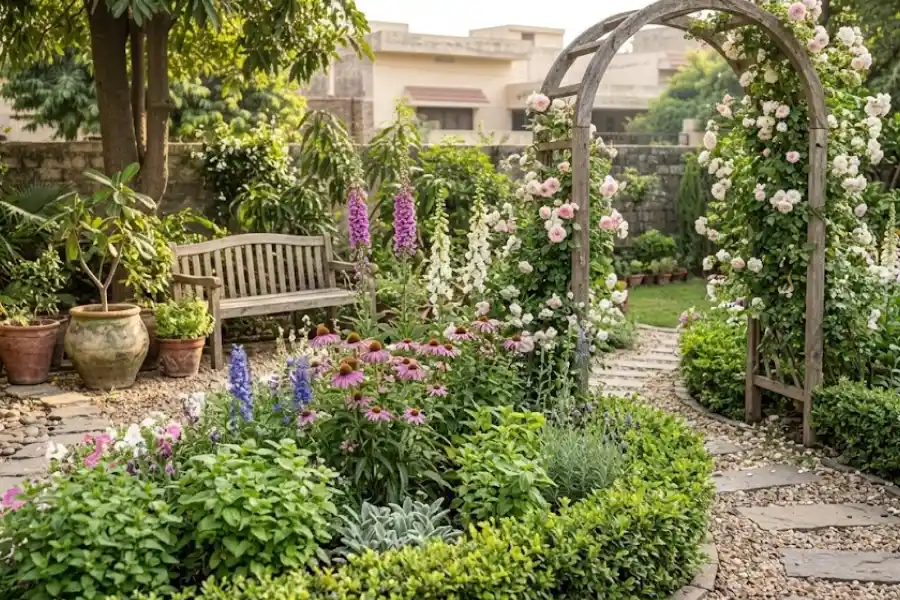
Picture a garden where roses spill over a low fence, bees drift between tall spikes of purple flowers, and a narrow gravel path curves out of sight behind a hedge. That picture is what most people mean when they say “English garden.” It looks a little wild, but every part of it was planned. That mix of order and freedom is the whole secret, and it’s a lot easier to copy than you might think.
This article walks you through what English garden design means, how to plan one step by step, which plants to use, how to do it on a small budget, and how to keep it looking good all year. No fancy gardening degree needed.
What Is English Garden Design?
English garden design is a style that blends a clear plan with looseness. You get clear lines, like a path, a fence, or a trimmed hedge, but the plants inside those lines are allowed to grow full, tumble over edges, and mix together in soft drifts of color. Garden writers sometimes call this “tidy wildness,” which is a fancy way of saying: build a frame, then let nature fill it in.
The style grew out of two very different roots. Wealthy estate gardens in the 1700s and 1800s moved away from stiff, geometric designs and toward flowing lawns, curved lakes, and clusters of trees. At the same time, ordinary cottage gardeners were planting herbs, vegetables, and flowers together in small yards simply because they needed food and beauty in the same small space. Both traditions still shape English garden design today.
Cottage Garden or Country Garden: Which One Fits You?
Before you plant anything, pick a direction. Most English-style gardens fall into one of two camps.
The English Cottage Garden
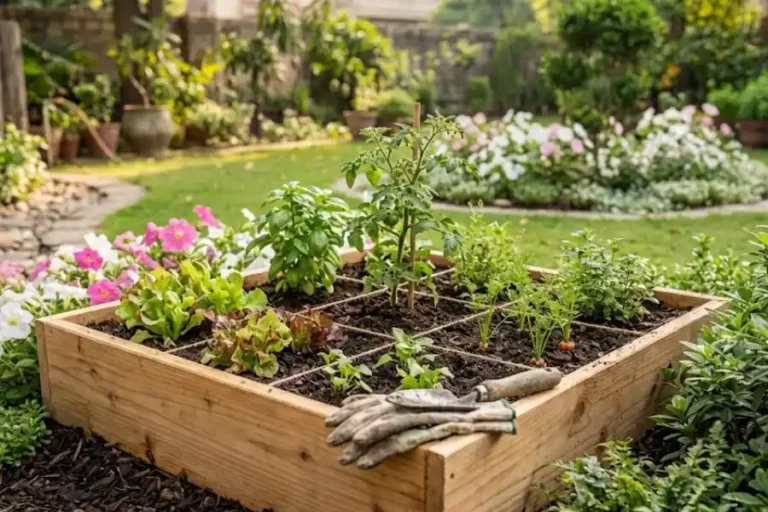
This is the busier, more colorful option. Flower beds overflow with roses, foxgloves, delphiniums, and hollyhocks planted close together. A picket fence or low stone wall keeps the chaos looking intentional instead of messy. This style works great in small city or suburban yards because it doesn’t need much open space.
The English Country Garden
This version feels grander and calmer. Think trimmed hedges, a neat lawn, a pond or fountain, and long flower borders along the edges of the space. It takes more room and more upkeep, but it gives a more polished, elegant look.
You don’t have to choose just one. Many modern English gardens in the US blend both: a tidy hedge or fence to hold the shape, with a cottage-style burst of flowers inside it.
5 Design Principles Behind Every Great English Garden
- Layered planting. Tall trees or shrubs sit in the back, mid-size perennials in the middle, and low ground cover in front. This layering gives the garden depth, the way a forest edge naturally looks.
- Drifts, not rows. Instead of planting one flower per spot in a straight line, English garden design groups the same plant in clusters of three, five, or more. This creates soft waves of color instead of a polka-dot pattern.
- A strong focal point. Every English garden has one thing that pulls the eye first: a bench, a birdbath, a small statue, or an arch covered in climbing roses.
- Curved, walkable paths. Straight lines feel formal and French. English gardens use gentle curves and hidden corners so the space feels bigger than it is and invites you to explore.
- Something blooming in every season. Spring bulbs, summer roses, and fall seed heads keep the garden alive from March through November instead of peaking for two weeks and going quiet.
How to Design an English Garden: Step by Step
Most articles on this topic show you pretty photos and stop there. Here’s the part they skip: an actual process you can follow, starting today.
- Study your space first. Spend a few days watching where the sun hits your yard in the morning, afternoon, and evening. Check your soil too: dig a small hole, and if water still sits there after an hour, you have drainage issues to plan around.
- Sketch a rough layout. You don’t need software. Graph paper works fine. Mark where the sun falls, where your path will curve, and where your one big focal point will sit.
- Build the “bones” before the flowers. Install your path, edging, fence, or arch first. This hardscape is what holds the design together once plants grow in and get messy.
- Plant your layers from the back forward. Start with any trees or tall shrubs, then mid-height perennials, then low border plants. Planting in this order stops you from accidentally hiding your shorter plants behind taller ones.
- Group plants in odd numbers. Three, five, or seven of the same plant look far more natural than one or two scattered around.
- Fill early gaps with fast growers. Perennials can take two to three years to fill in fully. Tuck in cheap annuals like cosmos or sweet alyssum during year one so the bed doesn’t look bare while you wait.
Quick tip: Resist the urge to fill every inch in year one. English gardens are meant to fill in and mature slowly. A garden that looks a little sparse at first often looks the most natural by year three.
The Best Plants for English Garden Design (By Layer)
Since most articles skip US growing conditions entirely, here’s a plant list organized the way English garden design works, layer by layer. Check your USDA hardiness zone before buying, since English classics like delphiniums and foxglove struggle in the hottest zones (9 to 11) without some afternoon shade.
Backbone Layer (Trees and Shrubs)
- Boxwood, for low hedges and edging
- Climbing roses, for arches and fences
- Hydrangea, for large bursts of color against a hedge
- Yew or holly, for taller, year-round greenery
Middle Layer (Perennials)
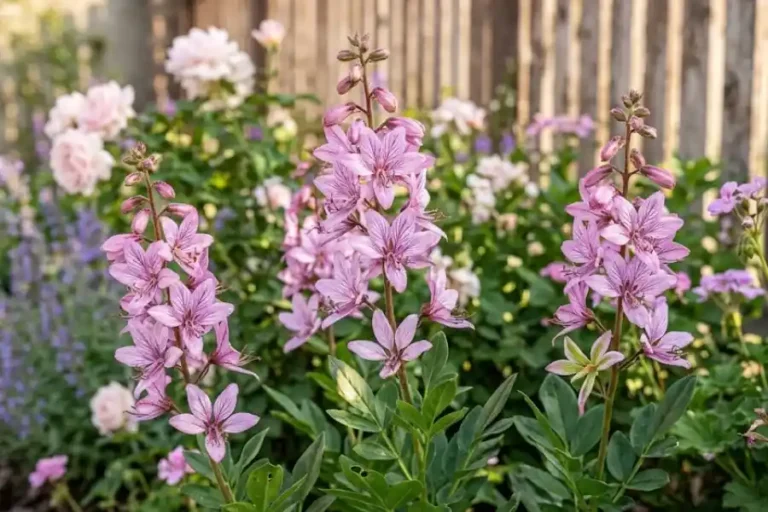
- Foxglove
- Delphinium
- Peony
- Lupine
- English lavender
- Catmint (nepeta), a low-maintenance stand-in for lavender in hotter climates
Front Layer (Ground Cover and Edging)
- Lady’s mantle
- Sweet alyssum
- Hardy geranium
- Creeping thyme, especially good along path edges
Budget-Friendly English Garden Ideas for Small Yards
You don’t need a country estate. Most of these budget tricks work in a yard as small as a city rowhouse patch.
- Swap an expensive iron fence for a simple painted picket fence, or grow a low hedge instead.
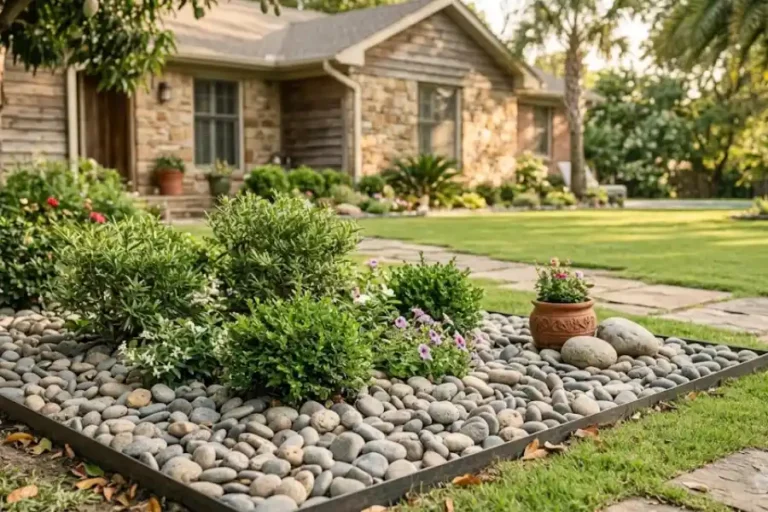
- Use gravel instead of pavers for your path. It’s a fraction of the cost and still gives that classic crunch underfoot.
- Ask neighbors for plant divisions. Perennials like hardy geranium and lady’s mantle multiply fast, and most gardeners are happy to share extras for free.
- Buy perennials small. A tiny one-gallon peony costs far less than a mature one, and it will catch up within two seasons.
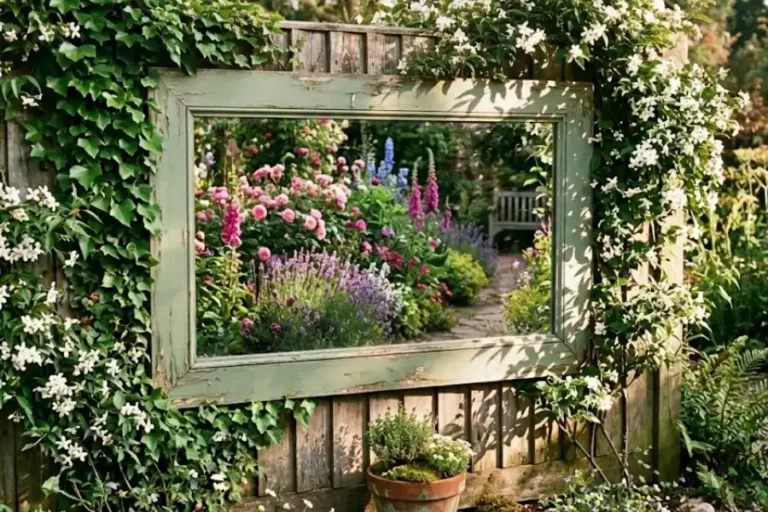
- Use a thrifted mirror, an old ladder, or a repurposed washtub as your focal point instead of a store-bought statue.
5 Mistakes Beginners Make in English Garden Design
- Planting everything in straight rows. This instantly makes a bed look like a vegetable patch instead of an English border. Group in clusters instead.
- Skipping the bones. Without a path, fence, or hedge to frame it, a mix of wildflowers just looks unkempt rather than intentionally informal.
- Choosing plants for looks alone. A stunning photo from a UK garden won’t survive a Texas summer. Always check your zone before falling in love with a plant.
- Overcrowding on day one. Plants that look perfectly spaced at the nursery will crowd each other out within two years. Leave room for growth.
- Forgetting year-round interest. A garden that only blooms in June looks empty the other eleven months. Mix in spring bulbs and plants with nice seed heads for fall and winter texture.
A Simple Season-by-Season Care Plan
- Spring: Plant bulbs left over from fall, divide overcrowded perennials, and add a layer of compost to your beds.
- Summer: Deadhead spent roses and perennials to keep new blooms coming, and water deeply once or twice a week rather than a little every day.
- Fall: Plant spring bulbs like daffodils and tulips, and leave some seed heads standing for birds and winter interest.
- Winter: Prune dormant roses and shrubs, and use this quiet season to plan next year’s layout on paper.
Frequently Asked Questions
What is the difference between an English garden and a cottage garden?
A cottage garden is one branch of English garden design. It’s the busier, more colorful, informal version. “English garden” is the wider term that also includes the grander, more formal country estate style with clipped hedges and open lawns.
Is an English garden hard to maintain?
It takes more regular care than a plain lawn, mainly deadheading and yearly pruning, but it’s not difficult once you build a simple seasonal routine. Choosing hardy perennials suited to your climate cuts the workload dramatically.
What flowers are most commonly used in English garden design?
Roses, foxglove, delphinium, lavender, peony, and hardy geranium are the classic choices. Most US gardeners mix in tougher, similar-looking substitutes, like catmint instead of lavender, in hotter zones.
Can I create an English garden in a small yard?
Yes. The cottage garden style was originally designed for small plots, so it adapts naturally to compact yards, patios, and even large containers near a doorway.
How long does it take for an English garden to look established?
Most perennial-based gardens take two to three years to fill in fully. Using fast-growing annuals in the first year helps the space look full while the perennials mature.
Final Thoughts
English garden design isn’t about copying a palace garden. It’s about a simple idea: build a clear frame, then let the plants inside it grow a little wild. Start with your path and your one focal point, plant in layers and clusters, choose flowers that suit your climate, and give it a couple of years to fill in. That’s the whole formula behind every beautiful English garden you’ve ever admired in a photo.