Garden Heliotrope Plant: Planting, Care, and Winter Tips
Walk past a blooming garden heliotrope plant on a warm day, and you will stop. The scent hits you first. It smells like cherry, vanilla, and almond all at once. No wonder people call it the cherry pie plant.
The good news is that this flower is easy to grow once you know a few simple rules. The bad news is that many gardeners lose it in their first winter. A few easy steps can prevent that. Below, you will find planting steps, daily care tips, and ways to keep it alive for years. You will also find what to do about pets, pests, and a common name mix-up.
Garden Heliotrope Plant Quick Facts
- Botanical name: Heliotropium arborescens
- Other names: cherry pie plant, common heliotrope, Peruvian heliotrope
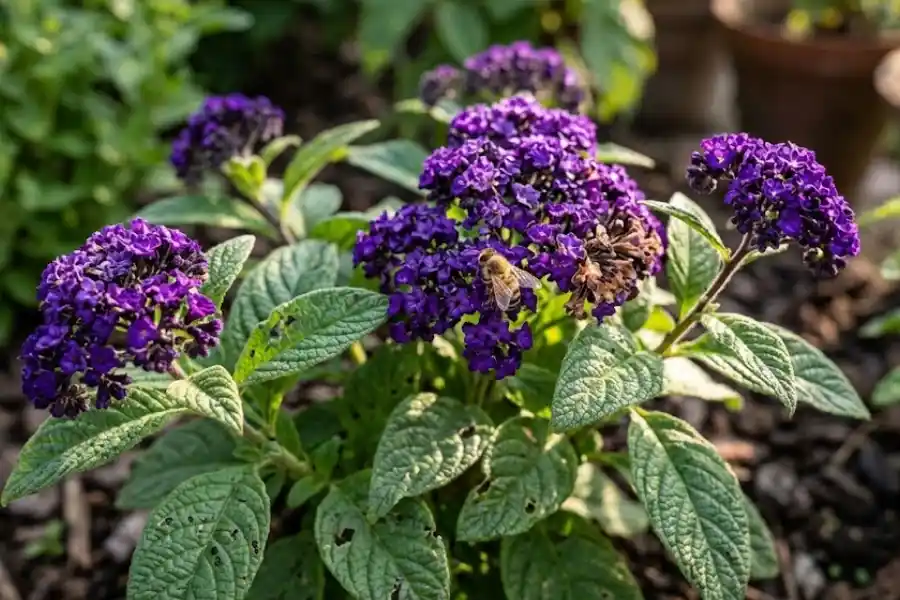
- Flowers: small clusters in dark purple, violet, blue, or white
- Scent: sweet, like vanilla, cherry, and almond
- Size: about 1 to 3 feet tall, depending on the variety and climate
- Light: full sun, with a little afternoon shade in hot areas
- Hardiness: a perennial in zones 10 and 11, and grown as an annual in colder areas
- Bloom time: late spring until frost
- Toxic? Yes, to people and pets if eaten
What Is a Garden Heliotrope Plant?
A garden heliotrope plant is a bushy, soft-stemmed shrub that comes from Peru. It belongs to the borage family. The leaves are dark green, wrinkled, and a little hairy. The flowers grow in tight clusters at the tips of the stems. From a distance, they look a bit like small hydrangea heads.
Most people grow it in flower beds, pots, and hanging baskets. It is a favorite for patios and porches because the scent is strongest on warm days. Bees and butterflies love the flowers too.
The name comes from two Greek words. Helios means sun, and tropos means turn. Old garden stories say the blooms follow the sun across the sky.
The Name Mix-Up: Two Very Different Plants
Search for “garden heliotrope” and the results can get messy. Some people use that name for Valeriana officinalis, which most of us know as valerian. Valerian is a tall, hardy perennial with pale pink or white flowers. Its roots are used in herbal sleep products.
The two plants are not related. They only share a common name. This article is about the purple, sweet-smelling one, Heliotropium arborescens. When you shop, always check the Latin name on the plant tag.
Why Gardeners Love the Garden Heliotrope Plant
- The scent. Few flowers smell this good, which is why it is a popular pick among sensory garden plants. Plant it near a seat, a door, or an open window.
- A long bloom time. You get flowers from late spring until the first frost.
- Rich color. Dark purple and blue blooms make bright flowers look even brighter.
- Great for pots. It fits in containers, window boxes, and hanging baskets.
- Few outdoor pests. Healthy plants outside rarely have serious bug or disease problems.
- Good for wildlife. Bees, butterflies, and hummingbirds visit the flowers, so it pairs well with other hummingbird garden plants.
Is the Garden Heliotrope Plant an Annual or a Perennial?
It depends on where you live. A garden heliotrope plant is a tender perennial. That means it lives for many years in warm places, but a hard freeze kills it.
- Zones 10 and 11: It can stay outside all year.
- Zone 9: It may survive with a thick layer of mulch and some shelter.
- Zone 8 and colder: Grow it as an annual, or bring it indoors for winter.
Not sure of your zone? Look up your zip code on the USDA Plant Hardiness Zone Map.
How to Plant a Garden Heliotrope Plant
When to Plant
Wait until after your last spring frost. Nights should stay warm too. If you buy a plant from a greenhouse, harden it off first. Set it outside for a few hours each day for about a week. Add a little more time each day.
Where to Plant
Full sun gives you the most flowers. In very hot summers, a bit of afternoon shade keeps the leaves from burning. The soil should be rich and drain well. A pH between 6.6 and 7.3 works best. If you have heavy clay, mix in compost or use a raised bed or a large pot. Space plants 12 to 18 inches apart.
Step-by-Step Planting
- Dig a hole as wide as the pot and the same depth.
- If the roots are packed in a tight ball, gently loosen the edges.
- Set the plant at the same soil level it had in the pot. Do not bury the stem.
- Fill the hole with soil and press it down lightly.
- Water the soil well right away.
- Add a thin layer of mulch, and keep it away from the stem.
Can You Grow It From Seed?
Yes, but it takes patience. Sow seeds indoors 10 to 12 weeks before your last frost. Seeds can take three to four weeks to sprout. Also, hybrid plants do not grow true from seed. If you want the exact color and scent you loved, take cuttings instead. Or just buy a young plant at a garden center.
Garden Heliotrope Plant Care Made Simple
Water
Keep the soil moist, but never soggy. Water when the top inch feels dry. Pots dry out fast, so check them every day in summer. One simple tip saves many plants. A wilting heliotrope may be thirsty, or it may have wet roots. Always touch the soil before you water.
Feeding
Rich soil needs little extra food. In pots, a light feeding every few weeks during the growing season is enough. Too much fertilizer can give you lots of leaves and fewer flowers.
Pinching and Deadheading
Pinch off the top inch of new growth when the plant is young. This makes it bushier. Then snip off faded flower clusters. The plant will put its energy into new blooms instead of seeds.
How to Pick a Healthy Plant at the Store
- Smell the flowers first. Some newer varieties are bred for color and size, and their scent can be weak.
- Look for dark green leaves with no yellow spots.
- Flip a few leaves over. Skip any plant with tiny white bugs underneath.
- Pick a plant with many buds, and a few open flowers.
How to Keep a Garden Heliotrope Plant Over Winter
Most articles skip this part, and it is why many gardeners lose their plants. Do this in late summer or early fall, before the first frost.
Option 1: Take Cuttings (Best for Most People)
- Cut a 4-inch piece of soft new growth from a healthy stem.
- Remove the lower leaves and any flowers or buds.
- Push the stem into a pot of moist, well-drained mix. Perlite mixed with potting soil works well.
- Slip a loose plastic bag over the pot. Leave the top open so air can move.
- Place it in bright light, but out of hot, direct sun.
- In a few weeks, new roots will form. Then move each cutting to its own pot.
Grow the new plants in a sunny window or under a grow light. Plant them outside again after the last frost.
Option 2: Bring the Whole Plant Indoors
Move the pot inside before frost. Put it in a bright window, and keep the soil lightly moist. Keep the room above about 45 degrees Fahrenheit. Do not panic if the plant drops many leaves. It will grow new leaves that suit its indoor home.
Check often for whiteflies, spider mites, aphids, and mealybugs. Indoor plants get these pests more than outdoor ones.
Option 3: Mulch in Mild Areas
In zones 9 and 10, add a thick layer of mulch in the fall. This protects the roots from short cold spells.
Best Garden Heliotrope Varieties to Try
- ‘Marine’: A classic. It has big clusters of rich violet-blue flowers on plants about 15 to 18 inches tall.
- ‘Fragrant Delight’: Dark purple blooms with a vanilla and cherry scent.
- ‘Fragrant Blue’: Dark blue flowers and a strong scent.
- ‘Alba’: White flowers with a rich vanilla smell. It looks lovely in a moonlight garden or at dusk.
Common Garden Heliotrope Plant Problems and Easy Fixes
- Few flowers: The plant may need more sun, or it may be getting too much fertilizer. Move it to a sunnier spot and deadhead often.
- Wilting with wet soil: This often means root rot from too much water. Let the soil dry out and improve drainage.
- Tiny white flying bugs: These are whiteflies. Spray the leaves with a hose, or use insecticidal soap.
- Fine webs and speckled leaves: This points to spider mites. Rinse the plant and raise the humidity.
- Long, leggy stems: Pinch the tips and give the plant more light.
- Black or brown leaves after a cold night: This is frost damage. Cover plants or bring them in when frost is coming.
Is the Garden Heliotrope Plant Poisonous?
Yes. Every part of the plant has natural chemicals called pyrrolizidine alkaloids. These can harm the liver if someone eats the plant. Experts say you would need to eat a lot to get very sick, but the risk is not worth it.
Plant it out of reach of small children and pets that chew on plants. If someone eats it, call Poison Help in the US at 1-800-222-1222. For pets, call your vet or the ASPCA Animal Poison Control Center at 888-426-4435. A fee may apply. Wash your hands after you prune or handle the plant.
What to Plant With a Garden Heliotrope Plant
Good partners have similar needs: sun, regular water, and well-drained soil. Try these flowers beside it:
- Black-eyed Susan, for a bright yellow contrast
- Ageratum, for a soft blue-purple mix
- Geranium, for easy color all summer
- Sweet alyssum, to fill the gaps at the front
- Lantana and zinnia, which also draw butterflies
For design ideas, line a sunny border with it, tuck it into a window box, or build a container garden around it near your patio chairs.
Frequently Asked Questions
Does a garden heliotrope plant come back every year?
In zones 10 and 11, yes. In colder areas, it usually dies in winter. You can save it with cuttings or by bringing the pot indoors.
Can I grow a garden heliotrope plant indoors?
Yes. Give it a bright, sunny window or a grow light. Keep the soil lightly moist and watch for pests.
How much sun does a garden heliotrope plant need?
Full sun is best. In very hot areas, give it a bit of shade in the afternoon.
Is garden heliotrope deer resistant?
Many gardeners say deer leave it alone. No plant is fully deer-proof, though. A hungry deer may still take a bite.
Is garden heliotrope the same as valerian?
No. They share a common name, but they are different plants. The cherry pie plant is Heliotropium arborescens. Valerian is Valeriana officinalis.
Why does my garden heliotrope plant have no scent?
Some modern varieties have a weaker scent. Heat and the time of day matter too. The scent is usually strongest on warm days. Next time, smell the plant before you buy it.
Final Thoughts
A garden heliotrope plant gives you rich color, a sweet scent, and a steady stream of bees and butterflies. It asks for sun, good drainage, and a plan for winter. That is all.
If you try only one thing from this article, take a few cuttings before the first frost. It costs nothing, and it keeps the plant you love for another year.