20 Best Hummingbird Garden Plants That Bloom All Season
You hear a tiny hum. You turn your head. And there it is: a hummingbird, hovering like a tiny helicopter, sipping from a flower in your yard. If you want to see that moment happen again and again, the secret is not a fancy feeder. It is the right hummingbird garden plants, planted the right way.
This article covers the best hummingbird garden plants for almost every yard in the U.S., from small balconies to full backyard borders. You will also learn which popular “hummingbird plants” can cause real problems, how to lay out your garden so birds keep coming back, and the small mistakes that quietly chase hummingbirds away.
What Makes a Flower a Hummingbird Magnet?
Hummingbirds are not picky about beauty. They are picky about food. Before you buy a single plant, it helps to know what these birds are really looking for.
- Tubular shape. Long, trumpet-like blooms hold nectar tucked far inside, right where a hummingbird’s long beak and tongue can reach it easily.
- Bright color. Red and orange catch their eye first, but hummingbirds will happily visit pink, purple, and even white flowers if the nectar reward is good.
- High nectar output. A flower that refills with nectar often is worth more to a hummingbird than one with a big, showy bloom and little sugar inside.
- Long bloom time. Hummingbirds need food from early spring through fall. A plant that blooms for eight weeks is more useful than one that blooms for two.
Keep these four traits in mind as you read through the list below. They explain why some hummingbird garden plants show up on every expert’s list, year after year.
Perennial Hummingbird Garden Plants That Return Every Year
Perennials are the backbone of a strong hummingbird garden. Plant them once, and they come back bigger and better each season.
Bee Balm (Monarda)
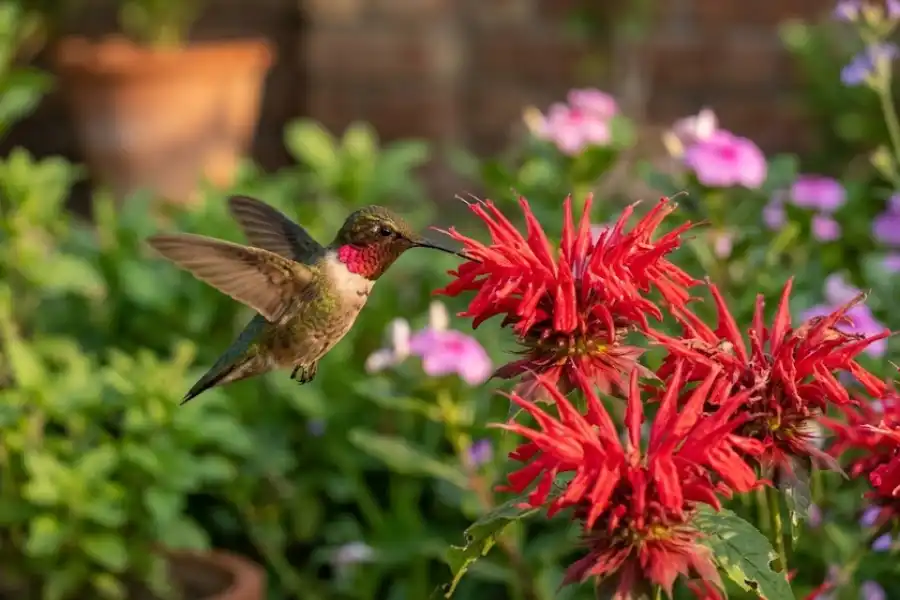
Bee balm produces shaggy, firework-shaped blooms in red, pink, or purple. It grows well in zones 4 through 9, prefers full sun to light shade, and does best in soil that stays a little moist. It is part of the mint family, so give it room to spread, or plant it in a spot where a little wandering is fine.
Cardinal Flower (Lobelia cardinalis)
This tall, spiky native plant produces brilliant red blooms in mid to late summer, right when many other flowers start to fade. It grows in zones 3 through 9 and loves consistently moist soil, which makes it a great choice near a pond, rain garden, or low spot in the yard.
Salvia
Few plants work harder for a hummingbird garden than salvia. Many varieties bloom almost nonstop from late spring until the first frost, and they come in red, purple, blue, and white. Salvia handles heat and dry spells well, and it prefers full sun with well-draining soil.
Agastache (Hummingbird Mint)
True to its nickname, agastache is one of the most reliable hummingbird garden plants you can grow. It is drought-tolerant once established, blooms for months, and its licorice-scented leaves are rarely bothered by deer or rabbits. Most types grow well in zones 5 through 9.
Penstemon (Beardtongue)
Penstemon offers tall spikes of tubular flowers in shades of red, pink, and purple. It is a favorite of native plant gardeners because so many penstemon species are native to specific U.S. regions. Give it full sun and soil that drains well, since soggy roots are its biggest enemy.
Columbine (Aquilegia)
Columbine blooms earlier than most hummingbird plants, which makes it valuable for feeding the first hummingbirds returning in spring. Its nodding red and yellow flowers do well in part shade, and it grows in zones 3 through 9.
Annual Flowers That Bloom Nonstop All Summer
Annuals will not survive winter, but they make up for it with fast growth and months of continuous color, which is just what a hummingbird garden needs during peak summer.
Zinnia
Zinnias are one of the easiest flowers to grow from seed, and hummingbirds sip from the small central florets while butterflies and bees visit too. They bloom in nearly every color, need full sun, and keep producing new flowers all summer if you snip off the spent ones.
Petunia
Trailing petunias work beautifully in hanging baskets and window boxes, making them one of the best hummingbird garden plants for patios, porches, and balconies. They bloom continuously in full sun and need only occasional deadheading to keep the flowers coming.
Cuphea (Firecracker Plant)
Small, tubular, orange-red blooms cover this heat-loving plant from early summer through fall. Cuphea handles hot, humid weather better than almost any other annual on this list, which makes it a strong pick for southern gardens.
Fuchsia
Fuchsia produces elegant, dangling flowers in pink, red, and purple that seem custom-built for hovering hummingbirds. It prefers part shade and cooler temperatures, so it is often grown in hanging baskets that can be moved out of the hottest afternoon sun.
Impatiens
If your yard is more shade than sun, impatiens is one of the few reliable hummingbird garden plants that will still bloom well. It flowers continuously from late spring until frost and needs consistent moisture to keep performing.
Vines and Climbers Hummingbirds Can’t Resist
A blooming vine on a fence, arched garden trellis, or arbor adds vertical nectar and turns a flat yard into a layered hummingbird habitat.
Coral Honeysuckle (Lonicera sempervirens)
This native vine produces clusters of red-orange tubular flowers and is a top pick among hummingbird garden plants for good reason: it is well-behaved, unlike some other honeysuckle species, and it blooms for months without becoming invasive. It grows in zones 4 through 9.
Trumpet Vine (Campsis radicans)
Trumpet vine produces large, showy, orange-red flowers that hummingbirds love, and it grows fast in zones 4 through 9. That fast growth is also the catch: it spreads aggressively by both seed and root suckers. Plant it only where you can give it strong support and firm boundaries, such as a solid fence line far from other garden beds.
Cypress Vine (Cardinal Climber)
This delicate annual vine has feathery, fern-like leaves and small star-shaped red flowers. It grows quickly from seed, climbs a trellis or mailbox post with ease, and gives your garden a lighter, lacier look than heavier vines like trumpet vine.
Scarlet Runner Bean
Part food crop, part hummingbird magnet, scarlet runner bean produces bright red flowers on a fast-growing annual vine. It is an easy, kid-friendly plant to grow on a trellis, and the beans themselves are edible once mature.
Shrubs and Small Trees for Long-Term Nectar
Shrubs and small trees add height and shape to a hummingbird garden and often provide the earliest and latest blooms of the season.
Abelia
Glossy abelia is an underrated hummingbird garden plant. It produces small, tubular, pink-white flowers over a very long season, often from late spring into fall, and it thrives in zones 6 through 9 with minimal care.
Weigela
Weigela is a hardy, low-maintenance shrub that produces trumpet-shaped pink or red flowers in late spring. It grows well in zones 4 through 8 and tolerates a wide range of soil types, which makes it a forgiving choice for newer gardeners.
Rose of Sharon
This hibiscus relative blooms in late summer, a time when many other shrubs have finished flowering, which makes it valuable for feeding hummingbirds preparing for fall migration. It grows in zones 5 through 9 and tolerates heat, humidity, and average soil.
Butterfly Bush (Buddleia)
Butterfly bush blooms almost all summer and draws in hummingbirds along with butterflies and bees. However, in several states it is classified as invasive because it can spread into wild areas from dropped seed. If you want to grow it, choose a sterile, non-seeding cultivar and check your state’s guidance before planting.
Red Buckeye (Aesculus pavia)
Red buckeye is a small native tree that produces upright clusters of red, tubular flowers in early spring, making it one of the earliest nectar sources of the year. It grows in zones 4 through 8. One important safety note: its seeds and other plant parts are considered toxic if eaten by humans or pets, so plant it somewhere small children and curious dogs are not likely to snack.
Should You Choose Native Plants, or Will Any Flower Do?
Native hummingbird garden plants have a real advantage. They are already adapted to your local rainfall, soil, and temperature swings, so they tend to need less water and less fuss once established. They also support the small insects that hummingbirds rely on for protein, especially while raising chicks.
That said, non-native flowers like zinnias, petunias, and salvia are not harmful, and hummingbirds will happily feed from them. Most experienced gardeners use a mix: natives for a strong, low-maintenance backbone, and colorful non-natives to fill gaps and extend the bloom season. You do not have to choose only one side to build a garden hummingbirds love.
Hummingbird Plants to Grow With Caution (or Skip Entirely)
Most “best hummingbird plants” lists stop at what to grow. Just as important is knowing what to avoid, especially since a few popular choices can cause real problems once they take hold.
- Japanese Honeysuckle (Lonicera japonica). Unlike its well-mannered native cousin, coral honeysuckle, this species is classified as invasive across much of the eastern and central U.S. Choose coral honeysuckle instead for the same nectar benefit without the spread.
- Non-sterile Butterfly Bush. In parts of the Pacific Northwest and mid-Atlantic, older butterfly bush varieties have escaped gardens and crowded out native plants. Look for labels that say “sterile” or “seedless” if you want to grow it.
- Trumpet Vine in small yards. It is not invasive in the legal sense, but its aggressive root suckers can quickly take over a small garden bed. Save it for a large, well-contained space.
How to Design a Hummingbird Garden That Really Works
Buying the right hummingbird garden plants is only half the job. How you arrange them matters just as much.
- Plant in clusters, not single stems. A group of five salvia plants is far more visible and worth defending than one lonely plant scattered among other flowers.
- Layer your bloom times. Combine early bloomers like columbine and red buckeye, summer bloomers like bee balm and zinnia, and late bloomers like rose of sharon, so nectar is available from spring through fall.
- Add a water feature. Hummingbirds love bathing in a light mist or shallow, moving water. A small outdoor garden water fountain or mister near your flowers will keep them lingering longer.
- Skip the pesticides. Hummingbirds eat small insects and spiders for protein, especially in nesting season. Spraying your garden removes their food supply along with the pests.
- If you use a feeder, keep it simple. Mix four parts water to one part plain white sugar, with no red dye. Clean it every few days, especially in hot weather.
A good rule of thumb: if your hummingbird garden plants alone could feed a hummingbird from March through October in your climate, a feeder becomes a bonus, not a lifeline.
Common Mistakes That Keep Hummingbirds Away
- Planting only one type of flower. A single species blooms for a few weeks and then leaves your garden empty. Variety keeps the nectar flowing all season.
- Spacing plants too far apart. Hummingbirds prefer dense feeding zones where they can dart between blooms without wasting energy flying long distances.
- Forgetting shelter. A nearby tree or shrub gives hummingbirds a safe perch to rest, watch for danger, and build a nest.
- Using red dye in feeders. It is not necessary, and some studies suggest it may not be good for hummingbird health. Red on the feeder itself is enough to catch their eye.
- Letting cats roam freely. Outdoor cats are one of the biggest threats to hummingbirds visiting a yard. Keeping cats indoors, especially during nesting season, protects your visitors.
Frequently Asked Questions
Do hummingbirds only like red flowers?
No. Red and orange often catch their attention first, but hummingbirds will feed from pink, purple, and even white flowers if the nectar reward is strong enough. Shape and nectar content matter more than color alone.
How many hummingbird garden plants do I really need?
There is no strict number, but a good starting goal is at least three to five different species blooming across spring, summer, and fall, planted in small clusters rather than spread thinly across the yard.
Do I still need a feeder if I plant flowers?
Not necessarily. A well-planned hummingbird garden with plants blooming from spring through fall can provide enough nectar on its own. A feeder is a helpful backup, especially during early spring or late fall when fewer flowers are blooming.
Can I grow hummingbird garden plants in pots on a balcony?
Yes. Petunias, fuchsia, cuphea, and many salvia varieties all do well in containers and hanging baskets, which makes a small balcony garden possible even without a yard.
What is the best time to plant a hummingbird garden?
Early spring, right after the last frost date in your area, gives perennials and shrubs a full season to establish strong roots before winter. Annuals can be planted anytime through early summer for continued color.
Final Thoughts
You do not need a huge yard or a lot of experience to build a garden that hummingbirds visit all season long. Start with two or three reliable hummingbird garden plants from this list, group them together in a sunny spot, and build out from there. Within a season or two, you will likely have your own front-row seat to one of the most delightful sights in nature: a tiny bird, hovering just for you.