Full Sun Plants Outdoor: 25 Tough Picks for Hot Spots
Got a spot in your yard that bakes all day? Most plants give up there. The right ones will bloom like crazy.
This post covers the best full sun plants outdoor gardeners can grow, from flowers to shrubs to herbs. Along the way, we will look at what “full sun” means and how to test your yard. We will also cover how to keep new plants alive through their first hot summer. Every pick here is easy to find and easy to grow.
Quick answer: Full sun plants need at least 6 hours of direct sun each day. Great starter picks are coneflower, black-eyed Susan, salvia, lavender, sedum, zinnia, marigold, and lantana. Give them a long, slow soak in year one, add mulch, and they will handle the heat.
What Does “Full Sun” Mean?
Full sun means at least six hours of direct sunlight a day. Garden Design and The Home Depot both use this rule. Some plants do even better with eight hours.
“Direct” matters. The light must hit the leaves. Light that slips through tree branches does not count as much.
Not all sun is equal, either. Afternoon sun is harsher than morning sun. A west-facing wall or fence often makes the hottest spot in the yard.
How to Sun Map Your Yard in One Day
Do not guess how much sun a spot gets. Track it. Gardeners call this sun mapping, and it takes only a few minutes.
- Pick a clear day and choose the spot you want to plant.
- At 9 a.m., check if the sun hits it. Take a quick photo.
- Check again at noon, at 3 p.m., and at 6 p.m.
- Count the hours of direct sun. Six or more means full sun.
- Repeat in another season. The sun moves, and trees change how much light gets through.
[Author note: Add one short story from your own garden here, plus a photo of your sunniest spot.]
Full Sun Feels Different in Different Places
Six hours of sun in Maine is not the same as six hours in Texas or Arizona. Plant tags are written for an average climate. In very hot places, many sun lovers like a break from the strong late-day rays.
If your summers pass 95°F, pick extra tough plants. Give new ones a little afternoon shade until they settle in.
How to Choose the Right Full Sun Plants
A pretty plant is not always the right plant. Check these four things before you buy.
- Your hardiness zone: Find yours on the USDA Plant Hardiness Zone Map. A perennial that cannot survive your winter is wasted money.
- Your soil: Many sun lovers need soil that drains well. Lavender and sedum hate wet roots. If you have heavy clay, mix in compost or plant in a raised bed.
- Your goal: Do you want color all summer? Food for bees? Low water use? Cut flowers? Pick with a goal in mind.
- Your space: Read the tag for the full height and width. Small plants grow up fast.
The zones below are close estimates. Always check the tag on the plant you buy.
Best Full Sun Perennials (They Come Back Every Year)
Perennials cost more at first. But you plant them once and enjoy them for years.
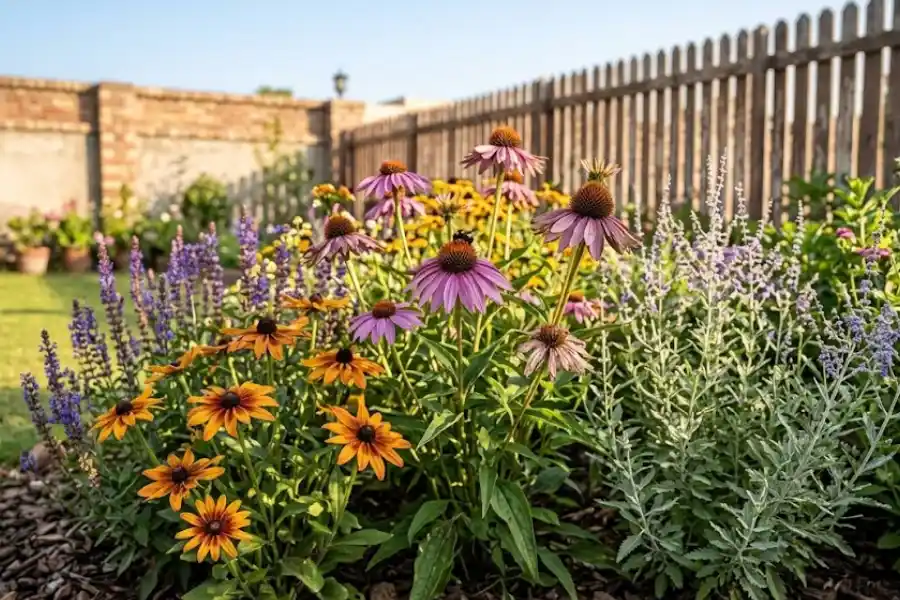
- Coneflower (Echinacea): Big daisy-like blooms from summer to fall. Bees and butterflies love them. Birds eat the seeds in winter. Zones 3 to 9.
- Black-eyed Susan (Rudbeckia): Golden petals with dark centers. It handles poor soil and hot summers. It blooms from midsummer to frost. Zones 3 to 9.
- Salvia: Purple flower spikes that bees visit. It is a favorite among hummingbird garden plants, too. Cut it back after the first flush of flowers. It often blooms again. Many types grow in zones 4 to 9.
- Yarrow (Achillea): Flat flower heads in yellow, pink, red, or white. It shrugs off drought once it has roots. It can spread, so give it room. Zones 3 to 9.
- Coreopsis (tickseed): Cheerful yellow flowers for weeks. Snip off dead blooms to keep new ones coming. Zones 4 to 9.
- Daylily: Very hard to kill. Each flower lasts one day, but each plant makes many buds. Zones 3 to 9.
- Lavender: Sweet scent and purple spikes. It needs sharp drainage. Soggy soil is its enemy. English types grow in zones 5 to 9.
- Russian sage: Silver leaves and a haze of blue flowers. It grows three to five feet tall and loves hot, dry spots. Zones 4 to 9.
- Sedum (stonecrop): Thick leaves store water. The flowers turn pink in fall and feed late bees. Zones 3 to 9.
- Catmint (Nepeta): Soft gray leaves and blue-purple flowers. Deer usually leave it alone. Cut it back after the first bloom for a second show. Zones 3 to 8.
Best Full Sun Annuals (Big Color for One Season)
Annuals live for one growing season. They bloom hard and fast. They are perfect for filling gaps in a new bed.
- Zinnia: Easy to grow from seed. Sow after the last frost. They make great cut flowers. In humid areas, space them out so air can move.
- Marigold: Cheap, bright, and fast. They bloom until frost.
- Petunia: Big color for pots and baskets. They need steady water and regular food.
- Verbena: Clusters of small flowers that butterflies love. It handles heat and dry spells well.
- Lantana: A true heat champion. It is a perennial in warm zones (about 8 to 11) and an annual in colder ones. The berries are toxic if eaten. In some warm states it can spread, so ask a local nursery about seedless types.
- Portulaca (moss rose): Thick, juicy leaves store water. It loves scorching, dry spots. The flowers open in bright sun and close on cloudy days.
- Sunflower: Grows fast and needs six to eight hours of sun. Birds love the seeds. Choose dwarf types for pots.
- Cosmos: Airy, light flowers that thrive in poor soil. Too much fertilizer gives you leaves instead of blooms.
Best Full Sun Shrubs and Small Trees
Shrubs give a garden its bones. Once they settle in, they need far less care than flowers.
- Knock Out roses: Easy care and bloom from spring to frost. They resist disease better than many roses. Most grow in zones 5 to 9.
- Spirea: A small, tough shrub with summer flower clusters. Many types grow in zones 3 to 8.
- Panicle hydrangea: Big cone-shaped blooms. It flowers well in sun in cooler areas. In hot climates, give it afternoon shade and extra water. Zones 3 to 8.
- Hardy hibiscus: Dinner-plate flowers in summer. It wakes up late in spring, so do not panic. It dies back in winter. Zones 4 to 9. Tropical hibiscus needs a warm climate (zones 9 to 11) and cannot take frost.
- Crape myrtle: Summer color through the worst heat. It grows as a large shrub or small tree. Zones 6 to 9 for most types. Prune it lightly.
Best Full Sun Grass and Ground Cover
- Dwarf fountain grass: Soft, feathery plumes that glow in late sun. Choose the hardy dwarf type (zones 5 to 9). Skip the tender purple type in dry western states, where it can spread.
- Creeping thyme: A low mat of tiny purple flowers that bees love. It smells great when you step on it. It handles light foot traffic. Zones 4 to 9.
Herbs and Veggies Love Full Sun Too
Full sun plants are not only for flower beds. Most vegetables need six to eight hours of sun to make good fruit. Tomatoes, peppers, and squash all fall in this group. So do herbs like basil, rosemary, thyme, and oregano.
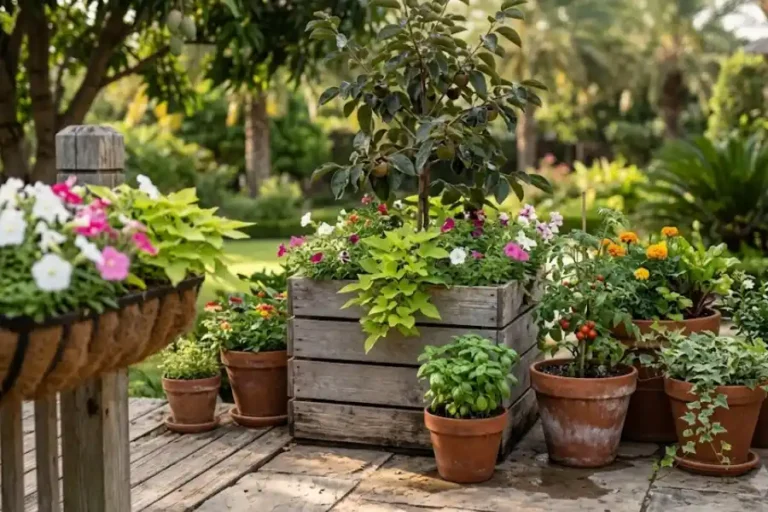
Tucking a few herbs between your flowers is a smart trick. You get food, scent, and pollinators in one bed. A few herb garden pots outdoors near the kitchen door also work well, since basil and rosemary both love the sun.
Best Full Sun Plants for Pots
Containers dry out faster than garden soil. In summer heat, a small pot can go dry in a day. Pick plants that can handle it.
- Portulaca, lantana, and petunias for color.
- Sedum, lavender, and rosemary for low-water pots.
- Dwarf zinnias and dwarf sunflowers for height.
Use big pots with drain holes. Size matters most, and many container garden ideas start there because more soil holds water longer. Fill them with potting mix, not garden dirt. Dark pots get hot, so a light color helps keep roots cool.
How to Care for Full Sun Plants Outdoor
Even the toughest plant needs help at the start. The first summer is the make-or-break time.
Give Them a Long Soak, Not a Quick Sprinkle
New plants need regular water, even the “drought tolerant” ones. Garden Betty notes that these plants still need steady watering for the first year while roots grow.
Portland Nursery suggests a slow soak of 30 to 60 minutes, two to three times a week, until plants are established. A slow soak pulls roots down into the soil. Quick daily sprinkles keep roots shallow and weak.
Not sure if it is time to water? Push a finger two inches into the soil. If it feels dry, water. Plants can also wilt in the afternoon and perk up by night. That does not always mean they are thirsty.
Water in the Morning
Morning is the best time. The soil is cool, and plants have a full drink before the heat peaks. Water at the base of the plant, not over the leaves.
Add Two to Three Inches of Mulch
Mulch keeps soil cool and slows water loss. Spread a layer two to three inches thick. Keep it a few inches away from stems and trunks so they do not rot.
Go Easy on Fertilizer
Food pushes plants to grow, and growth adds stress in hot weather. The Old Farmer’s Almanac says to stop feeding when temperatures pass about 85 to 90°F.
Will Watering Leaves in the Sun Burn Them?
You may have heard that water drops act like tiny magnifying glasses. Some gardeners believe this. But Gardening Know How calls it a myth and says a thirsty plant should be watered right away. The safe path is simple. Water the soil, and do it in the morning.
6 Common Mistakes With Full Sun Plants
- Trusting the tag over the yard. Sun map first, then shop.
- Skipping water in year one. Roots need time to grow.
- Watering a little every day. Long soaks, less often, work better.
- Planting at noon. Plant in the cool of morning or evening, or in spring or fall.
- Overfeeding. More food does not mean more flowers.
- Ignoring drainage. Wet feet kill lavender, sedum, and many others.
A Simple Plan for a Full Sun Flower Bed
Not sure how to arrange your plants? Build in layers, tall to short.
- Back row: Russian sage or a small shrub like spirea.
- Middle row: Coneflower, black-eyed Susan, and salvia.
- Front row: Catmint, coreopsis, and sedum.
- Gap fillers: Zinnias and marigolds until the perennials grow in.
- Edge: Creeping thyme to soften the border.
Frequently Asked Questions
How many hours of sun is full sun?
Full sun is six or more hours of direct sunlight a day. Some plants, like tomatoes and sunflowers, do best with six to eight hours.
What is the easiest full sun plant for beginners?
Coneflower, black-eyed Susan, daylily, and marigold are hard to mess up. They handle heat, forgive missed waterings, and bloom for weeks.
Can full sun plants grow in shade?
Some will live in part shade, but most get weak and floppy. They also make fewer flowers. If your spot gets only three or four hours of sun, you will do better with garden plants for shade and part sun plants.
Do full sun plants need a lot of water?
New ones do. Once their roots have grown down, many need much less. Still, they enjoy a good long soak during dry spells.
Which full sun plants bloom all summer?
Zinnias, marigolds, lantana, verbena, coreopsis, and Knock Out roses are all long bloomers. Removing dead flowers keeps most of them going.
What full sun plants work best in very hot climates?
Lantana, Russian sage, yarrow, salvia, and portulaca are strong picks. Give new plants some afternoon shade for the first few weeks. Your local extension office can share plants that do well in your area.
Final Thouhgts
A hot, bright yard is not a problem. It is a chance. The best full sun plants outdoor gardeners grow turn that harsh light into color, scent, and buzzing life.
Start small. Sun map your spot, check your zone, and pick three or four plants from this list. Water them well this year, and next year they will do the hard work for you.