Michigan Perennial Plants: 25 Tough Picks for Sun and Shade
Michigan winters are rough. Snow piles up, the wind bites, and the ground freezes solid. Yet some flowers shrug it all off and return each spring. Those flowers are perennials, and they are the best deal in your garden.
You plant them once, and they grow back for years. This article shows you the best Michigan perennial plants for sun, shade, dry spots, and wet soil. You will also learn when to plant them and how to keep them safe through winter.
Here is a fun fact to start. Michigan has an official state wildflower, the dwarf lake iris. It is tiny, rare, and protected, so please leave it in the wild. The good news is that many other Michigan perennial plants are easy to grow at home.
Quick Picks: The Best Michigan Perennial Plants at a Glance
Short on time? Start with this list of Michigan perennial plants.
- Best for full sun: purple coneflower and black-eyed Susan
- Best for shade: hosta, hellebore, and wild columbine
- Best for dry soil: sedum, yarrow, and baptisia
- Best for wet soil: cardinal flower and marsh marigold
- Best for bees and butterflies: wild bergamot and butterfly weed
- Best for deer: hellebore, allium, and goatsbeard
What Makes a Perennial Right for Michigan?
Not every plant can handle our weather. Four things decide if Michigan perennial plants will thrive in your yard: your zone, light, soil, and deer.
Know Your Hardiness Zone
The USDA sorts the country into zones based on winter lows. On the 2023 map, Michigan runs from zone 4a to zone 6b. The Upper Peninsula is the coldest. Southeast Michigan and the Lake Michigan shore are the warmest. You can find your exact zone on the USDA Plant Hardiness Zone Map.
Check the zone number on the plant tag. If you live in zone 5, pick plants rated for zone 5 or a lower number. A zone 4 plant is safe in a zone 5 yard.
Check Your Light
Watch your yard for a day. Full sun means six or more hours of direct light. Part shade means about three to six hours. Shade means less than that. Match the plant to the light, and half the work is done.
Look at Your Soil
Many Michigan yards have heavy clay or sandy soil. Clay holds water. Sand drains fast. A soil test from MSU tells you what you have. Then you can choose Michigan perennial plants that like those exact conditions.
Plan for Deer
Deer now wander into towns and suburbs. MSU Extension says to pick plants that deer seldom eat. But no plant is truly deer proof. We flag the best deer-resistant picks below.
Best Michigan Perennial Plants for Full Sun
Sunny beds give you the most flowers. These eight Michigan perennial plants love the light.
1. Purple Coneflower
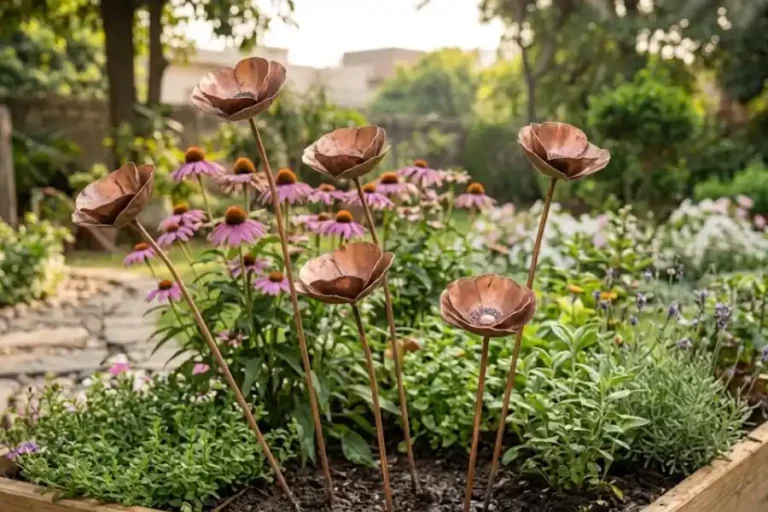
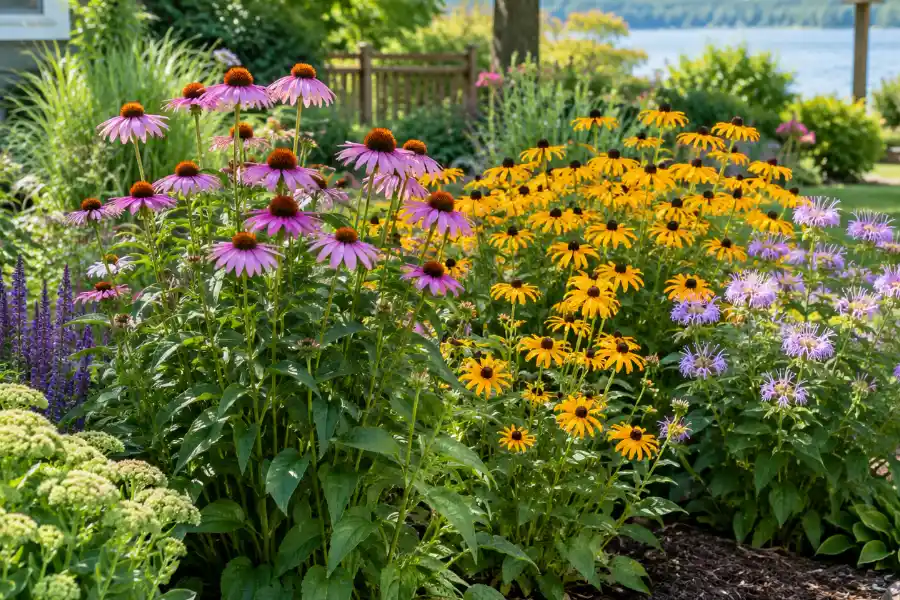
Coneflowers are tough and showy. They bloom from summer into early fall and draw bees and butterflies. Once settled, they handle dry spells well. Leave the seed heads up in fall, and birds will thank you.
2. Black-Eyed Susan
This golden flower is a Michigan favorite. It is rated for zones 4 to 9, so cold winters do not scare it. It grows well in dry to medium soil and blooms from late summer into fall. Snip some old blooms to keep new ones coming, and leave the rest for the birds.
3. Wild Bergamot (Bee Balm)
Wild bergamot is a native with fuzzy lavender flowers. It blooms in mid-summer, and bees, butterflies, and hummingbirds all visit. It likes full sun to part shade and grows in most soils, except very wet ones. You only need to divide it once in a while.
4. Blazing Star
Blazing star sends up tall purple spikes in summer. MSU lists it as a Michigan native with some deer resistance. For better protection, plant it next to coneflowers.
5. Daylily
Daylilies are nearly foolproof. They grow in full sun to part shade and bloom in mid-summer in many colors. Divide the clumps every few years to keep them strong.
6. Peony
Peonies give big, sweet blooms in late spring. Their leathery leaves are deer resistant, though deer may nibble the flowers. A healthy peony can live for decades.
7. Allium
Allium is a showy onion with round, purple flower balls. It blooms when many Michigan gardens look plain. Deer tend to avoid the onion family, so alliums suit deer-prone yards. Plant the bulbs in fall.
8. Smooth Blue Aster
Asters bring color when summer flowers fade. Smooth blue aster is a Michigan native that likes full sun and dry soil. Its blooms feed bees late in the year.
Still have sunny space left? Our list of full sun plants outdoor has plenty more ideas to fill it.
Best Michigan Perennial Plants for Dry Spots
Hot, dry beds and sandy soil can be hard. These Michigan perennial plants do not mind. Once they settle in, they need very little extra water.
9. Baptisia (False Indigo)
Baptisia grows long roots that can handle long dry spells, says MSU Extension. It makes tall spikes of blue flowers in late spring and grows into a big, bushy plant. Give it room, because it does not like to be moved.
10. Sedum
Sedum, also called stonecrop, comes in many heights and leaf colors. Low types make a thick groundcover. Tall types bloom pink in late summer. All of them take dry weather well, which is why sedum is a favorite among rock garden plants.
11. Yarrow
Yarrow loves full sun and poor soil. MSU says its color range is hard to beat, from yellow to red and pink. Bees and butterflies love it too. It can spread, so give it space.
12. Russian Sage
Russian sage is a shrubby plant with silver leaves and tall spikes of purple-blue flowers. It blooms for weeks in summer and loves heat. Cut it back in early spring.
13. Catmint
Catmint has gray-green leaves and clouds of blue flowers. Gray-leaved plants rank high for drought tolerance. Shear it back after the first wave of blooms, and it will often flower again.
14. Butterfly Weed
Butterfly weed shows off bright orange flowers in full sun and very dry soil. It is a type of milkweed, so monarch butterflies use it. It wakes up late in spring, so mark the spot and be patient.
Best Michigan Perennial Plants for Shade
Michigan has lots of trees, so shade is common. Do not worry. Plenty of lovely Michigan perennial plants grow there.
15. Hosta
Hosta is the king of the shade garden. It comes in many sizes and leaf colors, from tiny blue-green to giant gold. Deer like to eat hostas, so protect them or pick another plant if deer visit your yard.
16. Hellebore (Lenten Rose)
Hellebores bloom very early in spring. The leaves stay green for most of the year. MSU names hellebores as one of the best deer-resistant picks for shade.
17. Bleeding Heart
Bleeding heart has dangling pink or white flowers shaped like little hearts. It likes part to full shade and moist, well-drained soil. Morning sun and afternoon shade is the sweet spot. It may fade in midsummer heat, so plant it near later bloomers.
18. Wild Columbine
Wild columbine is a Michigan native with red and yellow bell-shaped flowers. It blooms in spring and feeds early bees. It grows in sun or shade and in clay or sandy soil, so it is easy to place.
19. Foamflower
Foamflower is a native groundcover for moist, dappled shade. Soft spikes of white flowers rise above neat leaves in spring. Bees like it, and it is easy to divide.
20. Goatsbeard
Goatsbeard is a tall Michigan native with creamy plumes of flowers in early summer. MSU says deer seldom feed on it. It looks like a big, airy shrub and fills a back corner well.
21. Ferns
Ferns add soft texture. Ostrich fern and maidenhair fern are both deer resistant, says MSU. Maidenhair fern likes rich, moist soil.
22. Virginia Bluebells
Virginia bluebells paint the shade sky blue in spring. MSU calls them deer resistant and a good native choice. They fade by midsummer, so plant them with ferns or hostas to fill the gap.
Have a very dark corner? This list of garden plants for shade has even more picks.
Best Michigan Perennial Plants for Wet or Heavy Soil
Rain gardens, low spots, and clay beds stay soggy. Do not fight them. Use Michigan perennial plants that enjoy wet feet. If you plan to build a rain garden, our tips on rain garden design can help you get started.
23. Cardinal Flower
Cardinal flower has bright red spikes that glow in late summer. It grows best in moist soil in full sun to light shade. Hummingbirds love it.
24. Marsh Marigold
Marsh marigold is an early spring wildflower with buttery yellow blooms. It grows across Michigan in wet soil, in full to partial sun. It is perfect for pond edges and wet corners.
25. Michigan Lily
Michigan lily has showy orange-red flowers with dark spots. It likes full sun to part shade and moist, well-drained soil. It is a great way to bring a bit of the wild Michigan meadow home.
Pro tip: Plant in groups of three or five of the same plant. Groups look fuller and draw more bees and butterflies than single plants.
Deer-Resistant Michigan Perennial Plants
If deer visit your yard, start with these Michigan perennial plants.
- Hellebore
- Goatsbeard
- Ostrich fern and maidenhair fern
- Virginia bluebells
- Allium
- Sedum
- Yarrow
Remember that no plant is deer proof. A hungry deer will try almost anything, especially in a hard winter.
Perennials to Skip in Michigan
Some garden plants escape and take over wild places. These are called invasive plants. They crowd out native plants and hurt wildlife. Avoid these:
- Purple loosestrife: spreads through wetlands and replaces native plants
- Dame’s rocket: looks like phlox but spreads fast by seed
- Japanese knotweed: a huge plant that is very hard to remove
- Garden yellow loosestrife: can make up to 20,000 seeds per plant
- Lily of the valley and yellow archangel: creeping groundcovers that can escape into woods
Not sure about a plant? Check the Michigan invasive species program before you buy. A good rule is simple. If a plant spreads fast by seed or runners, think twice.
When to Plant Michigan Perennial Plants
Spring is the best time for most Michigan perennial plants. Wait until after your last frost date. Frost dates swing a lot across the state. MSU Extension notes that the average last frost is near the end of April in Detroit and late May in Grand Rapids.
You have a few other good windows too.
- Early spring, for bare-root plants: These are dormant, so you can plant them as soon as the soil is workable and not soggy. See this MSU Extension article on bare-root perennials.
- Early fall: Plant at least six weeks before the ground freezes so roots can settle in. Add mulch to stop frost heaving.
- October, for bulbs: Plant allium bulbs in fall for blooms next year.
How to Plant Perennials in Michigan: 6 Easy Steps
- Pick the right spot. Match the plant’s light and soil needs to your yard.
- Loosen the soil. Dig a hole about twice as wide as the pot and as far down as the root ball is tall. In heavy clay, mix in some compost.
- Set the plant at the right height. The top of the root ball should sit even with the soil. Planting too low can cause rot.
- Fill and firm. Press the soil gently around the roots.
- Water well. Soak the bed right after planting. In the first season, give it a long, slow soak when rain is light.
- Mulch. Add a few inches of mulch around the plant, but keep it off the crown. Mulch piled on the crown can cause rot.
Winter Care for Michigan Perennial Plants
Good fall care makes next summer easier. MSU Extension teaches a “less is more” approach.
- Do not rush to cut everything back. Healthy plants can die back on their own. Standing stems shelter native bees and feed birds.
- Clean up sick plants. Remove leaves and stems from plants that had disease or pests. MSU also suggests cutting back hosta, daylily, and peony leaves to lower disease and slugs.
- Mulch after the ground freezes. A thick layer of leaves, compost, or bark mulch shields roots from freeze and thaw swings.
- Leave a little bare soil. Many native bees nest in the ground, so skip mulch in a small patch.
- Trim grasses in late March. Cut them to the ground before new growth begins.
- Finish spring cleanup early. Cut back leftover stems once the snow melts.
5 Common Mistakes With Michigan Perennial Plants
- Planting too early. A late frost can burn new growth.
- Ignoring your zone. A plant rated for a warmer zone may not survive our winters.
- Picking the wrong light. Sun lovers in shade flop over and bloom less.
- Planting too close. Crowded plants get more disease, so give each one room to grow.
- Skipping water in year one. New roots need steady moisture.
Michigan Perennial Plants: Frequently Asked Questions
What is the easiest perennial to grow in Michigan?
Black-eyed Susan, purple coneflower, daylily, and sedum are some of the easiest. They handle cold winters and need little care once settled.
What zone is Michigan for perennials?
Michigan spans zones 4a to 6b on the 2023 USDA map. The north is coldest, and the southeast and Lake Michigan shore are warmest. Always check your exact zone before you buy.
When should I plant perennials in Michigan?
Spring after the last frost is best for most plants. Early fall also works if you plant at least six weeks before the ground freezes.
Which Michigan perennial plants bloom the longest?
No single plant blooms all summer. But catmint, coneflower, and black-eyed Susan bloom for weeks. For steady color, mix early, middle, and late bloomers. Try columbine and baptisia in spring, bergamot and daylily in summer, and asters and sedum in fall.
Do perennials come back every year in Michigan?
Most do, if you choose plants rated for your zone. A few, like columbine, are short-lived but often grow new plants from seed.
Are native perennials better for Michigan?
Native plants grew here long before us, so they know our weather. They also help wildlife. Garden classics like hosta and peony do well too, so a mix works great.
Final Thoughts
Michigan perennial plants give you color for years with little work. Start small. Pick three plants that fit your light and soil, and plant them in spring. Add a few more each year. Check your zone, mulch in fall, and skip the invasive plants. Before long, you will have a garden that returns every year.