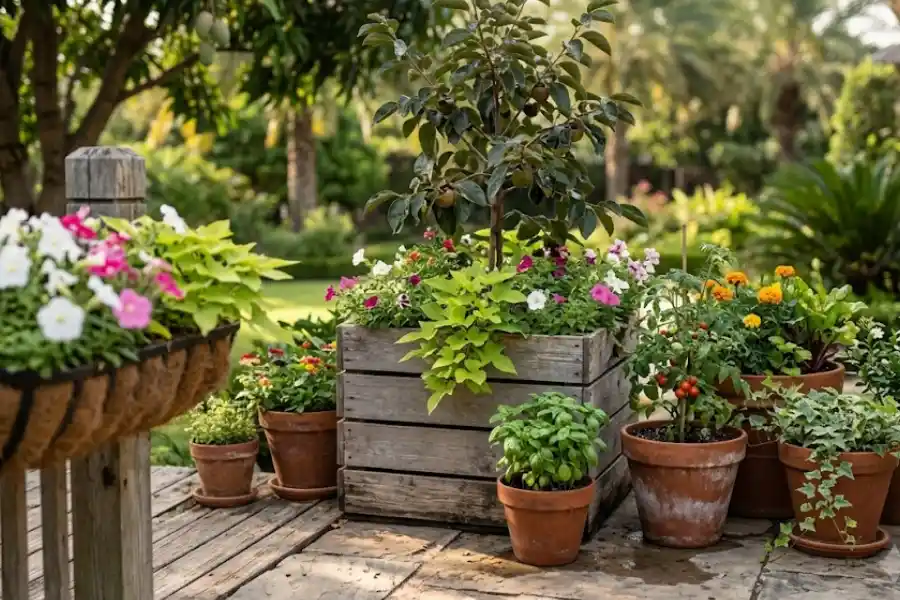
Container Garden Ideas for Small Spaces and Patios
You don’t need a backyard to grow something beautiful. You just need a pot, some soil, and the right plan. That’s the whole secret behind great container garden ideas: small containers, big impact.
I’ve killed more plants than I can count. Overwatered ones. Underwatered ones. Ones stuffed into pots way too small. Over the years, though, I learned what actually works. This article is everything I wish someone had told me on day one, plus the ideas that made my patio look like it belonged in a magazine.
Whether you’re working with a tiny balcony or a wide open patio, you’ll find real, doable container garden ideas here. No fluff. No guesswork.
Why Container Gardens Work So Well
Containers give you control. You control the soil. You control the sunlight, because you can move the pot. You control the water. That’s why container gardening is one of the easiest ways to start growing plants, even if your yard is small or you don’t have one at all.
This makes it perfect container gardening for beginners. There’s no digging up grass. No fighting with clay soil. Just a pot and a plan.
The Simple Formula Behind Every Beautiful Pot
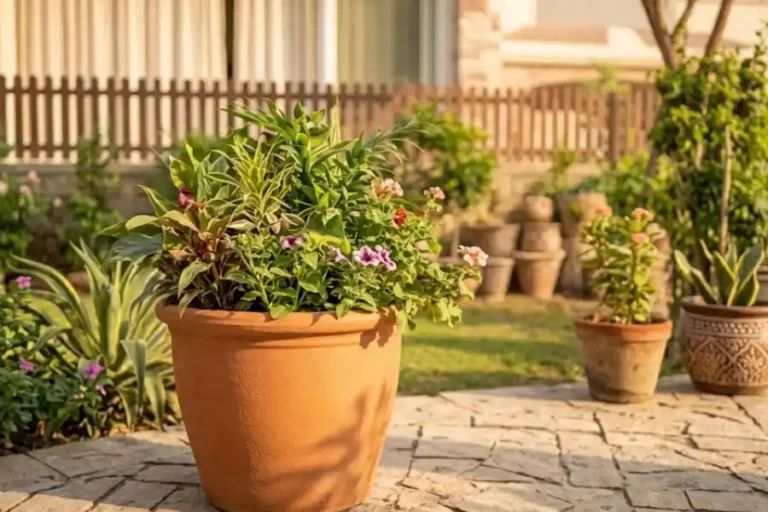
Professional gardeners use a trick called “thriller, filler, spiller.” It sounds fancy, but it’s simple.
- Thriller: A tall plant in the center or back. This is your eye-catcher.
- Filler: Medium, bushy plants around it. These fill the gaps.
- Spiller: Trailing plants along the edge. These spill over the sides.
Follow this formula and almost any pot will look designed on purpose, even if you just grabbed plants you liked at the store.
Container Garden Ideas for Small Spaces and Balconies
Small space doesn’t mean small style. Some of the best small space container garden ideas come from apartment balconies where every inch counts.
- Stack pots on a plant caddy with wheels to save floor space and move plants for sun.
- Use a railing planter that hangs over the balcony edge instead of sitting on the floor.
- Hang a shoe organizer with pockets and fill each pocket with a small herb.
- Try a tiered plant stand to grow up instead of out.
- Group three pots of different heights together instead of spreading single pots around.
Grouping pots, rather than scattering them, is one of the fastest ways to make a small space look intentional instead of cluttered.
Container Garden Ideas for Vegetables and Herbs
A vegetable container garden can feed you all summer, even from a sunny doorstep. Vegetables need more room than flowers, so container size matters more here.
- Cherry tomatoes in a 5-gallon bucket with drainage holes drilled in the bottom.
- A mixed herb pot with basil, thyme, and parsley, since they all like the same amount of water.
- Bush beans in a wide, shallow container near a wall for support.
- Lettuce and greens in a shallow tray, since their roots stay close to the surface.
- Peppers in dark-colored pots, which soak up extra heat and help peppers ripen faster.
Cool-weather crops like lettuce, spinach, and peas do best planted in early spring or fall. Heat-loving crops like tomatoes and peppers want full sun and warm soil.
Container Garden Ideas for Every Season
A container garden shouldn’t disappear in October. You can rotate plants with the seasons and keep color going almost year-round.
- Spring: Pansies, snapdragons, and cool-tolerant herbs like parsley.
- Summer: Petunias, sweet potato vine, and heat-loving vegetables.
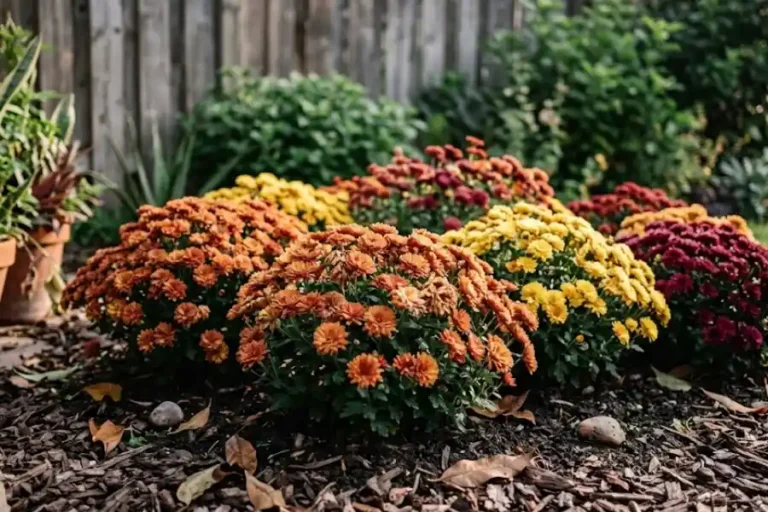
- Fall: Mums, ornamental kale, and ornamental grasses in warm colors.
- Winter: Evergreen branches, pinecones, and red berries pushed into the soil for a festive look.
Low-Maintenance Container Garden Ideas
Not everyone has time to fuss over pots every day. These low-maintenance container garden ideas are built for busy people, or anyone who forgets to water sometimes.
- Choose succulents and sedums. They store water in their leaves and can go over a week without watering.
- Use a self-watering container, which has a water reservoir at the bottom the plant can pull from as needed.
- Pick larger pots over small ones. Bigger pots hold more soil, and more soil means the water doesn’t dry out as fast, using tall outdoor planters is a great way to gain soil volume while saving floor space.
- Add a layer of mulch on top of the soil to slow down evaporation.
Mistakes That Quietly Kill Container Gardens
Most container garden failures come down to a handful of repeat mistakes. Here’s what to watch for.
- Skipping drainage holes. Water needs somewhere to go. Without holes, roots sit in water and rot.
- Adding gravel to “help” drainage. This is a myth. Gravel at the bottom doesn’t drain water any faster; it just raises the water level closer to the roots.
- Using dirt from the yard. Garden soil gets compacted in a pot and blocks airflow to the roots. Always use a potting mix made for containers.
- Choosing a pot that’s too small. A good rule of thumb is to start with a container at least 12 inches wide and 12 inches from top to bottom for most plants. Small pots dry out fast and leave roots cramped.
- Overcrowding the pot. Plants sharing a container are also sharing a limited amount of nutrients. Give each one room to breathe.
- Forgetting to feed the soil. Potting mix runs out of nutrients after a few weeks. A slow-release fertilizer added at planting time keeps plants fed all season.
Budget-Friendly and DIY Container Ideas
You don’t need pricey ceramic pots to have a beautiful container garden.
- Repurpose an old wheelbarrow, wagon, or metal wash tub, or build rustic raised planter boxes framed with leftover corten steel garden edging.
- Paint plain terra cotta pots in a bold color for an instant upgrade.
- Use wooden crates lined with landscape fabric for a rustic look.
- Drill holes into a large food-safe bucket for a nearly free vegetable planter.
Frequently Asked Questions
How often should I water a container garden?
Most container plants need water when the top inch of soil feels dry. In hot weather, this can mean daily watering, since pots dry out faster than garden beds.
Can I mix flowers and vegetables in the same pot?
Yes, as long as they need similar sun and water. Many gardeners mix marigolds with tomatoes, since marigolds can help deter certain pests.
What is the best container size for beginners?
A pot around 12 inches wide and 12 inches from top to bottom works well for most flowers, herbs, and many vegetables. Bigger plants like tomatoes need at least a 5-gallon container.
Do containers need to be replanted every year?
Annual flowers and most vegetables get replanted each year. Perennials, shrubs, and some herbs can live in the same container for several years with fresh soil added on top.
Final Thoughts
Great container garden ideas aren’t about having a big budget or a green thumb. They come down to a few basics: the right size pot, good drainage, decent soil, and plants that get along with each other. Start with one pot. Get it right. Then add another.
Before long, that empty balcony or bare front step turns into the spot everyone notices first.