Garden Sign Ideas That Last for Years: Materials, DIY Steps, and Placement Tips
A garden sign is a small thing that does a big job. It can make a plain fence feel like a real destination. It can turn a row of tomatoes into “The Weeden,” a joke your neighbors will remember for years. But here is what most articles on this topic skip: a sign only works if it survives the weather, sits in the right spot, and says something people want to stop and read. This article covers all three, plus enough ideas to fill an entire garden.
Why a Garden Sign Is Worth the Effort
A garden is already beautiful. So why add a sign at all? Because a sign gives your garden a voice. It tells visitors what you planted, why you love this space, or just makes them smile on their way to the front door. Gardeners who have used signs for years will tell you the same thing: the right sign, in the right spot, makes the whole garden feel finished.
Signs also solve a real problem. If you grow herbs, vegetables, or a mix of flowers, it is easy to forget which plant is which once everything grows in. A simple marker saves you the guessing game every spring.
Garden Sign Ideas Worth Copying
Welcome and Funny Signs
These sit near a gate, porch, or garden entrance. They are meant to be read and enjoyed right away. Popular sayings include short, punny lines about plants and dirt, or warm welcome messages for guests. The trick is keeping the words short enough to read from a few steps away. Six to eight words is the sweet spot.
Personalized and Family Signs
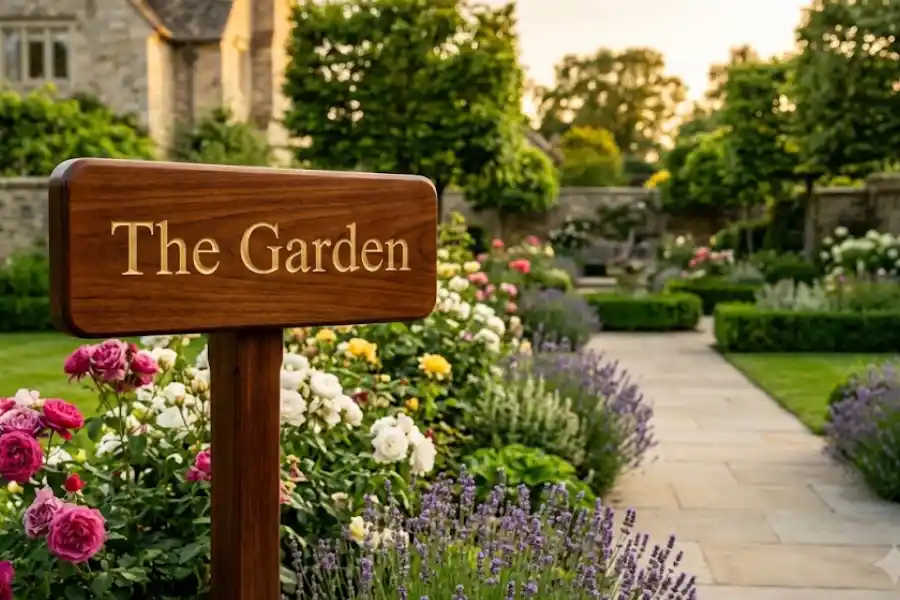
A sign with a family name, like “The Smith Garden” or “Grandma’s Patch,” turns a garden into a piece of your family story. These make wonderful gifts too. Many gardeners add the year the garden was started, which becomes a nice detail years later.
Practical Plant Markers
Not every sign needs to be clever. Small stakes or painted stones with plant names help you and your visitors know exactly what is growing where, and you can even pair them with beautifully engraved Personalized Garden Stones to map out your plots. These are especially useful in vegetable and herb gardens, where many plants look similar before they mature.
Seasonal and Themed Signs
Some gardeners swap signs with the seasons, a cheerful “Welcome Spring” in April, a harvest-themed sign in October. This keeps the garden feeling fresh without any new planting.
The Part Most Guides Skip: Choosing a Material That Survives Outdoors
This is where a lot of garden signs fail. A beautiful sign that fades, warps, or rusts within a season is not worth the effort. Here is an honest comparison of the most common materials, based on how they truly hold up outside.
- Wood: Warm and classic, but needs a sealant or weatherproof paint. Untreated wood can start to rot within one to two years in wet climates. Cedar and redwood naturally resist rot better than pine.
- Metal: Extremely durable and low maintenance. Galvanized or powder-coated metal resists rust for many years. It can get hot in direct sun, so keep that in mind if it is near seating.
- Stone and Ceramic: Nearly indestructible outdoors and does not fade in sunlight. Heavier and harder to move, and it can crack if it gets waterlogged and then freezes.
- Acrylic and Plastic: Budget-friendly and easy to find, but many types fade or turn brittle after a year or two of direct sun, which is a common issue often discussed when setting up cheap Solar Garden Lights Outdoor fixtures. Look for UV-resistant labels if you choose this option.
If you want a sign that still looks sharp five years from now, metal or sealed hardwood are the safest bets. If you just need a season or two, wood or acrylic work fine.
How to Make Your Own Garden Sign
You do not need special tools to make a sign that looks store-bought. Here is a simple method that works for most materials.
- Choose your material. A leftover fence board, a smooth stone, or a pre-cut wood blank all work well.
- Sand any rough edges so paint goes on smoothly.
- Sketch your words lightly in pencil first, or use a stencil for even lettering.
- Paint or wood-burn your design. Wood-burning tends to last longer outdoors since there is no paint to peel.
- Seal the finished sign with an outdoor sealant or clear weatherproof spray. This one step doubles the life of most signs.
- Attach a stake, hook, or hanging wire, depending on where the sign will sit.
Let everything dry fully between steps. Rushing the sealant is the most common mistake, and it is the reason signs peel after just one rainy week.
Where to Place Your Sign for the Best Effect
Placement matters as much as the sign itself. A few tips that experienced gardeners swear by:
- Put welcome signs at eye level, near the entrance, not buried behind tall plants.
- Angle plant markers slightly toward the walking path so they are easy to read without bending down too far.
- Avoid full afternoon sun for painted signs if possible. Morning sun with afternoon shade helps colors last longer.
- Group two or three small signs together for a cozy, curated look rather than scattering them randomly.
Keeping Your Sign Looking New
A little care goes a long way. Wipe wood and metal signs with a damp cloth every month to remove dirt and pollen buildup. Reapply sealant on wood signs once a year, ideally in early spring before the rainy season starts. Bring lightweight signs indoors during storms or heavy frost if you can, since sudden temperature swings are what crack paint and warp wood the fastest.
Frequently Asked Questions
What is the most weatherproof material for a garden sign?
Galvanized or powder-coated metal is generally the most weatherproof choice, followed closely by sealed hardwood like cedar. Both can last several years outdoors with minimal care.
How do I stop my wooden garden sign from fading?
Use a UV-resistant outdoor sealant and place the sign where it gets some shade during the strongest afternoon sun. Reapplying sealant once a year keeps colors from washing out.
What should I write on a garden sign?
Short and personal works best. A family name, a favorite gardening phrase, or a simple plant label all read well from a distance. Keep it under eight words when possible so it is easy to read at a glance.
Can I make a garden sign without wood-burning tools?
Yes. Outdoor-rated paint pens or stencils with weatherproof spray paint work well and require no special equipment.
How often should I replace a garden sign?
A well-sealed metal or wood sign can last five years or more. Acrylic or unsealed wood signs often need replacing every one to two years.
A garden sign is a small project with a big payoff. Choose a material that matches how long you want it to last, place it where it will really be seen, and give it a little yearly care. Do that, and your sign will still be welcoming visitors long after this season’s flowers have come and gone.