Japanese Garden Plants: 15 Best Picks and 4 to Skip
Have you ever walked into a Japanese garden and felt your shoulders relax? Nothing was loud. Nothing was crowded. Every plant seemed to belong. That feeling is not luck. It comes from smart plant choices.
You can get the same look at home. You do not need a huge yard or a big budget. You just need the right Japanese garden plants and a few simple ideas for placing them.
This article shares 15 plants that grow well in American yards, with a hardiness zone for each one. You will also see which popular Japanese plants can turn into weeds, and how to arrange everything so it feels calm instead of messy.
The Short Answer: The Best Japanese Garden Plants
The best Japanese garden plants for most US yards are Japanese maple, Japanese black pine, azalea, Japanese holly, Japanese forest grass, hosta, moss, and Japanese iris. Together, they give you shape in winter, soft flowers in spring, and rich color in fall. Most of them grow well in USDA zones 5 to 8.
What Makes a Plant Fit a Japanese Garden?
Japanese garden style is about calm, not about collecting rare plants. It shares that mood with other Asian garden styles, which also favor balance and simple shapes. Four simple ideas sit behind this calm look:
- Evergreens give the bones. Pines, hollies, and mounding shrubs keep the garden looking good in winter.
- Seasons are the show. Spring blossoms, summer green, fall color, and winter shape each get a turn.
- Texture beats color. Leaf shapes, moss, and grasses matter more than a bright flower bed.
- Less is more. Empty space is part of the design. It gives your eyes a place to rest.
Keep these ideas in mind when you shop for Japanese garden plants. Ask one question at the nursery: does this plant add calm, or does it add noise?
Japanese Garden Plants at a Glance
Use this list to compare your options fast. Check your own zone on the USDA Plant Hardiness Zone Map by typing in your ZIP code.
- Japanese maple: zones 5 to 8, morning sun, fall color
- Japanese black pine: zones 5 to 8, full sun, evergreen shape
- Yoshino cherry: zones 5 to 8, full sun, spring blossoms
- Japanese snowbell: zones 5 to 8, part shade, white summer flowers
- Azalea: zones 6 to 9 for most, part shade, spring flowers
- Camellia: zones 7 to 9, part shade, winter and spring flowers
- Japanese holly: zones 5 to 8, sun to part shade, clipped shapes
- Japanese quince: zones 4 to 9, full sun, early spring flowers
- Japanese forest grass: zones 5 to 9, part shade, flowing leaves
- Hosta: zones 3 to 9, shade, bold leaves
- Japanese painted fern: zones 4 to 8, shade, silver fronds
- Mondo grass: zones 6 to 10, sun to shade, dark green tufts
- Moss: most zones, shade and moisture, soft green carpet
- Japanese iris: zones 4 to 9, sun, wet soil, early summer flowers
- Clumping bamboo: zones 5 to 9, part shade, height and sound
Trees: The Backbone of Your Garden
Trees come first because they set the shape of the whole space. Pick one or two, not five. A small garden looks best with a single star tree.
1. Japanese Maple (Acer palmatum)
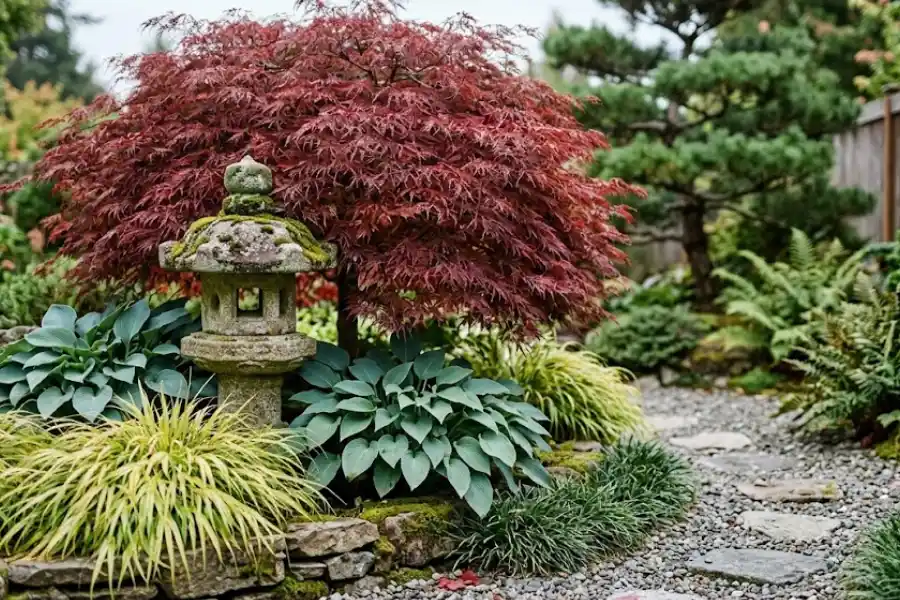
If you plant only one tree, make it this one. Japanese maples have lacy leaves and a graceful shape. Leaf color ranges from bright green to dark red, and many turn fiery in fall. They hate hot, dry wind, so give them morning sun and afternoon shade. They also do well in large pots.
2. Japanese Black Pine (Pinus thunbergii)
This is the classic tree of Japan. Gardeners shape it by hand into cloud-like layers, a style called niwaki. In spring, pinch the new growth, called candles, to keep the tree small and full. It handles wind and salty air well. Left alone, it grows very big, so plan to trim it every year.
3. Yoshino Cherry (Prunus x yedoensis)
Cherry blossoms are the symbol of Japanese spring. The show lasts only one to two weeks, so plan for it. Place the tree where you can see it from a window or a seat. The rest of the year, its smooth bark and open shape still look nice.
4. Japanese Snowbell (Styrax japonicus)
This small tree deserves more attention. White, bell-shaped flowers hang down from the branches in early summer. It stays around 20 to 30 feet tall, which suits many yards. It likes moist, slightly acidic soil that drains well.
Shrubs for Soft Shapes and Spring Color
Shrubs fill the middle layer. They hide bare tree trunks and add flowers or clipped form.
5. Azalea
Azaleas are a spring favorite. Entire hillsides of them bloom in Japan each year. They need acidic soil, with a pH around 5 to 6. If your soil is alkaline, grow them in pots filled with acidic mix. Most evergreen types grow in zones 6 to 9, and a few tough hybrids handle zone 5.
6. Camellia (Camellia japonica)
Camellia gives you glossy evergreen leaves all year. Its big flowers open from late fall to early spring, when little else is in bloom. It does best in zones 7 to 9. In cooler areas, plant it where cold winter wind cannot reach it.
7. Japanese Holly (Ilex crenata)
Japanese holly has small, glossy leaves and looks a lot like boxwood. It is perfect for cloud pruning, where you shape the shrub into soft, rounded pillows. It is also a popular stand-in where boxwood struggles with disease.
8. Japanese Quince (Chaenomeles speciosa)
Quince flowers in red, orange, or pink before the leaves appear. That makes early spring feel special. It is tough, grows in zones 4 to 9, and does well with little care. Note that it has thorns, so keep it away from paths.
The Ground Layer: Moss, Ferns, Grasses, and Hostas
The low plants tie everything together. In many Japanese garden plants lists, this layer gets ignored. Yet it is what makes a garden feel finished.
9. Japanese Forest Grass (Hakonechloa macra)
This grass flows like a green waterfall. Golden types brighten shady corners. Plant it in clumps to soften the edges of steps and paths. It grows slowly, so be patient and do not move it around.
10. Hosta
Many hostas come from Japan. Their big leaves come in green, blue, and yellow shades. They love shade and grow in zones 3 to 9. The catch is that slugs and deer enjoy them too. A little slug bait or a deer spray can save your plants. In a shady yard, hostas blend well with other garden plants for shade, which helps you fill the space with less fuss.
11. Japanese Painted Fern (Athyrium niponicum)
This fern has silvery fronds with a touch of red and purple. It brings gentle color to heavy shade without a single flower. Give it moist soil and it will return every year in zones 4 to 8.
12. Mondo Grass (Ophiopogon japonicus)
Mondo grass forms dark green tufts that stay green all year. Dwarf types work well between stepping stones, where they act like a tiny lawn that never needs mowing. It grows in zones 6 to 10.
13. Moss
Moss is the secret of many famous gardens in Kyoto. It loves shade, moisture, and acidic soil. It has no true roots, so it takes water from the air and rain. Do not use fertilizer on it. Water it gently during dry spells.
Water’s Edge and Bamboo
14. Japanese Iris (Iris ensata)
Japanese iris has wide, flat flowers in purple, blue, white, and pink. They bloom in early summer, right after azaleas fade. Plant them near a pond edge or in a rain garden. They want wet soil in spring and summer, and they grow in zones 4 to 9. If you have a pond, the best aquatic plants for garden ponds give you more ideas for planting the water itself.
15. Clumping Bamboo (Fargesia)
Bamboo adds height and a soft rustling sound. Choose a clumping type, which stays in a tight group. It grows in zones 5 to 9. Avoid running bamboo, which spreads fast. The next sections explain why.
Japanese Garden Plants by US Zone
Your climate decides which Japanese garden plants will thrive. Here is a quick way to sort them.
- Cold zones (3 to 5): Hosta, Japanese painted fern, Japanese iris, Japanese quince, and hardy azaleas. A Japanese maple can work in zone 5 if you plant it in a sheltered spot.
- Middle zones (6 to 7): This is the sweet spot. Japanese maple, black pine, Yoshino cherry, Japanese holly, forest grass, mondo grass, and azaleas all do well.
- Warm zones (8 to 10): Camellia, mondo grass, azaleas, and clumping bamboo. Give maples and hostas shade from the hot afternoon sun.
4 Japanese Garden Plants to Skip
Some popular plants from Japan and Asia can escape gardens and crowd out native plants. Rules differ by state, so check your local list before you buy. The National Invasive Species Information Center is a good place to start.
Japanese Barberry
This red-leaf shrub spreads into forests and pushes out native plants. Some states, including Pennsylvania, have banned or limited its sale. Try ninebark instead.
Nandina (Heavenly Bamboo)
Nandina is not a true bamboo. It spreads in much of the Southeast, and its berries can harm birds and pets. Strawberry bush is a safer choice with fall color.
Running Bamboo
Running bamboo sends out underground stems that pop up far from the parent plant. Some states list golden bamboo and yellow groove bamboo as invasive. Choose clumping bamboo or reed grass instead.
Japanese and Chinese Wisteria
These vines look lovely on an arbor, but they are strong enough to damage trees and buildings. Some states regulate them. American wisteria is a better pick, with softer growth and similar flowers.
How to Arrange Japanese Garden Plants So They Look Calm
Good plants can still look messy without a plan. Follow these steps:
- Start with one star. Choose a tree, a large rock, or a lantern as your focal point.
- Plant in odd numbers. Groups of three or five look more natural than pairs.
- Build three layers. Use one tall plant, a few mid-size shrubs, and low plants at the front.
- Leave empty space. In Japanese design, this open space is called ma. It lets the plants breathe.
- Keep the palette small. Use green as your base, then add one or two accent colors.
- Avoid straight lines. Gentle curves feel more like nature.
Easy Care Tips for Japanese Garden Plants
- Mulch: Spread 2 to 3 inches of bark or pine needles. It keeps roots cool and soil moist. Keep it a few inches away from trunks.
- Water well: New plants need regular water for their first two years. A slow, long soak beats a daily sprinkle.
- Test your soil: Azaleas, camellias, iris, and moss like acidic soil. A simple test kit or your local extension office can tell you your pH.
- Prune lightly: Remove dead or crossing branches. Trim maples in late fall or winter.
- Use pots in small spaces: Maples, hostas, and mondo grass grow well in containers. Some simple container garden ideas can help you choose pots and layouts.
[Author note: add one real lesson or mistake from your own garden here. Readers trust real, first-hand tips.]
Common Mistakes to Avoid
- Planting too many types. Pick fewer plants and repeat them.
- Putting a Japanese maple in hot, all-day sun.
- Ignoring soil pH when you plant azaleas or iris.
- Letting a black pine grow wild instead of shaping it.
- Buying plants that are invasive in your state.
- Filling every inch of space. Empty areas are part of the look.
A Quick Safety Note for Pet Owners
Several favorite Japanese garden plants can make pets sick if eaten. Azaleas, rhododendrons, and nandina are common examples. If you have a curious dog, cat, or child, check each plant before you buy it. You can also place those plants where pets cannot reach them.
Frequently Asked Questions
What are the easiest Japanese garden plants for beginners?
Hosta, Japanese holly, Japanese forest grass, and mondo grass are very forgiving. A Japanese maple in a pot is also a good first tree.
Can I make a Japanese garden in a small space?
Yes. Use one small maple, a patch of moss, a few ferns, and a bowl of water. Small gardens often feel the calmest.
What is the most popular tree in a Japanese garden?
Japanese maple is the most popular for home gardens. Black pine and flowering cherry are also very common.
Do Japanese garden plants need full shade?
No. Hostas, ferns, and moss love shade. Black pine, cherry, and quince need full sun. Maples and azaleas like a middle path of morning sun and afternoon shade.
Can I use native plants in a Japanese-style garden?
Yes, and it is a smart idea. Native ferns, native azaleas, ninebark, and American wisteria give you the same calm look without the risk of spreading.
When is the best time to plant?
Fall or early spring works best in most areas. The soil is cool, and plants have time to settle in before extreme heat or cold.
Final Thoughts
A beautiful Japanese garden does not need dozens of rare plants. It needs a few good ones, placed with care. Choose one star tree, add two or three plants for the ground layer, and leave room to breathe.
Start with your zone, pick the Japanese garden plants that fit it, and skip the ones that can spread. Then give your garden time. Like the best gardens in Japan, yours will only grow more peaceful with every season.
Which plant will you try first? Share your pick in the comments.