Landscaping Around Patio: 17 Ideas Plus Mistakes to Avoid
A bare patio can feel like an island. It is just a slab of stone sitting in the yard. But the right landscaping can change that. Good plants and a smart layout add color and shade. They add privacy too. They also hide ugly edges and soften hard lines.
This post is different from most. Most articles just show pretty photos. This one covers two things they skip: how far to plant from the patio, and which plants to avoid. Skip these steps, and you may end up with cracked pavers, root damage, or a soggy mess after every storm.
Let’s start with the planning part. Then we will move into the best ideas for every yard and budget.
Plan Before You Plant Anything
Before you buy a single plant, take ten minutes to look around. Ask three simple questions. How much sun does the space get? Which way does water flow when it rains? How much time do you want to spend on upkeep each month?
These answers shape every choice you make next. A shady patio needs different plants than a sunny one. A yard with poor drainage needs a different plan too. Getting this part right saves you time and money later.
How Far Should Plants Be From the Patio Edge
This is the part most articles never mention. Roots can grow sideways just as far as a plant grows tall. If a tree will reach 20 feet tall, its roots can spread 20 feet wide too.
Here is a simple rule to follow:
- Small shrubs: at least 2 feet from the patio edge
- Medium shrubs and small trees: 5 to 8 feet back
- Large, full-size trees: 15 to 20 feet back, or more if you can
Roots that grow under a patio can lift the stone over time. They can even crack it. Planting at a safe distance protects your patio and saves you a costly repair.
Check the Drainage First
Water needs somewhere to go. If your patio does not drain well, plants can sit in soggy soil. That leads to root rot. It also leads to a muddy mess near your chairs.
Walk outside during a heavy rain, or run a hose near the patio for a few minutes. Watch where the water goes. If it pools at the edge instead of flowing away, you have a problem to fix first.
A simple fix is a garden bed that slopes gently away from the patio. Another fix is a thin gravel trench on the low side. Both let water move away from your seating area.
17 Ideas for Landscaping Around a Patio
Once your plan is set, it’s time for the fun part. Here are ideas that work for small yards, large yards, and everything in between.
1. Layered Flower Beds
Plant tall flowers at the back of the bed. Put medium ones in the middle, and short ones up front. This layered look adds depth and color without blocking your view.
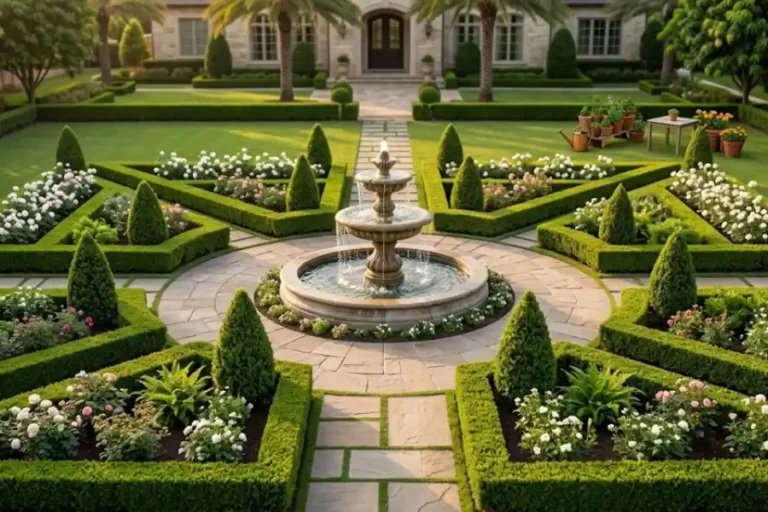
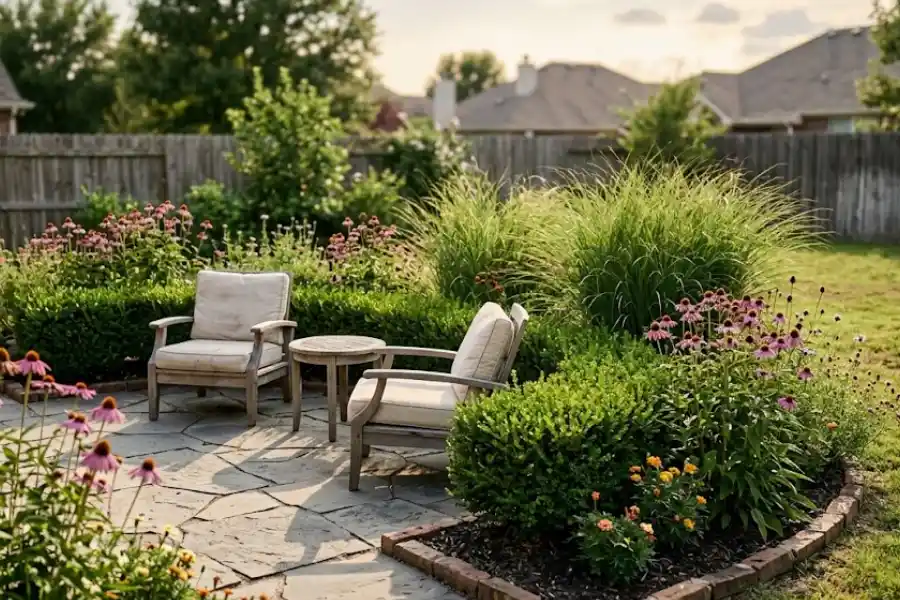
2. A Low Hedge for Privacy
A row of low, trimmed shrubs blocks the neighbor’s view without feeling like a wall. Boxwood and holly are popular picks because both stay green all year.
3. Ornamental Grasses
Grasses sway in the wind and add motion to a still space. They also need very little water once they take root, which makes them a smart pick for busy homeowners.
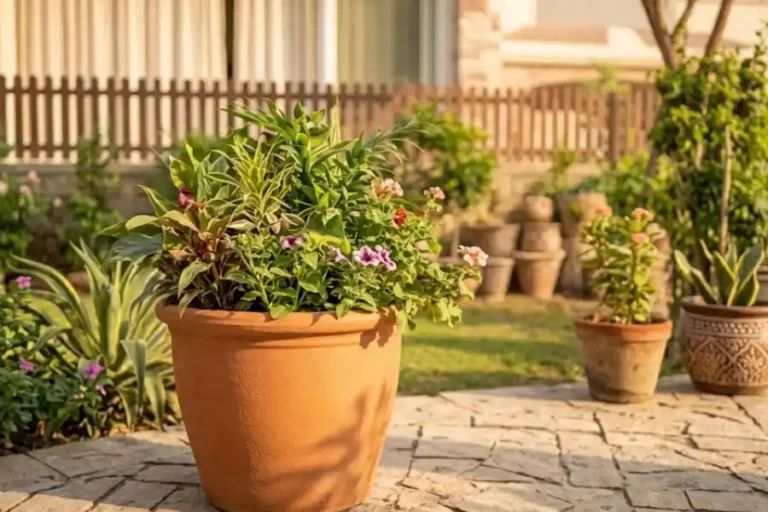
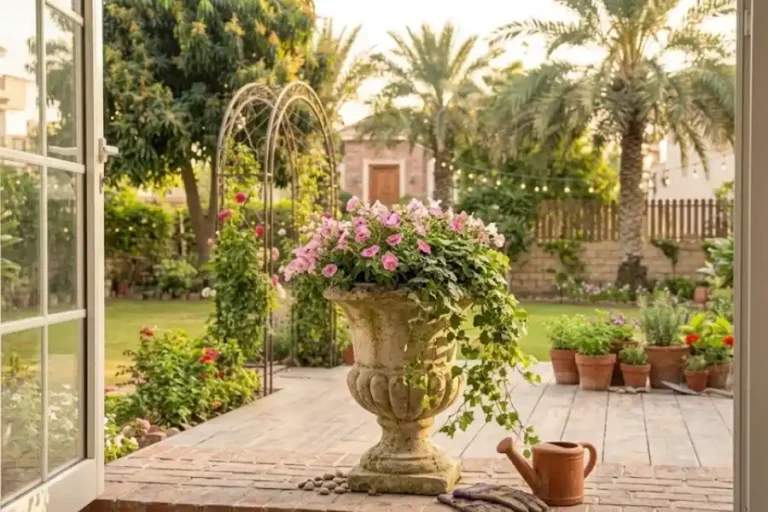
4. Container Gardens
If you rent your home, pots are the answer. These container garden ideas show how to move plants around, change them each season, and skip digging into the ground altogether.
5. A Shade Tree Set Back From the Edge
One shade tree, planted at a safe distance, can cool your patio a lot in summer. Pick a slow-growing type to keep the roots easy to manage for years.
6. Climbing Vines on a Trellis
A trellis with vines adds height without taking up floor space. This works well for small patios that lack room for wide beds.
7. Stepping Stone Path
A short stone path from the patio into the yard makes the space feel bigger. It also gives your yard a clear sense of direction.
8. Raised Garden Beds
Raised beds sit above ground level, which means better drainage and less bending over. They also create a neat, clear edge around the patio.
9. Fragrant Herbs Near the Seating Area
Plant rosemary, thyme, or mint in a few outdoor herb garden pots near your chairs. Brush past them, and they release a nice smell. You can use them for cooking too.
10. A Low Stone or Brick Border
A short border of stone or brick separates the patio from the lawn. It keeps mulch and soil off the pavers and gives the whole space a finished look.
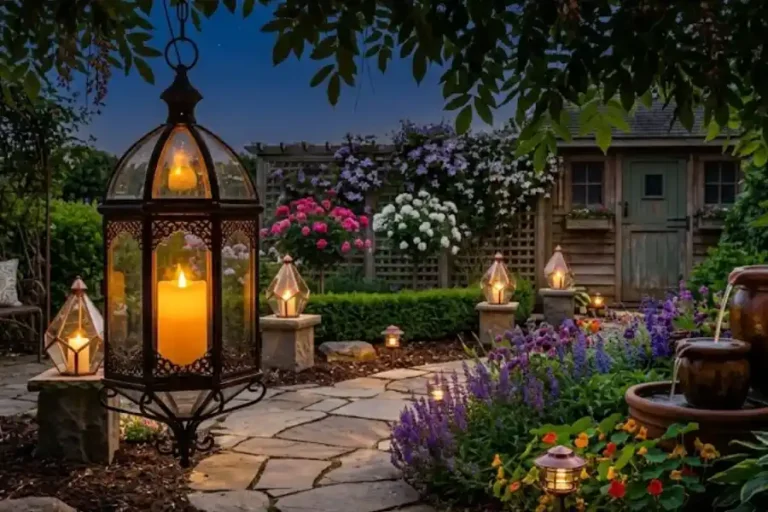
11. Solar Path Lights
Small solar garden lights along a bed or path add a soft glow at night. They need no wiring and cost very little to run.
12. A Mini Water Feature
A small fountain adds a calming sound to your patio. It also helps cover up noise from traffic or nearby conversations.
13. Native Plant Beds
Native plants already suit your local weather and soil. That means less watering, less fertilizer, and fewer pest problems.
14. A Fire Pit Ring With Heat-Safe Plants
If your patio has a fire pit, pick plants that can take some heat and won’t catch a spark easily. Keep any greenery a few feet back from the flames.
15. Mixed Textures With Mulch
Mix smooth river rock in one spot with dark mulch in another. This mix makes your beds look planned instead of plain.
16. A Pergola With Climbing Plants
A pergola over part of the patio gives shade without blocking the whole sky. Add a climbing plant like wisteria for extra color as it grows.
17. Seasonal Color Rotation
Plant spring bulbs, summer flowers, and fall bloomers in the same bed. That way, something is always blooming, and your patio stays fresh from March through October.
Plants That Can Cause Problems Near a Patio
Not every plant belongs near a patio. Some can cause damage. Some create extra work down the road. Here are a few to think twice about.
- Willows and poplars: their roots spread far and fast, and can crack pavers even from a distance
- Fruit trees: they can drop messy fruit right onto your seating area
- Bamboo: it can spread fast and pop up through gaps in the stone if you don’t contain it
- Thorny plants: too close to a walkway, they can scratch anyone who brushes past
If you already have one of these plants, you don’t have to tear it out. Just watch the roots and trim it back when you need to.
Low-Maintenance Options If You Don’t Want a Big Project
Not everyone wants a big project. If you want a patio that looks good with less work, keep it simple.
- Pick native plants suited to your climate
- Use mulch to cut down on weeding
- Choose plants that come back every year on their own
- Group plants with similar water needs together, so you won’t over-water some and under-water others
A Simple Budget-Friendly Plan
You don’t need a big budget for this.
- Start with one small section, not the whole yard
- Use mulch and a few pots to test a layout first
- Ask a local nursery which plants are on sale right now
- Ask a neighbor to split plants from their garden instead of buying new ones
Frequently Asked Questions
What is the cheapest way to landscape around a patio?
Mulch, a few pots, and a simple border cost the least to start. You can add more over time as your budget allows.
Should the ground be higher or lower than the patio?
In most cases, garden beds should sit a bit lower than the patio, or slope away from it. This keeps water and soil off the pavers.
How do I stop weeds from growing near the patio edge?
A stone or brick border helps a lot. Add a layer of mulch on top, and pull any weeds early, before they can spread seeds.
Can grass grow right up to the edge of a patio?
Yes, but a small border makes mowing much easier. It also keeps grass clippings off your seating area.
What plants work best in shade near a patio?
Hostas, ferns, and astilbe all do well in shade, and they add color even in spots that get little sun. For more options, browse this list of garden plants for shade.
Final Thoughts
Good landscaping around a patio does two things at once. It looks great, and it works with your yard, not against it. Start with the planning steps above, pick a few ideas from the list that fit your space, and skip the plants that cause problems later. Your patio will go from a plain slab to the spot everyone wants to sit.