Solar Garden Lights Outdoor: How to Choose the Right Ones and Fix Common Problems
You bought solar garden lights because they looked easy. No wires. No electrician. Just push them into the soil and let the sun do the work. Then night comes, and half of them barely glow, one won’t turn on at all, and you’re left wondering if you wasted your money.
You are not alone. Thousands of people search for answers to this exact problem every single day. The good news is that most solar garden light issues have simple fixes, and most buying mistakes are easy to avoid once you know what to look for.
This article walks you through everything: how these lights work, which type fits your yard, how to place them so they get real sunlight, and how to fix the most common problems yourself. No special skills needed, and no tools required.
How Solar Garden Lights Work
Every solar garden light has three main parts: a small solar panel, a rechargeable battery, and an LED bulb. During the day, the panel soaks up sunlight and turns it into electricity. That electricity gets stored in the battery. When it gets dark, a light sensor tells the bulb to turn on, and it runs off the stored power until the battery runs low or the sun comes up again.
That sounds simple, and it is. But the quality of each part matters a lot. A cheap panel charges slowly. A weak battery drains fast. A poor sensor might turn the light on too early or not at all. This is why two lights that look almost identical can perform completely differently once you get them home.
Types of Solar Garden Lights (And Which One You Need)
Not every solar light is built for the same job. Picking the wrong type is one of the biggest reasons people feel disappointed after buying. Here are the main categories:
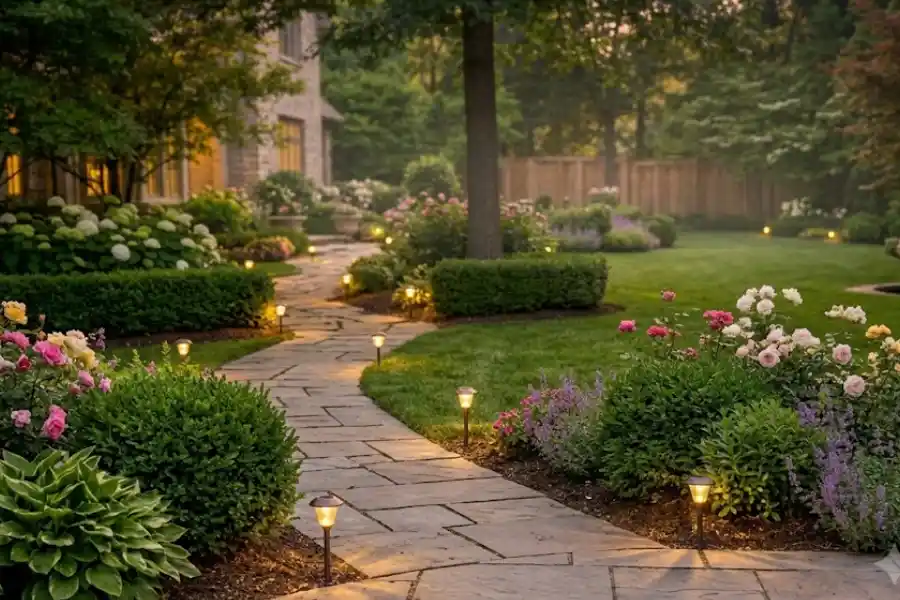
- Path lights: Short stake lights that line walkways and borders. They give soft, even light rather than bright spotlighting.
- Spotlights (uplights): These point upward to highlight trees, statues, or flower beds. Great for drama, not for walking safely.
- String or fairy lights: Strands of small bulbs wrapped around a pergola, fence, or patio railing. Best for atmosphere, not function.
- Lantern lights: Freestanding or hanging lights that mimic old-fashioned oil lanterns. Popular near seating areas, they look fantastic when placed directly on top of a Plastic Outdoor Garden Table choice.
- Bollard lights: Taller, post-style fixtures that mark driveways or garden edges with a more upscale look.
- Motion sensor lights: Stay dim or off until they detect movement, then brighten. Ideal for security near entryways.
A quick rule that helps: if you need to see where you’re walking, choose path lights or motion sensor lights. If you just want your garden to look pretty at night, string lights or lanterns do that job better.
What to Check Before You Buy
Packaging often makes every solar light sound amazing. Here’s what matters:
- Lumens (brightness): For soft garden ambiance, 20 to 50 lumens is plenty. For a path you’ll walk at night, look for 100 lumens or more. For security lighting, 300 lumens and up.
- IP rating: This tells you how weatherproof the light is. Look for IP44 or higher for rain exposure, and IP65 if the light will face direct downpours.
- Battery type: Lithium batteries hold a charge longer and handle temperature swings better than the cheaper nickel batteries found in budget packs.
- Solar panel size: A bigger panel usually charges faster and stores more power, especially in areas with shorter winter days.
- Light modes: Some lights offer steady glow, dim mode, and motion mode. More modes mean more control over your battery life.
If a listing doesn’t mention lumens, IP rating, or battery type at all, treat that as a warning sign. It usually means the specs aren’t good enough to brag about.
Placement Mistakes That Kill Your Light’s Performance
Here’s something most buying guides skip completely, and it’s often the real reason lights seem to “stop working.” It’s not the light. It’s where you put it.
Solar panels need direct, unblocked sunlight for at least 6 hours a day to fully charge. A light tucked under a tree branch, behind a fence, or in the shadow of your house will always underperform, no matter how expensive it was.
Follow these placement tips to get the most out of every light:
- Avoid spots shaded by trees, roof overhangs, or tall plants, even if the shade only lasts part of the day.
- In the Northern Hemisphere, face panels south for the most consistent sun exposure throughout the day.
- Keep the panel tilted slightly rather than perfectly flat, so rain slides off instead of pooling on the surface.
- Move lights seasonally if trees grow leaves in summer and lose them in winter, since this changes the shade pattern.
- Test a new spot for a few days before committing your whole light collection to it.
A solar light that gets four hours of full sun will almost always outperform one that gets eight hours of dappled shade. Sunlight quality matters more than sunlight duration, though you can subtly boost light in shaded spots if you position them to reflect off strategically placed DIY outdoor garden mirrors.
Common Problems and How to Fix Them Yourself
Before you assume a light is broken, run through this list. Most issues take less than five minutes to fix.
The light won’t turn on at all
Check for a plastic pull tab covering the battery contacts. Many new lights ship with this tab still in place, and it blocks the connection completely. Also check that the on/off switch, often hidden underneath the light head, is actually set to “on.”
The light turns on but is very dim
This usually means the battery isn’t fully charged, or the solar panel is dirty. Wipe the panel with a soft, damp cloth to remove dust, pollen, or water spots, then give it a full sunny day to recharge before judging it again.
The light works for a while, then dies early at night
This is a sign the rechargeable battery is aging and holding less charge than it used to. Most solar light batteries last one to two years before they need replacing. Good news: most brands use standard AA or AAA rechargeable batteries that you can swap out yourself.
The light stopped working after rain
Check the IP rating on the box. If it’s below IP44, water may have gotten into the battery compartment. Dry it out completely, check for rust on the contacts, and gently clean any corrosion with a pencil eraser or fine sandpaper.
The light flickers on and off randomly
This often points to a loose battery connection or a failing light sensor. Try removing and reseating the battery first, since that solves the issue more often than people expect.
How to Make Solar Garden Lights Last Longer
A little maintenance goes a long way with solar lighting. These habits can add real years to their lifespan:
- Clean the solar panels once a month with a soft cloth, since dust and grime block sunlight absorption.
- Bring string lights and delicate lanterns indoors during heavy snow or ice storms, even if they’re rated for outdoor use.
- Replace batteries as a set rather than mixing old and new ones, since mismatched batteries drain unevenly.
- Turn lights off manually (if they have a switch) during long trips to preserve battery health.
- Check stakes and mounts each spring, since freeze and thaw cycles can loosen them in the soil.
Are Solar Garden Lights Worth It?
For most homes, yes. There’s no wiring cost, no increase to your electric bill, and setup usually takes a few minutes per light. The tradeoff is that solar lights are generally less bright than hardwired fixtures, and their performance depends heavily on sunlight, which means cloudy climates or heavily shaded yards will see weaker results.
If your garden gets decent sun for most of the day, solar lighting is one of the easiest upgrades you can make. If your yard is mostly shaded by mature trees or buildings, you may get better results mixing a few hardwired fixtures for your most important areas, like front steps, with solar lights for decorative accents elsewhere.
Frequently Asked Questions
Do solar garden lights work in winter?
Yes, but they charge more slowly because days are shorter and the sun sits lower in the sky. Placing them in the most open, unobstructed spot you have will help a lot during winter months.
How long do solar garden lights last at night?
Most quality lights run 6 to 12 hours on a full charge, which is enough to cover a typical night. Cheaper models with small batteries may only last 3 to 4 hours.
Can I leave solar garden lights out all year?
Most path and spike lights are built to stay outside year-round. String lights and lanterns often need more protection, so check the IP rating before leaving them out through winter storms.
Why do new solar lights not work right out of the box?
New batteries often ship partially charged or with a plastic insulator tab still attached. Give new lights a full day of direct sunlight before deciding if something is actually wrong.
Do solar garden lights attract bugs?
Warm white LED lights attract far fewer insects than bright white or blue-toned lights. If bugs are a concern, choose warm white bulbs and keep lights away from seating areas.
Solar garden lights are one of the simplest upgrades you can make to your outdoor space, but only if you choose the right type, place them correctly, and know how to troubleshoot the small issues that come up. With the tips in this guide, you should be able to get more brightness, more reliability, and more years out of every light in your garden.