Tall Outdoor Planters: How to Choose Ones That Won’t Crack or Fade
Walk past any beautiful front porch and you’ll notice something. It’s rarely the flowers that grab your eye first. It’s the pot. Tall outdoor planters do something small plants on the ground can never do: they lift your garden up to eye level, where people truly notice it.
But here’s the problem. Most people buy a tall planter, fall in love with how it looks in the store, and then watch it crack, fade, or tip over within a year. This article fixes that. By the end, you’ll know exactly what to look for, what to avoid, and how to pick large outdoor planters that survive real weather, season after season, rather than a single nice afternoon.
Why Tall Planters Work So Well
Height changes everything in a garden. A short pot blends into the ground. A tall one becomes a landmark. It draws the eye upward, frames a doorway, and makes even a plain porch feel designed on purpose.
There’s a useful side too. Tall planter pots keep soil further from the ground, which means less bending, better drainage, and fewer pests crawling in from below. Your plants stay healthier, and your back thanks you.
The Material Question: What Holds Up Outdoors
This is where most people get it wrong. They pick a planter because it looks nice in a showroom, not because it can handle sun, rain, or frost. Here’s a quick breakdown of what holds up.
- Fiberglass: Light, strong, and one of the best weather-resistant planters you can buy. It won’t crack in winter and doesn’t fade quickly in sun.
- Concrete: Extremely durable and heavy enough to resist wind, but it can crack in freezing temperatures if water gets trapped inside.
- Terracotta: Classic and beautiful, but it’s porous. It absorbs water, which means it can crack in cold climates. Best for warmer regions.
- Resin or plastic composite: Budget-friendly, weatherproof, and easy to move. Quality varies a lot, so check the thickness before buying. If you want a more rustic feel instead of a modern look, you can also look into heavy-duty barrel garden pots for your larger displays.
- Metal (galvanized steel): Modern look, very sturdy, but it can heat up fast in direct sun, which affects roots.
Quick tip: If you live somewhere with real winters, always check for a drainage hole and avoid glazed ceramic unless it’s rated for freezing temperatures. Trapped water is the number one reason planters crack.
How to Pick the Right Size
Bigger isn’t automatically better. The right size depends on what you’re planting and where it’s going.
For Small Trees or Shrubs
Go with at least 24 inches in height and width. Roots need room to spread, and a cramped pot stunts growth no matter how well you water it.
For Flowers and Trailing Plants
An 18 to 24 inch tall planter usually works well. This gives enough soil depth for healthy roots while keeping the piece easy to move if needed.
For Entryways and Symmetry
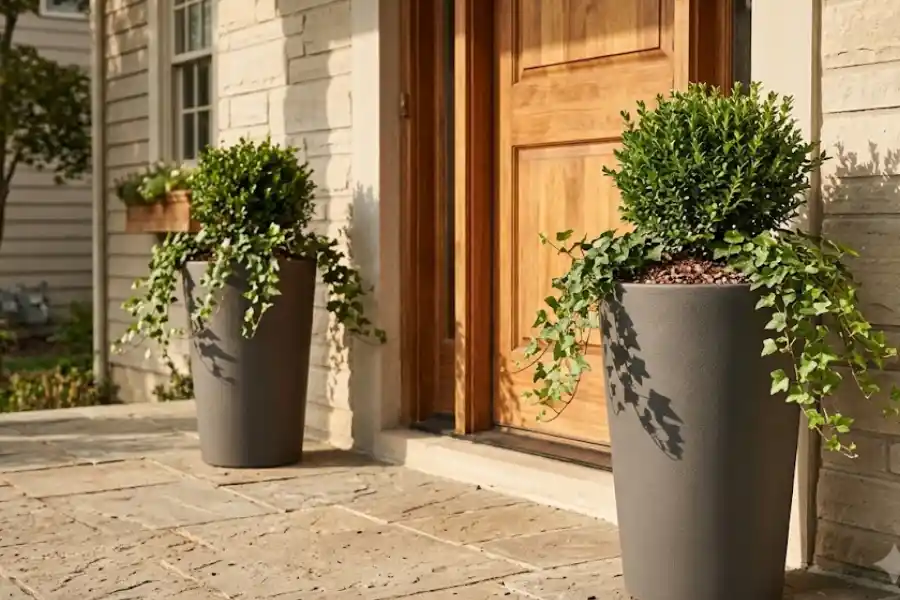
If you’re placing planters on either side of a door, matching height matters more than matching size. Consistent height creates the sense of balance that makes an entrance feel finished, and you can easily pair these vertical pots with low garden pots rectangle layouts along the porch wall for a tiered look.
Where to Place Them for Maximum Impact
Placement is where a lot of good planters go to waste. Here are the spots that consistently work.
- Flanking a front door: Instantly upgrades curb appeal, especially in matching pairs.
- Corners of a patio: Anchors the space and softens hard edges like concrete or brick.
- Along a fence line: Breaks up a plain fence and adds privacy when paired with tall plants.
- Beside outdoor stairs: Adds a sense of arrival, similar to a hotel entrance.
Best Plants for Tall Outdoor Planters
Not every plant looks right in a tall pot. You want something that either spills over the edge or grows upward to match the planter’s height.
- Boxwood or dwarf conifers for a clean, structured look that lasts through winter.
- Boston fern or trailing ivy for softness and movement along the sides.
- Ornamental grasses for height, texture, and almost no maintenance.
- Geraniums or petunias for color that lasts all summer.
Keeping Your Planters Looking Good Year After Year
A little care goes a long way. Check the drainage hole every few months to make sure it isn’t blocked. In freezing climates, consider moving lightweight planters into a garage or covered area during winter. For heavier concrete or fiberglass pots, empty excess soil moisture before the first hard freeze to prevent cracking.
Cleaning is simple too. A mix of mild soap and water once or twice a year keeps fiberglass and resin planters looking new, while a soft brush works well on textured concrete.
Final Thoughts
The right tall outdoor planters do more than hold soil. They shape how a space feels the moment someone walks up to it. Choose the material based on your climate, pick a size that matches your plant’s roots, and place them where they’ll truly be seen. Get those three things right, and your porch or patio will look intentional, not accidental.