Barrel Garden Pots: How to Set Them Up, What to Plant, and Keep Them Thriving for Years
You have seen them at garden centers, on front porches, and tucked into sunny backyard corners. Big, round, wooden planters with metal rings wrapped around them. They always look full and lush. Somehow more alive than anything planted in a plain plastic pot.
Those are barrel garden pots. And if you have been thinking about getting one, or you already own one and want better results from it, you are in the right place.
This article walks you through all of it. What barrel pots are, why they work so well, how to set one up the right way, and which plants thrive inside them. It also covers the common mistakes most gardeners make and how to avoid every single one before it costs you time and money.
What Are Barrel Garden Pots?
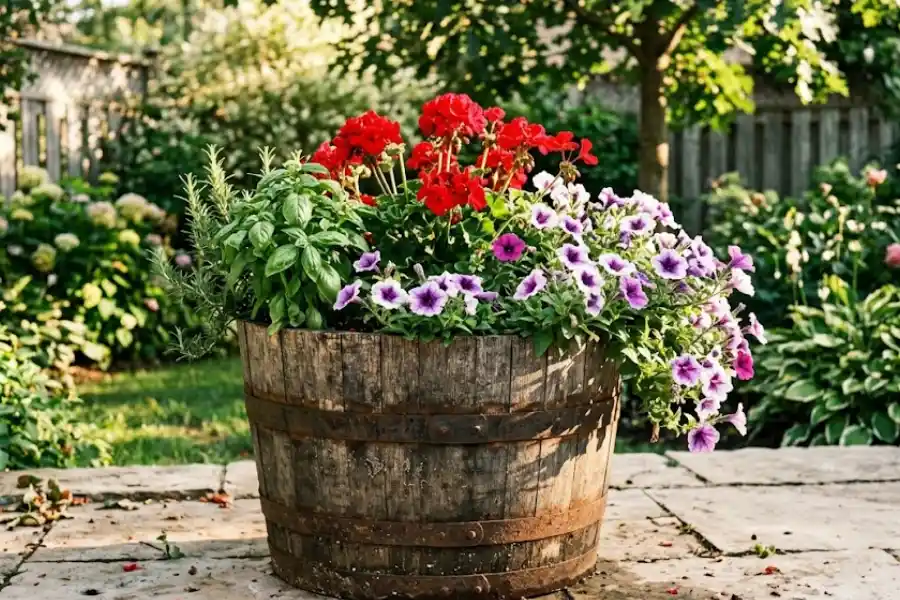
Barrel garden pots are large, round planters shaped like old-fashioned wooden barrels. Most of the authentic ones start as real wine or whiskey barrels. After the barrels finish being used to age drinks, they get cut in half. Each half becomes a planter.
A standard half-barrel sits about 27 inches across and 16 to 18 inches deep. That is a serious amount of growing space. Most regular pots do not even come close.
You can also find imitation barrel pots made from plastic, resin, or fiberglass, much like many modern White Outdoor Garden Pots designed for patios and garden spaces.These look similar but weigh a lot less and cost less too. Both types have their place, and we will cover the differences in detail below.
Why Gardeners Keep Coming Back to Barrel Pots
Barrel garden pots have been popular for decades. That staying power goes well beyond looks. They solve real problems that smaller containers cannot.
They hold much more soil: A standard half-barrel holds around 15 to 16 gallons of soil. That is enough room for strong root systems, mixed plantings, and even small fruit trees. Regular pots simply cannot compete.
They protect roots from temperature extremes: The thick walls of a real oak barrel act like natural insulation. They keep roots cooler in summer and warmer during fall cold snaps. Thin plastic or ceramic pots offer no such protection.
They look good without any effort: The rustic, weathered look of a barrel pot suits almost any garden style. Cottage, farmhouse, traditional, or a simple patio setup. They do not need decorating around them. They handle the decorating themselves.
They cost less than you might expect: A quality half-barrel typically runs between 40 and 80 dollars. A terra-cotta pot the same size can cost five times that amount. For the planting space you gain, barrel pots offer one of the best deals in container gardening.
They function like mini raised beds: Because of the depth and width, you can grow a full mix of plants in one barrel, just like a small raised garden bed. Tall plants in the center, bushy ones around them, and trailing plants spilling over the rim.
Types of Barrel Garden Pots: Real Wood vs. Imitation
Knowing the difference between the main types saves you from a purchase you will regret. Here is what to expect from each one.
Authentic Wine or Whiskey Barrel Halves
These are the real thing. They come from actual barrels used by wineries or distilleries. The wood is usually thick oak, which is naturally very durable. They have a genuine, aged look that imitation pots struggle to replicate. With proper care, authentic barrels last anywhere from five to ten years or more. The main downside is weight. A filled authentic barrel pot is nearly impossible to move without help.
Plastic and Resin Barrel Pots
These are lightweight and affordable. They imitate the barrel look but weigh a fraction of the real thing, making them easy to reposition. They do not rot, which is a plus in rainy climates. However, they do not insulate roots as well as real wood does. In areas with intense summer heat, dark-colored plastic pots can overheat the soil from the outside. If your summers are brutal, real wood is the smarter pick.
Fiberglass Barrel Pots
Fiberglass falls between real wood and plastic in terms of quality. It is lightweight like plastic but much stronger and more attractive. It resists cracking, never rots, and handles temperature changes well. The only real downside is price. Quality fiberglass pots cost more than plastic alternatives.
For most home gardeners in the USA, authentic half wine or whiskey barrels purchased from garden centers or local distilleries give the best results by far. If weight or budget is a concern, resin pots are a solid second choice.
How to Set Up Your Barrel Garden Pot the Right Way
Most people skip a few important steps when setting up a barrel pot for the first time. Those shortcuts cause big problems later. These are the steps to get it right from the start.
Step 1: Place the barrel before you fill it
A barrel pot filled with soil can weigh over 200 pounds. Move your barrel to its permanent spot before you add a single scoop of soil. Choose the location based on how much sunlight the plants you want to grow need. Once it is full, it is staying put for the season.
Step 2: Drill proper drainage holes
Many barrel pots arrive without drainage holes, or with only one or two small ones. That is not enough. Drill five to six holes across the bottom, each about one inch wide. The holes need to be large enough to pass a pencil through. Without good drainage, water pools at the bottom and roots rot within weeks.
Step 3: Raise the barrel off the ground
Set your barrel on bricks, flat stones, or pot feet. This keeps the base dry, prevents rot, keeps the drainage holes from getting blocked, and discourages insects from moving in underneath. This one step alone can add years to a wooden barrel’s life.
Step 4: Line the inside of wooden barrels
For real wood barrels, place a liner inside before adding any soil. An old compost bag with several holes punched into the bottom works perfectly. This layer slows down how quickly moist soil contacts the bare wood, and it can add two to three years to the barrel’s lifespan. It is one of the most important steps most guides skip entirely.
Step 5: Use a filler at the bottom to reduce cost and weight
Plant roots do not typically reach all the way to the bottom of the barrel. Fill the lowest one-fifth of the barrel with crushed empty nursery pots, large pebbles, or a few sealed plastic bottles. Then fill the rest with your soil mix. This approach cuts your soil cost and keeps the finished pot easier to handle.
Step 6: Use the right soil mix
Never use ground soil from your yard in a barrel pot. It compacts too quickly in a container and blocks water from draining properly. Use a quality potting mix designed for containers. For the best results, blend 70 percent potting soil with 20 percent compost and 10 percent perlite. This combination gives your plants nutrients, good drainage, and the air their roots need to breathe.
Step 7: Add fertilizer right at planting time
Work a slow-release granular fertilizer into the top layer of your soil when you plant. A good starting point is about one teaspoon of slow-release fertilizer per gallon of soil. For a standard 16-gallon half-barrel, that works out to roughly five tablespoons mixed into the top few inches.
Best Plants to Grow in Barrel Garden Pots
The depth and width of a barrel pot opens the door to plants that most containers cannot support. Here are the top options across different categories.
Vegetables and Edibles:
- Tomatoes: One large plant in the center, or two compact varieties. The generous column of soil supports strong root growth and big yields.
- Dwarf carrots: They love the loose, well-aerated potting mix where there are no rocks or hard layers to stop them.
- Lettuce and spinach: Plant them around the outer edge. They are shallow-rooted and grow fast.
- Mint: Barrel pots are ideal for mint because they contain its aggressive spreading habit. In the ground, mint takes over everything around it.
- Basil, rosemary, and chives: Group them together near a kitchen door. They share similar sun and water needs and are convenient for daily cooking.
- Bush beans: Compact, productive, and surprisingly generous when grown in a barrel pot.
Flowers:
- Marigolds: Easy to grow and they naturally repel certain garden pests, making them a smart companion planting choice.
- Geraniums: Long-blooming, heat-tolerant, and available in dozens of colors.
- Petunias: Trailing varieties spill over the barrel rim beautifully and bloom from spring right through fall.
- Hydrangeas: They benefit from the moisture-retaining depth of a barrel and produce dramatic flower heads.
Small Trees and Shrubs:
- Dwarf citrus: Lemon and lime trees grow well in barrel pots and can be moved indoors when temperatures drop.
- Blueberries: Barrel pots let you control the soil pH to match what blueberries need, which is hard to do in a mixed garden bed.
- Dwarf fig trees: Surprisingly productive in a large barrel pot and they add a dramatic look to any patio.
One of the best design approaches for a barrel pot is the thriller, filler, spiller method. Place one tall, eye-catching plant in the center. Surround it with shorter, mounding plants that fill the space. Then plant something trailing along the outer edges to spill over the sides. This creates a lush, professional look that is hard to mess up.
Common Mistakes That Ruin Barrel Garden Pots
Even experienced gardeners make these errors. Learning them upfront saves a lot of frustration and wasted plants.
Not drilling enough drainage holes. This is the number one mistake. Without proper drainage, roots sit in standing water and rot quickly. Five to six holes, each about one inch wide, is the minimum for a standard half-barrel.
Using ground soil instead of potting mix. Ground soil is far too dense for containers. It compacts into a solid mass, cuts off oxygen to the roots, and makes drainage nearly impossible. Always use potting mix.
Letting a wooden barrel dry out completely. When a wooden barrel dries out, the wood staves shrink, the metal bands loosen, and the whole barrel can literally fall apart. Keep some moisture in the soil at all times, even through the off-season. A barrel that stays slightly moist stays structurally tight.
Setting the barrel flat on a hard surface. Drainage holes get blocked when a barrel sits directly on concrete, brick, or wood decking. Always use pot feet or bricks to lift it clear of the surface below.
Overcrowding the planting. A barrel feels large, but roots still need room to grow. Crowded plants compete for water and nutrients and end up weaker and less productive than they would be with proper spacing.
Forgetting to fertilize after the first month. The nutrients in potting soil wash out fast. Every time you water, some nutrition drains away. After the first four to six weeks, start feeding with a liquid fertilizer every two to four weeks through the growing season.
How to Make Your Barrel Garden Pot Last for Years
With the right habits, a real wood barrel pot can give you a decade of beautiful planting. Here is what extends the life of your barrel.
Keep it raised at all times. Ground contact causes bottom rot faster than any other factor.
Line the inside before you ever plant in it. This one step, as simple as it is, adds years to the barrel’s functional life by limiting direct moisture contact with the wood.
Water the outside of the barrel too. When you water your plants, also wet the outer surface of the barrel. This keeps the wood staves swollen and snug against each other, which prevents gaps from forming and reduces the chance of the barrel loosening over time.
Apply a natural wood oil to the exterior once a year. Raw linseed oil or tung oil, applied to the outside of the barrel each spring, protects the wood from rain, sun, and cracking. Keep any sealant away from the interior where it could contact the soil.
Never leave the barrel empty and dry through winter. In colder months, keep the barrel filled with lightly moistened soil. If you are not growing anything, plant cold-hardy greenery to keep the wood active. An empty, bone-dry barrel in winter is a barrel that warps and splits by the time spring arrives.
Frequently Asked Questions About Barrel Garden Pots
How much soil do I need to fill a half-barrel pot?
A standard half-barrel holds about 4 to 5 cubic feet of soil. If you use filler material at the bottom to take up space, you can reduce that to 2 to 3 cubic feet. Most potting soil bags are sold in 2-cubic-foot sizes, so plan on two to three bags for a standard barrel without filler.
Can I grow vegetables in a barrel pot?
Yes, and barrel pots are among the best options for vegetable container gardening. Tomatoes, peppers, lettuce, herbs, carrots, and beans all perform well. The depth and volume give vegetable roots far more room than most standard planters can offer.
Do barrel garden pots need drainage holes?
Without question. Standing water at the bottom of a container is the leading cause of plant death in containers. Drill at least five to six holes across the base of your barrel, each about one inch wide, before you add any soil or plants.
How long does a wooden barrel pot last?
With proper care, five to eight years is a reasonable expectation. Some gardeners get ten or more with excellent care. The biggest factors are keeping the barrel raised, keeping moisture consistent, lining the interior, and never letting the wood fully dry out in winter.
Can I leave my barrel pot outside in winter?
In USDA zones 7 and above, most barrel pots handle year-round outdoor conditions without trouble. In colder zones, keep the barrel filled with soil and covered, or move it to a sheltered area. A full, moist barrel handles freeze-thaw cycles far better than an empty or dry one.
Where is the best place to buy barrel garden pots?
Garden centers and large home improvement stores like Home Depot and Lowe’s carry a good selection. Local wineries and distilleries sometimes sell used authentic barrels at lower prices than retail. For lighter resin or plastic barrel-style pots, online retailers offer a wide range of options at various price points.
Final Thoughts
Barrel garden pots are one of those gardening choices that look wonderful and work even better. They give plants more space, more protection from temperature swings, and more character than almost any other container on the market.
The key is setting them up properly from day one. Drain them well. Use the right soil. Keep the wood consistently moist. Choose plants that suit the space. Fertilize through the season. And never, ever let a wooden barrel dry out completely.
Follow those steps and your barrel pot will reward you with full, healthy, beautiful growth year after year. Whether you have a large garden or just a small sunny deck, a barrel pot is one of the best investments any gardener can make.