Artificial Fall Flowers for Outdoors: How to Choose Ones That Last
Real flowers are stunning for about a week. Then the petals drop, the stems droop, and you are back at the store buying more. If you want rich autumn color on your porch from September through Thanksgiving, without watering or replacing a single stem, artificial fall flowers for outdoors solve that problem. But here is the catch. Not every fake flower can handle the outside world. Sun bleaches color. Rain soaks stems. Wind knocks pots over. Below is what to buy, how to set it up, and how to keep it looking fresh all season long.
Why Artificial Fall Flowers Work So Well Outside
Fall weather is unpredictable. One week it is warm and sunny. The next week brings cold rain and wind. Live mums and pansies struggle to keep up. Artificial flowers do not care about any of that. They do not need soil, sunlight, or a watering can. Once you set them up, they simply sit there and look beautiful. If this is your first outdoor decorating project, our garden decor ideas for beginners article covers a few foundational tips worth knowing before you start adding seasonal touches like these.
I have tested cheap dollar-store flowers next to higher quality UV-treated ones on a covered porch. The difference showed up fast. Within a month, the cheap set already looked pale and dusty. The UV-treated set still looked full and bright. That one comparison tells you almost everything you need to know before you buy.
The Best Types of Artificial Fall Flowers for Your Porch
Some flowers just say “autumn.” These are the ones that show up again and again in porch displays, window boxes, and front door arrangements.
- Mums (chrysanthemums): The classic fall flower. Full, round, and available in orange, burgundy, and gold.
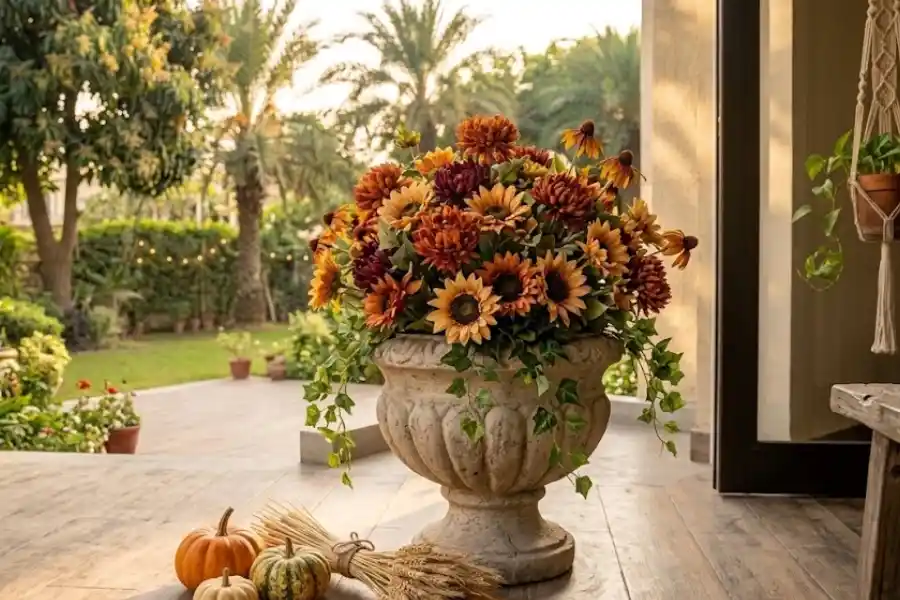
- Sunflowers: Bright and cheerful. They work well mixed with wheat stems or pumpkins.
- Dahlias: Layered petals give a rich, textured look that photographs beautifully.
- Hydrangeas: Big, soft blooms that add volume without much effort.
- Marigolds and ranunculus: Smaller flowers that fill gaps and add depth to an arrangement.
Mixing two or three of these usually looks more natural than sticking with just one type. Real gardens are never perfectly uniform, and your fake one should not be either.
Choosing a Material That Can Handle the Outdoors
This is the step most people skip, and it is the one that matters most. The material decides whether your flowers last three years or three weeks.
UV-Resistant Plastic (PE or PVC)
This is the toughest option for full sun. Look for the words “UV-resistant” or “UV-treated” on the label. Some brands mix UV protection directly into the plastic while it is made. Others just spray a coating on top. The mixed-in version costs more, but it holds its color much longer.
Silk and Polyester Blends
These look the most realistic up close, with soft, detailed petals. But without a UV coating, they fade quickly in direct sun. They do best in covered or partly shaded spots, like under a porch roof.
Latex and Rubber
Latex flowers flex and bend like real petals, which adds realism. They handle rain well, but extreme cold can make them stiff or brittle over time.
If a listing does not mention UV protection anywhere, assume it has none. Treat that flower as an indoor-only piece, even if the photo shows it on a porch.
How to Style Artificial Fall Flowers Outdoors
Where you place your flowers matters as much as which ones you buy.
Porch Planters and Urns
Group tall stems like sunflowers or dahlias in the back, with shorter mums in front. This creates depth instead of a flat, one-level look. If you are shopping for containers, tall outdoor planters give you more room to layer height without the display looking cluttered.
Window Boxes
Choose trailing stems along with upright blooms. The trailing pieces soften the hard edge of the box.
Front Door and Mailbox
Small bunches tied with ribbon or wire look tidy without overwhelming the space. This is a low-cost way to add color without buying a full arrangement. For more ways to dress up this area, our front patio decor ideas roundup has plenty of inspiration beyond flowers alone.
Hanging Baskets
Pick lightweight stems here. Heavy blooms can pull the basket down or tip it in strong wind.
The Secret to Making Fake Flowers Look Real
Sticking stems straight into an empty pot is the number one reason artificial flowers look, well, artificial. Real plants grow from the base up, and your display should mimic that.
- Fill the pot with floral foam or crumpled chicken wire to anchor the stems.
- Push the stems in at slightly different angles, not all pointing straight up.
- Cover the foam with soil, moss, or small rocks so nothing is visible.
- Add height in the center or back, then let smaller blooms spill over the front edge.
This one step takes an extra five minutes, but it is the difference between a display that looks store-bought and one that looks planted. For more layering tricks like this, our container garden ideas article has more tips on building a full, natural-looking pot.
How to Stop Fading and Wind Damage
Even UV-resistant flowers benefit from a little extra care, especially if your porch gets full afternoon sun.
- Rotate them monthly. Turning the arrangement evens out sun exposure so one side does not fade faster than the other.
- Add a UV protectant spray. A light coat once a season adds an extra layer of defense against fading.
- Weigh down your pots. Fill the base with sand or stones so wind cannot tip the whole arrangement over.
- Secure loose stems. A little floral wire or a dab of weatherproof glue keeps windy days from scattering your display.
- Bring them in during storms. Artificial flowers handle wind and light rain fine, but hail and heavy storms can still snap stems or petals.
Cleaning and Caring for Outdoor Fall Flowers
Dust and pollen settle on artificial flowers just like they do on real ones. Left alone, this buildup dulls the colors over time.
Every few weeks, wipe the petals and leaves with a soft, dry cloth or a feather duster. For a more thorough clean, rinse them gently with a hose on a low setting, then let them air dry in the shade. Avoid harsh scrubbing, since it can wear down the coating that keeps the color from fading.
When to Put Up and Take Down Fall Flowers
Most people start displaying fall flowers in early to mid September, right after summer blooms fade. They stay up through Thanksgiving, then get replaced with winter greenery or holiday decor.
Since artificial flowers do not die on their own schedule, you get to choose the timeline that fits your taste. Some homes keep a lighter, natural fall palette out through early December, especially in warmer climates where snow is not a factor yet.
What Should You Expect to Spend?
Prices vary a lot based on quality and size. Small individual stems tend to sit at the lower end of the price range, while full arrangements with UV-treated materials and premium detailing cost more. As a rule, spending a little more upfront on UV-resistant materials saves money later, since you will not be replacing faded flowers every single year.
Frequently Asked Questions
Can artificial flowers stay outside all year?
UV-resistant, weatherproof flowers can stay outside through most seasons. However, extreme heat, heavy snow, or repeated storms will shorten their lifespan, so bringing them in during the harshest weather helps them last longer.
Do artificial fall flowers fade in the sun?
Any material can fade eventually, but UV-resistant options fade much slower than untreated silk or basic plastic. Rotating your display and adding a UV spray helps slow the process even further.
How do I keep artificial flowers from blowing away?
Use a heavy pot, weigh the base with sand or stones, and anchor stems in floral foam. For very windy areas, a bit of weatherproof glue or wire adds extra security.
Are artificial fall flowers waterproof?
Most outdoor-rated flowers can handle rain without a problem, since the materials are designed to resist moisture. Still, standing water in the base of a planter can cause mold, so make sure your pot drains properly.
What is the most realistic material for outdoor fake flowers?
High-quality silk and polyester blends look the most lifelike up close, but UV-treated plastic holds up better under direct sun. Many people mix both, using silk in shaded spots and UV plastic in full sun.
Artificial fall flowers for outdoors give you the look of a beautifully planted porch without the watering can, the wilting, or the yearly replanting. Choose the right material, style it with a little care, and protect it from the harshest weather, and it will keep your home looking like autumn for years, well beyond a single season.