Rectangular Garden Pots: How to Choose the Right Size, Material, and Plants
I used to think pot shape didn’t matter much. Then I moved into a place with a narrow balcony, and every round pot I owned looked wrong and wasted space. That’s when I switched to rectangular garden pots, and honestly, it changed how I garden.
If you’re staring at a tight balcony, a thin windowsill, or a long empty strip along a fence, a rectangular pot might be the easiest fix you haven’t tried yet. This article will walk you through everything: why the shape works so well, which material fits your space, how to pick the right size, what to plant, and the mistakes most people make the first time.
Why Rectangular Pots Work Better in Small Spaces
Round pots waste corner space. That’s just math. A rectangular pot fits flush against a wall, a railing, or another pot, so you don’t lose an inch of usable room. This makes them perfect for:
- Balconies and narrow patios
- Windowsills
- Walkway edges and borders
- Rooftop gardens
- Indoor shelves
There’s also a design reason. Rectangular pots create clean, straight lines.Lined up in a row, they look intentional and neat, almost like a mini hedge or garden bed. You can even align them to beautifully frame a larger water feature like a Pond for Garden, whereas round pots grouped together tend to look scattered instead.
The Real Difference Between Pot Materials
Most buying guides just list materials without explaining what really matters. Here’s the plain version, based on what each material does well and where it falls short.
Plastic and Resin
Light, cheap, and easy to move. Great if you rearrange your plants often or live somewhere windy. The downside is that cheap plastic can crack in very cold winters, and it doesn’t hold heat or moisture as well as heavier materials.
Terracotta and Clay
Classic look, and the porous material lets roots breathe. Herbs like rosemary and thyme prefer this because they hate soggy soil. The catch: clay is heavy, breaks if dropped, and can crack in freezing weather unless it’s rated for outdoor winter use.
Fiberglass and Fiberstone
This is the upgrade most people don’t know about. It looks like heavy stone but weighs a fraction as much, so one person can carry a large planter without help. It also resists cracking in cold weather better than real stone or clay. The tradeoff is price; it costs more than plastic.
Concrete and Stone
Extremely durable and won’t blow over in wind, which makes it ideal for tall plants or exposed rooftops. But it’s heavy enough that once you place it, you’re probably not moving it again without help.
Wood
Warm, natural look that suits vegetable gardens and cottage-style patios. Untreated wood will rot over time, so look for cedar or add a plastic liner to extend its life by several years.
How to Pick the Right Size (Most People Get This Wrong)
Size mistakes are the number one reason plants struggle in rectangular pots. Here’s a simple way to think about proportions instead of guessing.
- Low and wide: Height is about the same as or less than the width. Good for borders, herbs, and shallow-rooted flowers like petunias.
- Balanced rectangle: Height and width are roughly equal. This is the most flexible option and works for most vegetables and mid-size shrubs.
- Tall and narrow: Height is clearly greater than the width. Best for small trees, tall grasses, or when you want privacy screening on a balcony.
A quick rule of thumb: the pot should be about twice the depth of the root ball of your plant. Shallow pots dry out fast and stress the roots, especially in summer heat.
Drainage: The Step Everyone Skips
This is where I see the most beginner mistakes. A pot without drainage holes will drown your plant’s roots no matter how careful you are with watering.
If a pot looks perfect but has no drainage hole, either drill one yourself or use it as a decorative outer shell with a smaller, properly draining pot placed inside.
For rectangular pots specifically, add a layer of small stones or broken pottery at the bottom before adding soil. Because these pots are longer, water can pool unevenly along the length if the base isn’t level, so check that your pot sits flat before planting.
What Grows Well in Rectangular Pots
Most articles stop at “here are some pots you can buy.” Few tell you what to plant in them. Based on the shape and depth options, here’s what works best.
Herbs
Basil, mint, parsley, and chives grow beautifully in a shallow rectangular pot on a windowsill. Keep mint in its own pot though, since it spreads aggressively and will choke out neighboring plants.
Flowers
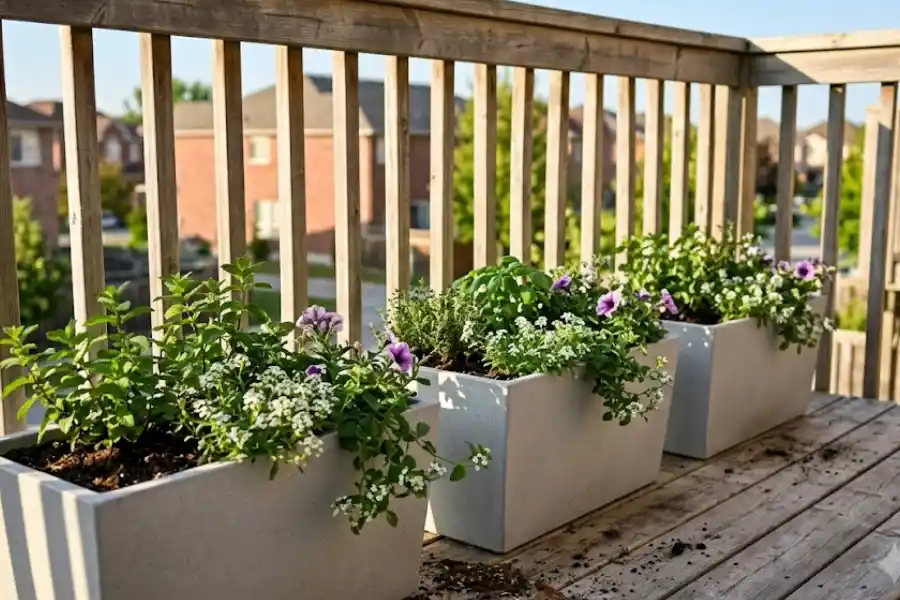
Petunias, marigolds, and pansies fill a rectangular planter fast and create a solid strip of color along a railing or path.
Vegetables
Lettuce, spinach, and radishes do well in a wider, shallower rectangle. Tomatoes and peppers need the deeper, balanced rectangle style for their root systems.
Small Trees and Shrubs
Boxwood, dwarf citrus, and small conifers suit the tall, narrow rectangular pots, especially for entryways or dividing outdoor spaces.
Placement Ideas That Make a Real Difference
- Line pots along a balcony railing to add privacy without blocking light
- Use a single long rectangular planter as a table centerpiece on a patio
- Place matching pairs on either side of a doorway for a tidy, welcoming look, or slide a long planter right alongside your outdoor Garden Corner Couch to create a cozy, enclosed lounge feel.
- Stack low rectangular pots along a walkway to guide the eye and mark the path
Common Mistakes to Avoid
- Mixing random sizes: A row of pots in different, uncoordinated dimensions looks messy. Keep the width and height consistent, and only vary the length if needed.
- Ignoring weight limits on balconies: Wet soil in a large concrete planter can weigh far more than people expect. Check your balcony’s weight capacity before committing to heavy materials.
- Overcrowding plants: The long shape tempts people to cram in too many plants. Give roots enough room, or growth will slow down for everything in the pot.
- Skipping a saucer indoors: Rectangular pots used indoors need a tray underneath, or water will damage shelves and floors.
Quick Maintenance Tips
- Check soil moisture by pushing a finger an inch into the soil before watering
- Rotate the pot every couple of weeks so plants grow evenly toward the light
- Refresh the top layer of soil once a year instead of replacing it all
- Wipe down plastic and fiberglass pots with soapy water to prevent algae buildup
Frequently Asked Questions
Are rectangular pots better than round pots?
Neither shape is better overall. Rectangular pots make better use of tight, straight spaces like balconies and walkways, while round pots often look more natural in open garden beds.
Can I use a rectangular pot without drainage holes?
Not directly. Either drill holes into the base or slip a properly draining pot inside it as an outer decorative cover.
How much depth does a rectangular pot need for vegetables?
Most vegetables need at least eight to twelve inches of depth. Tomatoes and peppers do better with twelve inches or more.
Do rectangular pots dry out faster than round ones?
Shallow, wide rectangular pots can dry out faster because there’s more soil surface exposed to air. Pots with more depth hold moisture closer to round pots of the same volume.
What’s the best material for cold climates?
Fiberglass and fiberstone handle freezing temperatures better than plain terracotta or thin plastic, which can crack when water inside them freezes and expands.