Outdoor Patio Misting Systems: Costs, Types & Buying Tips
Your patio should feel like your favorite spot in the house. Instead, by July, it feels like a sauna with lawn chairs. If summer heat has turned your outdoor space into a place you avoid, you are not alone.
Outdoor patio misting systems this problem in minutes. They spray a fine, cool mist that can drop the air temperature around you by as much as 30 degrees Fahrenheit. No more sweaty backyard parties. No more skipping dinner on the deck because it feels too hot to sit outside.
This article walks through what matters most before you buy or install one. We will look at how these systems work, what they cost, which type fits your climate, and the mistakes that trip up most first-time buyers. By the end, you will know which kind of outdoor patio misting system is right for your home.
What Is an Outdoor Patio Misting System?
An outdoor patio misting system is a simple setup. It uses a line of thin tubing with small nozzles spaced along its length. The tubing connects to a water source, like a garden hose or your home’s main water line. When water flows through, the nozzles push it out as a fine mist.
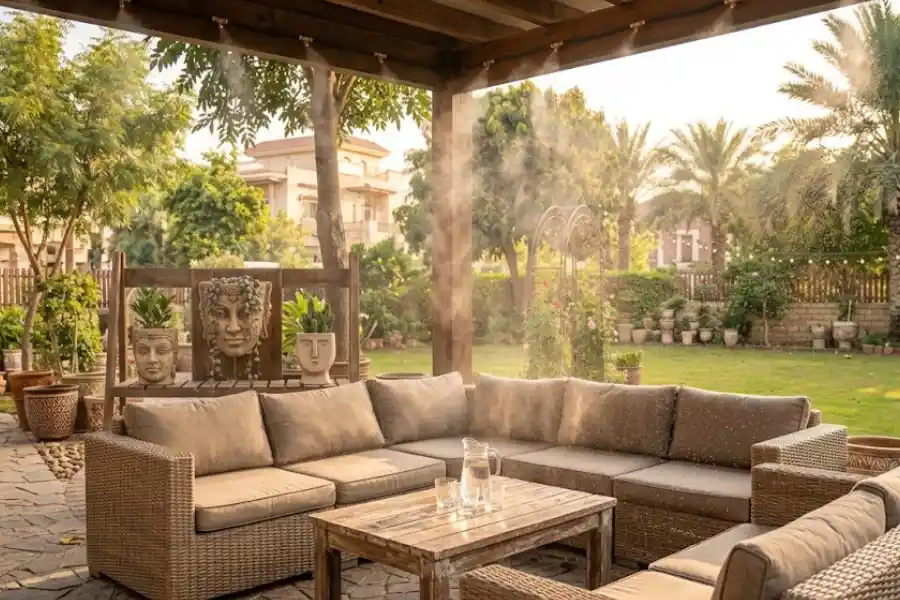
Most systems get mounted along the edge of a patio roof, pergola, or overhang. The nozzles point down or across so the mist spreads evenly over the space where people sit. Some kits use only your home’s normal water pressure. Others add a small pump that pushes water through smaller nozzles, which creates a finer mist and better cooling.
How Do Patio Misting Systems Cool the Air?
The science behind this is easier to understand than you might think. It comes down to something called evaporative cooling, and you already feel it every day.
Think about sweat. When you sweat and a breeze hits your skin, you feel cooler. That happens because the water on your skin is evaporating, and evaporation pulls heat away with it. A patio misting system uses that exact same idea, just on a bigger scale.
The tiny water droplets from the nozzles soak up heat from the air as they turn from liquid into vapor. That process pulls heat out of the space around you. The finer the mist, the faster it evaporates, and the more cooling you get. This is why high-pressure systems, which create smaller droplets, usually cool better than low-pressure ones.
Patio Misting Systems vs. Mosquito Misting Systems (Don’t Confuse These Two)
Here is something almost nobody explains clearly, and it causes real confusion when people start shopping. There are two completely different products that both get called “misting systems.”
An outdoor patio misting system for cooling sprays plain water. Its only job is to lower the temperature around your seating area. There is no chemical or pesticide involved at all.
A mosquito misting system is a different product entirely. It sprays insecticide on a timer to kill mosquitoes around your yard. The CDC does not recommend this type of system for routine home use, since it can harm bees, butterflies, and other helpful insects by spraying on a fixed schedule instead of only when mosquitoes are active.
If your goal is simply a cooler, more comfortable patio, a water-only cooling misting system is the one you want. It carries none of the safety concerns tied to pesticide-based systems.
Low, Mid, and High Pressure Systems: Which One Fits Your Patio?
Not all outdoor patio misting systems work the same way. The biggest difference between them is water pressure, and that changes both the cooling power and the price.
- Low-pressure systems connect straight to a garden hose. No pump is needed, which makes them the easiest option for a DIY project. They work best on small patios and in dry climates, but the mist can feel slightly damp on skin and furniture. A simple decorative garden hose holder at the connection point also keeps the setup tidy and easy to reach.
- Mid-pressure systems use a small pump, usually running around 200 to 300 PSI. The mist is finer and evaporates faster, which makes these a solid choice for medium-sized patios, porches, and decks.
- High-pressure systems run near 1,000 PSI. They produce a mist so fine it often evaporates before it ever touches you or your furniture. These are the go-to choice for restaurants, pool decks, and hot, dry regions.
As a simple rule, choose a lower pressure system if you live somewhere dry and just want light relief. Choose mid or high pressure if you want strong cooling without any dampness.
How Much Does an Outdoor Patio Misting System Cost?
Price depends heavily on pressure level, patio size, and whether you install it yourself or hire a pro. Here is a realistic breakdown based on current pricing.
- Basic DIY low-pressure kit: $30 to $100
- Mid or high-pressure kit, materials only: $200 to $800
- Full custom system, priced by length: $5 to $20 per linear foot
- Professional installation, including labor: $1,900 to $3,550
- Extras like misting fans, filtration, or smart timers: $50 to $500 more
The size of your patio matters more than most people expect. A small seating nook might only need a short run of tubing and a handful of nozzles. A large deck or outdoor dining area needs a longer line, more nozzles, and often a stronger pump to keep pressure steady across the whole space.
DIY Installation or Professional Help? Which Should You Choose?
Plenty of homeowners install their own low or mid-pressure misting system in a single afternoon. Others prefer to bring in a pro, especially for bigger or more powerful setups. Use this to decide.
- Go the DIY route if: your patio is small to medium sized, you are choosing a low or mid-pressure kit, you are comfortable with basic tools, and you want to keep costs down.
- Hire a professional if: you want a high-pressure system, the pump needs a dedicated electrical hookup, your patio is large or has an unusual layout, or your area requires a permit for outdoor plumbing work.
Does Your Climate Affect How Well a Misting System Works?
Yes, and this is one of the most overlooked factors when people shop for an outdoor patio misting system. Where you live changes how well the mist cools your space.
In dry climates, like Arizona, Nevada, and much of inland California and Texas, misting systems work extremely well. The air is thirsty for moisture, so it soaks up the mist quickly, and evaporation happens fast. This is where you get the biggest temperature drop.
In humid climates, like Florida, the Gulf Coast, or the Southeast, the air already holds a lot of moisture. That slows down evaporation, so the mist does not cool the air as fast, and it may leave a damp feeling instead. If you live somewhere humid, a high-pressure system paired with a misting fan will give you far better results than a basic low-pressure kit. If stray breezes keep carrying the mist away from your seating area, a few outdoor privacy screen ideas can help trap it closer to where you actually sit.
A five-minute nozzle check once a month can save you a much bigger repair bill later.
Common Problems With Patio Misting Systems
Most complaints about outdoor patio misting systems come down to a handful of avoidable issues. Here is what goes wrong, and how to fix it.
- Clogged nozzles from hard water: Mineral buildup is the most common issue. Soak the nozzles in white vinegar or a CLR solution for 30 to 60 minutes, then rinse and reattach.
- Sticky or wet patio floor: This usually means the pressure is too low for your climate, so the mist is not evaporating fast enough. Switching to a higher pressure system, or adjusting nozzle spacing, often solves it.
- Mold or mildew near the system: This happens when nozzles point directly at wood, fabric, or furniture, leaving them damp for too long. Reposition nozzles so the mist drifts through open air instead.
- Higher water bill than expected: Running the system for hours out of habit adds up fast. Use a timer and only run it while people are outside.
How to Maintain Your Outdoor Misting System So It Lasts for Years
A little routine care goes a long way with these systems. Follow these steps to keep yours running well for years.
- Clean the nozzles every 4 to 6 weeks if you live in a hard water area, or every couple of months if your water is soft.
- Install an inline filter near the water source to catch sediment before it reaches the nozzles.
- Check tubing and fittings each season for small leaks or drips, and tighten any loose connections.
- Before the first frost, drain the lines and bring the pump indoors if you live somewhere that freezes in winter.
Frequently Asked Questions
Will a misting system make my patio furniture wet?
Usually not, as long as it is sized correctly for your space. A properly pressured system produces a mist fine enough to evaporate before it lands. If you notice dampness on furniture, try repositioning the nozzles or moving up to a higher pressure setup, especially in humid climates.
Do outdoor patio misting systems attract mosquitoes?
Not directly. Since these systems only spray plain water, they do not attract mosquitoes any more than a birdbath would. The real risk is standing water, so make sure your mist does not pool anywhere nearby, and empty any containers that could collect it.
Can I run a misting system in the winter?
In regions that see freezing temperatures, no. Water left in the lines can freeze, expand, and crack your tubing or pump. Drain the system and store the pump indoors before the first hard freeze. In mild winter climates, you can usually run it occasionally without issues.
How much does it cost to run the pump?
A small misting pump uses roughly the same amount of electricity as a box fan, so the cost is minor even with regular summer use. Low-pressure hose-connected kits use no electricity at all, since they rely on your home’s existing water pressure.
Is the water from a misting system safe for pets and plants?
Yes. A cooling patio misting system uses the same tap water that comes out of your garden hose, so it is completely safe around pets, plants, and kids. This is one of the biggest advantages it has over pesticide-based mosquito misting systems.
Final Thoughts
A good outdoor patio misting system can turn an unusable summer patio into your favorite place to relax. The key is matching the right pressure level to your climate, budgeting for the setup that fits your patio size, and keeping up with simple, regular maintenance.
Start by measuring your space and taking a clear look at your local climate. From there, picking between a low-pressure DIY kit and a professionally installed high-pressure system becomes a much easier decision, and you will be sitting outside in comfort well before the next heat wave hits. Once the system is in place, browsing a few front patio decor ideas is a nice way to finish off the space and make it feel complete.