
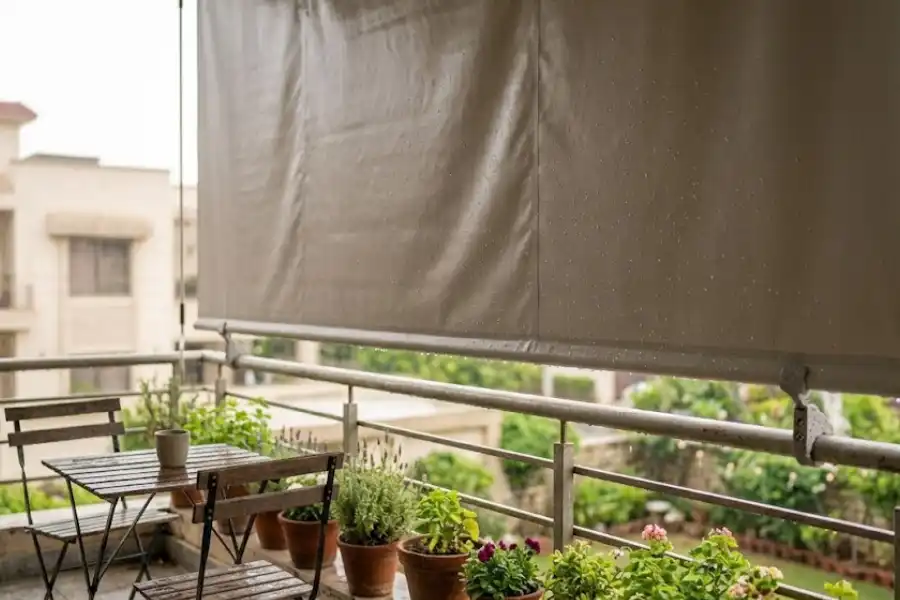
Outdoor Balcony Blinds Waterproof: What Holds Up in Rain and Wind
My first balcony blind lasted four months. It looked great in the store. Then one rainy week hit. The fabric sagged. It went stiff. It started to smell like mildew. That is when I learned a hard truth. Not every blind that says waterproof is waterproof. Some are only water resistant. That one word makes a big difference outside.
This is here to save you that headache. It covers what waterproof means for outdoor balcony blinds, which materials hold up in real rain and wind, and the mistakes that make blinds fail fast. Everything here comes from what works on a balcony in real conditions, rather than what simply looks nice in a photo.
Quick Answer: For real rain protection, pick solid PVC or HDPE blinds, not mesh. Choose outside mount over inside mount. Add wind cables if you live above the third floor. Always let a wet blind dry before you roll it up.
What Waterproof Means
Not all blinds that claim to be waterproof are built the same way. There are three levels you should know.
- Water repellent blinds have a light coating. They handle a quick drizzle. They soak through in heavy rain.
- Water resistant blinds handle more rain. But water can still get in through the seams over time.
- Waterproof blinds are made from solid material like PVC or coated fabric. Water rolls right off. It cannot soak in.
If your balcony gets direct rain, pick outdoor balcony blinds that are labeled fully waterproof. Do not settle for water resistant. That one word can decide if your blind lasts two years or two months.
The Best Materials for Waterproof Balcony Blinds
The material is the biggest factor in how long your blind will last outside. Here are the main choices.
- Solid PVC: blocks rain completely. It is thick, flexible plastic. It wipes clean in seconds. It may look less stylish than fabric.
- PVC coated polyester: mixes a fabric look with a waterproof plastic layer. This is a strong pick if you want both style and protection.
- HDPE fabric: woven tight. It blocks heavy rain but still lets some air through. It also resists sun fade better than most fabrics.
- Clear vinyl panels: let you keep your view. They still block wind and rain. They work well if you do not want to lose light.
- Mesh or sheer fabric: skip this if you want real rain protection. Mesh lets air and light through. It also lets rain through. It is better for shade than for waterproofing.
- Bamboo or natural fiber: looks nice indoors. Never use it outside. It soaks up water fast, grows mold fast, and falls apart after one rainy season.
If shade matters more to you than full rain protection, it can help to compare dedicated balcony shade options too, since mesh blinds lean more toward blocking sun than blocking water.
Types of Waterproof Outdoor Balcony Blinds
Once you know your material, pick your blind style. Each type suits a different kind of balcony.
- Roller blinds: the most common choice. They roll up and down on a tube. They work well on open and covered balconies.
- Track or zip blinds: run along a rail on both sides. This keeps them steady in strong wind, which makes them a smart pick for high floor balconies.
- Clear PVC curtains: hang like drapes. You can pull them back when you do not need them. Great if you want an open view most of the time.
- Motorized blinds: open and close with a remote or a phone app. Some models close on their own when rain starts, which helps if you are often away from home.
For balconies that also need coverage from neighbors, alongside the weather, pairing a blind with outdoor privacy screen ideas often works better than relying on one product alone.
Open Balcony or Covered Balcony
Your balcony type changes what you need. A fully open balcony gets sun and rain from every angle. It needs a fully waterproof, sun stable material like solid PVC or HDPE. A covered balcony only gets angled rain and wind. A lighter waterproof fabric can still work well here. If you are not sure how much rain and wind your own space gets, it helps to understand the terrace vs balcony difference first, since that changes how much weatherproofing you need.
Check your balcony before you buy. Stand outside during a light rain. Notice which way the water comes from. This tells you where your blind needs the strongest protection.
Do Not Ignore Wind on High Floors
Waterproofing is only half the job. Wind is the other big factor. Most people ignore it until a blind tears or blows loose.
If you live above the third floor, wind hits much harder than at ground level. Pick a blind with side guide wires or a track system. These stop the fabric from flapping and pulling away from the brackets in a storm.
Look for blinds with steel cables or heavy bottom bars. These add weight, which keeps the blind from swaying or lifting in strong gusts.
How to Install Waterproof Balcony Blinds the Right Way
How you install a blind matters as much as the material. There are two main mount types.
- Outside mount: attaches the blind to the wall or ceiling, outside the window frame. This gives full coverage and blocks more light and rain. It is the better choice for exposed balconies.
- Inside mount: fits inside the frame. It looks neat, but it leaves small gaps at the edges where wind and rain can sneak through.
For balconies with real weather, pick outside mount almost every time. Always measure with a few extra inches on each side. This overlap is what stops rain from sneaking around the edges. If you are mounting other add-ons at the same time, like balcony netting for cats, plan the bracket positions together so the hardware does not compete for the same wall space.
Cleaning and Care: Stop Mold Before It Starts
Even a fully waterproof blind can grow mold if you care for it the wrong way. The biggest mistake is rolling up a wet blind right after rain.
Always let your blind dry fully first, then roll or fold it. Trapped water between folds is the top cause of mold on outdoor blinds.
Clean PVC and vinyl blinds with mild soap and water every few weeks. Skip harsh bleach, since it can crack the plastic over time. For fabric blinds, use a soft brush and gentle soap.
Common Mistakes That Ruin Balcony Blinds Fast
Many blinds fail early. It is not always about poor quality. Small mistakes cause most of the damage.
- Picking mesh or sheer fabric in a rainy area. It looks nice, but it will not stop water.
- Buying bamboo or natural fiber blinds for outside use. These are made for indoor rooms only.
- Skipping wind cables on a high floor. This often leads to torn fabric in the first year.
- Ignoring the sun rating. A blind with weak sun protection can fade and turn brittle in one summer, even if it blocks rain just fine.
How Much Do Waterproof Balcony Blinds Cost?
Price depends on material, size, and whether the blind is manual or motorized.
- Basic manual PVC or HDPE roller blinds often start around 50 to 120 dollars for a standard size.
- Track guided or zip blinds with wind protection often run 150 to 350 dollars, depending on width and height.
- Motorized waterproof blinds, especially ones with rain sensors, can run 300 to 600 dollars or more for large balconies.
Spending more upfront on solid PVC or HDPE almost always saves money later. These blinds last years longer than cheap mesh or basic fabric.
Frequently Asked Questions
Are outdoor balcony blinds 100 percent waterproof?
Solid PVC and PVC coated fabric blinds come very close to fully waterproof. Water resistant blinds are not the same. They will let some moisture through over time.
Can I leave waterproof blinds up all winter?
Yes, if the material is made for outdoor use and drains well. Still check them now and then for ice or damage after big storms.
What is the difference between water resistant and waterproof blinds?
Water resistant blinds slow down moisture. They can still soak through over time. Waterproof blinds use a solid material that blocks water fully.
Do waterproof blinds also block wind?
Not always. Waterproofing and wind resistance are two different things. For strong wind, look for side guide wires or a track system rather than relying only on a waterproof label.
How long do outdoor balcony blinds usually last?
A good PVC or HDPE blind, installed the right way and cared for well, often lasts three to five years. Cheap mesh or fabric versions often need replacing in one to two years.
Final Thoughts
The right waterproof balcony blind comes down to three things. Pick the right material. Pick the right mount. Do a little bit of care.
Skip mesh if you get real rain. Add wind cables if you live above the third floor. Let your blind dry before you roll it up.
Get these basics right, and your outdoor balcony blinds will handle years of rain, sun, and wind. They will not fall apart on you the way mine did.