Large Dog Grass Pad For Balcony: Sizes, Types & Setup Tips
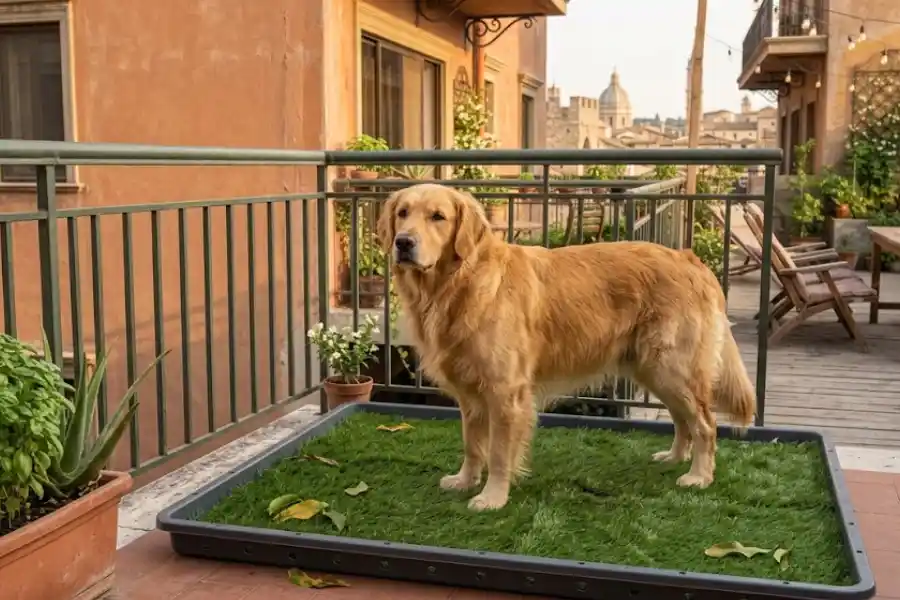
If you own a big dog and live in an apartment, you already know the problem. Small potty pads look like a joke next to a 70-pound Lab or a Shepherd mix. You need a large dog grass pad for balcony use that truly fits your dog, drains fast, and survives daily use in sun, rain, and wind. Most articles online just show you a product and call it a day. This one is different. It walks you through sizing, materials, training, cleaning, and the hidden rules apartment owners often miss, so you buy the right setup the first time.
Why Big Dogs Need A Different Kind Of Balcony Setup
Most grass pads on the market are built with small dogs in mind. A pad that fits a Chihuahua is nowhere near big enough for a Labrador, a Husky, or a Doberman. Large breeds need a lot more than a bigger patch of turf. They need room to turn around, sniff, and settle into position before they go. A cramped pad makes dogs hesitant, and a hesitant dog is a dog that “holds it” or has an accident on your balcony floor instead.
There’s also something smaller-dog articles skip entirely. Bigger dogs produce more urine per visit, so drainage has to work harder. Their weight puts more pressure on trays and bases, so cheap plastic can crack. And because they use the space more often, the whole system has to hold up to daily wear, not occasional use. A large dog grass pad for balcony living has to be built for volume, and size alone isn’t the whole story.
How Big Should The Pad Really Be?
This is the part most articles get vague about. Here’s a simple way to think about it: measure your dog from nose to tail base, then add at least 12 to 18 inches so they have room to turn and position themselves comfortably.
- Small dogs (under 20 lbs): A 20 x 16 inch pad is usually enough.
- Medium dogs (20 to 40 lbs): Look for at least 24 x 24 inches.
- Large dogs (40 to 60 lbs): You’ll want something closer to 30 x 24 inches, and many owners size up further.
- Extra-large dogs (60 lbs and up): Aim for 48 x 48 inches, or use two connected pads to build a bigger surface.
If your balcony is narrow, don’t force a square pad into a tight rectangular space. Several brands sell interlocking trays specifically so you can join two or three smaller pads into one wide surface. This works better for big dogs than one oversized single unit, since it’s easier to carry, clean, and replace piece by piece instead of hauling one giant tray. If you’re also working on a small balcony garden for beginners setup, sketch out both zones before you buy anything, since planters and a grass pad can eat up space fast on a compact balcony.
Real Grass Or Artificial Turf: Which One Works Better For Big Dogs?
This is where a large dog grass pad for balcony use really splits into two different paths, and the right answer depends on your budget and your patience for maintenance.
Real grass feels natural and most dogs take to it instantly, since it smells and feels like the ground they’re used to outside. Hydroponically grown patches absorb urine and control odor better than most synthetic options. The catch is cost and lifespan. A large real grass patch for a big dog usually needs replacing every two to four weeks, and at extra-large sizes, that adds up fast. Over a year, a big dog on a real grass subscription can easily cost several hundred dollars once you factor in size and replacement frequency.
Artificial turf costs more upfront but pays for itself over time. A good synthetic pad can last one to three years with regular cleaning, and you’re not waiting for deliveries or dealing with grass that dies in extreme heat. The tradeoff is that turf needs more deliberate odor control, since it doesn’t absorb liquid the way real soil and roots do. If you go this route, look for turf with multiple drainage layers and a tray underneath, since a flat mat by itself won’t hold up.
For big dogs specifically, artificial turf tends to be the smarter long-term choice simply because the cost of constantly replacing large real grass patches gets expensive quickly. But if your dog strongly prefers the real thing and you don’t mind the upkeep, real grass is still a solid option.
Features That Matter Most For Large Breeds
Size gets all the attention, but these details decide whether your setup lasts.
- Drainage capacity: More holes, spaced evenly, so urine doesn’t pool on the surface after a big dog uses it multiple times a day.
- Tray strength: A flimsy plastic base can bow or crack under a large dog’s weight, especially when a dog stands on the edge to turn around. Look for reinforced or thicker plastic.
- Non-slip bottom: Big dogs shift their weight more, and a sliding pad on a balcony is both annoying and unsafe.
- UV-resistant material: Balconies get direct sun for hours. Cheap turf fades and turns brittle within months without UV protection.
- Replaceable turf layer: Being able to swap just the grass mat instead of the entire tray saves money over the life of the product.
Training A Big Dog To Use A Balcony Grass Pad
Here’s something most articles skip entirely: training an adult large dog is different from training a puppy. Puppies are still forming habits, but a full-grown dog that’s used to walks and yards has to unlearn a routine, and that takes patience.
- Start with familiar scent. Rub a small amount of grass or dirt from a spot your dog already uses outside onto the new pad. Scent is the strongest trigger for dogs when it comes to bathroom habits.
- Bring them at the same times you’d normally walk them. Consistency matters more than the pad itself. Use it right after waking up, after meals, and before bed.
- Reward immediately, not later. The moment your dog goes on the pad, praise them and offer a small treat within seconds. Big dogs respond well to clear, immediate feedback.
- Keep the pad clean during training. A dog that smells old, stale waste may avoid the area entirely. Clean up right after each use during the first few weeks.
- Expect setbacks. A large adult dog may take two to four weeks to fully adjust, longer than most puppies. Don’t scold accidents. Just redirect calmly next time.
Cleaning And Maintenance For Heavy Daily Use
A large dog grass pad for balcony use goes through more wear than a small dog’s setup, so your cleaning routine needs to match that. A decorative garden hose holder mounted near the pad keeps your hose coiled and out of the way between rinses, instead of tangled across the balcony floor.
- Rinse the pad with a hose or watering can daily if your dog uses it multiple times a day.
- Pick up solid waste as soon as you notice it, since leaving it in direct sun speeds up odor.
- Do a more thorough clean weekly using a pet-safe enzyme cleaner, which breaks down odor at the source instead of just masking it.
- Check the tray underneath every week or two for standing liquid, especially after heavy use or rain.
- Replace real grass patches every two to four weeks, or synthetic turf mats once they start smelling even after cleaning.
Check These Rules Before You Buy Anything
This part gets overlooked constantly, and it can save you a real headache. Many apartment buildings and HOAs have specific rules about pets using balconies as bathroom space, separate from general pet policies. Some buildings ban it outright, others allow it only with a tray system that prevents any liquid from dripping onto balconies below you.
There’s also a structural point worth thinking about if you’re on an upper floor: a large, wet grass pad plus a big dog standing and moving on it adds real weight to a small area. It’s rarely an issue on a standard balcony, but it’s worth a quick check of your lease or building rules, especially in older buildings, before you commit to a large, permanent setup. It also helps to double-check whether your lease refers to your space as a terrace vs balcony, since that wording can affect which outdoor rules apply to your unit.
Common Mistakes To Avoid
- Buying based on price instead of your dog’s actual size. A pad that’s too small gets ignored, and you end up buying a second one anyway.
- Skipping the tray. Loose turf without a drainage tray leaks straight onto your balcony floor and stains it.
- Placing the pad in full sun all day. This dries out real grass fast and can make artificial turf uncomfortably hot for paws in summer.
- Not cleaning often enough. Odor buildup is the number one reason dogs stop using a pad they were previously fine with.
- Ignoring building rules. Getting asked to remove a setup after buying it is a frustrating and avoidable waste of money.
- Leaving the whole setup in plain view. A grass pad sitting in full view of every neighboring balcony isn’t a dealbreaker, but a few outdoor privacy screen ideas can make the space feel more like part of your balcony and less like a utility area.
Frequently Asked Questions
What size grass pad does a large dog really need?
Most large dogs between 40 and 60 pounds do well with a pad around 30 x 24 inches or bigger. Dogs over 60 pounds often need 48 x 48 inches or two connected pads for enough turning room.
Is real grass or artificial turf better for a big dog on a balcony?
Real grass feels more natural and many dogs prefer it, but it needs frequent replacement and costs more over time for large sizes. Artificial turf costs more upfront but lasts much longer with proper cleaning, making it the more budget-friendly choice long term for big dogs.
How long does it take to train an adult large dog to use a balcony pad?
Plan for two to four weeks of consistent training. Adult dogs take longer than puppies because they’re unlearning an existing routine, not building a new one from scratch.
How often should I clean a large dog’s grass pad?
Rinse daily if your dog uses it several times a day, and do a more thorough clean with a pet-safe enzyme cleaner once a week to control odor at the source.
Can a heavy grass pad damage my balcony?
Standard balconies handle this fine, but it’s worth checking your lease or building rules, especially in older buildings, before setting up a large, permanent grass pad system.
Final Thoughts
Choosing the right large dog grass pad for balcony living comes down to more than grabbing the biggest option you can find. It comes down to matching the size to your dog, picking a material that fits your budget and maintenance style, and setting it up the right way from day one. Get those three things right, and you’ll have a setup that gets used every day, stays clean, and makes apartment life easier for both you and your dog.