Aura Balcony/Deck Tiles: Price, Installation & Buying Tips
Your balcony has one job: make you want to sit outside. But if you’re staring at cracked, stained, or just plain ugly concrete every time you step out there, that’s not happening. This is the problem Aura balcony/deck tiles were built to solve, and it’s why they keep showing up in searches from renters, condo owners, and homeowners who want a fast fix.
But before you add a case to your cart, you probably have real questions. Do they work? What do they cost? Can you install them yourself in an afternoon? And are they worth it compared to other options?
This article answers all of that in plain language, based on the specs, pricing, and customer feedback available right now. No fluff, no guesswork.
What Are Aura Balcony/Deck Tiles?
Aura deck and balcony tiles are square, snap-together floor tiles made by Aura Outdoor Living (a brand under Gracious Living Innovations). The name covers both use cases, since the same tile works on anything from a compact apartment balcony to a full backyard deck. If you’re not sure which term applies to your own space, our terrace vs balcony comparison can help you sort that out. Each tile measures 12 inches by 12 inches and clips into the next one, so you don’t need glue, nails, screws, or any tools to lock them together.
They sit on top of whatever surface you already have. That means you can lay them over old concrete, an existing wood deck, interlocking pavers, or even a flat rooftop. You’re not replacing your balcony floor. You’re covering it with something that looks a lot better.
What They’re Made Of
Here’s something worth knowing before you buy: Aura tiles are not composite decking in the traditional sense. Composite decking usually blends wood fibers with plastic, and that wood content is what lets it soak up moisture, grow mildew, or warp over time.
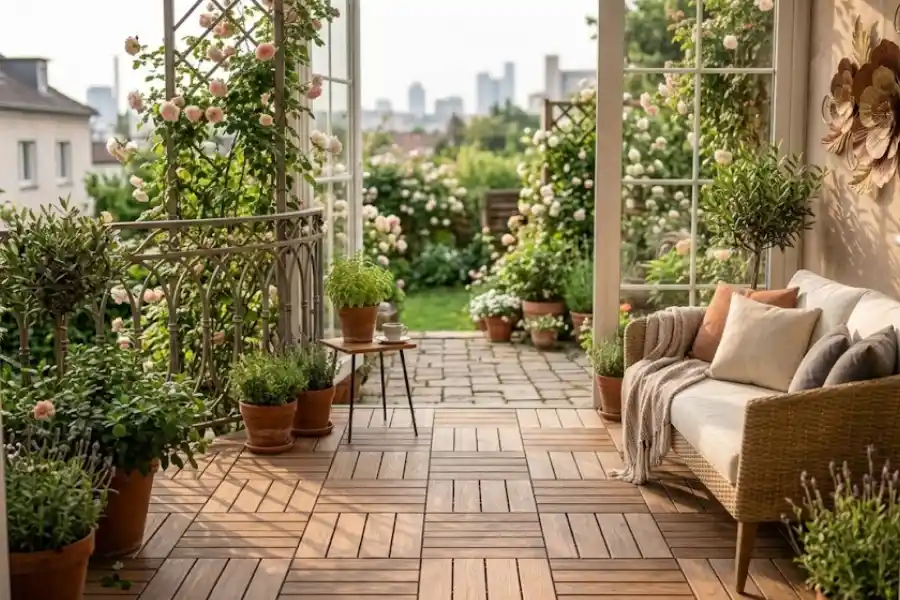
Aura tiles are made from a premium polymer material with no organic wood fibers in it at all. That’s a meaningful difference. Without wood content, there’s nothing for mold, mildew, rot, or insects to feed on. The surface is embossed with a rich wood-grain texture, so it still looks like real wood from a few feet away, but the material underneath behaves more like solid plastic than lumber.
The tile backing is also built with channels underneath, which lets air move and water drain instead of pooling on your balcony floor.
Sizes and Colors
Every tile is 12 inches by 12 inches and about 1 inch thick. They’re sold in cases of six tiles, which covers 6 square feet per case. Each tile weighs under 2 pounds, so even a full case is easy to carry up a few flights of stairs if you live in an apartment.
Aura currently offers these color options:
- Driftwood (a warm, weathered grey-brown)
- Walnut (a dark, rich brown)
- Honey Teak (a lighter golden tone)
- Grey Oak (a cooler, modern grey)
- Copper (a reddish wood tone, available in select markets)
If you want a finished, clean edge instead of a raw tile border, Aura also sells matching transition strips in a few of these colors, which snap into the tile channel for a smooth, safe edge where the tiles meet a step or the edge of your space. Once the color and edging are settled, it’s worth planning the rest of the space too. Our list of front patio decor ideas has plenty of inspiration for furniture, lighting, and layout to go with your new floor.
How Much Do Aura Balcony/Deck Tiles Cost?
Pricing varies a bit by retailer and region, but here’s a realistic range based on current listings. A single case (6 tiles, covering 6 square feet) typically runs somewhere between $40 and $55, which works out to roughly $7 to $9 per square foot. Some retailers list Aura and similar polymer tile products anywhere from $6 to $13 per square foot depending on the style and any sales running at the time.
For comparison, that’s noticeably more than basic plastic snap-tiles or interlocking rubber mats, but it’s in the same ballpark as mid-range composite decking, and cheaper than hiring someone to install real wood decking or porcelain pavers.
Where to Buy Them
Aura tiles are widely available in both the US and Canada. You’ll find them at:
- The Home Depot
- Lowe’s
- Amazon
- Walmart
- Ace Hardware
- RONA (Canada)
You can also order directly through Aura’s official website, where they list current colors, accessories, and a store locator.
How to Install Aura Deck Tiles
This is the part that sells most people, and it holds up. According to Aura, most people finish a small balcony in under 90 minutes with zero tools. Here’s the general process:
- Clean the surface. Sweep away dirt, leaves, and debris. The surface needs to be flat and solid, but it doesn’t need to be perfectly smooth.
- Check for drainage. Make sure your balcony already drains water properly, since the tiles sit on top and won’t fix an existing drainage problem underneath.
- Start in a corner. Lay your first tile flush against the corner of your space.
- Snap tiles together. Connect each new tile to the one before it using the interlocking clips on the sides. Press down firmly until you hear or feel it click into place.
- Work row by row. Continue across the space, row by row, until the area is covered.
- Trim edge tiles if needed. Odd-shaped balconies may need a tile cut down to fit. A basic utility knife or jigsaw handles this.
- Add transition strips. Snap these along any exposed edges for a finished, safe border.
Quick tip: measure your balcony twice before ordering. A miscount means a second shipment, and mismatched dye lots between orders can occasionally show slight color variation.
How Many Tiles Will You Need?
This is the part most people forget to plan for, and it’s the one that saves you a return trip to the store.
- Measure the length and width of your balcony or deck in feet.
- Multiply length by width to get your total square footage.
- Add 10 percent to that number to cover cuts, trims, and mistakes.
- Divide that total by 6, since each case covers 6 square feet.
- Round up to the nearest whole case.
For example, a small 6-foot by 8-foot balcony is 48 square feet. Add 10 percent and you’re at about 53 square feet. Divide by 6 and round up, and you’ll need 9 cases.
Cleaning and Maintenance
One of the bigger selling points here is how little upkeep these tiles need compared to a real wood deck. You won’t need to stain, seal, sand, or paint them, ever.
Routine care is simple:
- Rinse the surface with a garden hose to remove loose dirt.
- Wash occasionally with warm water and a mild dish soap.
- Use a squeegee afterward to push off excess water and reduce water spotting, especially if you have hard water.
- Avoid petroleum-based products, solvents, or harsh chemical cleaners on the surface.
If a tile gets a light scratch, gently rubbing it with fine steel wool and buffing with a small amount of WD-40 on a cloth usually blends it back in. Bigger scratches can be filled with a standard furniture scratch repair product.
Pros and Cons
This is a balanced look at how these tiles perform in real use, beyond what the marketing says.
What People Like
- No tools, glue, or screws needed for installation
- Can be installed, and just as easily removed, which is ideal for renters
- No wood content means no mold, mildew, rot, or insect damage
- No staining, sanding, or painting required, ever
- Works on concrete, existing decks, pavers, and rooftops
- Backed by a 20-year limited warranty
Where It Falls Short
- Costs more upfront than basic plastic deck tiles or rubber mats
- Some buyers have reported tiles arriving broken due to packaging during shipping, so inspect your order right away
- Color choice is more limited than full composite decking lines
- Like most dark-toned outdoor surfaces, darker colors (like Walnut) can feel warm underfoot on hot, sunny days
- Because they’re an interlocking system, the surface can feel slightly less solid underfoot than a fully fastened wood or composite deck
Aura Tiles vs. Other Balcony Flooring Options
If you’re comparing options, this is how Aura stacks up against the usual alternatives.
Aura Tiles vs. Composite Decking Boards
Composite boards need to be screwed into the joists underneath, which usually means hiring a contractor or taking on a bigger DIY project. Aura tiles snap together with no framing needed, and since they contain no wood fiber, they skip the fading and moisture issues that composite decking is sometimes known for.
Aura Tiles vs. Real Wood Interlocking Tiles
Real wood tiles (often acacia or teak) look beautiful when new, but they need regular oiling or sealing to prevent graying, splitting, and water damage. Aura tiles copy that wood look without the upkeep, though purists will say nothing fully matches real wood grain up close.
Aura Tiles vs. Porcelain or Rubber Pavers
Porcelain pavers are extremely durable and won’t fade, but they’re heavier, pricier, and less forgiving to install yourself. Rubber tiles are cheaper and softer underfoot, but they rarely match the upscale look Aura is going for. Aura sits in the middle: better looking than rubber, easier to install than porcelain.
Common Problems and the Warranty
The most common complaint isn’t about the tiles themselves, it’s about shipping. A few customers have noted that cases weren’t well packaged and arrived with cracked tiles. If this happens to you, photograph the damage immediately and contact the retailer or Aura directly.
On the durability side, Aura backs its deck and balcony tiles with a 20-year, pro-rated limited warranty that covers manufacturing defects. To file a claim, you’ll need your original purchase receipt along with photos of both the damaged area and the full installed surface. Claims typically take 5 to 10 business days to review once everything is submitted.
Is It Worth It?
If you’re renting and can’t make permanent changes, if you want a weekend project instead of a construction job, or if you’re tired of staring at bare concrete, Aura tiles are a genuinely solid pick. Plenty of renters use the fresh surface as a starting point for pots and planters too, and our post on how to make a small balcony garden for beginners walks through the basics if you want to take it further. They’re not the cheapest option on the shelf, but you’re paying for a real installation shortcut and a material that won’t rot on you in three years.
If you own your home long-term and want a permanent, fully custom deck, traditional composite or wood decking might still serve you better. But for balconies, patios, and quick outdoor refreshes, this is the kind of product built for that job.
Frequently Asked Questions
Can I install Aura tiles over an existing deck?
Yes. As long as the surface underneath is flat, solid, and not actively rotting, you can install tiles directly over an existing wood deck, concrete patio, or paver surface.
Do Aura tiles get hot in direct sunlight?
Like most dark, solid outdoor flooring, they can warm up on hot, sunny days, especially in darker colors like Walnut. Lighter shades like Honey Teak or Grey Oak tend to stay a bit cooler underfoot. If heat is a concern, adding some balcony shade above the space can help keep both the tiles and your feet cooler on sunny afternoons.
Are they slippery when wet?
The embossed wood-grain texture is designed to add grip, and the drainage channels underneath help water move away from the surface quickly, which reduces standing water and puddling.
Can I leave them outside all winter?
Yes. The tiles are built to handle all four seasons, including freezing temperatures, without cracking or warping.
Will the color fade over time?
Because the tiles contain no organic wood fiber and use a closed-cell polymer material, Aura states the color is built to resist fading far better than treated wood or basic composite products.
How long does installation take?
For a small balcony, most people finish in under 90 minutes without any tools. Larger patios or decks will naturally take longer, especially if you need several edge cuts.