Covered Patio Attached to House: Cost, Permits, and Design Ideas
Picture this. You finally plan a weekend BBQ. Chairs are out. Food is on the grill. Then the sky opens up, and everyone runs inside. A covered patio attached to house solves that problem before it starts. It gives you shade from the sun and shelter from the rain, right outside your back door.
This article covers what you need to know before you build one. We’ll look at real costs, the best materials, how the cover actually attaches to your home, and the mistakes that cause the most regret. No fluff. Just clear, useful answers.
What Is a Covered Patio Attached to a House?
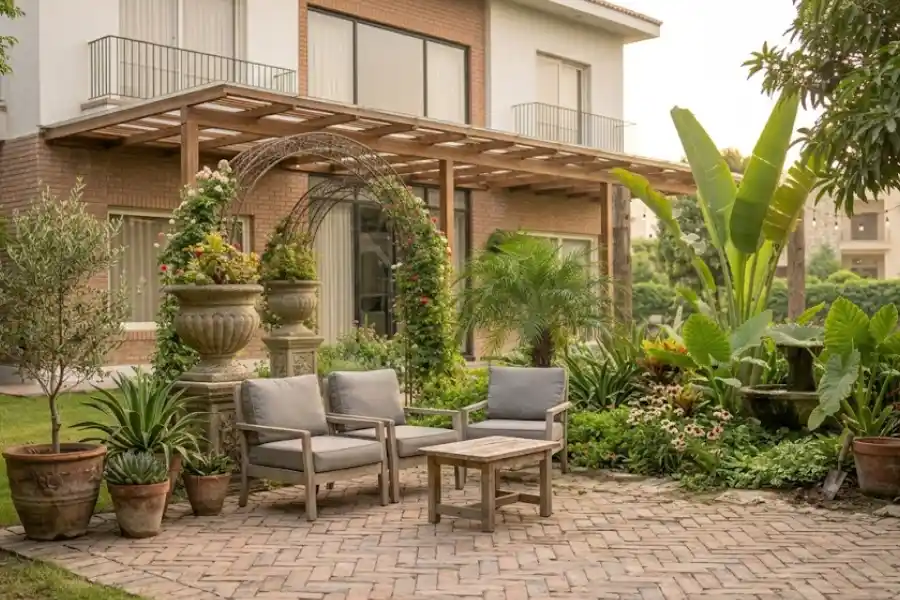
A covered patio attached to a house is an outdoor roof that connects directly to your home. One side of the roof ties into the house wall. The other side rests on posts or columns. This design turns a plain backyard slab into a real outdoor room.
Unlike a freestanding gazebo or pop-up canopy, an attached patio cover feels like part of the house. It shares a wall with your home, so it looks like it’s always belonged there, not bolted on. That’s a big reason homeowners choose this style over a standalone piece in the yard.
Attached vs. Freestanding: Which One Fits Your Home?
Before you commit, it helps to know the two main paths. Each one solves a different problem.
- Attached patio cover: Connects to your house using a ledger board. It works best right behind the house, over an existing patio, deck, or back door area. It often costs less because it uses your home for part of the support.
- Freestanding patio cover: Stands on its own posts, with no connection to the house. It works well for pools, outdoor kitchens, or spots farther from the home.
If your goal is a shaded space right outside your kitchen or living room, an attached patio cover almost always makes more sense. It creates a smooth flow between indoor and outdoor living, and it usually costs less to build than a standalone project.
Quick tip: If you want the space to feel like an extension of your home instead of a separate backyard feature, attached is the way to go.
How Much Does a Covered Patio Attached to a House Cost?
Cost is the first question most homeowners ask. The real answer is that it depends a lot on size and material. But here are the real numbers, based on current pricing across the industry.
Typical Price Ranges
- Basic aluminum or fabric cover: $500 to $4,000, often installed over an existing slab.
- Standard professional install: $4,500 to $12,000, which covers most mid-size wood or aluminum covers.
- Full solid roof or premium build: $15,000 to $40,000, especially for larger spans or custom rooflines.
Most homeowners land somewhere in the $8,000 to $12,000 range for a solid, good-looking attached patio cover on an average-size home. A basic 10 by 20 foot cover typically runs $50 to $150 per square foot installed, depending on your material choice.
What Pushes the Price Up
- A solid roof costs more than an open lattice or louvered design.
- Wood needs more labor and finishing than aluminum panels.
- Electrical work, like fans, lights, or outlets, adds $200 to $2,000.
- Permits typically add $100 to $500, sometimes more in certain cities.
- Attaching to the house instead of building freestanding can add 10 to 20 percent, since it needs a properly engineered ledger connection.
One thing many articles skip is this: an attached patio cover often costs more per square foot than a freestanding one, not less, once you count the ledger work and flashing. You save on posts and footings, but you spend more making sure the house connection is done right.
How Is a Patio Cover Attached to Your House?
This part matters more than most people realize. A poorly attached patio cover is one of the top causes of water damage to a home. A proper attachment follows these steps, explained simply.
- Mark the height. The builder finds the right spot on the wall, usually just below the roofline or eaves.
- Remove the siding. A section of siding comes off so the ledger board can connect straight to the house framing, not just the siding.
- Add flashing. Metal flashing goes above and below the ledger board. This stops rain from sneaking behind the wall.
- Bolt the ledger board. The board gets lagged into solid framing, like wall studs or floor joists, using strong, weather-resistant screws.
- Replace and seal the siding. The siding goes back on, and every gap gets sealed so water has nowhere to enter.
This is why a covered patio attached to a house is not a simple weekend job. If the ledger board and flashing are not done correctly, water can get trapped behind your wall. That leads to rot, mold, and expensive repairs years later.
Choosing the Right Material
Your material choice affects the look, the price, and how much upkeep you’ll deal with for years to come.
Aluminum
Aluminum is the most popular choice for a reason. It resists rust, holds up in heat, and needs almost no maintenance. It can last more than 50 years. It’s also one of the more budget-friendly options for a patio cover attached to a house.
Wood
Wood gives you a warm, classic look that matches many home styles. The tradeoff is upkeep. You’ll need to seal, stain, or paint it every few years, or it can warp, crack, or rot.
Vinyl
Vinyl is low maintenance and resists moisture, bugs, and rot. It won’t need painting. The downside is fewer design choices and some fading over time in strong sun.
Polycarbonate Panels
Often paired with an aluminum frame, polycarbonate roof panels let some light through while blocking rain and UV rays. This is a great pick if you want brightness without full sun exposure.
If you’re not sure which to pick, think about your climate first. Hot, sunny areas do well with aluminum or polycarbonate, and some homeowners pair either one with outdoor patio misting systems to keep the space comfortable once summer really sets in. Damp, rainy regions benefit from vinyl or well-sealed wood.
Permits and Building Codes You Shouldn’t Skip
Because it connects directly to your home’s frame, an attached patio cover almost always needs a permit. Skipping this step is a common and costly mistake.
- Most cities require a permit for anything attached to the house, even a simple one.
- Permit fees usually run $100 to $500, though some cities charge more.
- Inspectors check the footings, the ledger connection, and sometimes the electrical work.
- Skipping a permit can lead to fines, forced removal, or trouble when you sell your home.
- Some HOAs have their own rules on top of city codes, so check both before you build.
A quick call to your local building department before you start can save you from a major headache later.
Design Ideas That Make It Look Like Part of the House
The best covered patios attached to a house don’t look like an add-on. They look like they were always part of the home. These small choices make the biggest difference.
- Match your roofline. A cover that echoes the slope and style of your main roof blends in far better than a flat, mismatched add-on.
- Use similar materials. If your home has brick, stone, or a certain trim color, carry that into the patio cover posts or beams.
- Add a ceiling fan or lighting. This turns the space into a true extra room, not just a shaded slab. If you want something softer than a fixture, stringing patio umbrella lights along the beams works just as well.
- Frame it with big doors. Large sliding or French doors connect the indoor and outdoor space and make the whole area feel bigger.
- Tilt the roof for drainage. A slight slope keeps water rolling off instead of pooling, and it also controls how open or closed-in the space feels. If you’d rather the runoff look intentional than messy, some homeowners route it through a decorative rain chain instead of a plain downspout.
Common Mistakes That Cause Regret
Here are the problems that show up again and again with attached patio covers, based on what contractors and homeowners report most often.
- Skipping proper flashing. This is the number one cause of hidden water damage behind the wall.
- Ignoring roof interference. A cover built without thinking about the main roof’s water runoff can send extra water right into your patio area.
- Choosing the cheapest ledger board. A weak or wrong-size board can sag or pull away from the house over time.
- Skipping the permit. This can cause problems years later during a home sale or insurance claim.
- Not planning for shade angle. A cover built without checking the sun’s path can end up too dark or barely shady at all.
Does a Covered Patio Attached to a House Increase Home Value?
Yes, in most cases. Industry estimates suggest a well-built covered patio can add around 8 to 10 percent to a home’s value, with a return on investment often landing between 60 and 80 percent of the build cost. Some reports show even higher returns for smaller, well-designed projects.
The value depends heavily on your location, your materials, and how well the cover matches your home’s style. A patio cover in a warm climate like Texas, Arizona, or Florida tends to add more value than one in a cold, rainy region, simply because buyers there use outdoor space year round.
Frequently Asked Questions
Can I build a covered patio attached to my house myself?
Yes, if you’re comfortable with basic carpentry and follow your local codes. Many homeowners save thousands by installing a DIY kit. Just make sure the ledger board and flashing work is done correctly, since mistakes there can lead to water damage.
What is the cheapest way to cover a patio attached to a house?
A basic aluminum or fabric cover over an existing concrete slab is the most budget-friendly option. Prices can start around $500 to $2,000 for a simple version, though most full builds cost more once labor and permits are added.
Do I need a permit for a covered patio attached to my house?
In almost every city, yes. Because the structure connects to your home, inspectors need to check the connection point, footings, and any electrical work. Skipping this step can cause problems later.
What is the difference between a patio cover and a pergola?
A patio cover usually has a solid or semi-solid roof that fully blocks sun and rain. A pergola has an open lattice design, so it offers partial shade but not full weather protection.
How long does a covered patio attached to a house last?
Aluminum covers can last 50 years or more with almost no upkeep. Vinyl often lasts 20 to 30 years. Wood can last decades too, but only with regular sealing and maintenance.
Final Thoughts
A covered patio attached to a house is one of the few home upgrades that pays you back twice. You get more usable living space right away, and you often get a good chunk of your money back if you sell later. The key is getting the attachment right, picking a material that fits your climate, and pulling a permit before you start.
Do that, and you’ll have a space that holds up for decades, rain or shine.