Garden Railroad for Beginners: Costs, Track, Power and Steps
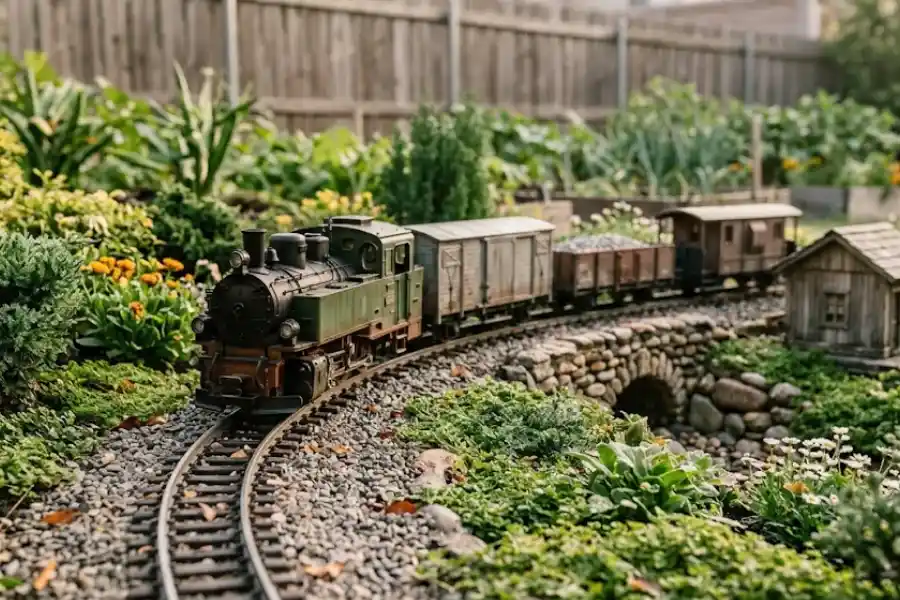
Picture a warm Saturday morning. Your coffee is still hot. A small steam engine rolls past your tomato plants, over a tiny bridge, and into a tunnel under the hill. Your neighbor stops to watch. Your kids forget about lunch.
That is the charm of a garden railroad. It mixes model trains and gardening into one living scene. You do not need a huge yard to start. You do not need a huge bank account either.
But there is a catch. Many beginners spend too much, pick the wrong track, or build on soft ground. A few summers later, the whole thing sags. This article helps you skip those mistakes. It covers what a garden railroad is, what to buy first, what it costs, and how to build one that lasts.
What Is a Garden Railroad?
A garden railroad is a model railway set up outdoors. The trains are small, but they are tough enough for sun, rain, and wind. Some people say “garden railway.” In the United States, most people say garden railroad.
You can’t ride these trains. Trains big enough to carry people are called backyard railroads or miniature railways. In a garden railroad, you sit back and watch the trains run.
The hobby is also old. Phipps Conservatory says the first documented garden railroad was built in 1859 for the son of Napoleon III. That means people have enjoyed this hobby for more than 160 years.
Why So Many People Love Garden Railroads
Indoor layouts need space, and many people do not have a spare room. Outdoors, you often have far more room to work with. That is one big reason the hobby keeps growing.
People stick with it for a few reasons:
- It is two hobbies in one. You get the fun of trains and the joy of plants.
- It is easy to share. Kids, grandkids, and neighbors all stop to look.
- It grows with you. You can start with a small loop and add more later.
- It has a friendly community. Clubs and shows are found all over the country, and many members love to show off their layouts.
Garden Railroad Scales: What Is G Scale?
Two words come up a lot: scale and gauge. Scale tells you how small the model is compared with the real train. Gauge is the distance between the two rails.
Most garden railroads use G scale. G scale trains run on track that sits 45 mm apart, which is about 1.8 inches. Well-known brands include LGB, Bachmann, Piko, and USA Trains.
You may also see 16 mm scale. It is popular in the United Kingdom, and many of those engines run on live steam.
Here is a tip that can save you money. Sizes in the large-scale world are not fully standard. One hobby wiki says there is no real agreed standard. That means a house from one maker may look too big or too small next to a train from another. Compare sizes before you buy.
Plan Your Garden Railroad Before You Dig
Good planning matters more than fancy trains. Start with one question. Do you want a garden with a train in it, or a train layout with a garden around it? In the first style, the railroad stays in the background, so the yard looks good even when no train is running.
Next, walk your yard and ask yourself these questions:
- Where does the sun shine during the day?
- Where does water collect after rain?
- Can you reach every part of the track by hand?
- Where will the power pack or charging spot live?
- Could the layout grow later?
That last question is important. Garden railroads tend to grow fast, and it is much easier to plan for growth on day one.
Keep hills gentle. Wheels slip and motors get hot on steep slopes, especially with long trains. Most garden railroads stay at or below a 3 percent grade, as HR Trains explains. That means a rise of about 3 inches for every 100 inches of track.
Builders on the Large Scale Central forum share a few lessons worth copying. Plan on walking on your track, so build a roadbed that can take your weight. Leave enough room for sidings. And make sure you can reach the switches. Many people learn these lessons too late.
Try this simple trick. Lay a garden hose where you want the track to go. Check that the curves look smooth and the train has room to turn.
Choose the Right Track
Track is the part you will deal with most, so do not cheap out here. These are the main types:
- Brass track: It is common and works well. It can turn dull over time, so it needs regular cleaning if you use track power.
- Stainless steel track: It costs more up front. HR Trains calls it the best choice outdoors, because you spend less time cleaning and more time enjoying your trains.
- Aluminum track: It costs less, but it can build up a thin layer that blocks power.
For beginners, sectional track is the easiest. These are pre-curved pieces that join together. Flex track bends to fit any shape, but you need tools to cut and bend it.
Whatever you pick, use stainless or galvanized screws and good support under the rails. Cheap screws rust, and rust makes a mess.
How to Power Your Trains
You have three main choices: track power, battery power, and live steam. Hobbyists love to argue about which one is best, and many mix them. There is no single right answer.
Track Power
Power flows through the rails to the engine, just like many indoor trains. It is simple and often the cheapest way to start. Trains.com says running track power outdoors is safe.
The downside is dirty track. Leaves, dust, and rain can block the flow of power, so you will need to clean the rails often. Some hobbyists also say digital systems (called DCC) can act up when the rails are wet.
Battery Power
With battery power, the batteries sit inside the engine or in a car behind it. You steer the train with a remote control. Dirty track does not matter, because the power does not come from the rails.
One hobbyist on a train forum said he dropped track power early and never looked back. The trade-off is charging. You will need to keep those batteries ready. Many people like battery power for small, flat layouts.
Live Steam
Live steam gives you real steam, real smell, and real sound. These engines need more hands-on care. You must add water and fuel each time. They also leave an oily film on the rails, which can block track power.
Live steam is a joy for experienced hobbyists. It is usually not the easiest first pick.
For most beginners, a small loop with track power or battery power is the easiest place to begin.
How Much Does a Garden Railroad Cost?
The short answer is that it depends on how far you take it. A hobbyist quoted by the Butler Eagle estimated that a starter set with a train, brass track, and a power pack costs $300 to $500.
Here is a rough idea of what you may spend:
- Starter set: about $300 to $500.
- Extra track: one or two big loops, plus a few straight pieces or switches, may run $150 to $400, according to Family Garden Trains.
- Plants: in one Ohio source, small dwarf trees cost about $10 each, and ground covers cost $3 to $5 each. Prices change by area and year.
Now for the part that surprises people. The trains are often not the biggest cost. Family Garden Trains notes that a nicely landscaped small or medium garden railroad with a garden pond can cost several times more than the train itself. Buildings, bridges, walls, and water features add up fast.
There is also a cost people often miss. The same site warns that many garden railroads need major repair within five to ten years. The cause is usually weak track support or weeds that grow through the roadbed. A strong base now saves you money later.
Easy Ways to Save
- Start with a small loop and add more each year.
- Let your garden budget pay for the scenery, as the World of Railways team suggests.
- Shop used. Clubs, swap meets, and online groups often sell good gear.
- Spend more on the base and the track, and less on decorations.
Prices change, so check current ones before you buy.
How to Build a Garden Railroad: 7 Simple Steps
- Pick your spot and draw a plan. Start with a simple loop. Mark where the power, water, and walking paths will go.
- Test the path with a hose. Make your curves as wide as your space allows. Wide curves look better and trains run smoother. Check the train’s box for its minimum curve size.
- Build the roadbed. Remove grass and roots, then level the ground. Add a layer of packed gravel so water drains away. Put landscape fabric underneath to slow down weeds.
- Lay and secure the track. Keep the track level from side to side. Keep slopes under 3 percent. Fasten it with stainless or galvanized screws.
- Hook up power and test. Run your train on bare track for a few days before you add plants. Fix problems now, not after you plant.
- Add scenery. Place buildings, bridges, and plants. Step back often and look at the whole scene.
- Run, watch, and adjust. Walk the line and look for bumps, gaps, and spots where the train slows down. Small fixes early keep the railroad running well.
Plants and Scenery: Avoid the Graveyard Effect
Trains.com warns about something called the graveyard effect. This is when parts of a scene look scattered and fake, like random pieces dropped in a field. You can avoid it in a few ways:
- Pick a theme. It could be a mountain town, a farm line, or a seaside route. Many layouts copy real places.
- Add a focal point. A decorative garden bridge over a dry creek bed gives the eye a place to rest and ties the track to the garden.
- Keep building sizes consistent. A tiny house next to a giant barn looks odd.
- Use small, slow-growing plants. Dwarf evergreens, low ground covers, and rock garden plants keep the scale right.
- Trim often. A plant that grows too big can swallow your train.
- Group buildings in clusters. Real towns grow in groups, not in neat rows.
Family Garden Trains says the best garden railroads balance nature and engineering. Keep that in mind, and your layout will feel like a real place.
Common Garden Railroad Mistakes to Avoid
- Starting too big. A huge plan can wear you out before the first train runs.
- Steep hills and tight curves. Trains slip, stall, or jump the track.
- Skipping the base. Soft ground moves, and the track moves with it.
- Forgetting about weeds. Use fabric and check the roadbed every season.
- Having no access. If you cannot reach a switch or a siding, you will hate fixing it.
- Mixing sizes. Trains and buildings from different scales can look out of place.
- Going it alone. Join a local club and visit a show. Members share tips that save you money and time.
Keeping Your Garden Railroad Running All Year
A little care each season keeps things running smoothly:
- Spring: Walk the line. Look for shifted track, loose screws, and new weeds. Clean the rails if you use track power.
- Summer: Trim plants so they stay away from the train. Remove leaves and debris.
- Fall: Clear fallen leaves from the track. Leaves on the rails can stop a train fast.
- Winter: In cold areas, many hobbyists store engines and cars indoors. Check what your train maker says about cold and wet weather.
See a Garden Railroad in Person
Seeing a big layout is the best way to get ideas. These public displays are a good place to start:
- Phipps Conservatory in Pittsburgh runs its Garden Railroad display from October through February each year.
- Morris Arboretum in Philadelphia has a quarter-mile Garden Railway with buildings made from seeds, logs, and twigs.
- Mitchell Park Horticultural Conservatory in Milwaukee shows a large Garden Railway display, built with help from Wisconsin model railroad club members.
Dates change, so check each website before you go. Also search for a club near you. Many members enjoy showing off their layouts, and some open their yards to visitors.
Frequently Asked Questions
What is the best scale for a garden railroad?
G scale is the most popular choice. It runs on 45 mm track and is easy to find in stores. Many beginners also like it because the parts are large and easy to handle.
Can garden trains stay outside all year?
Garden trains are built for the outdoors, and many hobbyists leave track outside all year. In cold or wet areas, though, many people store engines indoors in the off season. Always check what your train maker says.
Is track power safe outdoors?
Trains.com says it is safe. Garden trains use low-voltage power packs, not house power. Still, follow the maker’s directions and keep wires and plugs protected from rain.
How much space do I need?
Not much. A small loop can fit on a patio or in a raised garden bed. You can always add more track later.
Do I need to know gardening?
It helps. Family Garden Trains points out that the real work of building a layout is gardening and landscaping, which are skills many train fans do not have at first. The good news is that you can learn both, and club members are usually happy to help.
Are garden trains good for kids?
Yes, for watching and learning. But these are not toys. Engines can be heavy, and small parts can break or get lost. Supervise young children.
Final Thoughts
A garden railroad is a small world you build over time. The trains are only one piece of it. Start with a small loop. Build a strong base. Choose sturdy track. Plan for growth. Then let your garden and your trains grow together.
Ready to start? Grab a hose, lay out your first loop, and look at your yard with fresh eyes. Your first train is closer than you think.