Eyeball Plant: How to Grow It, Eat It, and Stay Safe
Picture a tiny yellow flower with a dark red dot on top. It looks like a little eye staring back at you. Now picture popping it in your mouth. Your tongue starts to fizz. Your lips buzz. Then a cool, numb feeling spreads through your mouth.
That is the eyeball plant, and it is very real. It is one of the strangest and most fun plants you can grow at home. It looks odd, it tastes odd, and it feels even odder.
This post covers what an eyeball plant is, why it has so many nicknames, and how to grow one. You will also see how cooks and bartenders use it. And you will get a clear talk on safety, because a few things are worth knowing before you take a bite.
Quick Facts at a Glance
- Plant name: Acmella oleracea (also sold as Spilanthes oleracea)
- Other names: toothache plant, buzz buttons, Sichuan buttons, electric daisy, paracress, jambu
- Size: about 12 to 18 inches tall and wide
- Light: full sun to part shade
- Life cycle: a tender perennial in the warmest zones, grown as an annual in most of the United States
- Blooms: summer into fall
- Edible: yes, but only in small amounts
What Is an Eyeball Plant?
It is a small herb in the daisy family. Experts think it came from Brazil. Today it grows in warm places all over the world. The University of Arkansas Extension calls it a fast-growing, warm-weather plant that you can start from seeds or cuttings.
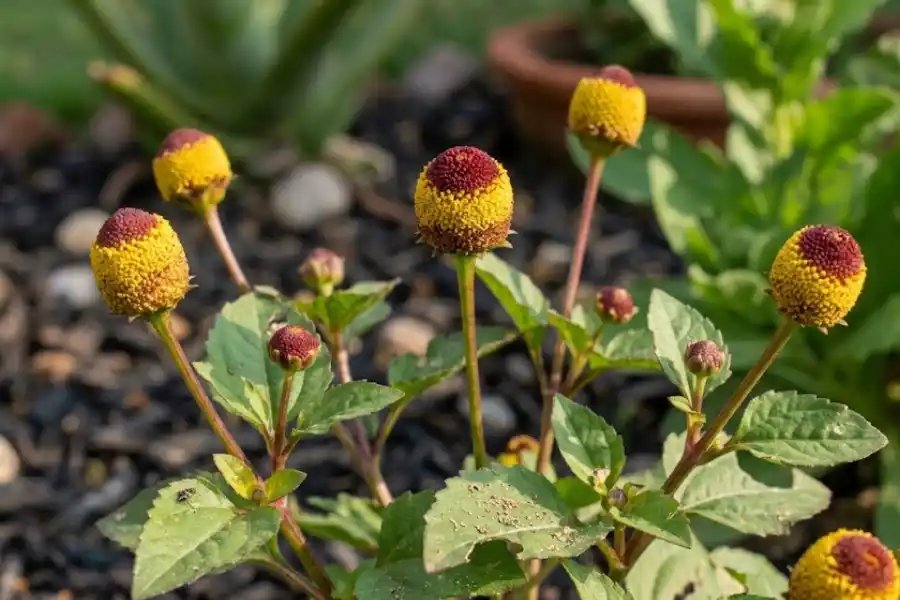
Most daisies have flat petals around the edge. This one does not. It makes round flower heads about the size of an olive. They have no petals at all. The leaves are green with toothed edges, and some plants have a copper tint. The flowers keep coming all summer long.
The plant stays small. It fits in a border, or in a pot by the kitchen door, right next to your other herb pots.
Why Is It Called the Eyeball Plant?
Look closely at one flower head. The bottom part is bright yellow. The top part is dark red or maroon. That dark top is made of tiny buds that have not opened yet. Put them together and you get an eyeball with a big pupil.
The eye look is strongest while those top buds are still closed. Some seed sellers even call it the “peek-a-boo” eyeball plant, and it is easy to see why.
One Plant, Many Names
This plant has more nicknames than almost any herb. They all point to the same plant:
- Toothache plant: Chewing the leaves or flowers numbs your mouth for a short time.
- Buzz buttons or Sichuan buttons: Chefs use the flower buds. The plant is not related to Sichuan pepper, but the mouth feel is a bit like it.
- Electric daisy: This one is named for the zing.
- Jambu: This is the name in Brazil, where people eat it every day.
- Paracress: Another common name in food and herb circles.
If you shop for seeds, try more than one name. A seller might list this herb under any of these.
Wait, Are You Looking for Doll’s Eyes?
Some people who search for “eyeball plant” want a different plant. It is called doll’s eyes, or white baneberry (Actaea pachypoda). It grows in woods in the eastern United States and parts of Canada. It has white berries with a black dot, and they sit on thick red stalks. They look like the eyes of an old doll.
Do not mix the two up. Every part of doll’s eyes is poisonous, and the berries and roots are the worst. The North Carolina Extension Gardener Plant Toolbox warns that it can harm people and pets.
Here is an easy way to tell them apart. The plant covered here is small, with yellow and red flower heads. Doll’s eyes has white berries. And a good rule for any plant: if you are not sure what it is, do not eat it.
What Does an Eyeball Plant Taste and Feel Like?
The first taste is mild and grassy. Then the fun starts. Your mouth tingles, like fizzy candy. You make extra spit. After that, a numb feeling sets in. It fades after a few minutes.
All of this comes from a natural compound called spilanthol. As Atlas Obscura explains, it wakes up the salivary glands and causes a tingle that slowly turns into numbness.
Here are two tips before you try it:
- Flowers pack more punch than leaves.
- Raw leaves are stronger than cooked ones.
How to Grow an Eyeball Plant
Good news: this plant is easy. It likes warm weather, and it grows fast. If you can grow basil, you can grow this.
Light and Soil
Give it full sun or part shade. Pick rich soil that drains well but stays a little moist. In very hot places, a bit of afternoon shade keeps the leaves from burning.
Starting Seeds Indoors
Most seed sellers suggest starting seeds indoors. Here is the simple way to do it:
- Start about four to six weeks before your last spring frost.
- Fill a tray with seed starting mix and water it well.
- Press the seeds onto the top of the soil. Do not bury them, because they need light to sprout. At most, cover them with a very thin layer.
- Keep the tray warm, around 70 to 78°F. A heat mat helps a lot.
- Wait one to two weeks. Some seeds take a bit longer.
- Put the seedlings under bright light so they stay strong.
- Before planting outside, let them get used to the outdoors for about a week. Gardeners call this hardening off.
You can also plant seeds straight in the garden once the frost is over and the soil is warm. Sow Right Seeds suggests waiting until the soil reaches about 70°F.
Planting Outside
Do not rush. This plant hates frost. Wait until the danger of frost is gone. The soil should be warm, between 65 and 85°F. Space plants 12 to 18 inches apart. Water new plants often for the first two weeks so they can settle in.
Watering and Feeding
Keep the soil evenly moist. It droops fast when it gets thirsty, but it usually perks up soon after a drink. Feed it with a balanced liquid fertilizer about once a month. Snip off faded flowers to get more blooms.
Growing in a Pot
Pots work well. Pick one that is at least 10 to 12 inches wide with good drainage holes. A pot is also handy if you want to move the plant indoors when the weather turns cold. It also looks great mixed with other annuals, and these container garden ideas can help you plan a mixed pot.
Growing From Cuttings
You can also make new plants from a stem. Cut a piece about eight inches long. Leave two leaves at the top. Dip the cut end in rooting powder, then push it into moist potting mix. Some gardeners root the stem in a glass of water instead.
Winter Care
Frost kills this plant. In most of the United States, treat it as an annual. If you want to keep yours, dig it up before the cold comes and move it to a pot indoors. In mild places, thick mulch and a cover on frosty nights may be enough. The garden blog Growing in the Garden says this can work in mild spots, like the low desert of Arizona.
Saving Seeds
Let some flower heads dry out on the plant. Then clip them and rub them over a clean bowl to free the seeds. Store the seeds in a cool, dark, dry place until spring. Baker Creek Heirloom Seeds shares the same steps.
Common Eyeball Plant Problems and Easy Fixes
- Drooping leaves: The plant is thirsty. Water it, and check it again in an hour.
- Not many flowers: Give it more sun and clip off old blooms.
- Slow growth in spring: It was probably planted too early. Wait for warm soil.
- Scorched leaves in hot weather: Add some afternoon shade.
- Tiny bugs or white powder on leaves: Aphids, thrips, and powdery mildew can show up now and then. Catch them early.
Can the Eyeball Plant Spread or Turn Invasive?
In the tropics, it is a common weed that has spread far and wide. The North Carolina Extension Gardener Plant Toolbox notes that it can escape gardens and grow in wet spots, like lake edges. Flora Finder says it is not found in the wild in North America.
In places with cold winters, frost stops it every year. In warm, wet places, like a tropical garden, pull up any baby plants you do not want.
How to Use an Eyeball Plant in Food and Drinks
In northern Brazil, jambu is an everyday food. Cooks put it in a soup called tacacá, and they mix it into rice. Bars there make a spirit called cachaça de jambu, which is known for its numbing kick. In Madagascar, it goes into a dish called romazava. The travel site Matador Network covers how Brazilians use the plant.
Closer to home, bartenders love it. Atlas Obscura reports that the Chandelier Bar at the Cosmopolitan hotel in Las Vegas serves a cocktail with a buzz button.
Ready to try it at home? Follow these tips:
- Start small. One tiny flower or a few petals is plenty.
- Warn your guests. The feeling surprises people, so tell them what to expect.
- Chew, then sip. The food blog Marx Foods says the buzz hits hard when you chew a few petals and take a sip right after.
- Muddle for a mild tingle. Crush a few petals into a drink for a softer effect.
- Try sparkling water or lemonade. Both are simple ways to add the zing.
- Add petals to salads or sorbet. They add fun without a lot of work.
Does the Eyeball Plant Cure Toothaches?
People have chewed this plant for sore teeth for a very long time. The numbing is real, but it is short. It does not fix the cause of the pain, like a cavity or an infection.
The Memorial Sloan Kettering Cancer Center has a page on the plant. It says lab and animal studies point to possible pain and swelling effects, but studies in people are lacking. The plant database Flora Finder adds that the old toothache cures probably do not work well.
So enjoy it as a fun herb, not as a cure. If a tooth hurts, see a dentist.
Is the Eyeball Plant Safe to Eat?
For most healthy adults, a small bite is fine. But a few rules make sense:
- Keep the amount small. Flora Finder says large amounts are toxic. Too much may also cause long numbness or a sore mouth.
- Skip it if you have daisy family allergies. If ragweed, marigolds, or chrysanthemums make you sneeze, stay away.
- Ask a doctor if you are pregnant or nursing. Some animal studies used high doses and raised concerns. Experts do not fully agree, so it is best to check first.
- Ask a doctor if you take medicine or have a health issue.
- Watch your pets. The plant is not known to be toxic to dogs and cats. Still, it may make them drool or feel a numb mouth.
- Keep young kids away. The strong feeling can scare them.
- Wash your hands. Spilanthol can sting real eyes, so wash up before you touch your face.
This article is for general learning. It is not medical advice.
Where to Buy Eyeball Plant Seeds and Plants
Many seed companies and garden centers sell them in spring. Look for the names eyeball plant, toothache plant, Spilanthes, Acmella, or buzz buttons. Check the label for the plant size and the frost notes.
Cooks who want fresh flowers, but do not want to grow them, can find some online sellers of edible flowers. Fresh buzz buttons are hard to find in regular grocery stores.
Frequently Asked Questions
Is the eyeball plant an annual or a perennial?
It is a tender perennial. That means it lives for years only where it never freezes. In most of the United States, it acts like an annual and dies with the first hard frost.
Can you eat an eyeball plant?
Yes, in small amounts. People eat the leaves and flowers in salads, soups, and drinks. Please read the safety tips above first.
Why does an eyeball plant make my mouth tingle?
A natural compound called spilanthol does it. It makes your mouth tingle and water, then feel numb for a few minutes.
How tall does it get?
Most grow 12 to 18 inches tall and wide. Some seed sellers say it can spread wider, up to about 30 inches.
Can I grow an eyeball plant indoors?
You can try. Use a pot with drain holes and give it bright light, like a sunny window or a grow light. It may bloom less than it would outside. No yard? Treat it like any other balcony herb and follow the basics of growing an herb garden on a balcony: bright light, a roomy pot, and steady water.
Is the eyeball plant the same as doll’s eyes?
No. They are two very different plants. One is an edible herb with yellow and red flowers. The other, doll’s eyes, is a poisonous woodland plant with white berries.
How long do the seeds take to sprout?
Most seeds sprout in one to two weeks when the soil is warm. Some seed sellers say it can take up to three weeks.
Final Thoughts
The eyeball plant is easy to grow, fun to look at, and full of surprises. It is a great pick for kids’ gardens, herb pots, and anyone who loves a good garden story. Start with a few seeds, keep them warm, and wait for those little eyes to appear.
Just remember the golden rule. A tiny bite is all you need.