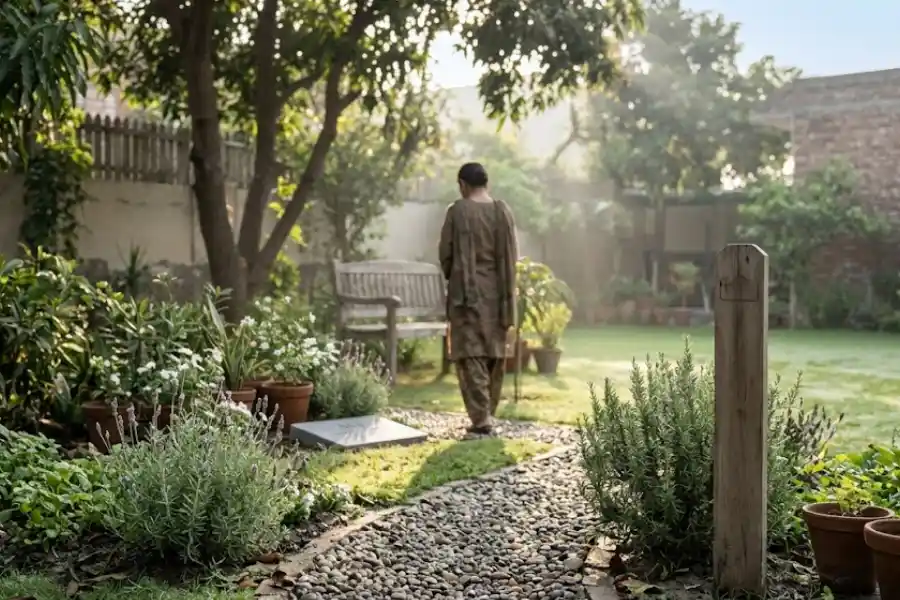
Garden Path Name, Walk, Pray: A Simple Prayer Walk Plan
Some of the best prayers happen on your feet. A quiet garden path gives you a place to slow down, name what matters, walk with care, and pray without rushing. You do not need a big yard. A few steps of dirt, gravel, or grass can be enough.
This post shows you how to turn any garden path into a place of prayer. You will find out how to give the path a name, how to walk it, and what to pray along the way. It works in a backyard, a church garden, a park, or a shared community space.
The Short Version
Here is the whole idea in five steps. The rest of this post explains each one.
- Pick a path. Choose a safe, quiet spot where you can walk without hurry.
- Name it. Give the path a name that tells you why you are there.
- Set a few stops. Pick three to five spots along the way where you will pause.
- Walk slowly. Match your steps to your breathing.
- Pray at each stop. Use your own words, a short prayer, or a verse.
What Is a Garden Path Prayer Walk?
A garden path prayer walk is simple. You walk a path on purpose, and you pray as you go. The path is not a race. The garden is not a show. Both are tools that help you slow down and pay attention.
People have prayed this way for a very long time. Many churches build prayer gardens and walking paths for this reason. Some use a winding labyrinth. Others mark out a short loop with benches and signs. The shape does not matter much. The slow, quiet walking does.
Why Walking Makes Prayer Easier
Sitting still to pray is hard for many people. Your mind jumps around. Your body feels tight. Then you feel bad about it.
Walking can fix that. A writer at Ignatian Spirituality shares that pacing helped them pray for longer stretches. They also suggest treating gardening itself as a holy task and offering each plant to God. That is a good reminder that a garden already has a lot to teach.
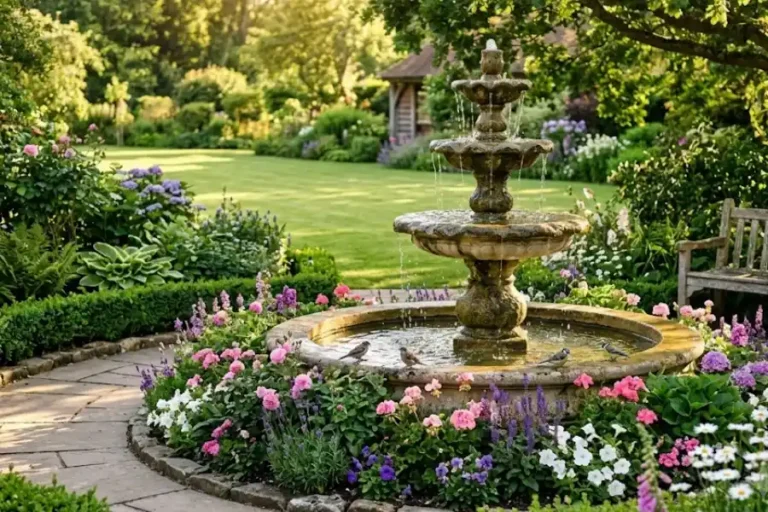
A garden also gives you things to notice. You can feel leaves, smell herbs, hear birds, and watch light move through branches. These small things pull your mind back when it wanders. If you are planting a new bed, a few sensory garden plants, like herbs with strong scents and leaves that feel soft, give you even more to notice.
Step 1: Pick Your Garden Path
You can start with almost any path. Look for these simple things:
- Quiet. Pick a spot away from loud noise if you can.
- Safe footing. Avoid slick stones or loose boards.
- A little length. Twenty to fifty steps is plenty. You can walk it more than once.
- Something to notice. A tree, a flower bed, a fence, a patch of herbs, or a bench all work well.
No garden at all? Use a park trail, a church yard, a school field, or a quiet block in your neighborhood. The point is the slow walk, not the scenery.
Step 2: Give Your Path a Name
This is the step most articles skip. A name changes how you see a place. A plain strip of gravel becomes a path with a purpose.
Real places do this too. The Wheaton Franciscans created a mile-long walking route called the Peace Path on their campus. You can read about it at the Tau Center. A church in the city created a small prayer space and called it the Garden of Grace. You can see how that came about in Pastor Sarah’s Pen. In Cebu City, a garden pathway built next to a cross tower is called Walk on Water, to remind people of baptism. The Cebu Daily News has the story.
Notice what these names have in common. Each one tells you what to expect. That is what a good path name does.
How to Choose a Name
Ask yourself one question: what do I need when I walk here? Then let the answer shape the name.
- Name it for a feeling. Peace Path, Thankful Way, Quiet Lane, Rest Walk.
- Name it for a need. Healing Path, Hope Walk, Courage Trail.
- Name it for a verse. Light for My Feet, Still Waters Walk, Green Pastures Path.
- Name it for a person. Grandma’s Walk, or a path that honors someone you miss.
- Name it for a season. Spring Awakening Path, Harvest Thanks Walk.
Keep the name short. If it takes more than a few seconds to say, it is too long. Write it on a small wooden garden sign, a flat stone, or a card. Or just keep it in your heart. Both work.
The Bible also links paths and names in one line. Psalm 23:3 says, “He leadeth me in the paths of righteousness for his name’s sake.” You may find that a helpful verse to start with.
Step 3: Set Up a Few Simple Prayer Stops
Stops give your walk a rhythm. They also stop you from rushing to the end.
Some church walks do this well. A prayer walk handout from Ed Walton church uses the garden itself. At one stop, you rub herb leaves and smell them. At another, you touch a smooth stone statue. At another, you look at early spring flowers. Each touch of the senses leads to a short prayer. A printed walk from the University of Bath does something similar on a longer route. It sets prayer stations at spots like a hilltop marker and a churchyard.
You can copy this idea at home. Here is a simple plan with five stops:
- The start. Stand still. Take three slow breaths. Say hello to God.
- A plant. Touch a leaf or smell a flower. Thank God for one small thing.
- A bench or flat stone. Sit for a minute. Pray for someone you love.
- A far corner. Pray for something bigger, like your town, your church, or the world.
- The end. Stand still again. Name one thing you are taking with you.
If your path has no seat yet, a wooden garden bench is an easy way to add stop three.
Step 4: Walk Slowly and Pray
Now you walk. Keep it simple with these tips.
- Go slow. Walk about half as fast as you normally do.
- Use your breath. Breathe in for a step or two. Breathe out for a step or two.
- Keep your eyes soft. Look around gently. You do not need to stare at the ground.
- Do not force words. If you run out of things to say, just walk. Silence is still prayer.
- Bring your phone, but silence it. Or leave it inside.
Try the Walk In and Walk Out Idea
Pastor Sarah describes a helpful way to use a winding path in her post about the Garden of Grace. On the way in, you let go of worries and things that distract you. On the way out, you take in what you received and walk with thanks. You can do this on any path. Walk to the far end and release. Walk back and receive.
Short Prayers You Can Use
You do not need fancy words. Here are four short prayers. Use them as they are, or change them to fit you.
At the Start
Lord, I am here. Slow my mind and quiet my heart. Walk with me today.
At the Plant
Thank you for this leaf, this color, this smell. Help me see what I usually rush past.
At the Bench
God, I bring you the people I love. Hold them close. Give them what they need today.
At the End
Thank you for this walk. Help me carry this peace back into my day.
Bible Verses to Carry Along
A short verse is easy to repeat as you walk. These four fit a garden path well:
- Genesis 3:8. The first garden scene in the Bible describes God “walking in the garden in the cool of the day.” It reminds us that God and gardens have always gone together.
- Psalm 119:105. “Thy word is a lamp unto my feet, and a light unto my path.”
- Psalm 23:3. “He leadeth me in the paths of righteousness for his name’s sake.”
- Isaiah 43:1. “I have called thee by thy name; thou art mine.”
Make It Work for Real Life
Most articles assume you have a big garden, strong legs, and a free afternoon. Real life is different. Here are ways to adjust.
If You Have a Small Space
Walk the same ten steps back and forth. Repeating a short path can feel calming. Each pass can carry a different prayer.
If Walking Is Hard
You can still pray in a garden. Sit near the path and watch it. Pray as you look at it. Some paths are built to be open to everyone. The Peace Path mentioned above is paved and wheelchair accessible. If you are choosing or building a path, wide, flat, firm ground is a kind choice for others.
If You Have Kids
Turn the stops into a quiet treasure hunt. Ask each child to find one thing to thank God for at each stop. Keep it short, and let them lead sometimes.
If the Weather Is Bad
Walk a hallway, a porch, or a church aisle. Or look out a window at your path and pray there. The path in your mind still counts.
If You Have No Garden
Pick any outdoor route and name it. Your street at sunrise can be a Morning Thanks Walk. A bridge over a creek can be a Still Waters Path.
Common Mistakes to Avoid
- Trying to do too much. Ten calm minutes beat an hour of stress.
- Rushing between stops. The walking is part of the prayer.
- Chasing a feeling. Some days feel full. Some feel plain. Both are fine.
- Making it a show. A prayer walk is not about how it looks. It is about paying attention.
- Quitting after one try. It often feels awkward at first. Give it a few walks.
Frequently Asked Questions
What is a prayer walk?
A prayer walk is a slow walk where you pray as you go. You can walk alone or with others. You can pray out loud, in silence, or with a short verse.
Do I need a garden to do this?
No. A garden helps, but any quiet outdoor path will do. What matters is that you slow down and pay attention.
Why should I name my path?
A name gives the path a purpose. When you say it, you remember why you are there. It also makes the place feel special, even if it is just a strip of grass.
How long should a garden prayer walk take?
Ten to twenty minutes is a good start. You can go longer once it feels natural.
Is a prayer walk the same as a labyrinth?
Not quite. A labyrinth is one kind of winding path with a clear way in and a clear way out. A prayer walk can use any path, straight or curved.
What if my mind keeps wandering?
That is normal. When you notice it, gently bring your attention back to your steps, your breath, or the next stop. You have not failed. You have just started again.
Can I do this if I am not very religious?
Yes. Many people use a quiet garden walk for thanks, calm, and reflection. You can use your own words and skip any verses that do not fit. Garden meditation is another gentle option if you would rather use fewer words.
A Simple Place to Begin
You do not need to build anything. Pick a path. Give it a name. Choose a few spots to pause. Then walk slowly and pray.
Try it this week for ten minutes. Notice what changes in you. Over time, the path may become one of your favorite places to meet with God.