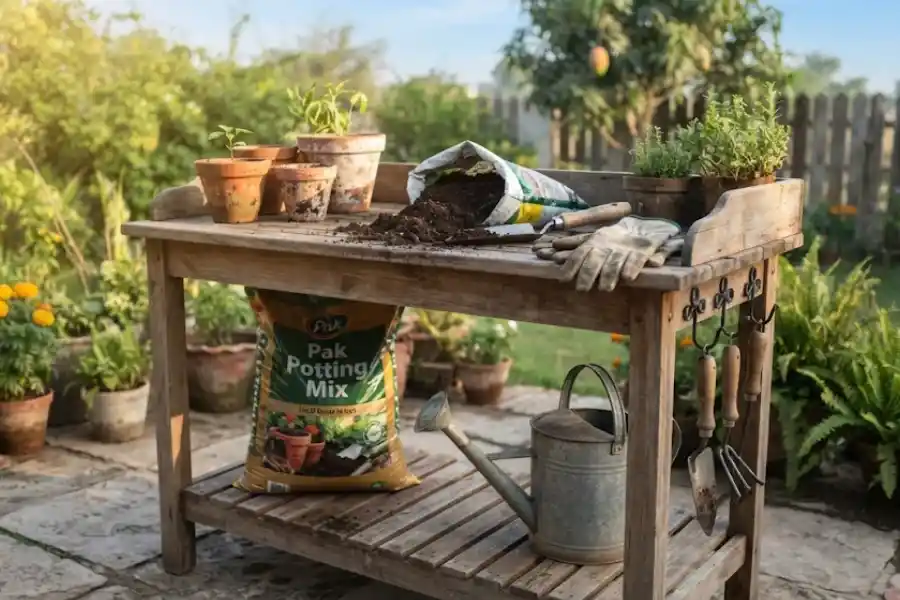
Garden Potting Table: How to Pick the Right One for Your Space
Bent over a low pot. Soil on your shoes. A sore back by noon. If that sounds like your weekend, a garden potting table can fix it fast. It gives you a waist-high spot to pot plants, start seeds, and keep your tools in one place.
This article shows you how to choose the right garden potting table for your yard, patio, or balcony. You will see the best heights, sizes, and materials, plus costs and care tips.
Quick answer: Pick a garden potting table with a top that sits near your hip or lower waist, a work surface at least 40 inches wide, and a weather-tough material like cedar, fir, or galvanized steel. Add a lower shelf and side hooks, and the table will earn its space.
What Is a Garden Potting Table?
A garden potting table is a sturdy work surface made for small plant jobs. Think of repotting a houseplant, planting seedlings, or mixing soil. Many people call it a potting bench. In gardening, the two names mean the same thing.
Most tables have a flat top, a shelf below, and a few hooks for tools. Some add a cabinet, a drawer, or a small back shelf. A few high-end models even have a sink or a soil tub that catches the mess.
Why a Garden Potting Table Is Worth It
You can pot plants on a kitchen counter or an old crate. So why buy one? Here are the reasons gardeners keep coming back to a garden potting table.
- Less back pain. A table at the right height means you stop stooping.
- Less mess. Soil stays on one surface, and you can sweep it into a bucket.
- Faster work. Pots, trowels, gloves, and seed trays all live in one spot.
- Cleaner home. Dirt stays outside instead of on your floors.
- Better plant care. When your supplies are close, you repot on time instead of putting it off.
How to Pick the Right Height and Size
Height matters more than most buyers think. A table that is too low brings the back pain right back. A table that is too high makes your shoulders tired.
Find Your Best Height
Stand up straight and bend your elbows to a right angle. The top of the table should land at or just below that line. For most adults, that is about 33 to 38 inches.
If two people share the table, pick the taller person’s comfort level and add a mat or stool for the shorter one. Some tables also come with adjustable legs, which helps a lot in a shared home.
Check the Work Surface
Look at the table top, not the total height. Many products list the full height, which includes the back shelf. A table that looks tall may have a small work area.
For one or two people, aim for these sizes:
- Small spaces: 24 to 36 inches wide
- Standard use: 40 to 50 inches wide
- Heavy use or crafts: 55 inches wide or more
Depth is just as important. A top that is at least 18 inches deep gives you room for a large pot and a bag of soil.
Best Materials for a Garden Potting Table
The material decides how long your table will last outside. It also changes the weight, the price, and the look.
Wood
Wood is the most common choice, and it looks great in any yard. Cedar and fir resist rot better than many other woods. Acacia is also popular and looks rich, but it needs a seal every year or two.
Pine is cheaper, though it wears down faster in rain. If you pick pine, plan to stain or seal it before first use.
Metal and Galvanized Steel
Metal tops are easy to wipe clean and handle water well. Galvanized steel has a worn, farmhouse look that many gardeners love. A zinc top is another good pick, since it resists weather and rinses clean with a hose.
Metal can get hot in full sun, so a shaded spot works best. Cheap thin steel can also dent, so check the thickness before you buy.
Plastic and Resin
Plastic tables are light and cost less. They will not rot, and they are easy to move. The downside is weight capacity. Many cannot hold heavy soil bags or large clay pots.
Features Worth Paying For
A basic table works fine. A few extras can make the work much smoother.
- Lower shelf: Holds soil bags, pots, and watering cans off the ground.
- Side hooks: Keep trowels, gloves, and pruners within reach.
- Raised lip or edge: Stops pots from rolling off the top.
- Drawer or cabinet: Hides small items like twine and seed packets.
- Soil tub or sink: Catches mess and makes cleanup easy.
- Lockable wheels: Let you move the table to sun or shade.
Skip features you will not use. A sink looks nice, but it needs a hose and drainage. If you only repot a few houseplants, a simple top and a shelf may be all you need.
Garden Potting Table Ideas for Small Spaces
You do not need a big yard. A narrow garden potting table can sit on a porch, a balcony, or against a fence.
Look for tables that fold flat or tuck against a wall. A wall-mounted drop-leaf style is great when floor space is tight. If you rent, a slim freestanding table keeps you safe from drilling rules. For more ways to fit furniture and plants into a tight spot, check out these apartment patio decor ideas.
Some small tables also work as a plant stand in winter. Move your pots to the shelf, and the same table adds a bit of green to your patio.
How Much Does a Garden Potting Table Cost?
Prices change by brand and season, but most buyers fall into these ranges:
- Basic small tables: about $80 to $150
- Mid-size tables with a shelf and cabinet: about $150 to $300
- Premium cedar, steel, or sink models: about $300 to $600 or more
A higher price often means thicker wood, better coatings, and stronger joints. But a mid-range garden potting table is enough for most home gardeners. Read the weight limit and the reviews before you pay for extras.
Where to Put Your Garden Potting Table
Placement affects how often you use the table. Follow these simple rules.
- Pick a spot near a water source. A hose or spigot saves you many trips.
- Choose partial shade. Morning sun and afternoon shade keep both you and your seedlings comfortable.
- Keep the ground level. A wobbly table spills pots and soil. Use a flat patio stone or gravel pad.
- Stay close to storage. Your tools and soil should be a few steps away. If you are planning a storage building, these 12×16 garden sheds are worth a look for cost and permit details.
- Think about evening light. If you pot plants after work, a small light over the table helps. Some patio umbrella lights clip on easily and give you shade and light in one setup.
How to Set Up Your Garden Potting Table
A clean setup makes every task easier. Here is a simple layout that works for most people.
- On the top: Keep only what you need today, such as a pot, soil, and trowel.
- On the lower shelf: Store bags of potting mix, spare pots, and fertilizer.
- On the hooks: Hang pruners, gloves, a hand fork, and a small brush.
- In the drawer: Keep twine, labels, seed packets, and plant ties.
Labels save plenty of guessing later. Good garden plant markers keep your seedlings easy to name, even after a few weeks of sun and rain.
A tip many gardeners share: set a large tray or a plastic mat on top of the table. Soil spills land on the tray, and you can tip them into a pot or compost bin when you finish.
How to Care for Your Garden Potting Table
A little care can add years to your table.
- Wipe it down after each use. Wet soil stays damp on wood and can cause rot.
- Seal wood every year. Use an outdoor sealer or a food-safe oil, especially if you grow herbs and vegetables.
- Rinse metal tops with a hose. Dry them with a cloth to prevent water spots.
- Tighten screws each spring. Wood shrinks and swells, so bolts can loosen.
- Cover or move it in winter. A simple tarp or a spot in the garage protects it from ice and snow.
Common Mistakes to Avoid
Buyers often make the same few errors. Avoid these and you will save money and time.
- Buying by looks only. A pretty table with weak joints will wobble within a year.
- Ignoring the top size. A high back shelf can make a table seem large when the work area is tiny.
- Forgetting assembly time. Many tables arrive flat. Expect about one to two hours, and have a helper if you can.
- Skipping the weight limit. Wet soil is heavy. A single bag can weigh 40 pounds or more.
- Leaving it unsealed. Raw wood drinks water and wears out fast.
Frequently Asked Questions
What is the best height for a garden potting table?
Most adults feel comfortable with a top between 33 and 38 inches. Bend your elbows to a right angle and match the top to that line. Taller gardeners may want a higher table, and shorter gardeners a lower one.
What is the difference between a potting bench and a garden potting table?
There is no real difference. Both names describe a work surface for potting, planting, and sorting garden supplies. Stores use the names for the same kind of product.
Can I leave a garden potting table outside all year?
Yes, if it is made from cedar, fir, treated wood, or galvanized steel. Even then, a cover in winter helps. Plain pine and plastic wear out faster in harsh weather.
Is a wooden garden potting table safe for growing food?
Most are fine when the wood is untreated or sealed with a food-safe finish. Check the product details, and place a tray or a clean mat on top before you handle herbs or vegetables.
Can I build my own garden potting table?
Yes. A basic table needs four legs, side rails, a top, and a lower shelf. Many home improvement stores share free plans. Use cedar or treated lumber, and seal every cut edge.
How much space do I need?
A small table needs about a 3 by 2 foot spot, with another 2 feet in front so you can stand and move. A standard table needs about 4 by 2 feet, plus room to walk around it.
Final Thoughts
A good garden potting table makes plant work easier, cleaner, and a lot more fun. Start with the right height, then check the top size, the material, and the weight limit. Add a lower shelf and a few hooks, and your tools will always be close.
Pick a spot with a little shade and water nearby, wipe the table after use, and seal it each year. Do that, and your garden potting table can serve you well for many seasons.