Decorative Garden Bridge: Sizing, Materials & Cost
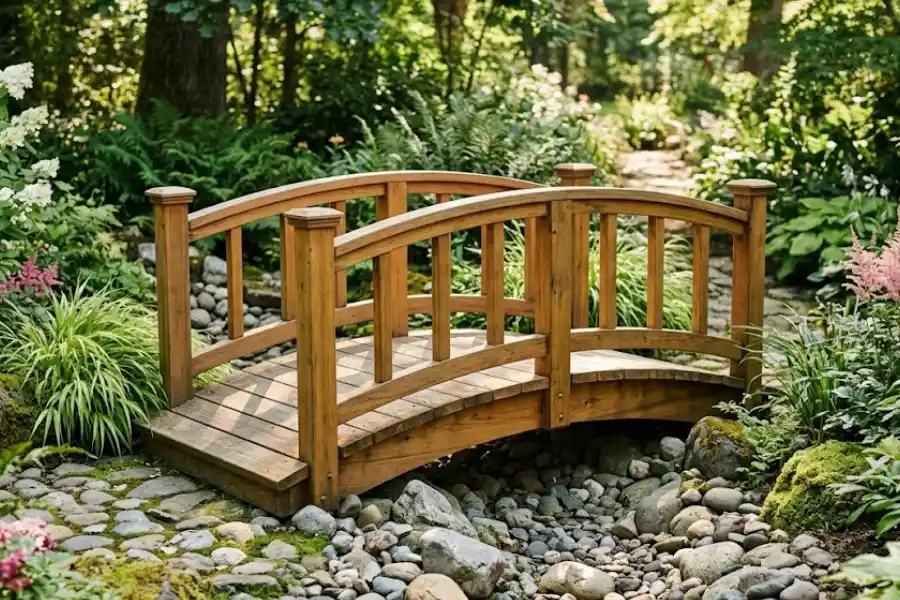
Picture this. You walk into your backyard, and instead of a flat, boring stretch of grass or a muddy dip near the flower bed, there’s a small wooden bridge arching gently over it. Your eyes go straight to it. That’s what a decorative garden bridge does. It’s a small feature with a big personality, and it can turn an average yard into something people stop and photograph.
But here’s the problem. Most guides online just show you pretty pictures and tell you to “pick a style you love.” They skip the real questions. How big should it be? Will it hold weight safely? What happens to the wood after two winters of rain? This article answers all of that, in plain language, so you can buy or build a bridge that holds up for years.
What Is a Decorative Garden Bridge?
A decorative garden bridge is a small, arched or flat crossing built over a gap in your yard. That gap could be a real stream, a pond, a dry creek bed, or just a low spot that turns to mud every time it rains. Some bridges are purely for looks. Others are built to hold your weight as you walk across.
Even if your yard has no water at all, a bridge still works. Placed over a bed of river rocks or nestled between flower beds, it adds height, shape, and a little bit of storytelling to your landscape. It also naturally guides people where to walk, which protects your plants from getting trampled.
Wood, Metal, or Vinyl? Choosing the Right Material
This is the decision that affects everything else, from price to how long your bridge lasts. Below is how the three main options compare.
Wood Bridges
Wood is the most popular choice, and cedar or fir wood is used most often because both resist rot and insects naturally. Wood bridges have a warm, classic look that fits almost any garden style. The tradeoff is upkeep. You’ll need to reseal the wood every one to three years to keep it from cracking or graying.
Metal Bridges
Metal bridges, usually made from powder-coated steel or iron, bring a more elegant, almost vintage feel. Think scrollwork rails and curved arches. They handle rain and humidity better than untreated wood and need very little maintenance. They can get hot in direct sun, though, so keep that in mind if your yard gets full afternoon light.
Vinyl or Composite Bridges
These are the newest option, and they solve the maintenance problem completely. Vinyl and composite bridges never need staining or sealing, and they don’t rot. They usually cost more upfront, but many homeowners find they save money over time since there’s nothing to repair or refinish.
What Size Bridge Do You Need?
This is the step most buying guides skip completely, and it’s the most important one. Before you buy anything, measure the gap the bridge needs to cross. Then add extra length on both ends.
- Measure the width of the gap at its widest point.
- Add at least 12 to 18 inches of extra length on each side. This gives the bridge solid ground to rest on, instead of hanging over the edge.
- For most home gardens, a bridge between 3 and 5 feet long is enough to cross small streams, dry creek beds, or narrow muddy patches.
- For wider ponds or streams, look at 6 to 8 foot bridges, which usually come with sturdier framing to match the extra length.
Width matters too. A bridge that’s too narrow will feel unstable to walk across, even if it’s plenty strong enough. Most decorative bridges range from 24 to 38 inches wide, which is comfortable for one person to cross at a time.
Weight Capacity: Don’t Skip This Part
Even a bridge that’s “just decorative” needs to hold weight safely, especially if kids, pets, or garden tools will ever cross it. Most residential wood and metal bridges are rated to hold between 300 and 800 pounds, but this varies a lot between brands and sizes.
A good rule of thumb from years of watching these installations: if the bridge will only be seen and never walked on, weight capacity matters less. But if there’s any chance someone will step on it, even just to trim a nearby plant, treat it like a load-bearing piece. Check for continuous support underneath the deck boards, since decorative framing alone won’t hold anyone’s weight.
Look for bridges with joists or support beams running the full length underneath the walking surface. Thin decorative rails with no support underneath are meant for looks only, not foot traffic.
Where to Place Your Bridge for the Best Effect
Placement changes how much impact your bridge has. A few tips that make a real difference:
- Place the bridge where it naturally connects two areas of your garden, like a path between a seating area anchored by a cozy Garden Corner Couch and a nearby flower bed.
- Avoid placing it dead center in an open lawn with nothing around it. Bridges look best surrounded by plants, gravel, or a water feature that gives them context.
- If your yard slopes, angle the bridge slightly so both ends sit on solid, level ground. This prevents wobbling and water pooling under the ends.
- Keep the ends of the bridge off bare soil. Set them on stone blocks or pavers instead. This single step adds years to the life of a wood bridge, since wood that touches wet soil directly rots much faster.
Can You Install It Yourself?
Most decorative garden bridges under 6 feet long are built for DIY assembly, and many owners finish setup in 30 to 60 minutes with basic tools like a screwdriver and wrench. The parts usually arrive pre-cut and pre-sanded, so it’s more like assembling furniture than building from scratch.
Larger bridges, or any bridge being installed over real moving water, are a different story. In those cases, it’s worth hiring a professional, since uneven ground or fast-moving water can shift a bridge over time if it isn’t anchored correctly.
Keeping Your Bridge Beautiful for Years
A little regular care keeps a decorative bridge looking new far longer than most people expect.
- Sweep leaves and dirt off the deck boards regularly. Debris traps moisture, and moisture is what causes rot.
- Reapply sealant or stain every one to three years for wood bridges, or sooner if you notice the color fading or the wood feels dry.
- Check the ends of the bridge each spring, since this is where rot usually starts first.
- If the surface feels slippery when wet, add a clear sealant with a bit of grit mixed in. This gives extra traction without changing how the bridge looks.
- For metal bridges, rinse off dirt and check for any scratches in the coating, since exposed metal can start to rust.
How Much Does a Decorative Garden Bridge Cost?
Prices vary a lot depending on size and material, but here’s a general idea of what to expect:
- Small wood bridges (3 to 4 feet): usually range from around 150 to 350 dollars.
- Mid-size wood or metal bridges (5 to 6 feet) with railings: typically fall between 300 and 700 dollars.
- Larger bridges (7 feet and up), or ones with planters and extra detailing: often run 700 dollars and higher.
- Vinyl and composite bridges tend to sit at the higher end of these ranges, since the material itself costs more.
Custom-built bridges, especially ones made by local carpenters or Amish builders, can cost more but often last significantly longer and can be built to an exact size for your yard.
Popular Styles to Match Your Garden
The right style depends on the general feel of your garden. A few common directions:
- Classic arched wood bridges suit traditional and English-style gardens, especially with climbing roses, cottage-style plantings, or a lush Garden Trellis Planter Box nearby.
- Japanese-style bridges, often with a steep arch and simple lines, pair naturally with koi ponds and zen gardens.
- Metal bridges with scrollwork fit romantic or vintage-inspired yards, especially near rose gardens or courtyards.
- Flat, simple plank bridges work well in modern or minimalist landscapes where you want function without extra decoration.
Frequently Asked Questions
Do decorative garden bridges need a permit?
Most small residential garden bridges do not need a permit, since they’re considered decorative landscaping. However, if you’re installing one over a natural stream, near a property line, or attaching it permanently to a fence, deck, or other fixture, it’s worth checking with your local building department first.
Can a garden bridge be used without any water nearby?
Yes. Many homeowners place bridges over gravel beds, mulch, or simply as a stand-alone accent between garden sections. It doesn’t need water to work as a design feature.
How long do wood garden bridges typically last?
With regular sealing and proper placement off bare soil, a cedar or fir garden bridge can last 15 to 20 years or more. Bridges left untreated or sitting directly on wet ground tend to break down much faster, often within 5 to 8 years.
Is a metal or wood bridge better for wet climates?
Metal and vinyl bridges generally hold up better in consistently wet or humid climates, since they don’t absorb moisture the way untreated wood does. If you prefer the look of wood, choose cedar and stay consistent with resealing.
What’s the most common mistake people make when buying a garden bridge?
Buying based on looks alone and skipping the measurement step. A bridge that’s too short for the gap, or too narrow to feel stable, ends up looking wrong no matter how nice the design is. Measure first, then shop by style.
Final Thoughts
A decorative garden bridge is one of the easiest ways to add real character to a yard, but the details matter more than most people expect. Get the size right, choose a material that fits your climate, and give it a little care each year. Do that, and your bridge will look just as good years from now as it does on installation day. It’ll still be the first thing people notice, five, ten, even twenty years down the road.