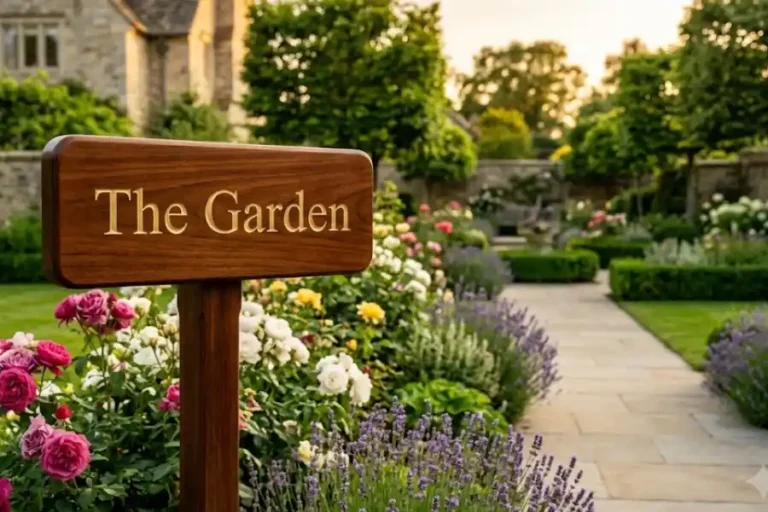
Garden With Seating: A Simple Plan for a Backyard You’ll Love
Most gardens have a problem. They look nice from the kitchen window, but nobody ever sits in them. If you have ever bought a plant, placed it somewhere pretty, and then never spent real time outside enjoying it, you already know this feeling.
A garden with seating fixes that. It turns a space you only look at into a space you live in. And you do not need a big yard, a big budget, or a landscaping crew to make it happen. You need a plan, a few smart choices, and about a weekend of work.
This post walks you through how to do it, step by step, based on what works and what people usually get wrong.
What Does “Garden With Seating” Mean?
A garden with seating is simply an outdoor space where planting and sitting share the same area. It is not a patio bolted onto the edge of your lawn. It is a spot where flowers, shrubs, or even a small tree grow right around a bench, a chair, or a little seating nook, so you feel like you are sitting inside the garden instead of next to it.
People search for this idea for a few different reasons. Some want a quiet corner to read in. Some want a place to host friends on a summer evening. Others just want their backyard to finally feel finished. The good news is that one basic plan works for almost all of these goals. You just adjust the size and style.
Step 1: Figure Out How Much Space You Need
This is the part most people skip, and it is why so many seating areas end up feeling cramped. Here is a simple rule you can use:
- One person, one chair: needs about 3 feet by 3 feet of space to sit and move comfortably.
- A small bistro set for two: works well in a 6 foot by 6 foot area.
- A group seating area for four to six people: needs roughly 10 feet by 10 feet, including walking room around the furniture.
- A wood outdoor garden bench tucked into a planting bed: only needs about 5 feet of open space in front of it so legs are not brushing against plants.
Grab a tape measure before you buy anything. It takes ten minutes and saves you from ordering furniture that will not fit, which is one of the most common and most expensive mistakes people make.
Step 2: Pick a Spot Your Garden Already Wants to Be
Every garden has a natural “sweet spot,” a place where people already tend to pause. It might be near a tree that gives afternoon shade, a corner that catches the evening sun, or a quiet edge away from the noise of the street.
Walk your garden at three different times of day: morning, midday, and evening. Notice where the light falls and where you naturally feel like stopping. That spot, not the center of the lawn, is usually the best place for your seating area.
A few things worth checking before you commit to a spot:
- Does it get shade during the hottest part of the day, or will you need to add some?
- Is the ground level, or will you need to fix drainage first?
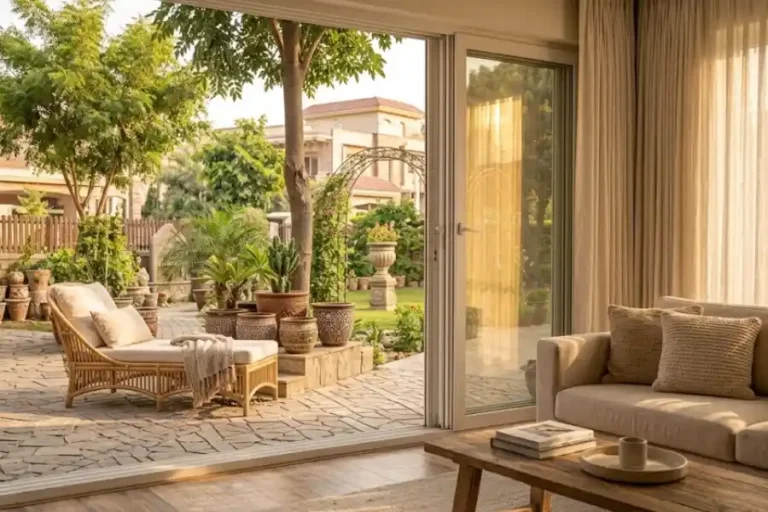
- Can you see it from inside your house? A seating area you can see from your kitchen or living room gets used far more often than one hidden in a back corner.
Step 3: Choose Seating That Matches How You’ll Use It
This is where a lot of garden seating ideas online go wrong. They show you pretty furniture without asking how you plan to use the space. Match the seating to your real habits, not only the look you want.
If you want a quiet, personal spot
A single Adirondack chair, a hanging egg chair, or a simple wooden bench tucked between plantings works best. Keep it small and intimate. You are not designing for a crowd.
If you want to host friends and family
Go with a cluster of chairs around a low table, or a sectional bench that can seat several people. Circular or U-shaped layouts work better than straight rows because they naturally encourage conversation.
If you have very little space
A folding bistro set, a bench built directly into a low wall, or even a wide, sturdy step can double as seating. Seating that’s fixed to the wall or ground is often the smartest choice for tiny gardens because it does not eat into walking space the way freestanding furniture does.
Choosing materials that last
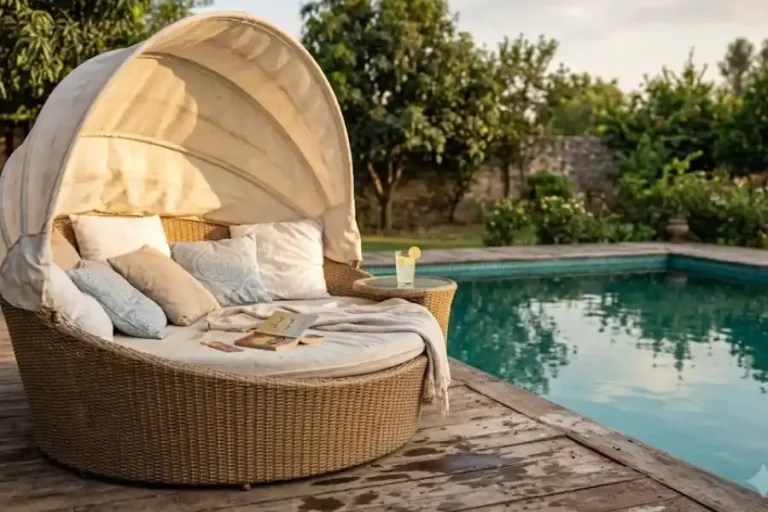
Wood gives a warm, natural feel but needs sealing every year or two. Metal, especially powder-coated aluminum, resists rust and needs almost no upkeep. Woven resin furniture is a good middle ground: lightweight, weatherproof, and comfortable without much maintenance. Whatever you pick, make sure it is rated for outdoor use. Furniture from your living room will not survive rain and sun for long.
Step 4: Add Plants That Do More Than Look Nice
This is the step most garden seating articles skip entirely, and it is where a good seating area becomes a great one. The plants around your seating should be doing a job, not only filling space.
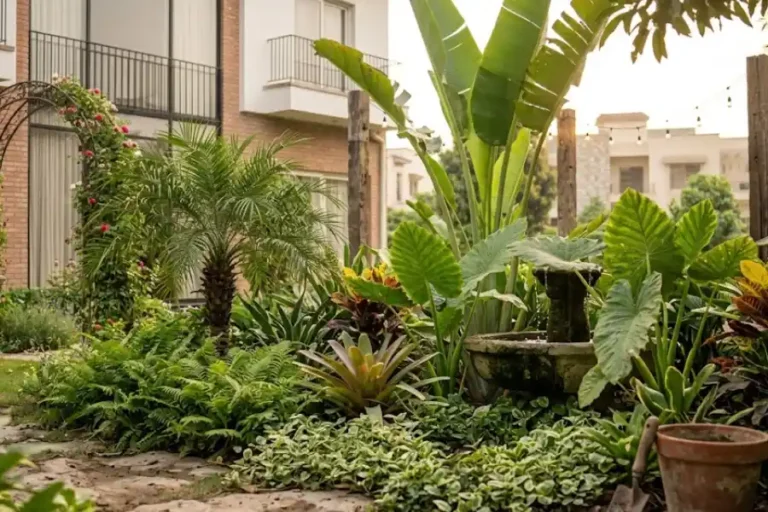
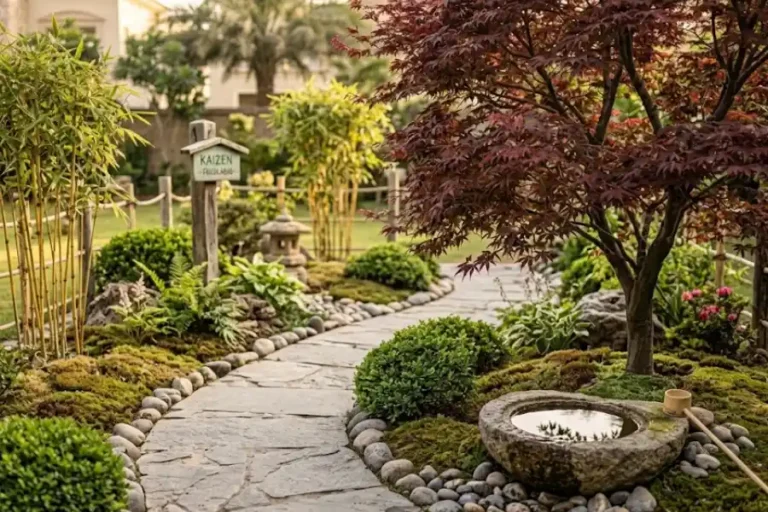
- For privacy: tall grasses, bamboo in containers, or a row of shrubs can screen your seating area from neighbors without needing a fence.
- For shade: a small tree, a large potted fig, or a climbing vine on a simple frame can cool the space naturally within a couple of growing seasons.
- For scent: plant lavender, jasmine, or rosemary close to where people will sit. You want to brush past them or catch their smell in the breeze, so place them within arm’s reach.
- For year round interest: mix evergreens with seasonal flowers so the area does not look empty in winter.
A simple trick that works in almost any garden: plant taller greenery behind the seating and lower, softer plants in front. This creates a natural, cozy “room” feeling without needing walls at all.
Step 5: Layer in Comfort and Light
Furniture and plants get you most of the way there, but comfort is what makes people stay outside. A few low cost additions make a big difference:
- Weatherproof cushions and throws instantly make hard chairs feel inviting.
- An outdoor rug defines the space and makes it feel like a real “room” rather than a random patch of garden.
- String lights or a couple of solar garden lights extend how late you can use the space in the evening.
- A small side table for drinks or books is easy to forget but makes the area far more usable.
What You Can Realistically Do at Each Price Point
One thing missing from most articles is a straight answer about cost. Here’s what you can expect at each level:
- Under $150: A pair of secondhand chairs, a coat of exterior paint, weatherproof cushions from a discount store, and a couple of potted plants for privacy.
- $150 to $500: A new bistro set or two seater bench, an outdoor rug, solar lighting, and a small planting bed with shrubs and flowers.
- $500 and up: A bench built directly into the patio or a small deck, a matching furniture set for four to six people, mature shrubs or a small tree for shade, and proper outdoor lighting wired into your home’s power.
You do not need the top tier to get a space you love. Some of the most inviting garden seating areas are the budget ones, simply because the owner put more thought into the layout than into the price tag.
7 Mistakes That Quietly Ruin a Garden Seating Area
- Placing seating too far from the house. If it takes effort to get there, you will not use it as often as you think.
- Ignoring shade completely. A beautiful seating area that bakes in direct sun by 11 a.m. will sit empty all summer.
- Buying furniture before measuring the space. This leads to cramped, awkward layouts that never feel relaxing.
- Forgetting maintenance. Untreated wood and cheap fabric cushions fall apart fast in real weather.
- Planting too close to the seating. Give plants room to grow, or you will be trimming leaves off your shoulder within a year.
- Skipping lighting. A gorgeous daytime spot that goes completely dark at night only gets used half as often.
- Copying a design that does not match your climate. A layout built for mild weather may not survive heavy rain, strong sun, or freezing winters where you live.
Garden Seating Ideas by Space Size
If you want a quick starting point based on what you are working with, here are combinations that consistently work well.
Small yards and courtyards
A folding bistro set, a vertical planter or trellis for privacy, and a single potted tree for shade. Keep colors light to make the space feel bigger, and use furniture that folds away when you need the room for something else.
Medium suburban backyards
A four chair set around a low table, a mix of shrubs and flowering plants along the edges, and a simple pergola or shade sail overhead. This size works well for both quiet mornings and small get togethers.
Larger backyards
Consider two separate seating zones instead of one big one, for example, a dining set near the house and a quieter lounge area with a bench tucked further into the garden among taller plants. This gives you flexibility depending on your mood or the size of your gathering.
Frequently Asked Questions
How much space do I need for a garden seating area?
A single chair needs about 3 by 3 feet, a small two seat setup needs roughly 6 by 6 feet, and a group area for four to six people needs about 10 by 10 feet, including room to walk around the furniture.
What is the best cheap seating option for a small garden?
A folding bistro set or a secondhand bench refreshed with paint and weatherproof cushions gives you comfortable seating for under $150 in most cases.
What plants work best around garden seating?
Lavender and rosemary add scent within reach, tall grasses or shrubs add privacy, and a small tree or climbing vine adds shade. Mixing evergreens with seasonal flowers keeps the area looking good year round.
Do I need a fence for privacy around seating?
Not always. Tall grasses, shrubs, or bamboo planted in containers can screen a seating area from view just as well as a fence, and they add greenery at the same time.
How do I make garden seating comfortable without spending a lot?
Weatherproof cushions, an outdoor rug, and a couple of solar lights make the biggest difference for the least money. Comfort usually comes from small details, not expensive furniture.
Final Thought
A garden with seating does not need to be complicated or expensive. It needs a spot you truly want to sit in, furniture that fits both the space and how you live, and a few plants doing real work around it. Start small if you need to. Add one chair, one plant, one light. The rest tends to fall into place once you are out there enjoying it.