Outdoor Rocking Chair: How to Choose One That Lasts
Picture this. It’s a warm evening. The sky is turning orange. You sit down, push your feet against the floor, and let the chair do the rest. Back and forth. Back and forth. That’s the magic of a good outdoor rocking chair. It turns a plain porch into your favorite spot in the whole house.
But here’s the problem. Walk into any store or scroll through any website, and you’ll find hundreds of options. Wood ones, plastic ones, metal ones, folding ones, oversized ones. How do you know which outdoor rocking chair is worth your money, and which one will crack, fade, or wobble after one summer?
This article answers that. We’ll cover the real differences between materials, what to check before you buy, where to place your chair, how to keep it looking new, and the mistakes most buyers make without even realizing it. By the end, you’ll know exactly what to look for in a weather resistant rocking chair that fits your space, your budget, and your body. Just like a welcoming garden sign creates a warm first impression, the right chair instantly makes your porch feel complete.
Why an Outdoor Rocking Chair Belongs on Your Porch
A rocking chair earns its keep in a way most porch furniture doesn’t. It’s one of the few chairs that moves with you instead of just holding you up. That gentle back and forth motion feels relaxing, and it’s genuinely good for you too. Rocking gently can improve blood flow, ease stiffness in your back and joints, and help you unwind after a long day. Many people even find that a slow rocking motion helps them fall asleep faster at night.
There’s also something simple about it. No screens, no notifications, just you, some fresh air, and a chair that sways with your breathing. That’s probably why rocking chairs have stayed popular for over two hundred years, while so many other furniture trends have faded away.
The 4 Main Types of Outdoor Rocking Chairs
Not all rocking chairs are built the same way. Each material has its own strengths and its own weak points. Here’s a simple breakdown so you can match the chair to your climate and your lifestyle.
1. Wood Rocking Chairs
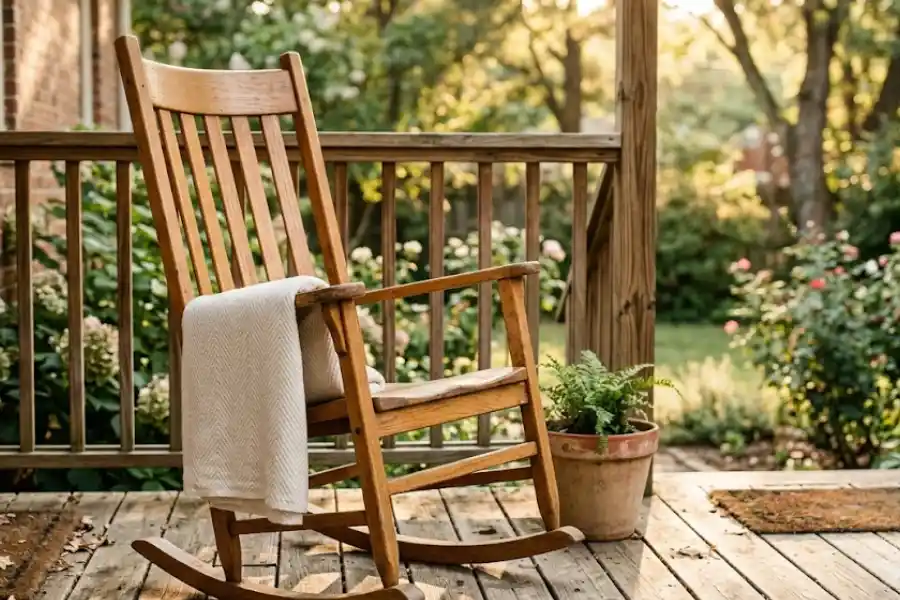
Wood is the classic choice. It looks warm, it feels sturdy, and it fits almost any porch style. Cedar and teak are the best woods for outdoor use because they naturally resist rot and bugs. The downside? Wood needs care. You’ll want to seal or stain it every year or two, or the sun and rain will slowly wear it down. This rustic, natural wood charm pairs beautifully if you have a climbing vine on a garden obelisk nearby on the patio.
2. All-Weather Resin (HDPE) Rocking Chairs
This is the newer, low-maintenance option. HDPE stands for high-density polyethylene, which is just a fancy way of saying “tough recycled plastic that looks like wood.” An all-weather rocking chair made from HDPE won’t crack, peel, splinter, or rot. You can leave it outside all year, through rain, snow, or blazing sun, and it will barely change. It costs a bit more upfront, but you’ll never have to paint or seal it.
3. Metal and Aluminum Rocking Chairs
Metal frames, usually powder-coated aluminum or steel, are light, strong, and often foldable. These are great if you want something portable for camping trips or if you like to move your chair around often. Just make sure the coating is rust-resistant, especially if you live somewhere humid or near the coast.
4. Wicker and Rattan Rocking Chairs
Synthetic wicker (not the natural kind, which doesn’t survive outdoors) gives you a cozy, textured look. It’s usually built over a metal or resin frame, so it holds up well outside while still looking soft and inviting. This style works especially well with a thick cushion for extra comfort.
7 Things to Check Before You Buy an Outdoor Rocking Chair
Most buying guides stop at material. But there are several other details that quietly decide whether you’ll love your chair or regret it within a month.
- Weight capacity: Most standard rockers hold around 250 to 300 pounds, while oversized models can hold 400 to 450 pounds. Always check this number, especially if more than one person might use the chair.
- Weather resistance: If your chair will sit outside all year, look for words like “UV-resistant,” “rust-proof,” or “all-weather” in the description.
- Cushions and fabric: Look for quick-drying, fade-resistant outdoor fabric like Textilene or solution-dyed acrylic. Regular indoor fabric will grow mold outside within weeks.
- Assembly: Some chairs arrive fully built, others need an hour with a screwdriver. Check the product details before you buy if you’d rather skip the setup.
- Rocking motion: Curved runners give a smooth, old-fashioned glide. Spring-action bases give a gentler, more controlled sway. Neither is better, it just depends what feels right to you.
- Maintenance level: Ask yourself how much upkeep you’re really willing to do. If it’s not much, skip real wood and choose resin or metal instead.
- Price range: Basic folding rockers start around 60 to 100 dollars. Mid-range wood or resin chairs run 150 to 350 dollars. Premium HDPE or handcrafted wood rockers can go from 400 to 700 dollars or more.
Where to Place Your Outdoor Rocking Chair
This part gets skipped in almost every buying guide, but it matters. A rocking chair needs room to actually rock. Give it a few feet of open space in front and behind, plus a bit of room on each side so nobody bumps an elbow mid-sway. A covered porch is ideal because it protects the chair from direct sun and rain, but if you don’t have one, an outdoor rocking chair for porch or patio use should still be rated for direct weather exposure.
Also think about surface. A flat, stable floor like a wood deck, concrete patio, or paved porch works best. On grass or gravel, look for a chair with a wider base or rubber feet so it doesn’t sink or tip.
How to Keep Your Rocking Chair Looking New
Buying the right chair is only half the job. Taking care of it decides how long it actually lasts.
- Wood: Wipe it down monthly, and reseal or restain it once a year, ideally before the rainy season hits.
- Resin or HDPE: Just wash with mild soap and water a few times a year. That’s really it.
- Metal: Check for rust spots occasionally, and touch up the paint or coating if you spot any chipping.
- Cushions: Bring them inside during heavy storms, and let them air out fully before storing them for winter to avoid mildew.
Common Mistakes People Make When Buying an Outdoor Rocking Chair
A lot of buyers focus only on looks, then run into problems later. Here are the mistakes worth avoiding.
- Ignoring weight capacity. A chair that looks sturdy in photos can still be rated for less weight than you’d expect.
- Buying indoor cushions for outdoor use. They’ll soak up water and grow mold within a season.
- Not measuring the space first. A chair that’s too big for your porch won’t rock properly, or worse, won’t even fit.
- Choosing style over material. A beautiful wood rocker that you never seal will look worse within a year than a simple resin chair that needs no care at all.
- Skipping reviews about long-term durability. Star ratings from the first month don’t tell you how a chair holds up after two summers outside.
A good outdoor rocking chair should still feel just as steady and comfortable three years from now as it did on the day you brought it home.
Frequently Asked Questions
Are outdoor rocking chairs good for your back?
Yes, in most cases. The gentle rocking motion keeps small muscles active without straining your spine, which can help reduce stiffness after long periods of sitting.
Can I leave my outdoor rocking chair outside all year?
It depends on the material. A weather resistant rocking chair made from HDPE resin or coated metal can usually stay outside year-round. Untreated wood should be covered or moved indoors during harsh winters.
How much weight can an outdoor rocking chair hold?
Standard models typically hold 250 to 300 pounds, while oversized or reinforced designs can support 400 pounds or more. Always check the listed weight capacity before buying.
Which lasts longer: wood, resin, or metal?
Well-maintained wood can last decades, but it needs yearly care. HDPE resin often lasts just as long with almost no maintenance. Metal frames last a long time too, as long as rust is kept in check.
How much should I expect to spend on a good outdoor rocking chair?
Simple folding rockers start around 60 to 100 dollars. A solid mid-range wood or resin chair usually falls between 150 and 350 dollars, while premium or handcrafted options can go well beyond that.
At the end of the day, the best outdoor rocking chair for you isn’t necessarily the most expensive one. It’s the one that matches your climate, fits your porch, and feels right the moment you sit down and start to rock. Take your time, check the details in this guide, and you’ll end up with a chair that earns its spot on your porch for years to come.