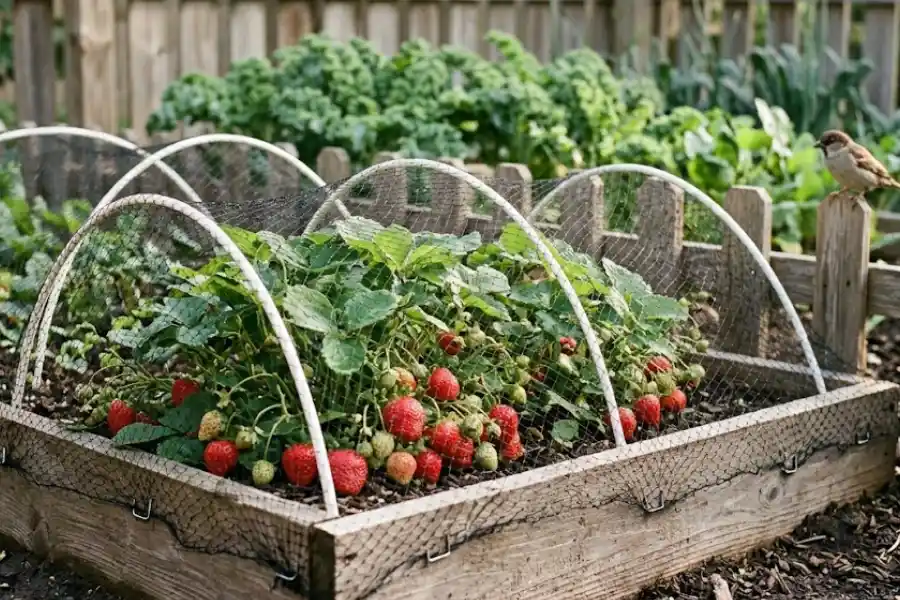
Netting for Garden: Best Types, Mesh Sizes & Setup Tips
You water the berries for weeks. You wait. Then one sunny morning, half the fruit is gone. The birds got there first.
It hurts, but it is very common. The good news is that the fix is cheap. A small roll can cost about the same as a pizza. The fix is netting for garden use. It needs no sprays, it does not harm the soil, and it works all season long.
This article covers which type to buy and what mesh size to pick. It also shows how to set it up the right way. Plus, you will see the mistakes that make nets fail, so you can skip them. Let’s get started.
What Is Netting for Garden Use, and Does It Really Work?
Short answer: yes, it works. Garden netting is a light mesh that blocks pests with a simple barrier. Birds, bugs, deer, and even harsh sun can be held back. Air, water, and light still pass through.
Sprays wash off in the rain. A net does not. It also will not hurt bees, pets, or people. You put it up once, and it starts working that day. With good care, one net can last for years.
There is one catch. A net only works when the holes are the right size for the pest. It also needs to be set up with no gaps. Most failures come from those two things, not from the net itself.
Quick Pick: Which Net Solves Your Problem?
Start with the pest. Then match the net.
- Birds eating your fruit: bird netting with holes of 3/4 inch or smaller.
- Moths, flies, and small bugs on veggies: fine insect mesh, about 0.6 to 1.4 mm.
- Deer in your yard: tall deer netting, 7 to 8 feet high.
- Too much summer sun: shade netting, often 30 to 50 percent for veggies.
- Climbing peas, beans, or cucumbers: trellis netting with open squares.
The Main Types of Netting for Garden Beds and Trees
1. Bird Netting
Bird netting has wide holes. Most rolls use a 3/4 inch square mesh. That size stops most birds from reaching the fruit. It still lets in sun, rain, and air.
Holes bigger than about 3/4 inch will not keep birds out for sure. Smaller birds can squeeze through. If you grow blueberries, a 1/2 inch mesh gives extra safety.
This is the best netting for garden fruit like strawberries, blueberries, grapes, cherries, and figs. A small 14 by 14 foot sheet often costs about $10 to $15.
2. Insect Netting
Insect netting is much finer. It looks like a soft, see-through cloth. It stops bugs from landing on your plants and laying eggs.
The size of the holes matters a lot. The Royal Horticultural Society explains that a standard mesh of 1.3 to 1.4 mm works well against cabbage root fly, carrot fly, onion fly, and moths. But it is not reliable against tiny pests like aphids and flea beetles. For those, you need a fine mesh of about 0.8 mm. You can read more on the RHS page about insect-proof mesh.
Cornell Cooperative Extension gives the same simple advice. Check the size of your pest first. Then pick a mesh that is smaller than the bug. Their notes on insect netting for growers are worth a look.
Insect netting for garden vegetables works best on cabbage, broccoli, kale, carrots, onions, radishes, and lettuce. These plants do not need bees to make food.
3. Deer Netting
Deer can jump high. Experts often say a deer fence must be about 8 feet tall to be safe. That is why deer netting comes in tall rolls of 7 to 8 feet.
Plastic deer netting costs far less than a wood or steel fence. Rolls of 100 feet often run from about $60 to $85. It is also easy to put up and hard to see.
Growers who use it share a few smart tips:
- Let the top sag a little to the outside. Deer find it harder to jump when the fence leans over their heads.
- Pin the bottom to the ground with 6 inch soil staples. Deer will crawl under a loose edge.
- Expect some damage. Rabbits and squirrels can chew through plastic.
Think of deer netting for garden borders as a budget fix. If deer pressure is high, or snow is heavy, you may need something stronger.
4. Shade Netting
Shade netting protects plants from burning sun. It comes in different percentages. A higher number means darker shade. Black shade netting is often used to make cool spots for plants that dislike full sun.
White netting lets in more light. Gardeners use it to block pests or heavy rain. The Singapore National Parks Board has a helpful page on garden netting, colors, and frames.
Shade netting can also help lettuce and spinach in hot weather. These plants often go to seed early when it is too hot. The same idea works on a small balcony or patio, where a bit of shade can keep both plants and people cooler. For more ways to do that, see these balcony shade ideas.
5. Trellis and Support Netting
This net is open and strong. You stretch it between poles so vines can climb it. Peas, beans, cucumbers, and small melons all love it. Short on space? Fix the net to a garden trellis planter box and let peas or beans climb up it.
A trellis net lifts fruit off wet soil. That helps stop rot. It also gives more air flow and saves space. Pick a strong one, because a full vine gets heavy.
How to Pick the Right Mesh Size
Here is the simple rule. The holes must be smaller than the pest. But they should not be so small that air and light cannot get in.
- Birds: 3/4 inch, or 1/2 inch for extra safety.
- Cabbage moths and root flies: 1.3 to 1.4 mm.
- Aphids, flea beetles, and leaf miners: 0.6 to 0.8 mm.
- Deer: tall plastic mesh. Larger holes can stop deer, but they will not stop birds.
Fine mesh also changes the light and heat. Many fine nets let through about 83 to 90 percent of the light. That is plenty for most crops. In very hot weather, though, check that your plants are not getting too warm under the cover.
The right netting for garden beds always depends on the pest. Look at the damage first. Then decide.
How to Set Up Netting for Garden Beds, Step by Step
- Measure your bed. Add at least one extra foot on every side so the net can reach the ground.
- Build a simple frame. Use hoops, stakes, or PVC pipes. The net should sit above the plants, not on them. Birds can peck through a net that touches fruit. Bugs can also lay eggs on leaves that press against it. Raised beds make this step easy, since you can fix the hoops right to the sides. Planning a new one? This 4×8 raised garden bed planting layout is a good place to start.
- Check your plants first. If bugs are already on them, insect netting will trap them inside. Remove them before you cover.
- Drape the net loosely. Leave enough slack for the plants to grow. A tight net can squash new leaves.
- Seal the edges. Bury them in soil, or hold them down with soil staples, bricks, or sandbags. Even a small gap lets pests in.
- Make your frame strong. Wind and shaking can pull poles loose. Push the posts well down into the ground.
- Check it often. Look every few days for holes, loose edges, or trapped animals.
Common Mistakes That Make Netting Fail
Even good netting for garden beds can fail. Here are the top mistakes, and how to fix each one.
- Leaving gaps at the bottom. Pests walk right in. Bury or pin every edge.
- Letting the net rest on the fruit. Birds eat through it. Raise it with hoops or poles.
- Using the wrong mesh. A bird net will not stop tiny bugs. Match the net to the pest.
- Covering plants that need bees. Strawberries, squash, cucumbers, and peppers need pollinators when they flower. Lift or open the cover during that time. Or pick types that do not need pollination.
- Leaving the net loose and flappy. Loose folds can trap animals. Pull it tight and tuck in the extra.
- Putting it up too late. Pests act fast. Put the net up before the damage starts.
- Leaving it on all year. Take it off after harvest unless the plants still need it.
Keep Birds and Wildlife Safe
Good gardeners care about wildlife, too. Netting for garden use can trap snakes, frogs, and birds if it is loose or stretchy. Reports from university extension offices describe snakes caught in loose plastic mesh.
You can lower the risk with a few easy habits:
- Pick a stiff net, not a floppy one.
- Keep it tight, and tuck in any extra folds.
- Do not leave long loose ends on the ground.
- Check the net every morning, especially in spring.
- If an animal is stuck, cut the net away with small scissors. Do not pull.
These small steps protect your plants and the creatures that share your yard.
You can also give birds a better place to go. A garden bird bath set up well away from your fruit gives them water without a fight over your berries.
How Much Does Netting for Garden Use Cost, and How Long Does It Last?
Garden nets are cheap. Most small and medium nets cost between $7 and $50. Big 100 foot deer rolls cost more, often $60 to $85.
Here is a rough idea of how long each type lasts:
- Bird netting: about 3 to 5 years if it has UV protection.
- Insect mesh: about 5 to 10 years with good care.
- Deer netting: several years, unless animals chew it.
Do the math, and the price gets even better. A $15 net that lasts four years costs under $4 per year. That is much cheaper than losing a whole crop.
To make your net last, look for the words UV stabilized on the label. After the season ends, shake it clean, let it dry, and roll it up. Store it in a cool, dry place. Do not leave it in the sun.
Best Netting for Garden Plants: Plant by Plant
Not sure what to use? Start here.
- Strawberries: bird netting on low hoops. Put it up when the fruit starts to turn red.
- Blueberries: a 1/2 to 3/4 inch net over a frame, set up before the berries ripen.
- Cabbage, broccoli, and kale: fine insect mesh from the day you plant until harvest.
- Carrots, onions, and radishes: fine insect mesh pinned down on all sides.
- Squash, cucumbers, and peppers: leave the cover open or lifted when flowers appear.
- Tomatoes: strong hoops with bird netting once the fruit begins to ripen.
- Peas and beans: trellis netting stretched between two sturdy poles.
- Fruit trees: bird netting hung from poles. Tie it closed low on the trunk so birds cannot slip in underneath.
- Ponds: bird netting stretched high above the water and pinned around the edges.
Frequently Asked Questions
What is the best netting for garden vegetables?
For most veggies, fine insect mesh is the best choice. It blocks moths, flies, and beetles. For fruit-bearing crops that need bees, use it only until flowering starts.
Can birds get through garden netting?
Yes, if the holes are too big. Mesh larger than about 3/4 inch does not reliably stop birds. Small birds may also slip through any gap at the edges. Keep the net off the fruit and seal every side.
Does garden netting stop deer?
Tall deer netting can help a lot. It works best at 7 to 8 feet high, with the bottom pinned to the ground. It is not perfect, so check it often for holes.
Should netting touch the plants?
No. Raise it on hoops or poles. A net that touches fruit lets birds peck through. It can also let bugs lay eggs on the leaves below.
Does garden netting block sun and rain?
Most nets let through plenty of both. Insect mesh often allows about 83 to 90 percent of light. Shade netting blocks much more sun on purpose.
Can I reuse garden netting?
Yes. Many nets are made to be used again. Clean it, dry it, and store it away from sun. Good insect mesh can last up to ten years.
Will netting stop squirrels and rabbits?
Not always. They can chew through plastic. For these pests, many gardeners use strong metal wire mesh near the ground and netting on top.
Final Thoughts
Netting for garden use is one of the easiest ways to protect your hard work. It is cheap, it is safe, and it lasts for years. You do not need special skills to use it.
Here is the plan in three steps. First, find the pest. Second, match the mesh size to that pest. Third, set it up with no gaps and with room for your plants to grow.
Do this, and you will pick your own berries, not watch the birds do it. Your veggies will grow clean and healthy, and you will not need a single spray. Pick the right net this week, and enjoy a bigger harvest.