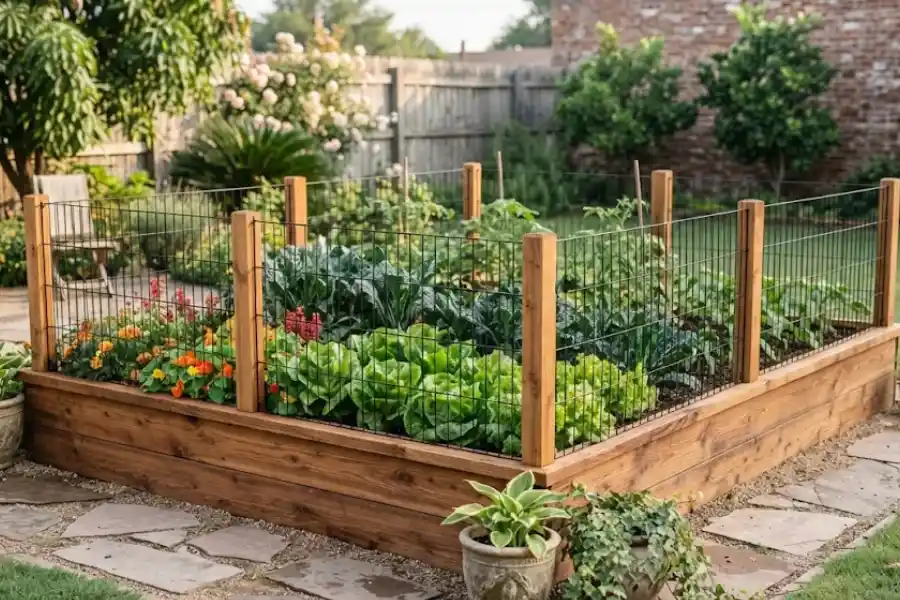
Raised Garden Bed With Fence: Beautiful and Stylish Designs
You plant your seeds, water them for weeks, and look forward to fresh vegetables. Then one morning, you find your lettuce damaged or missing. A rabbit has enjoyed a free meal.
A raised garden bed with fence can prevent this problem while making your outdoor space look more beautiful and organized. The fence protects your plants from rabbits, dogs, and other pests, while the raised bed creates a neat space for growing vegetables, herbs, and flowers.
But a garden bed does not have to look like a plain wooden box surrounded by wire. With the right materials, attractive fence designs, and carefully arranged plants, you can turn it into a stylish feature of your backyard. A natural cedar frame, a decorative wooden fence, or a simple trellis can add charm while keeping your garden practical.
This article covers fence heights, different designs, the best materials, and easy building steps. You will also find ideas for creating an attractive raised garden bed that protects your plants and adds beauty to your outdoor garden decor.
Why Use a Raised Garden Bed With Fence?
A raised garden bed already offers several benefits. It improves soil drainage, warms up earlier in spring, and makes planting and harvesting easier. Adding a fence provides extra protection and gives the garden a more finished appearance.
Here are some reasons to consider this combination:
- It blocks garden pests. Rabbits, groundhogs, and dogs cannot easily reach your vegetables when the fence is properly installed.
- It protects young plants. Seedlings are delicate, and even a small animal can damage them. A fence helps keep them safe while they grow.
- It supports climbing plants. Peas, beans, and cucumbers can grow along a trellis-style fence, adding height and greenery to your garden.
- It keeps pets away. A properly designed barrier prevents curious dogs and cats from digging through freshly prepared soil.
- It creates a neat garden appearance. A matching wooden frame and attractive fence give the bed a clean, organized look.
- It adds decorative value. A cedar frame, dark metal mesh, or painted wooden panels can complement your patio, lawn, and other outdoor features.
One raised bed maker, Frame It All, describes a good fence as insurance for your harvest. It is also an opportunity to make your vegetable garden look more attractive.
Match the Fence to the Pest
Before choosing a fence design, think about the animals that visit your backyard. A short fence that stops rabbits may not keep deer away. Look for chewed leaves, holes in the soil, and small tracks to identify the problem.
A practical fence can also look attractive when you select a style that suits your garden.
Before you buy a raised garden bed with fence, use this list as a starting point:
- Rabbits: A fence about 2 feet tall works well. Use mesh with holes of 1 inch or less, and keep the bottom edge tight against the bed.
- Dogs and cats: A 2-foot fence keeps most pets out. Cover bare soil with mulch so cats do not use it as a litter box.
- Groundhogs: Choose a fence 3 feet tall or more. They dig, so line the bottom of the bed with wire mesh.
- Squirrels and birds: Add a top cover. Light netting or a hinged lid works well and can be designed to blend with the rest of the bed.
- Voles and gophers: These pests tunnel from below. A layer of 1/2-inch wire mesh under the bed helps stop them.
- Deer: Deer can jump high. Fences for deer are often 6 to 8 feet tall, which is too tall for most raised beds. Many gardeners fence the whole garden instead.
Fence heights can add up quickly. One garden project on WTTW used 18-inch beds with an additional 18-inch rabbit fence on top. This brought the full height to 3 feet. Always count the bed wall when planning your fence.
Types of Raised Garden Bed With Fence
A raised garden bed with fence comes in several styles. Each one offers a different combination of protection, convenience, and visual appeal.
Choosing a design that matches your backyard can make the entire space look more coordinated. Consider the size of your garden, the materials around it, and the plants you want to grow.
Fence Panels Attached to the Bed
Many raised garden bed kits come with fence panels already attached. This design is convenient because the frame and fence are made to fit together.
The Greenes Fence CritterGuard system has panels that are 23.5 inches tall. Its stakes push 7 inches into the soil, leaving 16.5 inches above the dirt. This style suits smaller beds and gardens with rabbit problems.
For a more attractive appearance, choose a wooden frame with dark wire panels. The contrast between natural wood and dark mesh creates a clean, modern look without making the bed feel too heavy.
Hinged or Fold-Down Fence
Reaching over a tall fence can become uncomfortable when watering, pruning, or harvesting. A hinged or fold-down design makes everyday gardening easier.
Eartheasy sells a 3 x 6-foot cedar bed that stands 20 inches tall. Its fence is 13.5 inches high, and the front panels fold down. This allows you to reach your plants and soil without struggling with a fixed barrier.
Cedar also brings a warm, natural appearance to the backyard. You can keep the wood in its natural finish to create a rustic look that works well with green plants and outdoor furniture.
Fence With Trellis
A trellis-style fence is an excellent choice when you want to combine plant protection with decorative garden styling.
A trellis on one side gives climbing plants such as peas, beans, and cucumbers a place to grow. It saves ground space and adds vertical greenery to the bed. It can also cast light shade on lettuce planted behind it.
Wooden trellises create a traditional garden appearance, while simple metal designs suit more modern outdoor spaces. Growing flowering vines along the structure can make the raised bed even more attractive. For a ready-made option, see this garden trellis planter box.
Bed With Deer Fencing
Some raised garden bed kits come with taller fencing for areas where deer frequently visit.
Home Depot lists an 8 ft x 16 ft cedar kit with deer fencing. These larger systems are useful for gardens that need stronger protection from wildlife.
Although tall fencing is mainly practical, you can make it look more organized by choosing a consistent material and keeping the surrounding area tidy. A natural wood frame also helps the structure blend into the backyard.
Privacy Wall Bed
A privacy wall bed combines a raised planting area with a taller wall on one side. It can create a quiet corner in a busy backyard while adding a decorative feature.
The blog Empress of Dirt built one using 1 x 6 fence boards and tall back posts. This design creates a more enclosed garden space and can work well beside a patio or seating area.
You can grow climbing plants along the wall, place colorful flowers inside the bed, or use the structure as a backdrop for decorative garden features. The result is a more private and visually appealing outdoor corner.
Want more looks? See these garden border fence ideas.
Best Materials for a Raised Garden Bed With Fence
The materials you choose affect the strength, lifespan, and appearance of your raised garden bed. Some options offer a natural decorative finish, while others provide a more modern look.
Consider cost, durability, and how well each material fits your outdoor garden style.
- Cedar: Cedar naturally resists rot and insects. It has a warm wood appearance that suits rustic, traditional, and natural garden designs. Home Depot suggests untreated cedar or redwood if you grow food.
- Pine: Pine is usually less expensive than cedar. It may not last as long outdoors, but it can be painted or stained to match other garden features.
- Metal: Galvanized steel beds are durable and do not rot. Their smooth appearance works well in contemporary gardens. However, they may warm up more in hot sunlight, so water your plants regularly.
- Composite: Composite boards resist rot and suit wet climates. They can provide a clean, consistent appearance with less maintenance.
For the fence itself, you have several choices:
- Hardware cloth: This is a stiff wire mesh. It is strong and stops small animals. It is the best pick for most beds.
- Welded wire: It is strong and easy to cut. Check the size of the holes before buying.
- Chicken wire: It is inexpensive and bends easily. It stops rabbits but may not hold up against stronger animals.
- Wood pickets: These create a traditional decorative appearance. Keep the gaps small enough to prevent animals from entering.
- Netting: It works well as a lightweight top cover against birds.
A simple styling tip: Try to use materials that complement each other. For example, a cedar frame with dark wire fencing creates an attractive contrast. If your backyard already has wooden planters or a wooden patio fence, matching the finishes can make the entire garden look more coordinated.
Best Size for Your Raised Garden Bed With Fence
The size of your raised garden bed affects both plant growth and its overall appearance.
Keep the bed 4 feet wide or less. Home Depot notes that anything wider makes the middle difficult to reach. A fence can make reaching the plants even harder, so a narrow bed is often more convenient.
Plan for at least 10 to 12 inches of soil. Most vegetables grow well in about 10 inches.
An 8 x 4-foot bed that is 10 inches tall needs about 27 cubic feet of soil. Home Depot suggests a mix of 60 percent topsoil, 30 percent compost, and 10 percent potting mix.
Sunlight matters too. Choose a location with six to eight hours of direct sunlight. Put the tall fence or trellis on the north side so it does not shade your plants.
For a more beautiful layout, leave enough room around the bed for walking and watering. You can add a simple stone or gravel path to keep the surrounding area clean. A few matching planters nearby can also help connect the raised bed with the rest of your outdoor decor.
How to Build a DIY Raised Garden Bed With Fence
Building your own raised garden bed with fence gives you control over its size, materials, and appearance. You can choose a simple design or add decorative details that match your backyard.
A DIY raised garden bed with fence can cost around $100 and take about one day, based on a project shared on Hometalk. Kits cost more. A 4 x 4-foot cedar bed with a fence system was listed at $149.99 at Tractor Supply when this article was written. Check the current price before buying.
Here is what you need:
- 2 x 10 boards for the bed walls
- Four 4 x 4 posts, about 3 feet long (the WTTW project used this size)
- Hardware cloth or welded wire
- Exterior screws and heavy-duty staples
- Hinges for a gate or lift-off panel
- A drill, a level, and wire cutters
Follow these steps:
- Pick a flat, sunny spot. Remove rocks and level the ground. Choose a location where the raised bed will look natural and leave enough room to move around it.
- Build the frame. Cut the boards to length and screw them into a rectangle. Keep the corners straight and the edges even for a neat, professional-looking finish.
- Line the bottom. Lay hardware cloth under the frame. Fold it up the inside walls and staple it in place. This helps stop digging pests from below. Adding a garden bed liner can also help hold the soil in place.
- Add the corner posts. Fix one post inside each corner, as the WTTW project did. Use a level to keep them straight. Evenly positioned posts also help the finished fence look balanced.
- Attach the fence mesh. Pull it tight and staple it to the posts every few inches. Leave no gap at the bottom. Make sure the mesh sits evenly so the fence looks tidy rather than loose or uneven.
- Add a way in. Put hinges on one panel or build a lift-off top. A simple wooden gate can make the bed look more finished while keeping access convenient.
- Fill the bed. Add your soil mix and water it well. Keep the soil level slightly below the top edge so it does not spill over the sides.
- Plant your garden. Start with the plants that animals love most. Arrange taller plants toward the back and shorter vegetables or flowers near the front. This creates a more attractive planting layout while keeping everything easy to reach.
Once the structure is complete, take a little time to tidy the surrounding area. Remove leftover materials, straighten the fence, and add a simple path or a few decorative pots if space allows. These small details can make a homemade raised bed look like a planned part of your backyard design.
What to Plant in a Raised Garden Bed With Fence
The right plants can make your raised garden bed both productive and beautiful. A mixture of vegetables, herbs, and flowers adds different colors, textures, and heights.
A fence helps protect plants that animals love. Lettuce, beans, peas, carrots, and strawberries are common targets.
Climbers such as cucumbers, pole beans, and peas can use the fence as a trellis. This makes better use of vertical space and gives the garden a fuller appearance.
Keep tall plants like tomatoes toward the center or back so they do not push against the mesh. Place shorter plants near the front where they are easy to reach.
You can also add a few flowering plants along the edges if there is enough room. Their colors can soften the appearance of the wooden frame and wire fence. Choose plants that suit the available sunlight and growing conditions.
For more planting ideas, check this 4×8 raised garden bed planting layout.
Common Raised Garden Bed With Fence Mistakes
Even a beautiful raised garden bed can become difficult to use if the design is not planned properly. Avoid these common mistakes:
- A fence that is too short. Count the height of the bed wall when planning the total fence height.
- Gaps at the bottom. Small animals can squeeze through tiny spaces. Secure the bottom edge properly.
- Weak mesh. Cheap wire can tear. Use stronger wire where raccoons or dogs visit.
- No way in. If you cannot reach your plants easily, you may struggle with regular care. Include a hinged or removable section.
- Shade from tall panels. Place tall parts on the north side to reduce unwanted shade.
- Open tops. Birds and squirrels can enter from above. Add suitable netting or a cover where needed.
- A messy appearance. Uneven posts, loose mesh, and mismatched materials can make the garden look unfinished. Keep the frame and fence aligned for a cleaner design.
Planning these details before building can save time, money, and unnecessary repairs.
Care Tips for Your Fenced Bed
Regular maintenance helps your raised garden bed remain strong, attractive, and useful throughout the growing season.
Check your raised garden bed with fence each month. Look for loose staples, bent wire, and new gaps. Fix problems early before animals find a way inside.
Wood beds last longer if you keep soil from piling against the boards. Clean the outside of the frame when needed and remove dirt or plant debris that collects around the base.
In fall, pull out old plants so pests have fewer places to hide. You can also remove dead leaves and tidy the surrounding path.
If you have a wooden fence, check its condition regularly. Repair damaged sections and refresh the finish when necessary. Keep climbing plants trimmed so they do not make the mesh difficult to inspect.
A little care keeps the bed looking neat and helps it remain a beautiful feature of your outdoor garden.
Frequently Asked Questions
How tall should the fence on a raised bed be?
Most rabbit fences stand about 2 feet above the ground. Count the bed wall in that height. For groundhogs, aim for 3 feet or more. The correct height depends on the animals visiting your garden.
What is the best fence for a raised bed?
Hardware cloth attached to wooden posts works well for most gardeners. It is strong, has small holes, and lasts for years. Cedar posts can also give the bed a warm, natural appearance.
Is chicken wire good enough?
Chicken wire works for rabbits and small pets. However, it may not hold up against stronger animals. Use hardware cloth if raccoons or groundhogs visit your backyard.
Will a fence block sunlight?
A short wire fence usually will not block much sunlight. A tall, solid fence can create shade. Place any tall section on the north side of the bed to help your plants receive enough direct light.
Is a raised garden bed with fence worth the cost?
For most gardeners, yes. A properly designed fence can protect a whole season of plants from animals. It also gives you an opportunity to create a more organized and attractive growing space. With the right materials and planting arrangement, the bed can serve as both a practical vegetable garden and a decorative backyard feature.
Final Thoughts
A raised garden bed with fence can do much more than protect your vegetables. With a natural wooden frame, a well-designed fence, and carefully arranged plants, it can become a beautiful and stylish part of your outdoor garden decor.
Choose a fence height that matches the pests in your area, use strong materials, and make sure every section is properly secured. Then think about the decorative details. A cedar finish, an attractive trellis, colorful flowers, and a neat garden path can make the entire space feel more welcoming.
You do not need an expensive garden makeover to create something special. Start with a practical raised bed, add a few thoughtful design touches, and enjoy an outdoor space that looks organized, feels inviting, and helps your plants grow.