Crevice Garden Basics: How to Build One and What to Plant
Have you ever seen a tiny plant growing out of a crack in the sidewalk? It looks tough. It looks happy. And nobody planted it there. A crevice garden copies that idea on purpose.
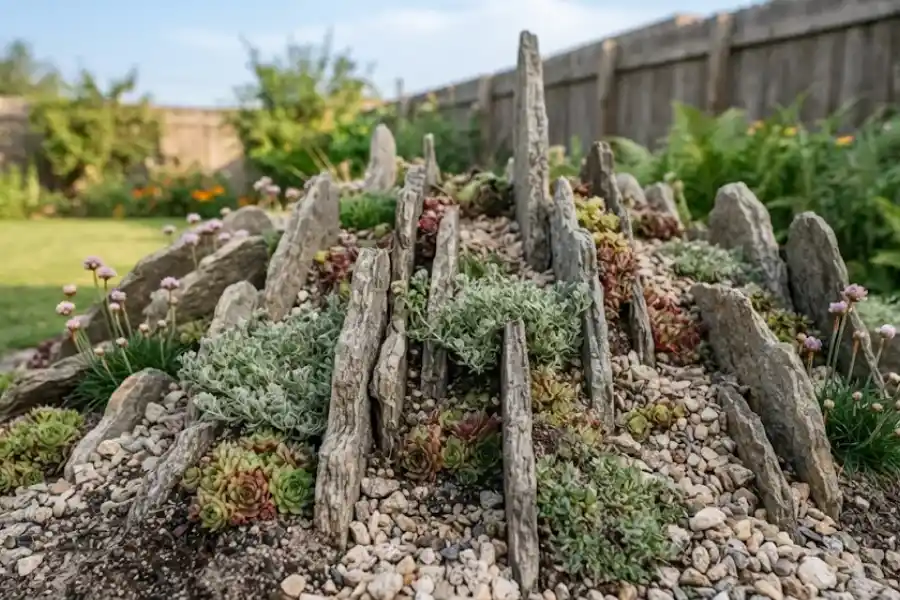
You set flat stones on their edge. You leave narrow gaps between them. Then you tuck small plants into those gaps. The result looks like a slice of mountain moved into your yard.
Gardeners love this style for good reasons. It saves water. It fits small spaces. And it lets you grow plants that often die in regular beds. In this article, you will see what a crevice garden is, how to build one, and which plants grow best in it.
What Is a Crevice Garden?
A crevice garden is a special kind of rock garden. Flat stones stand upright or lean at a slight angle. Narrow gaps run between the stones. Plants grow in those gaps, just like they do on natural cliffs.
Penn State Extension describes it as a form of rock gardening where alpine plants grow in tight spaces between flat rocks turned on end. Plants that live in rock cracks even have a science name: chasmophytes.
Many growers say a true crevice garden has at least 50 percent rock coverage. That is a lot of stone. In a classic rock garden, a few boulders sit in a bed of soil. Here, the stones are the star, and the plants fill the cracks.
If you like the look of stone in the yard, these rock garden ideas show other ways to use it.
A scree garden is a close cousin. It uses loose stone chips instead of upright slabs. Duke Gardens says it can give a similar effect.
Where the Crevice Garden Style Began
A gardener from the Czech Republic named Zdenek Zvolanek, often called “ZZ,” is seen as the pioneer. Czech gardeners loved alpine plants, but some of those plants were hard to keep alive. ZZ turned flat stones on end to copy natural layered rock. It worked.
The idea spread across Europe and into North America. Colorado, the Pacific Northwest, and California are hot spots today. The Denver Botanic Gardens has well-known examples. In 2022, garden designers Kenton Seth and Paul Spriggs shared their work in a book called The Crevice Garden.
Why People Love a Crevice Garden
- It uses little water. One public crevice garden in the Denver area gets water only about every two weeks.
- Drainage is fast. Water slips between the stones, so plant crowns stay dry. Wet crowns are a common reason alpine plants die.
- Roots stay cool. The narrow gaps push roots to grow long and reach cool, damp soil below.
- It looks good all year. The stones add shape and interest in every season, even in winter.
- It fits many spaces. You can build one on a mound, in a large pot, or in place of a rock wall. Washington State University Extension lists all three options.
- Upkeep is light. Setup takes more work than a normal rock garden. After that, there is less to do.
How a Crevice Garden Works
The top of each stone gets warm in the sun. The gaps drain fast, so the plant’s crown stays dry. Below, the tight space keeps the roots cool and moist. That mix is hard to copy in a flat bed. It is why this style can grow plants that would struggle in normal soil.
Pick the Right Spot First
Location matters more than anything else. Here is what to look for:
- Full sun is best. Shade can work with shade-loving plants, but sun gives you more choices.
- Stay away from big trees. Their roots steal water, and their leaves smother small plants.
- Skip low spots. Do not build where water pools. Good drainage is the key.
- Watch for utility lines. In the US, call 811 before you dig.
- Plan for at least 4 by 6 feet. Penn State Extension says this is the smallest size that looks right and works well.
A flat area or a slope will both work.
What You Need to Build a Crevice Garden
Penn State Extension lists these basics:
- Coarse builders’ sand, enough for a 6-inch layer
- Flat, uneven local stone, such as flagstone, in many thicknesses
- A few rounded boulders (optional)
- 3/8-inch stone, enough for a 4-inch layer
- Small crushed stone, like poultry grit, for the top layer
Pick stone from your own region if you can. It looks natural and is often cheaper to haul. Slate and sandstone also work well. Stones that are flat on two sides are easy to set side by side.
Wear gloves and sturdy boots. Stone is heavy and has sharp edges. Lift with your legs, and ask a friend to help with big slabs.
How to Build a Crevice Garden Step by Step
Set aside a full afternoon, even for a small one.
- Mark the edges. Dig down about 6 inches along the outside edge. Leave the middle alone. You want a small mound, so add soil if you want a taller hump.
- Spread the sand. Lay about 3 inches at the edges and 6 inches over the rest.
- Stand the stones on end. Tilt them 10 to 20 degrees, or set them straight up. Start in the middle and work out. Scoop the sand aside, set the stone, and push the sand back around it.
- Mix the thickness. Use thick and thin slabs. Keep the gaps 1 to 2 inches wide. Leave a few pockets for bigger plants. Small stone pieces make good wedges for support.
- Fill with sand. Bring it up to about 4 inches below the tops of the stones. Expect to move the stones many times until the look feels right.
- Add stone chips. Spread about 2 inches of 3/8-inch stone over the sand.
- Plant. Lift each plant from its pot, shake off the soil, and rinse the roots clean. Potting mix holds water, and rinsing it off keeps the gaps lean and fast-draining. Set the roots into a gap and add stone chips around the plant up to the crown.
- Water well. Water again two hours later. Then water once or twice a week for a few months while the roots settle in.
Building in a pot? Use the same idea. Mix only a handful of soil into the sand for a few nutrients.
Best Plants for a Crevice Garden
Choose small, tough plants that like sharp drainage. These beginner picks come from Penn State Extension. The zones are USDA hardiness zones.
- Hens and chicks (Sempervivum): zones 4 to 8
- Wooly thyme: zones 4 to 8
- Sea thrift: zones 4 to 8
- Rockcress (Aubrieta): zones 5 to 7
- Coastal rockcress: zones 5 to 8
- Rock soapwort: zones 2 to 9
- Ice plant (Delosperma): zones 6 to 10
- Rockfoil (Saxifraga): zones 5 to 7
- Lewisia: zones 3 to 8
High Country Gardens adds that this style also suits cold-hardy cacti and South African succulents. Check your zone before you buy, and start with small plants in small pots.
Want a few more low, spreading choices? These ground cover plants can give you ideas. Pick slow growers so they do not crowd out the small ones.
How to Care for a Crevice Garden
- Water less over time. After the roots settle, this garden needs very little water. For more low-water ideas, see these drought tolerant plants.
- Keep leaves off the stones. Rotting leaves turn into soil, and soil holds too much water.
- Remove clippings. When you trim plants, take the cuttings away for the same reason.
- Pull weeds when they are small. Sand and stone chips make weeds easy to lift out.
- Check the stones after freezing weather. Frost can push stones up, so set them firmly from the start.
Crevice Garden Ideas for Small Spaces
You do not need a big yard. Try one of these:
- A trough or large pot on the patio
- A low mound in the front yard
- A strip beside a path or driveway
- A slope where grass is hard to mow
- A fresh look for a plain retaining wall
A crevice garden also fits well with low maintenance landscaping, since it needs so little care once the plants settle in.
Common Mistakes to Avoid
- Using rich garden soil. It holds water and packs down. Stick with sand and stone chips.
- Laying stones flat. Flat slabs look like paving and block the gaps plants need.
- Leaving gaps too wide. Wide gaps let plants sprawl and let stone chips wash out. Keep them to 1 to 2 inches.
- Building under trees. Roots and falling leaves will cause trouble.
- Watering too much. Once the roots settle, extra water does more harm than good.
- Packing in big plants. Small plants fit the scale of the stones.
Frequently Asked Questions
What is a crevice garden in simple words?
A crevice garden is a rock garden built with tall, tight stones. Small plants grow in the narrow gaps between them.
How big should a crevice garden be?
Penn State Extension suggests at least 4 by 6 feet for the best look and results. For tiny spaces, a pot or trough works well.
Does it need a lot of water?
No. You water often for the first few months. After that, it needs very little.
Can I build a crevice garden in the shade?
Yes. The North American Rock Garden Society says the way your garden faces decides whether you grow sun-loving or shade-tolerant plants. Full sun still gives beginners more choices.
What stones are best?
Flat stones such as slate, sandstone, or flagstone work well. Local stone looks the most natural.
Is a crevice garden hard to build?
Setup is hard work, mostly lifting and placing stones. Upkeep is easy once it is done.
Ready to Start Your Crevice Garden?
Start small. Pick a sunny, well-drained spot. Set your stones on end, keep the gaps tight, and plant a few tough beginners. In a few months, those little cracks will fill with color. It is a simple way to bring a bit of the mountains home.