Garden Obelisk: How to Choose, Place, and Anchor One Right
A garden obelisk can turn a flat, boring flower bed into something people stop and stare at. It’s tall, it’s eye-catching, and it gives your climbing plants a place to grow up instead of sprawling all over the ground. But most guides online just try to sell you one. They skip the real questions: What size do you need? Where should it go? Which plants actually work well with it? This article answers all of that in plain, simple language, so you can pick the right garden obelisk trellis and get it right the first time.
What Is a Garden Obelisk?
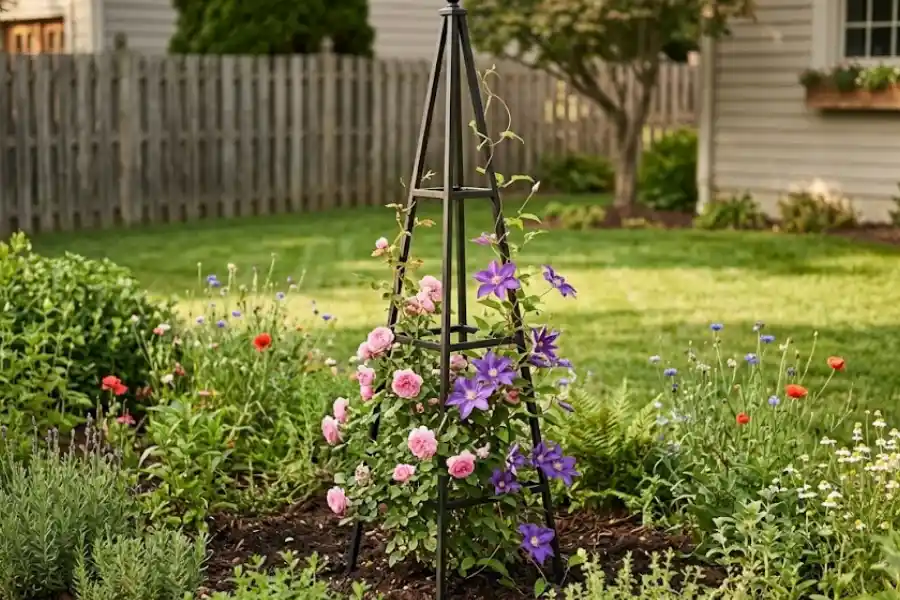
A garden obelisk is a tall, narrow frame that usually looks like a thin pyramid or tower. Most are made of metal, wood, or woven willow branches. Gardeners use them to support climbing plants like roses, clematis, and sweet peas. Instead of letting a vine crawl along the ground, an obelisk trellis gives it something to wrap around and grow upward. The result is a plant that looks fuller, healthier, and far more dramatic.
Unlike a flat trellis that leans against a wall or a large arched garden trellis that spans across a pathway, an obelisk stands entirely on its own. That makes it perfect for the middle of a flower bed, a large container, or even the center of a vegetable garden.
Why Add One to Your Garden?
A garden obelisk does more than hold up a plant. Here’s what it brings to your yard:
- Instant height: It breaks up a flat, low garden and adds visual interest without needing a tree or shrub.
- A focal point: Even before anything grows on it, a well-placed metal garden obelisk looks like a piece of outdoor art.
- Healthier plants: Vertical growth means better airflow, which lowers the risk of mold and mildew on leaves.
- More growing space: If your yard or bed is small, growing up instead of out lets you fit more plants in less ground space.
- Year-round shape: Even in winter, when the vines die back, the obelisk itself still adds form to the garden.
Types of Garden Obelisk Materials
Not all obelisks are built the same way. The material you choose affects how long it lasts, how much it costs, and how it looks in your garden.
Metal Obelisks
Metal, usually steel or iron, is the most popular choice. A good metal garden obelisk is powder-coated or galvanized to resist rust. It’s strong enough to hold heavy climbers like mature roses or wisteria and can last for many years outdoors, even through rain and snow.
Wooden Obelisks
Wood gives a softer, more natural look. Cedar and redwood are the best choices because they resist rot on their own. Wooden obelisks work beautifully in cottage-style or rustic gardens, but they usually need replacing sooner than metal ones.
Willow and Bamboo Obelisks
These are woven by hand and have an organic, rustic charm. They’re lightweight and affordable, but they break down faster than metal or wood, usually lasting just a few growing seasons. They work best for lighter plants like sweet peas or annual vines.
How to Choose the Right Size and Style
Picking the right size matters more than most people think. A structure that’s too small will get swallowed by the plant. One that’s too big will look empty and awkward.
- For small containers or pots: Choose a 3 to 4 foot obelisk. These compact sizes look beautiful on patio containers and can even be incorporated into grand outdoor garden table decor setups for special events.
- For flower beds and borders: A 5 to 6 foot obelisk works for most climbing roses and clematis.
- For vigorous climbers like wisteria: Go with a heavy-duty obelisk trellis that’s 7 feet or taller, and make sure it’s rated for extra weight.
As for style, match it to your garden’s overall feel. Clean, simple metal lines suit modern gardens, while a curved or scrollwork design fits traditional and English-style beds.
Best Plants to Grow on a Garden Obelisk
Not every plant needs a climbing structure, and not every climber suits an obelisk. These are some of the best matches:
- Climbing roses: A classic pairing that rewards a sturdy obelisk with months of blooms.
- Clematis: Its twisting stems grip thin metal or wood bars easily.
- Sweet peas: Fast-growing and fragrant, ideal for a lighter willow or wire obelisk.
- Morning glory: Grows quickly and covers the structure within weeks.
- Pole beans and peas: A smart pick if you’re using the obelisk in a vegetable garden.
- Wisteria: Beautiful, but heavy. Only use a reinforced, heavy-duty obelisk for this one.
Where to Place a Garden Obelisk in Your Yard
Placement changes everything about how an obelisk looks and performs. Keep these points in mind:
- Sunlight first: Most climbing plants need at least 6 hours of direct sun, so place the obelisk where it won’t be shaded by a fence, tree, or wall.
- Use it as an anchor: A single obelisk in the center of a round bed instantly creates a focal point.
- Frame an entrance: Placing two matching obelisks on either side of a gate or path creates a natural, welcoming frame.
- Add privacy: A row of two or three obelisks along a patio edge, planted with climbers, works as a living privacy screen.
- Give it room: Leave enough space around the base for the plant to spread and for air to move freely.
A good rule from experienced gardeners: place the obelisk first, then plant around it, not the other way around. It’s much harder to fit a tall obelisk into a bed that’s already full.
How to Anchor and Install It Properly
A wobbly obelisk is a common complaint, and it’s almost always caused by poor installation. Follow these steps to set it up correctly:
- Choose a level spot with firm soil, away from buried pipes or cables.
- Dig a hole roughly 12 to 18 inches deep, depending on the height and weight of your obelisk.
- Place the base of the obelisk into the hole and check that it’s standing straight using a level.
- Fill the hole with gravel or concrete mix for extra stability, especially in windy areas.
- Let the concrete set fully before letting any plant weight rest on it.
- Cover the base with soil or mulch so the anchoring point is hidden and blends into the garden.
If you’re using a lightweight willow or wire obelisk in a container, you usually don’t need concrete. Just push the legs firmly into the soil and pack it down around the base.
Common Mistakes to Avoid
- Choosing style over strength: A beautiful obelisk that bends under a heavy vine isn’t doing its job. Match the material to the plant’s weight.
- Skipping the anchor: Even a mid-size obelisk can tip over in strong wind if it isn’t properly secured.
- Planting too close: Crowding the base limits airflow and makes it harder for the plant to climb evenly.
- Ignoring the training process: Most climbers need a little guidance at first. Gently wrap new growth around the structure until it takes hold on its own.
Simple Care and Maintenance Tips
A well-chosen garden obelisk needs very little upkeep, but a few habits will help it last:
- Check metal obelisks once a year for rust spots and touch up with rust-resistant paint if needed.
- Trim back dead or overgrown vines at the end of each season so the structure doesn’t get buried and weakened.
- Tighten any loose joints or connectors on wire or wooden designs before each growing season starts.
- Store lightweight willow obelisks indoors over winter if your area gets heavy snow or ice.
Frequently Asked Questions
How tall should a garden obelisk be?
Most home gardens do well with a 5 to 6 foot obelisk. Go taller only if you’re growing a vigorous climber like wisteria or a mature climbing rose.
Can a garden obelisk go in a pot?
Yes. Smaller obelisks, usually 3 to 4 feet tall, work well in large containers, as long as the pot is heavy or wide enough to keep it from tipping.
Do I need to anchor it in concrete?
Not always. Lightweight obelisks in pots or soft soil can be secured by pushing them in firmly. Taller, heavier obelisks in open ground benefit from a concrete or gravel base for stability.
What plants grow best on an obelisk trellis?
Climbing roses, clematis, sweet peas, and morning glory are among the easiest and most popular choices for a garden obelisk trellis.
How long does a metal garden obelisk last?
A quality powder-coated or galvanized metal obelisk can last 10 years or more with minimal care, far longer than wood or willow versions.
A garden obelisk is one of the easiest ways to add height, shape, and personality to a garden without a major renovation. Pick the right material for your climate, size it to match your plant, anchor it properly, and it will reward you with years of vertical beauty.