27 Outdoor Privacy Screen Ideas for Every Budget and Yard
Last summer, my neighbor put in a hot tub about ten feet from my kitchen window. Nothing against hot tubs, but suddenly my backyard felt like a fishbowl. I spent weeks testing different outdoor privacy screen ideas before I found a combo that worked, looked good, and didn’t cost a fortune. This article is everything I learned, plus what I found after digging through dozens of other yards, decks, and balconies for inspiration.
Whether you rent an apartment with a tiny balcony or own a house with nosy neighbors on all sides, there’s a privacy solution here that fits your space. Just like organizing your tools with a decorative garden hose holder, setting up a proper screen instantly clears up outdoor clutter and gives you your peace of mind back.
How to Pick the Right Privacy Screen for Your Space
Before you grab a hammer or click “add to cart,” think about three things: what you’re blocking, how permanent you want the fix to be, and how much sun and wind your spot gets. A screen that’s great for a windy rooftop deck might be totally wrong for a shaded backyard corner. Once you know your goal, the rest gets a lot easier.
- Blocking a direct sightline (like a neighbor’s window) needs a solid or near-solid screen.
- Softening an open view (like a busy street) can work with lattice, plants, or slatted panels.
- Renters should stick to no-dig, freestanding, or clip-on options that leave no damage behind.
Budget-Friendly DIY Privacy Screen Ideas
You don’t need a contractor to get real privacy. These are some of the most popular outdoor privacy screen ideas for people who like a weekend project.
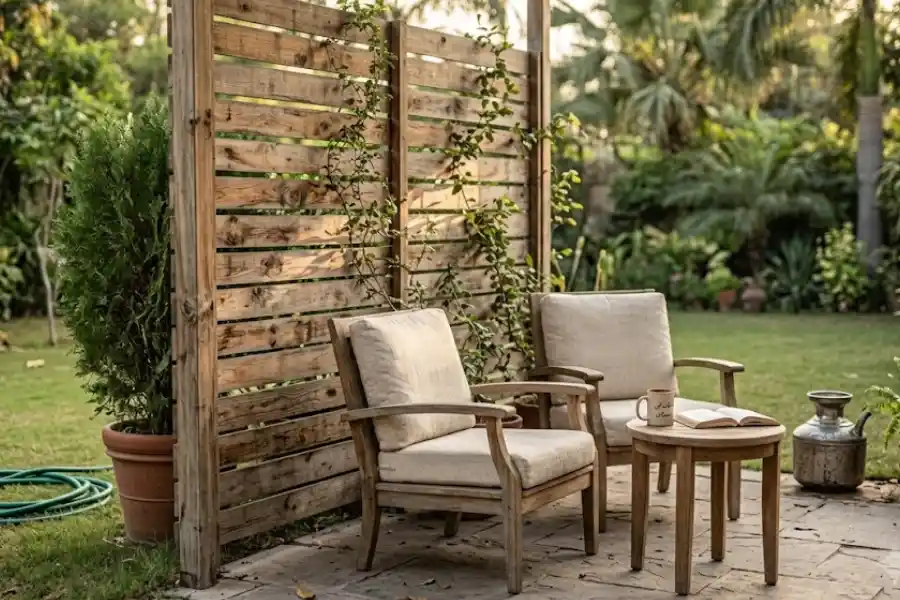
1. Cedar Plank Screens
Cedar naturally resists rot and bugs, which makes it a favorite for outdoor builds. A simple frame with vertical cedar planks can be built in an afternoon and stained to match your deck or fence.
2. Lattice Panels with Climbing Vines
Lattice gives you partial privacy right away, and it gets better every season as vines like clematis, jasmine, or climbing roses fill in the gaps. This is one of the few options that gets better with age instead of wearing down.
3. Bamboo Fencing Rolls
Bamboo rolls are cheap, lightweight, and easy to attach to an existing fence or railing with zip ties. They won’t last as long as wood or metal, but for the price, they’re hard to beat.
4. Repurposed Old Windows or Doors
If you like a rustic, one-of-a-kind look, old windows or shutters bolted into a frame make a screen that no one else on your street will have.
5. Shower Curtain or Fabric Panels
Outdoor-rated fabric strung on a wire or rod between two posts is a fast, movable option. Just make sure the fabric is labeled fade-resistant and waterproof, or it’ll fall apart after a few storms.
No-Dig and Renter-Friendly Options
If you’re not allowed to dig, drill, or make permanent changes, you’re not out of options. This is one area a lot of other guides skip, so pay close attention if you rent.
- Freestanding panel screens with weighted or wide feet stand on their own, no digging required.
- Planter box dividers combine a large planter with a built-in trellis, so you get privacy and greenery in one movable piece. You can easily pair these setups with heavy tall outdoor planters at the base to add extra height and structural stability against strong winds.
- Balcony privacy mesh attaches with zip ties or clips to railings and can come down in minutes if you move.
- Tension rod curtain systems need no tools at all and work great on covered patios or balconies.
Always check your lease or HOA rules before installing anything, even temporary screens. Some HOAs restrict height, color, or material, even for freestanding pieces.
Plants That Double as Privacy Screens
Living screens take longer to establish, but they cost less over time, filter noise, and look natural instead of built. A few reliable choices for most U.S. climates:
- Arborvitae: fast-growing, holds a narrow shape, great for tight side yards.
- Bamboo (clumping, not running): grows quickly and stays lush year-round in warmer zones.
- Boxwood hedges: slower growing but dense and easy to shape.
- Ornamental grasses: a softer, lower-maintenance option for partial screening.
One thing worth knowing: clumping bamboo stays contained, but running bamboo can take over your entire yard and your neighbor’s too. Always double-check which type you’re buying.
Modern and Decorative Panel Screens
If you want something that looks intentional and stylish rather than thrown together, decorative CNC-cut panels have become one of the most popular outdoor privacy screen ideas for patios and decks in the last few years. They’re made from weather-resistant materials like HDPE or aluminum composite, come in geometric or leaf-cut patterns, and cast interesting shadows as the sun moves. They cost more than DIY wood, but they need almost no maintenance and can last well over a decade outdoors.
Cost Comparison: What Should You Budget?
Prices vary a lot depending on size, material, and whether you DIY or hire someone. Here’s a realistic range based on common projects:
- Bamboo rolls: $20 to $60 for a 6×16 ft section
- DIY cedar screen: $100 to $300 depending on size
- No-dig vinyl panels: $80 to $200 per panel
- Decorative custom panels: $150 to $600+ per panel
- Mature privacy plants: $30 to $150 per plant, more for larger installed hedges
A good rule of thumb: if you’re renting or might move within a year or two, spend less and go portable. If this is your forever home, investing in plants or a solid wood screen pays off over time since you won’t need to replace them as often.
Mistakes People Make With Privacy Screens
After trying a few things myself and talking to friends who’ve done the same, these are the most common regrets:
- Going too solid. A fully closed-off screen can block airflow and make small spaces feel stuffy. Slatted or semi-open designs usually feel better in real life.
- Ignoring wind load. Solid panels act like sails in strong wind. Anchor freestanding screens well or choose a design with gaps.
- Skipping material care. Untreated wood can warp or rot within a couple of seasons. Seal or stain wood screens yearly.
- Not measuring sightlines first. Stand or sit where you’ll actually be using the space and check what’s visible before you build or buy anything.
Quick Comparison: Which Option Fits You?
- Renters: freestanding panels, planter dividers, or clip-on mesh
- Tight budgets: bamboo rolls or fabric curtain panels
- Long-term homeowners: cedar screens, hedges, or decorative custom panels
- Small balconies: tension rod curtains or mesh screens
- Style-focused spaces: modern CNC-cut decorative panels
Frequently Asked Questions
What is the cheapest outdoor privacy screen idea?
Bamboo rolls and outdoor fabric panels are usually the cheapest options, often costing under $60 for a section large enough to cover a patio or balcony railing.
How tall should a privacy screen be?
Most residential privacy screens range from 5 to 8 feet tall. Check local fence height rules first, since many cities cap height at 6 feet for front yards and slightly more for backyards.
Can I put up a privacy screen without a permit?
In most areas, freestanding or attached screens under 6 feet don’t need a permit, but rules vary by city and HOA. It’s worth a quick call to your local building department before starting a bigger project.
Do plants work as well as physical screens?
Yes, once established. Fast growers like arborvitae or clumping bamboo can reach full privacy height within one to three growing seasons, though a physical screen gives you privacy immediately while plants fill in.
What’s the most durable material for outdoor privacy panels?
HDPE and aluminum composite panels tend to outlast wood and vinyl, holding up to sun, rain, and temperature swings with very little maintenance.
Final Thoughts
The best outdoor privacy screen ideas aren’t always the most expensive ones. My own backyard fix ended up being a mix of a simple cedar frame near the hot tub sightline and a fast-growing arborvitae hedge along the side fence. It took a weekend and cost less than I expected. Start with what you need to block, pick a material that fits your budget and how long you’ll be in the space, and build from there.