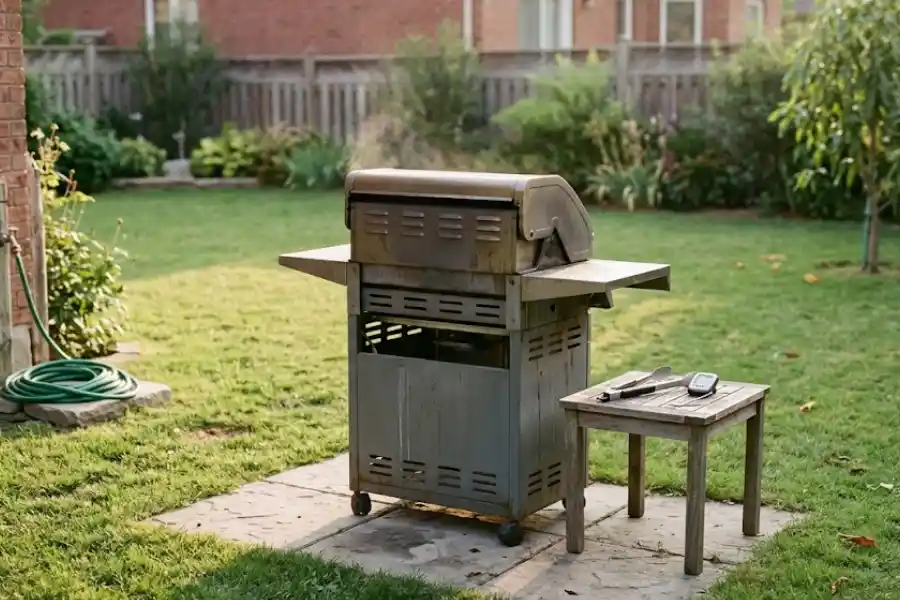
Grill in the Garden: Best Spot, Safe Distance and Setup Tips
Cooking outside sounds simple. You light the fire, flip the food, and enjoy the evening. But a grill in the garden can go wrong fast if you pick a bad spot or skip a few basic steps.
Smoke can drift into the kitchen window. A fence can scorch. A child can run too close to the heat. These problems are easy to avoid when you know what to look for.
This post shows you how to set up a grill in the garden the right way. You will see where it should go, what it should sit on, and how to keep your family safe. You will also find tips for small gardens, good neighbors, and cleanup that many articles skip.
Quick Answer: The Best Spot for a Grill in the Garden
Here is the short version. The best place for a grill in the garden is a flat, open area on a hard surface, at least 10 feet from your house, fence, shed, and tree branches. The National Fire Protection Association gives the same 10-foot advice for grills.
If your grill maker lists a different distance in the manual, follow the manual. It was written for your exact model.
Why Placement Matters More Than You Think
Most grill accidents do not start with a big flame. They start with a small mistake. A grill sits too close to a wall. A lid is left open near a hanging branch. A guest bumps the grill while carrying a plate.
Heat is the hidden problem. A grill can damage siding, fences, and plants long before anything catches fire. Plastic can melt. Paint can bubble. Vinyl siding can warp.
So think of the safe distance as a buffer against heat as well as fire. Good placement protects your home, your plants, and your guests.
How to Pick the Right Spot, Step by Step
Walk around your garden before you buy or move anything. Check each spot using the steps below.
- Measure 10 feet from the house. Count from the grill to the nearest wall, window, deck rail, or eave. Do not guess. Use a tape measure.
- Look up. Check for tree branches, roof edges, awnings, and pergolas. Never put a grill in the garden under anything that hangs over it.
- Check the ground. The surface should be flat, firm, and not flammable. Concrete, stone pavers, and brick are good choices. Dry grass and wooden decks are not.
- Find the wind. Stand in the spot on a breezy day. Notice where the wind blows. You want smoke to go away from your windows, your seating area, and your neighbors.
- Plan the walking paths. People will walk to the grill with plates, drinks, and trays. Keep these paths clear of toys, hoses, and chairs.
- Keep a clear exit. Make sure doors are not blocked. In an emergency, everyone should be able to get inside or away quickly.
The Ground Under Your Grill Matters
Many people forget this part. A grill is heavy and hot. If it sits on soft or uneven ground, it can tip.
Grass looks nice, but it can burn if hot coals or grease drip onto it. Soft soil can sink under the legs. A grill on a slope can slide.
If your garden is mostly lawn, build a small grill pad. Lay concrete pavers on a level base of compacted gravel. A pad about 6 feet by 6 feet gives you room to cook and move around. Pavers come in many patterns and colors, so you can browse some paver patio designs to find a look that suits your garden. A pad also gives you a clean, steady home for your grill in the garden.
Be careful with wooden decks. Sparks and grease can leave burn marks or start a fire. If you must grill on a deck, check your grill manual first and use a heat-proof mat made for that purpose.
Small Garden? You Can Still Grill Safely
Not everyone has a big yard. Many gardens are small, narrow, or close to the neighbors. A grill in the garden can still work. You just need to be smarter about it.
- Choose a smaller grill. A compact gas grill or a small charcoal kettle is easier to place and easier to keep away from walls.
- Use the far corner. Put the grill as far from the house as your space allows. Even a few extra feet helps.
- Pick a low-smoke option. Gas and electric grills make less smoke than charcoal. That is kind to close neighbors. Check your rules first, because some apartments and rented homes ban certain grills.
- Keep it movable. A grill with wheels can be rolled out for cooking and stored away after. This keeps your space open for the rest of the week.
If you cannot reach the 10-foot distance, do not leave it to luck. Read your manual, check local rules, and think about a different type of grill. Sometimes the safest choice is a smaller or cleaner-burning model.
Check the Rules Before You Light Up
This is the part most blog posts skip. Rules can change where you live and how you grill.
- Homeowner associations (HOAs): Some limit grill types, grill spots, or smoke.
- Apartments and rentals: Many ban charcoal or propane grills on balconies and patios.
- Local fire bans: In dry months, some areas ban open flames. Check with your local fire department.
- Insurance: Some home insurance plans have rules about grill distance. A quick call can save you trouble later.
A two-minute check can save you from a fine or a denied claim.
Be a Good Neighbor
Your grill in the garden does not stay in your garden. Smoke and smells travel. A little thought goes a long way.
Pick a spot where the smoke will not blow into a neighbor’s window or washing line. If you plan a big cookout, give your neighbors a heads up. A simple “We’re grilling Saturday afternoon” is enough. People are much more relaxed when they are not surprised.
Also think about timing. Late-night grilling with loud music is a fast way to lose goodwill.
Keep Kids and Pets Safe
A grill stays hot long after the food is done. Kids and pets do not always understand that.
The NFPA suggests a 3-foot safe zone around the grill. Set this up before guests arrive. You can use patio chairs, planters, or a simple rope barrier to mark the line. Tell kids the rule in plain words: “The grill is hot. Stay behind the line.”
Never leave a lit grill alone, even for a minute. Ask another adult to watch it if you need to step away. And keep lighter fluid, matches, and lighters where children cannot reach them.
Gas Grill Safety in the Garden
Gas grills are popular because they heat up fast. They also need a few extra checks.
- Test for leaks. At the start of each season, brush soapy water on the hose and connections. Turn on the gas. If you see bubbles, you have a leak. Turn off the gas and fix it before you cook.
- Store tanks outside. Keep propane tanks upright in a shaded, open area. Never store them in a garage, shed attached to the house, or inside your home.
- Light with the lid open. This stops gas from building up inside.
- Smell gas? Turn off the burners and the tank. Move away. If the smell stays, call the fire department.
Charcoal Grill Safety in the Garden
Charcoal gives great flavor. It also gives off carbon monoxide, which you cannot see or smell.
- Use it outdoors only. Never use a charcoal grill in a garage, tent, shed, or enclosed porch.
- Use the right starter. A charcoal chimney starter is safer than lighter fluid. If you use fluid, never add more once the fire is lit.
- Control the ash. Let the coals cool fully. This can take a day or more. Then place the ash in a metal container with a lid. Keep it away from the house and anything that burns.
Careless ash disposal is a top reason for grill-related fires. Plastic bins and paper bags are not safe for hot ash.
Be Ready for a Fire
Even careful cooks have bad days. Planning ahead keeps a small problem small.
- Keep a fire extinguisher near the grill. Look for one rated for kitchen or grease fires.
- Keep a garden hose within reach, but know when not to use it.
- Never throw water on a grease fire. It can make the flames spread. Close the lid, turn off the gas, and use the extinguisher if needed.
- Know your emergency number and keep your phone close.
If a fire grows quickly, do not be a hero. Move everyone away and call for help.
Weather Can Change Everything
Wind can blow sparks and flip lids. Rain can make surfaces slippery. Storms can be dangerous.
If there is thunder, put the grill away and go inside. Do not wait for the rain to start. Strong wind is also a good reason to wait for another day. A grill in the garden should never be a gamble.
Cook the Food Safely, Too
A safe setup is only half the job. The food must be safe to eat. The USDA safe temperature chart lists the numbers to hit. Here are the main ones:
- Chicken and turkey: 165°F
- Ground beef and pork: 160°F
- Steaks, chops, and roasts: 145°F, then rest for 3 minutes
- Fish: 145°F
Use a food thermometer. Color alone can fool you. Also use separate plates for raw and cooked food. A clean plate for cooked meat is a small habit that prevents big problems.
Make Your Grill Spot Feel Great
Once the spot is safe, make it fun. A good grill area is easy to use and pleasant to be in.
- Add a work surface. A small table or shelf near the grill gives you a place for tools and plates.
- Add light. Solar garden lights or a clip-on grill light help when the sun goes down.
- Add seating away from the heat. Place chairs at least a few steps back so guests can chat without crowding the cook.
- Add shade the safe way. A freestanding umbrella or a pergola set well away from the grill can keep people cool. Do not put a cover directly over the flame.
- Add a storage box. A weatherproof box keeps tools, gloves, and a thermometer within reach.
A Simple Pre-Grill Checklist
Run through this list each time you cook. It takes about a minute.
- Is the grill at least 10 feet from anything that can burn?
- Is it on a flat, firm, non-flammable surface?
- Is the area above it clear?
- Are kids and pets kept back?
- Is the extinguisher in reach?
- Is the wind blowing smoke away from the house?
- Is a food thermometer ready?
Frequently Asked Questions
How far should a grill in the garden be from the house?
Keep it at least 10 feet away from your house, garage, fence, shed, and deck rails. If your grill manual gives a different distance, follow the manual.
Can I put a grill on grass?
It is not a good idea. Grass can burn, and soft ground can make the grill unstable. A paver pad or a concrete patch is a much safer base.
Can I use a grill in a small garden?
Yes, if you can keep a safe distance and follow local rules. A compact gas grill is often the best fit for a small space.
Is it safe to grill under a pergola or covered patio?
Usually not. Heat, smoke, and carbon monoxide can build up under a roof, even on a covered patio attached to your house. Grill in an open area unless your grill maker clearly says otherwise.
Can I grill in the garden at night?
Yes, with good lighting and the same safety steps. Make sure you can see the grill, the food, and the ground around you clearly.
What should I do with the ash after grilling?
Let it cool fully, then place it in a metal container with a lid. Keep the container outside, away from the house and anything that can burn.
Final Thoughts
A great grill in the garden does not need a big budget or a huge yard. It needs a smart spot, a steady base, and a few good habits.
Give your grill room to breathe. Keep people back from the heat. Check your local rules. Cook your food to the right temperature. Do those four things and you will enjoy every cookout with a lot less worry.
Walk out to your garden today and look at your grill spot with fresh eyes. A small change now can make your next meal safer, easier, and a lot more fun. Once the basics are safe, you can grow the spot into a full outdoor entertaining area at your own pace.