White Outdoor Garden Pots: How to Choose, Style & Care for Them
You walk past someone’s front porch and stop. There is something about it. The plants look taller. The flowers look brighter. The whole space feels clean and pulled together. Then you notice it. The pots are white.
White outdoor garden pots have a quiet power. They can make a small patio feel like a designed outdoor room. They can turn a plain front door into a welcoming entrance. And they can make even ordinary plants look extraordinary.
But there is more to choosing white outdoor pots than grabbing whatever looks nice at the store. The material matters. The size matters. The care matters. This article covers all of it, from what the science says about white pots and plant health, to how to keep them looking crisp and clean all season long.
Why White Outdoor Garden Pots Are So Popular Right Now
White is one of the most searched pot colors for outdoor spaces, and it is easy to see why.
White works with almost every home style. It looks sharp next to red brick, gray stone, dark wood, and painted siding. It does not compete with your house. It adds to it.White pots also make green plants and bright flowers stand out, which is one reason they are often featured in Garden Decor Ideas for Beginners.The contrast between white and green is bold and pleasing in a natural way.
Design trends have shifted toward clean and simple outdoor spaces. People want patios and porches that feel calm and organized. White pots fit this idea perfectly. They bring order to a garden without making it feel stiff or boring.
Quick Fact: White and light-colored pots are among the top-selling planter colors in the United States, sitting just behind black and earth tones in overall popularity.
The Real Science Behind White Pots and Your Plants
Here is something most people do not know. The color of your pot affects how your plants grow.
Researchers tested bush beans planted in black, white, and silver containers. Dark pots absorbed sunlight and made the soil much hotter. White pots reflected the sun and kept the soil cooler. Plants in the white pots developed stronger, healthier root systems. Plants in the black pots had weaker roots because the heat damaged them from the outside in.
This matters most in summer. When temperatures climb above 90 degrees, roots sitting in a hot dark pot can get stressed and stop growing. White pots act like a shield. They bounce heat away and keep the soil at a safer temperature for the roots.
Some studies have found that white containers may be the best choice for plants to grow to their full potential. This is especially true for heat-sensitive plants like ferns, petunias, most herbs, and anything that wilts easily in afternoon sun. If you live in a warm state like Texas, Arizona, or Florida, white pots can make a real difference in how well your plants survive a hot summer.
Best Materials for White Outdoor Garden Pots
Not all white pots are created equal. The material you choose affects how long the pot lasts, how much it weighs, and whether it can handle your local weather. Here is what you need to know about each main option.
Fiberglass
Fiberglass is one of the best materials for white outdoor pots. It is lightweight, strong, and built to handle tough weather without cracking or fading. Fiberglass pots look sleek and modern. They come in glossy and matte white finishes that hold their color well even in direct sun.
They are also easy to move around, which helps when you want to change your outdoor layout. If you want white pots that last for years with almost no upkeep, fiberglass is the smartest investment.
Concrete and Fiberstone
Concrete pots have a heavy, permanent look that many gardeners love. They feel solid and architectural. The downside is that true concrete pots can be very heavy, which makes moving them difficult.
A great middle-ground option is fiberstone. Fiberstone blends fiberglass with crushed stone to create a pot that looks like aged concrete but weighs much less. These pots are weather-resistant, durable, and develop a beautiful weathered look over time. White concrete or fiberstone pots work especially well at front entrances where you want something classic and bold.
Ceramic and Glazed Pottery
White glazed ceramic pots are stunning. Their shiny finish looks polished and expensive. The glaze also helps keep moisture in the soil, which is good for plants that need consistent watering.
The main downside is cold weather. Ceramic pots can crack in freezing temperatures. Moisture seeps into tiny pores in the wall of the pot. When that moisture freezes, it expands and breaks the pot from the inside. If you live in a region with cold winters, bring ceramic pots indoors before the first frost or you risk losing them.
Resin and Plastic
Resin and plastic pots are the most budget-friendly choice in the white outdoor category. They are light, easy to move, and come in a wide range of sizes and shapes. Many high-quality resin pots do a good job of mimicking the look of ceramic or stone.
The main concern with white plastic pots is yellowing. Lower-quality plastic turns yellow or gray after one season in direct sun. If you go with resin or plastic, look specifically for pots labeled UV-resistant. These hold their bright white color much longer and are worth the small extra cost.
What to Look for Before You Buy
Before you pick a pot, ask yourself these four questions. They will save you from common and costly mistakes.
- Does it have drainage holes? This is the single most important feature. Without a drainage hole, water sits at the bottom of the pot and rots the roots. Always check before you buy. If a pot you love does not have holes, you can often drill them yourself.
- Is it rated for outdoor use? Some pots that look beautiful indoors will crack, fade, or warp outside. Look for the phrases “weather-resistant,” “frost-proof,” or “outdoor-rated” on the label or product page.
- Is the size right for your plant? A pot too small cramps the roots and stunts growth. A pot too large holds excess moisture and can cause root rot. Match the pot size to the current size of your plant, and size up as it grows.
- What is the climate like where you live? Cold winters mean you need frost-resistant materials like fiberglass or resin. Hot summers mean white pots matter even more for keeping roots cool.
Best Plants for White Outdoor Garden Pots
White pots are a blank canvas. Almost any plant looks great in them. But some combinations are truly hard to beat.
Lavender is a top choice. Purple blooms against a white pot create a sharp, elegant contrast. Lavender loves heat and sun, and it is easy to care for once it is established.
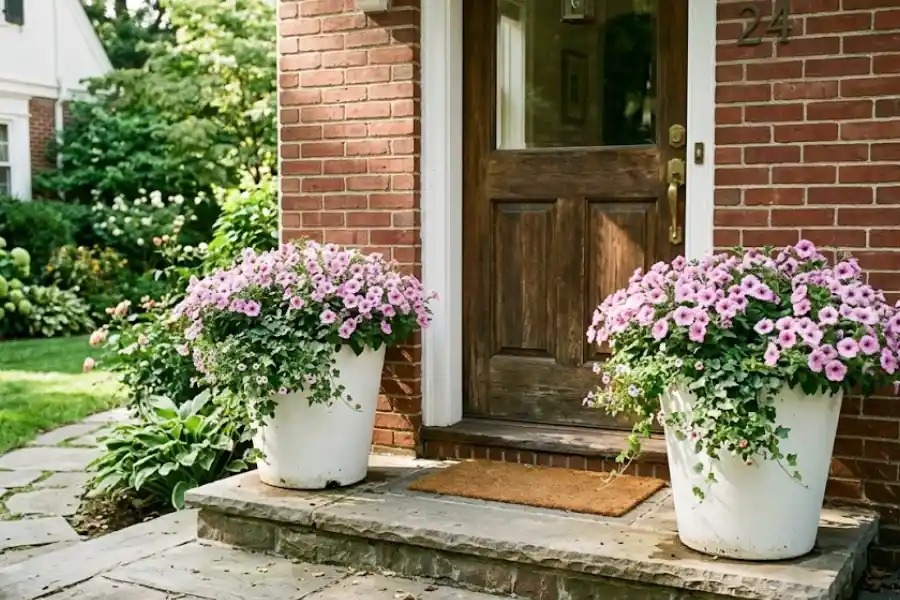
Petunias in pink, red, or purple are a classic pairing. A white pot filled with cascading petunias creates a lush, romantic look that works on porches, steps, and decks.
Agave and succulents shine in modern, minimalist gardens. Their blue-green or deep green color pops against a clean white background in a way that few other plant and pot combinations can match.
Hydrangeas are one of the most popular choices for white pots near front doors. Their large, full blooms in pink, blue, purple, or white look rich and welcoming against a white planter.
Ornamental grasses bring movement and texture to a white pot. A tall white cylinder filled with flowing grass has a sculptural, architectural look that feels modern and stylish.
Herbs like rosemary, basil, and mint thrive in white pots. The cooler soil temperatures that white pots provide help heat-sensitive herbs survive summer better than dark pots do.
How to Style White Outdoor Garden Pots
White pots are one of the easiest things to style outdoors. A few simple principles go a long way.
Use pairs at the front door. Two matching white pots on either side of an entrance create a symmetrical, welcoming look. This works with almost every house style, from modern to farmhouse to traditional.
Group pots in odd numbers. Three pots together almost always look better than two or four. Vary the heights. Place one tall pot next to two smaller ones and stagger them slightly for a natural, layered look.
Mix shapes. Combine a round white pot with a square or rectangular one nearby. Mixing shapes adds visual interest without creating clutter or confusion.
Try an all-white color scheme. Place white pots with white-flowering or silver-leaved plants like dusty miller, lamb’s ear, white impatiens, or white petunias. This creates a dreamy, monochromatic corner that looks designed and intentional.
Use white pots near dark surfaces, and consider pairing them with antique garden decor pieces to create even stronger contrast and character.A white pot against a dark fence, dark wood deck, or dark exterior wall creates bold contrast. Everything stands out more and the whole area gains energy and definition.
How to Keep White Outdoor Pots Looking Bright and Clean
White pots show dirt more than darker pots. That is just the reality. But keeping them clean is simple if you stay on top of it.
Wipe them down after rain. Splashed soil and watermarks appear quickly on white pots. A quick wipe with a damp cloth after a heavy rain keeps them looking sharp with very little effort.
Remove mineral buildup with vinegar. Over time, a white powdery crust builds up on the outside of pots. This comes from hard water and fertilizers. Mix one part white vinegar with four parts water, scrub with a stiff brush, and rinse well. The crust comes off easily with this method.
Treat mold and algae with diluted bleach. Shady, damp spots can cause green algae or mold to grow on outdoor pots. Mix one part bleach with nine parts water, scrub the pot, and rinse very thoroughly. Always wear gloves when using bleach.
Clean pots before storing for winter. Empty the pot, remove all old soil, scrub it clean, and let it dry completely before storing. This prevents mold and disease from sitting inside the pot all winter long.
Choose UV-resistant materials in sunny spots. If your pots sit in direct sun most of the day, fiberglass or UV-rated resin will hold their white color much better than standard plastic over a full season.
Common Mistakes People Make with White Outdoor Garden Pots
Even experienced gardeners make these errors. Knowing them ahead of time saves money and frustration.
- Buying pots without drainage holes. Water with nowhere to go causes root rot very fast. Always confirm there are drainage holes before you purchase a pot.
- Leaving ceramic pots outside in winter. Freezing temperatures crack both glazed and unglazed ceramic pots. Move them indoors before the first hard freeze of the season.
- Choosing the wrong size. A pot too small stunts root growth. A pot too large retains too much moisture and causes roots to rot. Match the pot size to the plant carefully.
- Buying cheap white plastic without UV protection. Standard white plastic pots turn yellow or gray within a single season in direct sunlight. Spend a little more on UV-rated versions to avoid disappointment.
- Using garden soil instead of potting mix. Regular garden soil does not drain well in containers. It gets compacted and can harbor disease. Always use a quality potting mix made specifically for container gardening.
- Skipping the cleaning between seasons. Old soil holds bacteria, pests, and fungal spores. Starting each season with a clean pot gives your new plants the best possible start.
Frequently Asked Questions
Are white outdoor garden pots good for plants?
Yes. Research shows that white pots reflect sunlight instead of absorbing it. This keeps the soil inside cooler, which protects roots from heat stress. Studies testing different pot colors found that plants grown in white containers developed stronger root systems compared to plants in dark pots. White pots are especially helpful for heat-sensitive plants and for gardeners in warm or sunny climates.
Do white outdoor pots fade or turn yellow over time?
It depends on the material. Standard white plastic pots can yellow after one season in direct sun. Fiberglass pots and glazed ceramic pots hold their color much better. Resin pots labeled UV-resistant are also a reliable choice. If keeping the bright white look long-term matters to you, invest in fiberglass or UV-rated resin rather than basic plastic.
What plants look best in white outdoor garden pots?
Almost every plant looks great in white pots. The best combinations include lavender, petunias, hydrangeas, agave, rosemary, ornamental grasses, and succulents. Dark green foliage and bold-colored blooms create especially strong contrast against white.
How do I keep white outdoor pots from looking dirty?
Wipe them with a damp cloth regularly, especially after rain. For mineral buildup, use a mix of white vinegar and water with a stiff brush. For mold or algae, use a diluted bleach solution and rinse thoroughly. Regular light cleaning is much easier than letting grime build up over an entire season.
Can white outdoor pots stay outside during winter?
It depends on what they are made of. Fiberglass and resin pots handle cold weather well. Ceramic and clay pots should come indoors before temperatures drop below freezing. Water trapped in the walls of a ceramic pot will freeze, expand, and crack the pot. Even one bad freeze can destroy an unprotected ceramic planter.
Are white pots harder to maintain than dark pots?
They do show dirt more clearly than dark pots. But they are not harder to clean. A quick wipe after rain and a vinegar scrub every few weeks keeps them looking fresh. Many gardeners find that the clean look white pots provide is worth the small extra effort.
Final Thoughts
White outdoor garden pots are one of the smartest choices you can make for your outdoor space. They are beautiful, they are backed by science, and they work with almost any garden style or plant type. The key is knowing which material fits your climate, picking pots with proper drainage, and giving them a little regular care to keep them looking their best.
Whether you are styling a small apartment balcony or a full front porch, white pots can lift the entire look. They make your plants shine, your home look polished, and your outdoor space feel like a place you actually want to spend time.
Now you have everything you need to choose well. Pick your pots, plant something beautiful, and enjoy your garden all season long.