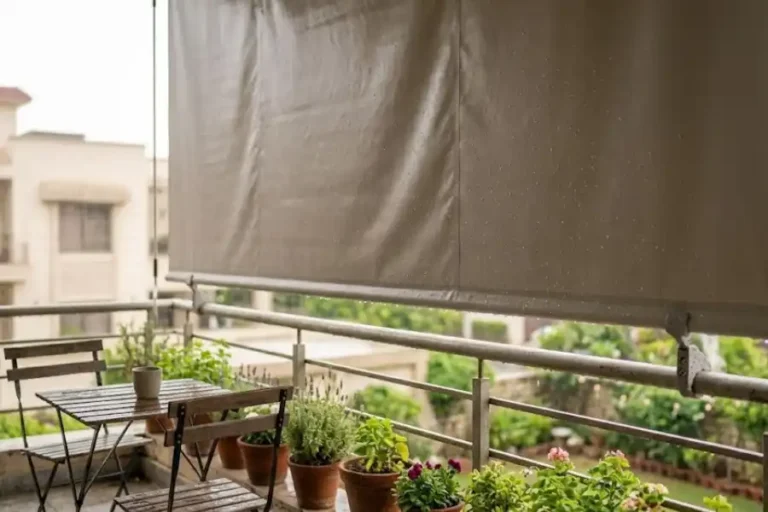

Curtains for a Balcony: Privacy, Shade, and No-Drill Ideas
Your balcony should feel like your own little escape. But if your neighbors can see straight into your space, or the afternoon sun turns it into an oven, that peaceful feeling disappears fast. The right curtains for a balcony can fix all of that in one simple step.
This article covers what you need to know before buying. You will learn which curtain type fits your needs, which fabric survives outdoors, how to hang curtains without drilling a single hole, and which mistakes to avoid. Let’s get started.
Why Add Curtains to Your Balcony?
Balcony curtains do a lot more than look nice. They solve real, everyday problems.
- Privacy: Block the view from neighbors, streets, or nearby buildings.
- Shade: Cut down harsh sunlight so you can actually enjoy your morning coffee outside.
- Wind control: The right fabric softens strong gusts instead of letting them rip through your space.
- Style: A good curtain instantly makes a plain balcony feel like a finished outdoor room.
If you live in an apartment, a balcony curtain can also give you a sense of privacy that thin railings and glass doors just cannot offer on their own.
Types of Balcony Curtains and What They Do
Not all balcony curtains serve the same purpose. Pick the type that matches your biggest problem first.
Privacy Curtains
These are thicker, solid-colored panels. They block the view from outside completely. Great for ground-floor balconies or balconies facing a busy street. If your railing has gaps that curtains alone cannot cover, pairing them with an apartment balcony privacy screen closes up those sightlines for good.
Sun-Blocking Curtains
Sometimes called blackout outdoor curtains. These use tightly woven or coated fabric to block strong UV rays and heat. Perfect for balconies that face direct afternoon sun. On balconies that get hit hard by midday sun, pairing curtains with other balcony shade options, like an awning or shade sail, takes some of the load off the fabric.
Clear Rain Curtains
Made from heavy-duty clear vinyl. These are not about privacy. They keep rain, wind, and snow off your balcony furniture while still letting light through.
Sheer and Decorative Curtains
Light, airy fabric that filters light and adds a soft look. These will not give you full privacy, but they make a balcony feel warm and inviting. If you like the look of window coverings but do not want fabric to wash and store each season, waterproof outdoor balcony blinds are worth comparing as a lower-maintenance alternative.
The Best Fabric for Balcony Curtains
Indoor curtain fabric will not survive outside. Sun, rain, and wind wear it down fast. Here is what holds up.
- Solution-dyed acrylic (like Sunbrella): The gold standard for sun exposure. Resists fading, mildew, and heavy UV rays. Costs more, but lasts for years.
- Outdoor polyester: Budget-friendly and easy to clean. Works well on covered balconies where sun and rain exposure is lower.
- Olefin: Dries fast and resists mildew, which makes it a smart pick for humid or rainy climates.
- PVC or clear vinyl: Best for full weather protection rather than privacy or style.
- Canvas: Heavy and durable, with a classic look. Handles wind better than lightweight fabrics.
As a simple rule: lighter fabric works fine on calm, covered balconies. Windy or fully open balconies need heavier, tightly woven fabric so the curtain does not flap around like a flag.
How to Measure Your Balcony Correctly
Getting the size right the first time saves you money and returns. Follow these steps.
- Measure the width of the space you want to cover.
- Multiply that width by 1.5. This gives the curtain enough fullness to look good and move naturally, instead of hanging flat and stiff.
- Measure the length from where your rod or hardware will sit down to where you want the curtain to end.
- If you plan to use tab-top curtains, remember the tabs usually add a few extra inches. Check the product details before you buy.
How to Hang Balcony Curtains Without Drilling
Most renters cannot drill into balcony walls, railings, or ceilings. Good news: you do not need to. Here is how to do it based on what your balcony has.
If Your Balcony Has a Ceiling or Overhead Beam
A tension rod is your easiest option. It uses an internal spring to wedge itself between two solid, parallel surfaces. This works best on covered balconies with side walls, where wind is not a major issue.
If Your Balcony Only Has a Railing
This is where most balcony setups get tricky, and where a lot of online advice falls short. If you only have a railing and no ceiling or side walls, a tension rod alone will not hold up in real wind. Instead, use railing clamps to attach vertical poles, then run a lightweight rod or cable across the top. The curtain hangs from that new line instead of relying on the building itself.
Skip magnetic hooks unless you know your railing is solid steel. Most apartment railings are aluminum, and magnets simply will not hold on aluminum, no matter how strong they claim to be.
If you take away one tip from this whole guide, let it be this: choose your hardware based on how exposed your balcony is to wind, not based on how the curtains look in a photo.
Open Balcony vs. Covered Balcony: Why It Changes Everything
This detail gets skipped in most buying advice, but it matters more than fabric color or curtain style.
A covered balcony, with a ceiling, roof, or overhang, gives your curtain hardware something solid to grip or brace against. Tension rods, tap-in brackets, and lightweight cable systems all work well here.
A fully open balcony, with no ceiling and no side walls, is a much harder environment. Wind hits it directly from multiple angles. In this case, a freestanding curtain frame or a weighted privacy screen is often more realistic than trying to force a curtain rod onto a railing that was never built to hold one.
Before you buy anything, take two minutes to check: does your balcony have something overhead, side walls, or just an open railing? That answer decides which hanging method will work for you.
Balcony Curtain Style Ideas
Once the practical side is sorted, style is where you get to have fun.
- Small balconies: Use tie-backs to hold curtains open during the day. This keeps the space feeling open instead of cramped.
- Boho style: Pair flowing, lightweight fabric with string lights and hanging plants.
- Minimalist look: Stick to one solid, neutral color and clean, simple hardware.
- Bold and bright: Use a patterned or colorful panel as the main focal point of the balcony.
Curtains are just one piece of the look. Once yours are up, these apartment patio decor ideas can help you finish the rest of the space, from seating to lighting.
Common Mistakes to Avoid
- Choosing fabric that is too light for a windy balcony. It will flap constantly and wear out fast.
- Skipping the width formula. A curtain that is not 1.5 times the width of your space will look thin and flat.
- Using magnetic hooks on aluminum railings. They simply will not stick.
- Ignoring lease or HOA rules. Some buildings have specific rules about what can be visible from outside. Always check first.
- Forgetting tie-backs. Without them, loose curtains can whip around and get damaged during storms.
How Much Do Balcony Curtains Cost?
Ready-made outdoor curtain panels are usually the most affordable option, often ranging from budget-friendly basics to mid-range weatherproof panels. Custom-made curtains, built to your exact balcony size and fabric choice, cost more but solve the sizing and durability problems that ready-made options sometimes cannot. Clear rain curtains and heavy-duty privacy screens tend to sit at the higher end, since they use thicker, more specialized material.
Frequently Asked Questions
Do balcony curtains work in windy areas?
Yes, but only if you choose heavier fabric and proper hardware. Lightweight sheer curtains will struggle in strong wind, while medium or heavyweight acrylic and canvas hold up much better.
Can I use regular indoor curtains outside?
It is not a good idea. Indoor fabric is not treated for UV rays or moisture, so it fades and wears out quickly outdoors. Always choose fabric labeled for outdoor use.
How do I clean outdoor balcony curtains?
Most outdoor fabrics like polyester and acrylic can be spot-cleaned with mild soap and water. Always check the care label first, since some fabrics need gentler handling than others.
Will curtains fit any balcony railing?
Not automatically. Railing thickness, material, and whether your balcony is open or covered all affect which hardware will work. Measure and check your railing type before buying.
Final Thoughts
The right curtains for a balcony can turn an overlooked outdoor space into your favorite part of the home. Start with your biggest need, whether that is privacy, shade, or wind protection. Then match your fabric and hardware to how exposed your balcony really is. Get those two things right, and the style part becomes the easy, fun step.