Garden Bags: 3 Types for a Cleaner, More Beautiful Garden
A beautiful garden is not only about colorful flowers, healthy plants, and attractive outdoor furniture. It is also about keeping everything clean, organized, and easy to use. The right garden accessories can make a big difference, and garden bags are one of those practical items that often get overlooked.
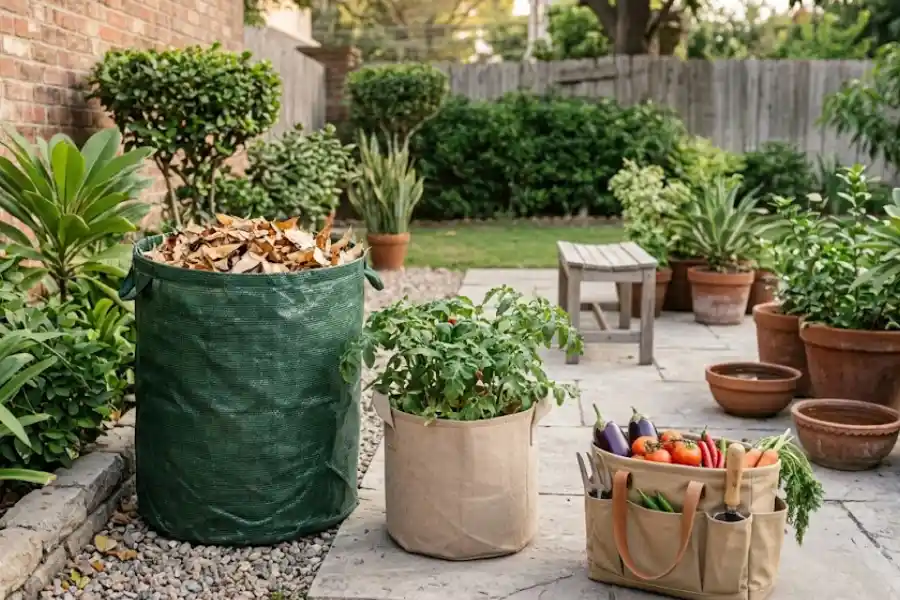
Search for “garden bags” and the results look messy. You will see big leaf sacks, fabric pots for tomatoes, and canvas totes for hand tools. They share one name, but they do very different jobs.
The good news is that each type can help you manage your outdoor space in a better way. Waste bags keep fallen leaves and garden clippings under control. Grow bags let you add greenery to patios and balconies. Harvest and tool bags help keep your gardening supplies together instead of scattered around the yard.
Pick the wrong one and you waste money. A tomato plant won’t grow in a leaf sack, and a fabric pot can’t haul a pile of wet grass. This guide explains the three main types of garden bags, what each one does best, and how to choose the right size. It also shows how to use them to keep your outdoor garden clean, attractive, and organized.
What Are Garden Bags?
Garden bags are tough, practical bags made for yard and garden work. Most fall into three groups. Garden waste bags carry leaves, grass, and trimmings. Grow bags are fabric pots that hold soil and plants. Harvest and tool bags carry vegetables, tools, and small supplies.
Although these bags serve different purposes, they have something in common: they help make garden work more manageable.
They can also support a more organized outdoor appearance. Instead of leaving loose leaves in corners, tools beside the patio, or planting supplies scattered around, you can use the right bags to keep everything in its proper place.
Quick Pick: Which Garden Bags Do You Need?
In a hurry? Start here.
- You want to clear leaves, grass, or branches: Choose reusable waste bags. Choose paper bags if your city asks for them.
- You want to grow vegetables on a patio or in poor soil: Choose fabric grow bags.
- You want to carry tomatoes, tools, or seeds: Choose a harvest tote or a tool bag.
- You want to store potatoes, onions, or apples: Choose a breathable bag, such as jute.
- You want a neater outdoor space: Choose bags that fold away easily or match your garden’s practical storage needs.
Type 1: Garden Waste Bags (Also Called Yard Waste Bags)
These are the garden bags most people want when they search. They hold leaves, grass clippings, twigs, and weeds. A good one saves your back and your time. You fill it where you work, then carry the load to the compost pile or a drop-off site.
They also help prevent garden waste from collecting in corners and along pathways. A clean garden looks more welcoming, and having a dedicated waste bag makes regular cleanup much easier.
HGTV tested 12 popular lawn and leaf bags in a large yard with mature trees. The tester is a pro with more than 15 years in DIY and construction. He split the bags into two groups: reusable and disposable. That is also the easiest way to think about them.
Reusable Woven Bags
These are the workhorses. Most are made of woven polypropylene, a tough plastic fabric. In HGTV’s test, this material gave the best strength and tear resistance.
Some of these bags stand up on their own, so you can fill them with both hands. Others need a little weight first. Handles at the bottom make dumping much easier.
Weight ratings are worth a look, but treat them with care. HGTV’s top pick, a 48-gallon Durasack bag, is rated for 1,000 pounds. That does not mean you should fill it that full. Your back is the real limit. Stop when you can still lift the bag with ease.
For a tidy garden, keep your reusable bags in a shed or a designated storage corner when you are not using them. This prevents bulky bags from becoming an eyesore beside your patio or garden seating area.
Pop-Up and Collapsible Bags
These have a spring frame, so they pop open and fold flat. They are easy to store and easy to carry. They suit light jobs like weeding and small pruning. They hold less than the big woven bags.
HGTV’s favorite in this group holds 26 gallons and has a canvas body. The tester also found that one vinyl pop-up bag began to rip before testing even started. So the material matters.
Their foldable design is especially useful for small outdoor spaces. You can keep one in a balcony storage box, garden shed, or outdoor cabinet and bring it out whenever you need to tidy up.
Dustpan-Style Bags
This design is clever. The bag lies on its side like a giant dustpan. You rake leaves right into it. No bending and no scooping. You can also stand it up like a normal bag.
HGTV liked how easy these were to fill. The tradeoff was thinner material and a lower weight limit. They work best for leaves and grass, not heavy branches.
These bags are helpful when you want to clear garden paths, patio edges, and the spaces around decorative planters without making a big mess.
Paper and Compostable Bags
Disposable bags go out with the waste inside. You never have to empty them. Paper is the usual choice. Compostable plastic is another.
HGTV found that the paper bags it tested had small openings, which made filling hard. Its compostable pick worked best inside a trash can. Try that trick with any disposable bag. The can holds the bag open while you fill it.
Paper bags are also easy to store because you can keep unused ones flat until cleanup day.
Check Your City Rules Before You Buy
This is the step most articles skip. Many US cities now ban plastic bags for curbside yard waste. Plastic does not break down at the compost site, so workers have to pull it out. Some cities allow paper and certified compostable bags. Others only allow their own carts or cans.
Here are a few examples. Tampa, Florida asks residents to use paper yard waste bags, bundles tied with natural twine, or reusable containers up to 32 gallons. Moorhead, Minnesota stopped taking yard waste in plastic bags on September 1, 2023. Kitsap County in Washington says no plastic bags in its compost carts, even ones marked “compostable,” unless they are paper or BPI certified.
Quick rule: look for the BPI certified label on any compostable bag. In many places, the word “biodegradable” on the front is not enough.
Soft reusable garden bags are great for your own yard. At the curb, many cities want a rigid can or a paper bag. Check your city’s website or call public works before you buy a big pack.
Keeping waste bags in the right place also helps maintain a neat outdoor layout. Avoid leaving filled bags beside decorative features or in the middle of a garden path.
How to Pick the Right Size and Strength
- Big yard with lots of leaves: Go big. HGTV tested sizes from 26 to 72 gallons and leaned toward larger bags for leaves.
- Heavy loads like wet grass, sticks, or mulched leaves: Go smaller. A smaller bag is lighter to lift.
- Thorny trimmings: Pick thick canvas or reinforced fabric. Thin plastic will tear.
- Small space: Pick a pop-up bag that folds flat.
Type 2: Grow Bags (Fabric Planters)
Grow bags are soft pots. You fill them with soil and plant right in them. They are popular for patios, balconies, and yards with poor soil. They are light, affordable, and easy to move, which makes them a good fit for a small balcony garden.
They can also add greenery to outdoor areas where traditional garden beds are not practical. A row of matching grow bags along a sunny wall, for example, can create a simple and organized planting arrangement. You can group different sizes together or use them to bring plants closer to a patio seating area.
When the season ends, you empty them and fold them away. Many stores list grow bags under the name garden bags, so they show up in search.
Why Gardeners Like Grow Bags
Fabric lets air and water move through the sides. Roots get more air than they do in a hard plastic pot. Makers also say the fabric stops roots from circling the pot, which can mean less stress when plants grow.
Harvest is easy too. With potatoes, you can tip the bag over and sort through the soil.
There is one catch. That airflow means the soil dries out faster. In hot weather, check your bags every day. Dark bags can also warm up in strong sun. In very hot places, a lighter color or some afternoon shade can help.
For a more attractive garden arrangement, choose a few grow bags in similar colors instead of mixing too many different styles. Arrange taller plants toward the back and smaller herbs or flowers near the front. This creates a more balanced look without making the space feel crowded.
The “Trade Gallon” Trap
Here is a detail that trips up many buyers. Not every seller measures gallons the same way. One grow bag maker says its 5 gallon bag holds about 5.3 liquid gallons, while other sellers may list that same size as 7 gallons. Those are called trade gallons.
Another seller lists a 7 gallon bag at 13 inches wide and 12 inches tall, which is about 6.9 liquid gallons.
So a bag that says “7 gallons” may be smaller than you think. Always check the width and height in inches, as well as the gallon number.
What Size Grow Bag Do You Need?
Size is the biggest choice you will make. A bag that is too small stunts the plant. One that is too big wastes soil and water.
The University of Maryland Extension lists the smallest container size for common vegetables. Here are some of its numbers:
- Leaf lettuce: half a gallon
- Beets: half a gallon
- Bush beans: 2 gallons
- Carrots: 2 gallons
- Swiss chard: 2 gallons
- Cherry tomatoes: 2 gallons
- Peppers: 5 gallons
- Cucumbers: 5 gallons
- Eggplant: 5 gallons
- Standard tomatoes: 5 gallons
- Summer squash: 10 gallons
These are minimums, and more room usually helps. The extension also notes that bush, dwarf, and compact varieties can grow in smaller containers.
For potatoes, one grow bag maker suggests a 10 or 25 gallon bag. If you are unsure, round up. Many herbs also do well in small bags, and they grow just as happily in herb garden pots for outdoors if you want to mix the two.
Fill and Feed Grow Bags the Right Way
Use a good potting mix, not heavy garden soil. Garden soil can pack down in a container and hold too much water. The same rule applies to any container garden.
Mixes made from peat or coir hold water well, but they carry no food on their own. One grow bag seller suggests slow-release fertilizer pellets. Add them at planting time and follow the label.
If you grow vegetables, look for bags labeled food safe. On a deck or patio, set the bags on a tray or bricks. Water seeps out the sides and can mark wood or stone.
To keep your arrangement looking neat, leave enough space between grow bags for watering and plant care. Avoid placing them too close to doors, walkways, or outdoor furniture. A little planning helps your plants become part of the garden design rather than an obstacle in your outdoor space.
Type 3: Harvest and Tool Bags
These are the carry-alls of the garden. Think of a sturdy tote for harvest time, a free-standing bag that stays open while you work, or a bag with many pockets for hand tools.
Some brands sell free-standing totes and “veggie harvester” bags that hold their shape. That lets you drop in tomatoes with both hands free.
Look for strong handles, a wide opening, and fabric you can wash. Dirt and tomato juice will happen. Harvest and tool bags are the most personal of all garden bags, so choose ones that fit how you work.
They can also help keep your gardening area organized. Instead of leaving gloves, pruning shears, seed packets, and small tools on a patio table, keep them together in one dedicated tote. When you finish working, carry the bag back to your storage area.
Choose a simple design that suits your outdoor setup. Neutral canvas, natural fabric, or a practical woven finish can look at home in a garden shed or beside a planting station.
Storage bags are a smaller group. Jute bags let air move, so they suit apples and potatoes. Keep stored vegetables in a cool, dry, dark place.
How to Choose Garden Bags: 5 Checks Before You Buy
Before buying garden bags, think about both their practical use and how they will fit into your outdoor routine.
- Match the job. Waste bags, grow bags, and totes are not the same. Decide your main job first.
- Check the material. For tough work, choose woven polypropylene or thick canvas. Thin plastic and vinyl can rip fast. A reusable bag that lasts for years costs less than a pack of bags you toss each fall.
- Read the real size. Look at inches and weight limits as well as gallons.
- Test the handles. Look for reinforced, double-stitched handles. Extra handles at the bottom help with dumping.
- Plan for storage. Will the bag fold flat? Will it fit in your shed? Can you keep it out of sight when it is not being used?
If you are using grow bags as part of your garden arrangement, also think about their color, shape, and placement. Matching bags can create a coordinated look, while different sizes can add visual interest when arranged carefully.
7 Common Mistakes With Garden Bags
- Buying by gallons alone. Check the width, height, and weight limit too.
- Overfilling waste bags. A full bag of wet leaves or grass can be very heavy. Stop before it gets too heavy to lift safely.
- Skipping the city rules. Tampa, for one, tags yard waste that breaks its rules and leaves it at the curb until the next pickup day.
- Leaving garden bags in the sun. Sun wears down plastic fabric. Some makers warn against long sun exposure.
- Picking a tiny grow bag for a big plant. Five gallons is the minimum for a standard tomato, not the best size.
- Using heavy garden soil in grow bags. Use potting mix instead.
- Forgetting to water in hot weather. Fabric bags dry out fast.
Another mistake is leaving garden supplies scattered around the outdoor area. Even attractive grow bags can look untidy if empty containers, tools, and waste bags are left in random places. Give everything a regular storage spot so the garden stays easy to enjoy.
How to Make Your Garden Bags Last Longer
Most garden bags wear out from sun and neglect, not from use. A few simple habits add years to their life.
- Empty waste bags after every use and shake them out. Wet leaves left inside will smell and mold.
- Let bags dry before you fold them.
- Store them in the shade or in a shed.
- At the end of the season, empty grow bags, brush off the soil, and let them dry. Check the maker’s care tips before you wash them.
- Wear gloves when you handle thorny trimmings.
A simple storage routine also helps keep your outdoor space looking its best. Fold collapsible bags neatly, keep tool totes together, and arrange unused grow bags in one dry location. These small habits prevent clutter and make the next gardening session easier.
Frequently Asked Questions
What are garden bags used for?
Garden bags have three main jobs. They carry yard waste, they hold plants as fabric pots, and they carry harvests or tools. Pick the type by the job, then check the size. They can also help keep outdoor spaces clean and organized.
Are reusable garden bags worth it?
For most homeowners, yes. HGTV says a reusable bag helps with more than fall cleanup, and people find new uses with every project. Just check your city’s curbside rules first. Some cities want paper bags or rigid cans at the curb.
What is the best material for garden bags?
It depends on the type. For waste bags, woven polypropylene held up best in HGTV’s test. For pop-up bags, thick canvas beat vinyl. For grow bags, look for thick, breathable fabric. If you grow food, choose bags labeled food safe.
How big should garden waste bags be?
For leaves, bigger is better. HGTV tested sizes from 26 to 72 gallons. For heavy loads like wet grass or sticks, pick a smaller bag so you can lift it. Think about your own strength as well as the size of your yard.
Can I use plastic bags for curbside yard waste?
In many US cities, no. Plastic does not break down at compost sites, so many programs ban it, even for bags marked compostable. Paper bags and BPI certified bags are the usual choices. Rules differ by city, so check yours.
Do grow bags work as well as pots?
For many plants, yes. Fabric lets air reach the roots, and the bags are light and affordable. The tradeoff is faster drying. You will water more often than you would with a hard plastic pot.
If you have more room, a raised bed is another choice. A 4×8 raised garden bed planting layout can help you plan one.
How often should I water plants in grow bags?
Check daily in hot weather. Push a finger one to two inches into the soil. If it feels dry, water until it drains from the bottom. Small bags dry out faster than large ones.
Can I reuse the soil in grow bags?
Often, yes. If your plants were healthy, mix in fresh compost and fertilizer before you replant. If plants had disease or pests, start with fresh soil.
Final Thoughts
Garden bags may seem like simple gardening supplies, but the right ones can make a noticeable difference in how you manage your outdoor space. Waste bags help control garden clutter, grow bags bring more planting opportunities to patios and balconies, and harvest totes keep tools and fresh produce together.
You do not need expensive accessories or a complete garden makeover to create a cleaner, more welcoming outdoor area. Start by choosing bags that match your needs, give them a proper storage spot, and arrange your planting bags in a way that complements the rest of your garden.
A few thoughtful choices can make everyday garden work easier while helping your outdoor space feel more organized and enjoyable.
So which one will you start with? A leaf sack for fall cleanup, a fabric pot for next season’s tomatoes, or a tote for the harvest? Whichever you pick, you now know what to look for.