Dutch Garden Ideas: How to Build a Neat, Colorful Space
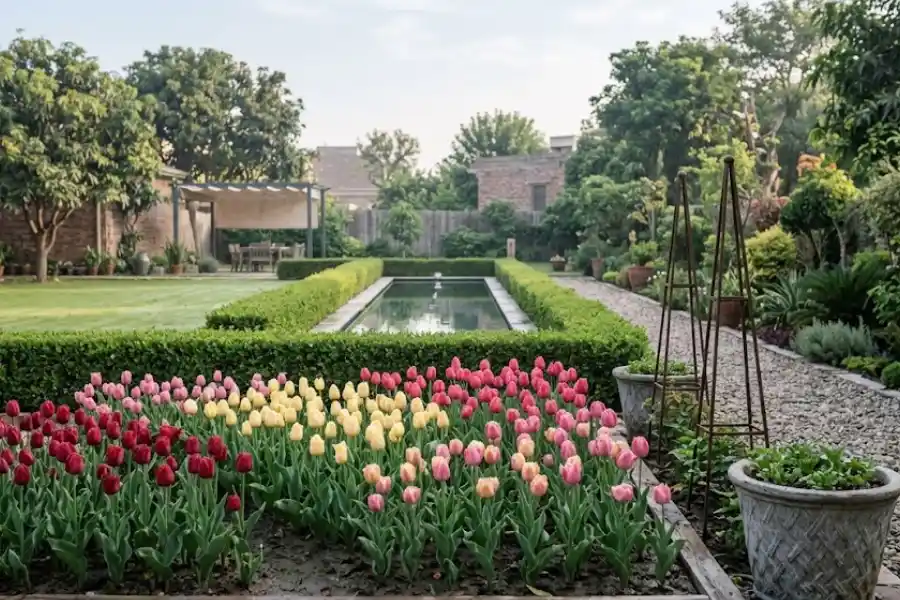
Picture a row of red tulips. Behind them stands a clipped green hedge. Next to them lies a still pool that mirrors the sky. That calm, tidy look is the heart of a Dutch garden.
It feels fancy, but it is easy to copy. You do not need a big yard or a big budget. You need straight lines, the right plants, and a little patience.
In this post, you will see what makes this style so special, which plants work best, and how to build one in seven steps. You will also find ideas for small spaces, a list of common mistakes, and a simple care plan for the year.
What Is a Dutch Garden?
A Dutch garden is a planned garden with straight lines, clipped hedges, and a big show of flowers, mostly bulbs. The idea comes from the Netherlands, where homes were small and built close together. Light and space were hard to find, so gardeners learned to use every inch. They grew vines up walls and even planted on rooftops.
The term has a second meaning in older English gardens. There, a Dutch garden often meant a rectangular flower bed, sometimes sunk a little below ground level and closed in by hedges or walls. Tulips made the name stick. Today, people use it for any neat, shapely space packed with spring color.
A Short History of the Dutch Garden
In the 1600s, Dutch gardens were flat and compact. They often had small canals, hedges, topiary, lead statues, and flowering shrubs and bulbs. Dutch growers also led the world in breeding garden plants, and they still do.
Tulips played a huge role. In the 1630s, prices for rare bulbs rose so fast that the time is now called tulip mania. Today, the Keukenhof in Lisse plants almost 7 million spring bulbs each year. It is often called the Garden of Europe. In Limmen, the Hortus Bulborum keeps about 4,000 kinds of heirloom bulbs alive, and some date back to the late 1500s.
Key Features of a Dutch Garden
Every Dutch garden shares a few clear traits. Use them, and your space will look Dutch at once.
Straight Lines and Rectangles
Dutch garden design loves long, straight lines and square corners. Beds, paths, and pools are all rectangles. Both sides of the space often match, which gives a calm and orderly feel.
Low, Clipped Hedges
A low hedge or wall marks each area and stops the eye from running too far. Boxwood is the classic pick. Where boxwood blight is a problem, yew or Japanese holly can do the same job. Trim twice a year for sharp edges.
Still Water
Water is part of daily life in the Netherlands, so it shows up in the garden too. A long, thin canal or a rectangular reflecting pool fits the style well. A small, straight-edged garden pond gives the same calm look in a typical US yard.
Spring Bulbs
Bulbs are the stars. Tulips, daffodils, hyacinths, crocus, and snowdrops all fit. Plant them in big groups, not thin lines. Try mixing colors, such as purple with orange, so the bed looks rich and full.
Quiet Colors and Big Containers
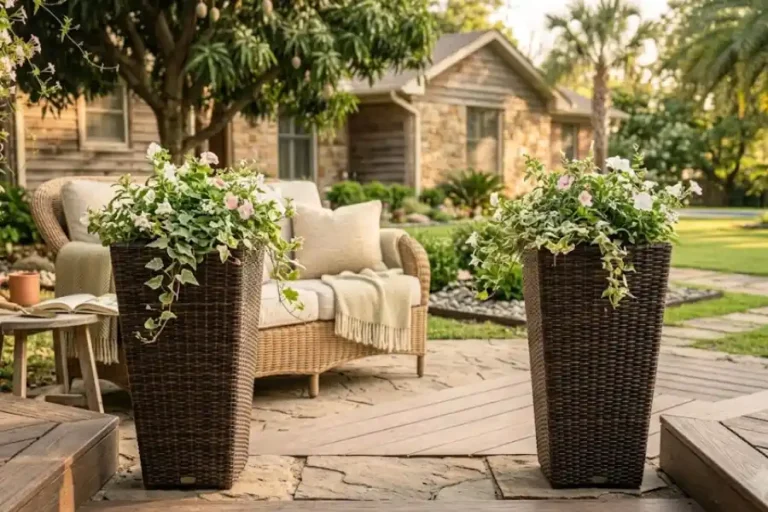
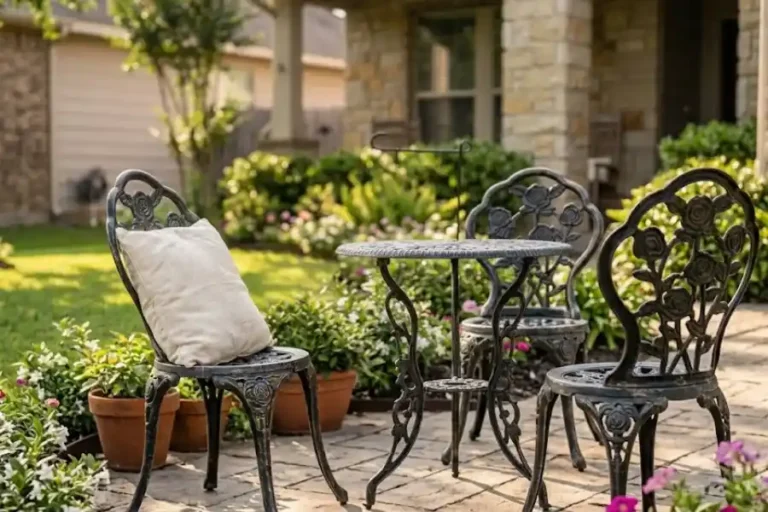
Paths, walls, and furniture are often gray, black, or white. This calm backdrop makes the flowers pop. Oversized pots add weight and height. Large containers and tall outdoor planters work well for this job.
A Few Garden Ornaments
Obelisks, topiary, and statues add a classic touch. Old Dutch gardens also used fountains with gold edges. Pick one or two pieces. Too many will crowd the space.
Two Dutch Garden Styles: Classic and Modern
Most pages only cover the formal look. In truth, a Dutch garden can take two paths.
The Classic Style
The classic style is formal and balanced. It uses hedges, rectangles, and bold bulb beds. If you like this look, our post on the formal garden shows more ways to plan it.
The Modern Style
The modern style is looser on the inside. Designer Piet Oudolf plants perennials in wide sweeps, a method he began at his own home in Hummelo. Another Dutch designer, Mien Ruys, paired airy grasses with clipped edges long before him. The result feels wild and neat at the same time.
Mix Both for the Best Result
You can blend the two. Build a tidy frame with hedges and straight paths. Then fill it with soft perennials and grasses. This way, the garden looks sharp in winter and full of life in summer.
Best Plants for a Dutch Garden
Bulbs to Plant in Fall
- Tulips: the signature flower. Pick early, mid, and late types to stretch the show.
- Daffodils: tough and cheerful, and deer and squirrels usually leave them alone.
- Hyacinths: strong scent and neat, upright shapes.
- Crocus and snowdrops: the first color of the year.
- Alliums: round purple globes that bloom in late spring.
Flowers for Spring and Summer
- Roses
- Irises
- Lilies
- Anemones
- Carnations
- Calla lilies
Perennials for the Modern Look
- Coneflower and black-eyed Susan for late summer color
- Salvia for spikes of blue and purple
- Sedum for thick, late blooms that bees love
- Feather reed grass for tall, soft movement
Plants for Hedges and Shapes
- Boxwood for classic low hedges
- Yew for dark, dense walls
- Beech and hornbeam for taller, clipped screens
Simple Tips for Planting Bulbs
- Plant in fall, about six weeks before the ground freezes.
- Set tulips at a depth of 6 to 8 inches and daffodils at about 6 inches. Crocus need only about 3 inches.
- Place each bulb with the pointed end facing up.
- Choose a spot with good drainage. Wet soil makes bulbs rot.
- Tulips return best in USDA zones 3 to 7. In warmer zones, chill the bulbs in the fridge for about 12 to 14 weeks first, and keep them away from ripe fruit.
How to Build a Dutch Garden in 7 Steps
- Pick a flat, sunny spot. Most bulbs and roses need at least six hours of sun each day.
- Draw a plan on paper. Use rectangles and keep both sides matched. Make main paths at least three feet wide.
- Mark the lines. Use string and stakes first. Then outline the shapes on the ground with spray paint.
- Build the frame. Plant hedges about 18 inches apart, or set low edging around each bed.
- Add paths and water. Gravel, brick, or pavers all work. Place a pond or pool near the center.
- Plant bulbs in fall. Group them in drifts and layer different types in the same bed.
- Finish with one big feature. A pair of obelisks, a clipped shrub, or a giant pot is enough.
Keep the plan simple at first. You can always add more next year.
Dutch Garden Ideas for Small Spaces
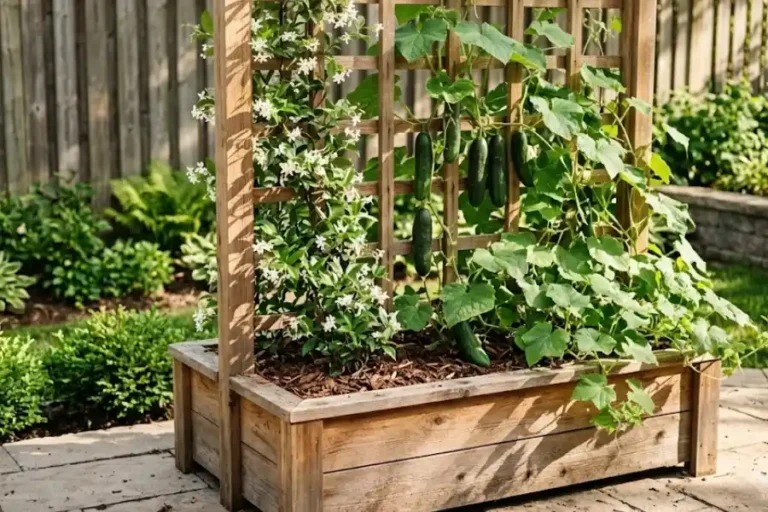
Dutch city gardeners are skilled at small spaces. In Amsterdam, people train vines up walls, plant on roofs, and even keep pots on boat decks. You can do the same on a patio or balcony.
- Grow up. Use climbers on a fence or wall to save floor space.
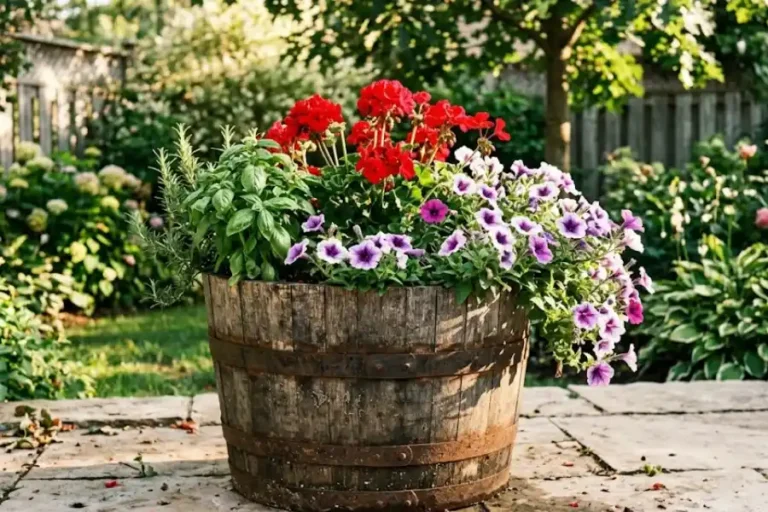
- Choose big pots. One large container of tulips looks better than ten tiny ones.
- Make a mini hedge. Plant boxwood in a long, narrow trough.
- Limit your colors. Two or three shades keep a small space calm.
- Add a bowl of still water. Even a small one catches the light.
Dutch Garden vs English Garden
English garden design is soft and curvy, with mixed cottage plants that spill over each other. Dutch style is tidy and planned, with straight edges and groups of one plant. If you like the loose look better, read our post on English garden design. Many gardeners mix the two by using a Dutch frame with an English-style center.
Common Mistakes to Avoid
- Planting bulbs too shallow. They flop, or squirrels dig them up. Follow the depths listed above.
- Planting in thin rows. Three or four bulbs look weak. Plant in groups of at least ten.
- Using too many colors. A calm palette is part of the look.
- Skipping the plan. Straight lines only work when you measure.
- Letting hedges grow wild. Sharp edges are the whole point.
- Cutting leaves too soon. After the flowers fade, leave the leaves for about six weeks. They feed the bulb for next year.
Yearly Care for a Dutch Garden
Fall: Plant bulbs, add new hedges, and cut back tired perennials.
Winter: Plan changes. Brush heavy snow off hedges so branches do not bend. Move pots near a wall to protect them from hard freezes.
Spring: Enjoy the show. Let the leaves die back on their own. Add a thin layer of mulch.
Summer: Trim hedges, water pots often, and snip off faded roses.
Frequently Asked Questions
What flowers should I plant first?
Start with tulips and daffodils. They are easy to find, easy to plant, and give the biggest color for the money. Add hyacinths and alliums next year.
When is the best time to plant?
Plant bulbs in fall, about six weeks before the ground freezes. Hedges, roses, and perennials can go in during spring or fall.
Can I build a Dutch garden in a small yard?
Yes. This style was born in tight city lots. One rectangular bed, one clipped hedge, and a big pot of tulips is a great start.
Do Dutch gardens work in the US?
Yes. Tulips do best in zones 3 to 7. In hotter areas, chill the bulbs first or choose heat-friendly flowers such as salvia and coneflower. Pick hedge plants that grow well in your region.
Is a Dutch garden hard to keep up?
Not at all. The work is light but steady. Trim hedges twice a year, water in dry spells, and plant new bulbs each fall.
Final Thoughts
A Dutch garden is all about order, water, and color. Start small with one straight bed and a handful of bulbs. Add a hedge, then a pool, then a big pot. Each step brings the look closer. By next spring, your yard can have its own calm, colorful scene.