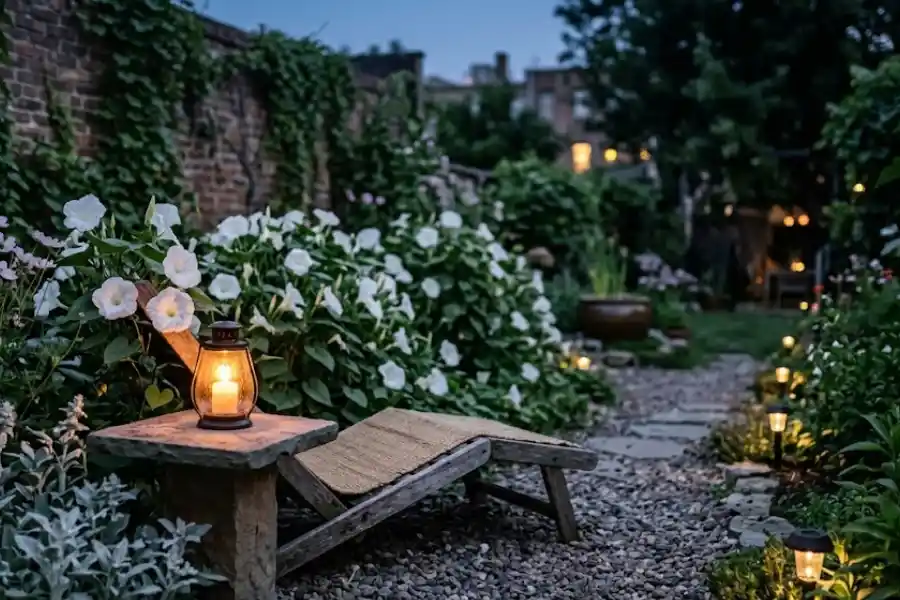
Nocturnal Garden: Best Plants, Lighting, and Easy Setup Tips
Most gardens look their best at noon. Then the sun sets and everything fades into shadow. A nocturnal garden changes that. It is a space planned to look, smell, and feel wonderful after dark.
If you work all day, the evening may be the only time you can sit outside. A nocturnal garden gives you a calm place to relax. Pale flowers glow in the moonlight. Sweet scents drift through the air. Soft lights show the way without hurting your eyes. It also gives moths, bats, and other night visitors a safe place to feed.
This article shows you how to plan one, step by step. You will see which plants work best, how to light the space, and how to keep it safe for kids and pets. Every idea is simple enough for a beginner.
What Is a Nocturnal Garden?
A nocturnal garden is a garden made to be enjoyed at night. The design focuses on moonlight, scent, sound, and gentle light instead of bright color. Many people also call it a moon garden. If you love pale blooms and silver leaves, our post on the moonlight garden style is a good place to start.
The idea is not new. The famous white garden at Sissinghurst Castle in England inspired many of the night spaces we see today. Garden designer Scott Ogden, author of The Moonlit Garden, suggests paying less attention to color and more attention to scent, shape, and sound. That is great advice, because color fades in the dark, but fragrance does not.
Why a Nocturnal Garden Is Worth Building
A garden that works at night offers more than good looks. Here are the main benefits:
- Cooler evenings: In hot areas, night is the best time to be outside.
- Strong scent: Many flowers release more fragrance after dark to call in moths.
- Wildlife support: Moths, bats, beetles, and fireflies feed and pollinate at night.
- Fewer mosquitoes: Bats eat large numbers of them.
- A calm mind: Soft light and quiet help you slow down after a busy day.
Where to Place Your Nocturnal Garden
Pick a spot you can see from your patio, kitchen window, or favorite chair. You will use it more if you can enjoy it from inside, too.
Walk outside at dusk and look around. Keep these points in mind:
- Stay away from street lamps and bright porch lights.
- Choose an open area where moonlight can reach the plants.
- Use pale walls or fences. They bounce light back into the space.
- Plant the sweetest flowers near where you sit.
Best Plants for a Nocturnal Garden
Three kinds of plants do the job. Some catch the light. Some open at night. Some fill the air with scent. Mix all three for the best result.
White and Silver Plants That Glow
These plants reflect moonlight, so they stand out when other colors disappear.
- Dusty miller: Silver leaves that shine under a night sky.
- Lamb’s ear: Soft, fuzzy, silver-gray leaves that look lovely in the dark.
- White cosmos: Airy flowers that float above the ground.
- Variegated hostas: White-edged leaves that brighten shady corners.
- Artemisia: Silvery, finely cut leaves that add texture.
Flowers That Open at Night
- Moonflower: Huge white blooms open at dusk on a fast-growing vine. In most of the United States, it grows as a yearly plant.
- Evening primrose: Yellow flowers open in the evening and attract moths.
- Four o’clocks: They open late in the afternoon and stay open through the night.
- Night-blooming cereus: This cactus makes one giant white flower that lasts a single night. Grow it in a pot and bring it indoors before frost.
Plants With Strong Evening Scent
- Flowering tobacco: White types smell sweet after sunset.
- Tuberose: A rich, sweet smell that fills a small patio.
- Gardenia and jasmine: Great choices in warm areas.
- Honeysuckle: Choose a native type when you can. Japanese honeysuckle spreads too fast in many states.
Place scented plants near your seat or beside an open window. That way, the smell reaches you without any effort.
How to Light a Nocturnal Garden
The goal is not to turn night into day. You want just enough light to walk safely and to see the glow of the plants. Less light usually looks better.
- Keep it low and warm. Soft yellow light feels cozy and is kinder to insects and bats.
- Use solar power. Place solar garden lights along paths. They need no wires and cost nothing to run.
- Add a flame-like glow. A garden lantern on a table or hook gives a candle-like feel.
- Aim light down. Shield the bulbs so the light lands on the ground, not in the sky.
- Use timers or motion sensors. Turn lights off when you do not need them.
Dark Sky, a group that protects night skies, shares a simple rule: use light only where it is needed. That helps wildlife, your neighbors, and your view of the stars.
How to Welcome Night Wildlife
A nocturnal garden comes alive after dark. In the United States, you may see moths, bats, fireflies, beetles, toads, and even owls. These visitors pollinate flowers, eat pests, and add a little magic to the evening.
In 2026, the Bat Conservation Trust built a Nocturnal Garden at the RHS Chelsea Flower Show. It showed how ordinary home gardens can help night wildlife with simple choices. You can do the same at home:
- Plant native flowers that bloom in the evening.
- Skip pesticides, since they harm moths and fireflies.
- Leave a small pile of leaves in a quiet corner.
- Add a shallow dish of water with stones for insects to land on.
- Turn off extra lights.
Add Seating, Water, and Sound
You will want a comfortable spot to sit. Soft lounge chairs work better than stiff dining chairs, because you will stay out longer. Add a blanket for cool nights.
Water adds a lot to a night space. The moon reflects in still water, and moving water makes a calming sound. A simple stone bowl with a small pump is enough. Moving water also keeps mosquitoes from breeding.
If bugs still bother you, set a few citronella candles near your seating area. They are easy to move and add a warm glow, too.
Nocturnal Garden Ideas for Small Spaces
You do not need a big yard. A balcony or patio works well with these simple ideas:
- Grow a moonflower in a large pot with a small trellis.
- Fill containers with white petunias, which smell sweeter at night.
- Hang a small lantern at eye level.
- Use a bowl of water as a mini moon mirror.
- Group pots close to your chair so the scent stays near you.
Common Nocturnal Garden Mistakes
- Too much light: Bright bulbs wash out the glow and scare off wildlife.
- All white, no scent: Looks are only half the fun at night.
- Planting too far away: If you cannot smell the flowers from your seat, move them closer.
- Ignoring your climate: Check your plant hardiness zone before you buy.
- Forgetting pets: Some night bloomers are toxic, so read the next section before planting.
Plan Your Nocturnal Garden in One Weekend
- Walk your yard or balcony at dusk and notice where light falls.
- Pick one spot near your seating area.
- Buy three glowing plants and three scented plants.
- Set up soft lights along the path.
- Add a chair, a lantern, and a small water bowl.
- Come back after dark a week later and adjust anything that feels off.
Safety Notes Before You Plant
Some famous night bloomers are poisonous. Angel’s trumpet, datura, and the berries of night-blooming jasmine can harm kids and pets. Wear gloves when you handle them, and place them where little hands and paws cannot reach. Before adding any plant to your nocturnal garden, check it against the ASPCA’s list of toxic and safe plants.
Also keep candles and lanterns away from dry leaves and fabric. Never leave a flame alone.
Frequently Asked Questions
What is a nocturnal garden?
It is a garden planned to look and smell wonderful at night. It uses pale plants, evening scents, and soft light, and it often helps night wildlife like moths and bats.
What plants bloom at night?
Moonflower, evening primrose, four o’clocks, flowering tobacco, tuberose, and night-blooming cereus all open in the evening or at night.
Is a nocturnal garden the same as a moon garden?
They are very close. A moon garden focuses on white and silver plants that glow under moonlight. A nocturnal garden adds scent, sound, and wildlife support to that idea.
Can I grow a nocturnal garden in a small space?
Yes. A few pots, a trellis, a lantern, and a bowl of water can turn a balcony into a relaxing night spot.
Will a nocturnal garden attract mosquitoes?
Night flowers attract moths and bats, which are helpful. Mosquitoes come from standing water, so use moving water or change the water often.
Final Thoughts
You do not need to rebuild your yard. Start with one corner, a few pale plants, and one soft light. Sit outside after dark and see what shows up. Soon you will notice new scents, quiet wings, and a calm you may not find during the day. A nocturnal garden grows better every season, and the best views often come after sunset.