Butterfly Garden Design Plans: 4 Easy Layouts for Any Yard
Picture this. You step outside with a cup of coffee. A monarch drifts past. A swallowtail lands on a flower an arm’s length away. That is not luck. That is a plan.
Good butterfly garden design plans give butterflies everything they need in one place. They get food, a safe spot to lay eggs, warm rocks, water, and shelter from the wind.
You do not need a big yard. A few pots on a sunny patio can work. Below, you will get four layouts you can copy, plant lists, a bloom calendar, and a list of common mistakes. The advice comes from university extension offices, state wildlife agencies, and conservation groups. You will find the sources at the end.
Quick answer: Strong butterfly garden design plans include six or more hours of sun, nectar flowers for adults, host plants for caterpillars, wind protection, a shallow water spot, and zero pesticides.
What Do Butterfly Garden Design Plans Need to Include?
Most beginner gardens fail for one simple reason. They have flowers, but no host plants. A flower bed feeds adult butterflies. A butterfly garden also feeds the caterpillars. That is the biggest difference between the two.
Every plan below covers these six needs:
- Sun: Butterflies are cold-blooded. They need warm, sunny spots to wake up and fly. Aim for at least six hours of direct sun each day.
- Nectar plants: These flowers feed adult butterflies. Pick a mix so something is always in bloom.
- Host plants: These are the plants where butterflies lay eggs. Caterpillars eat the leaves. Many butterflies use only one or two kinds of plants.
- Shelter: Wind makes it hard for butterflies to feed and rest. A fence, hedge, or group of shrubs helps a lot.
- Water and minerals: Butterflies sip from damp sand and mud. This is called puddling.
- No pesticides: Insect sprays and weed killers can harm butterflies and caterpillars. Keep them away from your garden and the area around it.
Step 1: Check Your Site Before You Plant
Before you pick from the butterfly garden design plans below, spend one day watching your yard. It can save you time and money.
- Track the sun. Look at your yard at 9 a.m., noon, and 4 p.m. Choose the spot that stays sunny the longest. Most of the nectar flowers in this article are full sun plants, so a bright spot pays off.
- Feel the wind. Notice which side of the yard gets the strongest gusts. That is where a fence or shrubs should go.
- Test the drainage. Dig a hole about 12 inches down and fill it with water. If it is still full the next day, pick another spot or build a raised bed.
- Find your USDA hardiness zone. Use your zip code on the USDA plant hardiness zone map. This tells you which perennials will survive your winters.
- Learn your local butterflies. Call your county Cooperative Extension office or visit your state native plant society. Ask which butterflies live near you and which plants they use.
4 Butterfly Garden Design Plans You Can Copy
Every one of these butterfly garden design plans follows the same easy rules. Tall plants go in back. Short plants go in front. Plant in groups of three to five instead of scattering single plants. Butterflies spot big patches of color and scent much faster.
Plan 1: The Patio Container Garden (3 to 5 pots)
Best for: balconies, patios, and renters.
Use pots that are at least 15 to 18 inches wide, with drainage holes. Set them in your sunniest spot.
- Pot 1: Zinnias. They are bright, easy, and loved by many butterflies.
- Pot 2: Dill and parsley. These feed black swallowtail caterpillars.
- Pot 3: Swamp milkweed. This feeds monarch caterpillars and gives nectar too. Choose a large, tall pot.
- Pot 4 (optional): A native aster for fall color.
Add a shallow dish of wet sand and a flat stone nearby. Water often, because pots dry out fast. Once these are growing well, you can try more setups from these container garden ideas.
Plan 2: The Small Sunny Bed (4 feet by 8 feet)
Best for: first-time gardeners.
This bed holds about 20 plants. Put the long side facing south so the tall plants do not shade the short ones. A raised bed of this size works too, and this 4×8 raised garden bed planting layout shows another way to arrange one.
- Back row: Three purple coneflowers and three native asters.
- Middle row: Three milkweeds (butterfly weed or swamp milkweed, based on your soil) and three liatris, also called blazing star.
- Front row: Five zinnias and a patch of sedum or creeping phlox.
- Corner: A clump of dill for the black swallowtails.
- Extras: One flat rock for basking and one buried dish of wet sand for puddling.
Plan 3: The Backyard Showpiece (10 feet by 10 feet)
Best for: people who want lots of butterflies and a place to sit and watch them.
Use soft, curved edges instead of straight lines. A relaxed shape looks natural and works well for butterflies.
- Windy side: Plant a few shrubs, such as spicebush. It blocks wind, and it also feeds spicebush swallowtail caterpillars.
- Back and center: Three Joe Pye weed, three tall asters, and a patch of goldenrod.
- Middle ring: Purple coneflower, bee balm, liatris, and two milkweed clumps.
- Front edge: Zinnias, sedum, and low phlox.
- Host corner: Dill, fennel, and violets, tucked off to the side where chewed leaves will not steal the show.
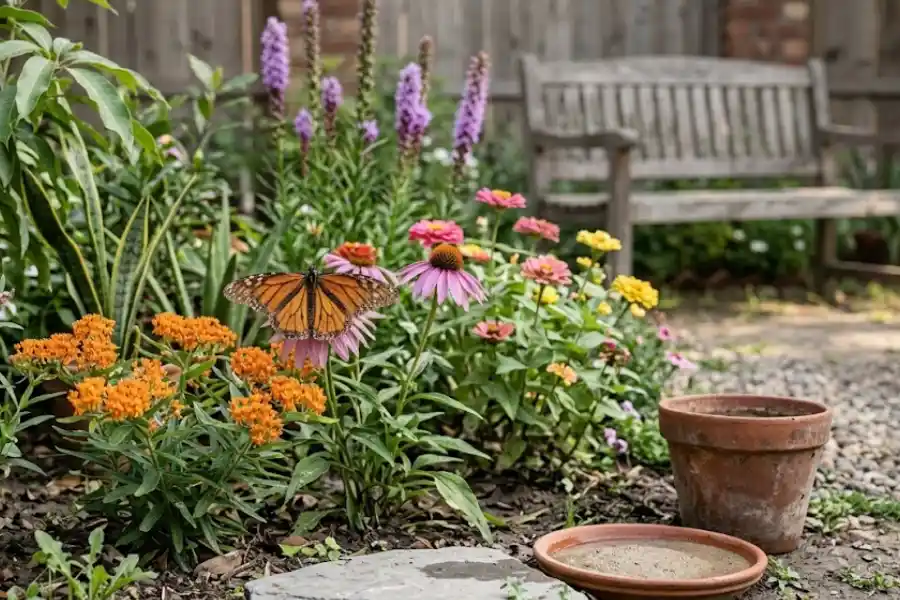
- Relax zone: Add a bench on the calm side, a few flat rocks, and a damp sand dish in full sun.
Plan 4: The Part-Shade Garden
Best for: yards with three to four hours of sun.
Most butterflies love sun, so you will see fewer species here. But some still visit, and shady spots can be pretty. You can fill any gaps with other garden plants for shade that suit your region.
- Spicebush: A host plant for spicebush swallowtails and a good wind shield.
- Native violets: Host plants for fritillary butterflies.
- Wild geranium and woodland phlox: Soft spring color for nectar.
- Turtlehead: A late-season bloom that hosts Baltimore checkerspot caterpillars in some regions.
The Best Plants for Butterfly Garden Design Plans
Native plants are the best choice. Local butterflies evolved with them. They also need less water once they settle in. Check your state’s native plant list before you shop.
Nectar Plants for Adult Butterflies
- Purple coneflower: Blooms in summer. Tough and easy.
- Bee balm: Blooms in mid-summer. Fragrant.
- Liatris (blazing star): Blooms in mid to late summer. Butterflies love the tall purple spikes.
- Joe Pye weed: Blooms in late summer. Big, tall, and popular.
- Zinnias and tithonia (Mexican sunflower): Annuals that bloom from summer to frost.
- Native asters and goldenrod: Bloom in fall. These feed butterflies, including migrating monarchs, when little else is blooming.
Host Plants for Caterpillars
- Milkweed: Monarchs
- Dill, parsley, and fennel: Black swallowtails
- Spicebush and sassafras: Spicebush swallowtails
- Pawpaw: Zebra swallowtails
- Wild cherry and tulip tree: Tiger swallowtails
- Violets: Fritillaries
- Passionflower: Gulf fritillaries
- Senna: Cloudless sulphurs
- Asters: Pearl crescents
- Nettles: Red admirals
Expect holes in the leaves. That is a good sign. Caterpillars rarely hurt a healthy plant. Place host plants toward the back or side of the bed so the chewed leaves do not stand out.
A note on butterfly bush: Despite the name, it is not a great pick. Adults will sip its nectar. But caterpillars cannot eat it. It is also considered invasive in some states, including parts of the Pacific Northwest. Native plants do more good.
A note on milkweed: Choose native milkweed for your region. In warm areas, tropical milkweed can stay green all winter. Many conservation groups say this can disrupt monarch migration and help a parasite spread.
Bloom Calendar: Keep the Food Coming All Season
Butterflies need nectar from spring to the first hard frost. Dates shift by region, but this pattern works almost everywhere. Choose at least two plants for each stage.
- Spring: Violets, woodland phlox, and wild geranium.
- Early summer: Butterfly weed, milkweed, and coneflower.
- Mid-summer: Bee balm, liatris, and zinnias.
- Late summer: Joe Pye weed and tithonia.
- Fall: Asters, goldenrod, and sedum.
Little Extras That Make a Big Difference
- Puddling station: Fill a shallow dish with sand or gravel. Bury it to the rim in a sunny, calm spot. Keep it damp.
- Flat rocks: Butterflies bask on them to warm up. Place a few in full sun.
- Perches: A few sticks give butterflies a spot to rest out of the wind.
- Shelter: Shrubs, tall plants, and ornamental grasses work better than butterfly houses, which are rarely used.
- A place for you: Add a bench or a chair. You will want to stay and watch.
8 Butterfly Garden Mistakes to Avoid
These mistakes can ruin even good butterfly garden design plans.
- Planting only nectar flowers. Without host plants, butterflies visit but do not stay.
- Using pesticides. Even a small amount can harm caterpillars.
- Buying treated plants. Ask the nursery if the plants were treated with systemic insecticides. Some store-bought plants are.
- Picking a shady spot. Less than six hours of sun means fewer butterflies.
- Scattering single plants. Groups of three to five are much easier for butterflies to find.
- Ignoring the wind. A windy garden empties fast.
- Cleaning up too early in fall. Many butterflies spend winter as eggs, caterpillars, or chrysalises in leaves and hollow stems.
- Expecting instant results. Give your garden time to grow.
Care Plan for Years One, Two, and Three
Even the best butterfly garden design plans need a little care. The good news is that native plants get easier each year.
Year One: Build the Base
Plant in spring after the last frost, or in early fall. Soak the soil well once or twice a week for the first season. Add a thin layer of mulch to hold moisture. Pull weeds by hand. Trim spent flowers on annuals like zinnias to get more blooms.
Year Two: Fill the Gaps
Watch which plants do well. Add more of those. Fill any weak bloom time on your calendar. Divide crowded perennials in spring or fall.
Year Three: Let It Settle
Native plants should need less water now. Leave stems standing over winter. Cut them back in spring, after the weather stays warm. Look closely at the leaves. You may find eggs and tiny caterpillars.
Frequently Asked Questions
How big should a butterfly garden be?
Any size can work. A few pots on a patio can attract butterflies. A bed of about 4 by 8 feet is a great start. Bigger gardens can hold more plants and more butterfly species.
How long does it take to attract butterflies?
Some butterflies may visit within weeks if your flowers are blooming. A steady population of butterflies that lay eggs in your yard usually takes one to three seasons.
What is the best flower for a butterfly garden?
There is no single best flower. Native milkweed is a top choice because it feeds both monarch caterpillars and adults. Purple coneflower, liatris, and asters are also strong picks.
Do butterfly garden design plans work in dry or hot areas?
Yes. Choose native plants that handle dry weather in your region. Most need little extra water after the first year.
Do I need a butterfly house?
No. Butterfly houses are rarely used. Shrubs, tall plants, rocks, and sticks give butterflies better shelter.
Is it okay if caterpillars eat my plants?
Yes, and it is a good sign. Healthy host plants usually grow back. A garden with chewed leaves is a garden that works.
Final Thoughts
Great butterfly garden design plans do not have to be fancy. They need sun, a mix of nectar and host plants, a little shelter, and no pesticides. Start with one of the layouts above. Pick plants native to your area. Then sit back and watch your garden come alive.
Start small if you need to. Even a few well-chosen plants can help butterflies in your neighborhood. Next spring, you will be glad you did.