Cinder Block Garden Ideas for a Budget-Friendly Backyard
Here’s something most garden blogs won’t tell you upfront: cinder blocks are one of the cheapest, toughest building materials you can buy, and almost nobody uses them to their full potential. Most people stack a few blocks in a rectangle, call it a raised bed, and stop there. That’s fine. But it’s also leaving a lot on the table.
I’ve spent years building garden beds, walls, and outdoor furniture with reclaimed and new cinder blocks, and the truth is these gray blocks can do way more than hold dirt. They can become seating, storage, vertical planters, water features, and even outdoor kitchens, all without power tools or a big budget. This article walks through real cinder block garden ideas you can build yourself, plus the safety questions people always ask but rarely get a straight answer to.
Quick Safety Check Before You Start
Before we get into the fun part, let’s clear up the biggest worry people have: are cinder blocks safe for growing food?
Here’s the straight answer. Older “true” cinder blocks were made with fly ash, a leftover byproduct of burning coal, which can contain trace heavy metals. Those blocks mostly stopped being produced decades ago. What you buy at a hardware store today is almost always a concrete block, made from cement and sand, not fly ash. That said, university extension researchers, including horticulture experts at the University of Maryland, note that manufacturers don’t always list what aggregate went into a block, so there’s no way to be 100 percent certain just by looking at one.
If you want to be extra careful, especially for a vegetable garden, you have two easy options:
- Line the inside of the blocks with a plastic liner or pond liner before adding soil, so the dirt never touches the concrete directly.
- Seal the blocks with a non-toxic polymer paint, which blocks moisture and any potential leaching.
Either trick takes an afternoon and costs very little, and it means you can stop worrying and start planting.
Why Cinder Blocks Work So Well for Garden Projects
Wood rots. Stone is expensive. Bricks need mortar and a steady hand. Cinder blocks just stack, and they hold their shape for decades. A single block usually costs between one and three dollars depending on your area, which means a full raised bed can often be built for under fifty dollars. They’re also heavy enough to stay put in wind and rain without any glue or fasteners, so a beginner with zero construction experience can build something sturdy on their first try.
The other advantage is the hollow center of every block. That empty space isn’t wasted, it’s a ready-made second planting spot, a place for drainage gravel, or a slot for a fence post. Almost every idea below leans on that one detail.
Raised Garden Beds
1. The Classic Rectangle Bed
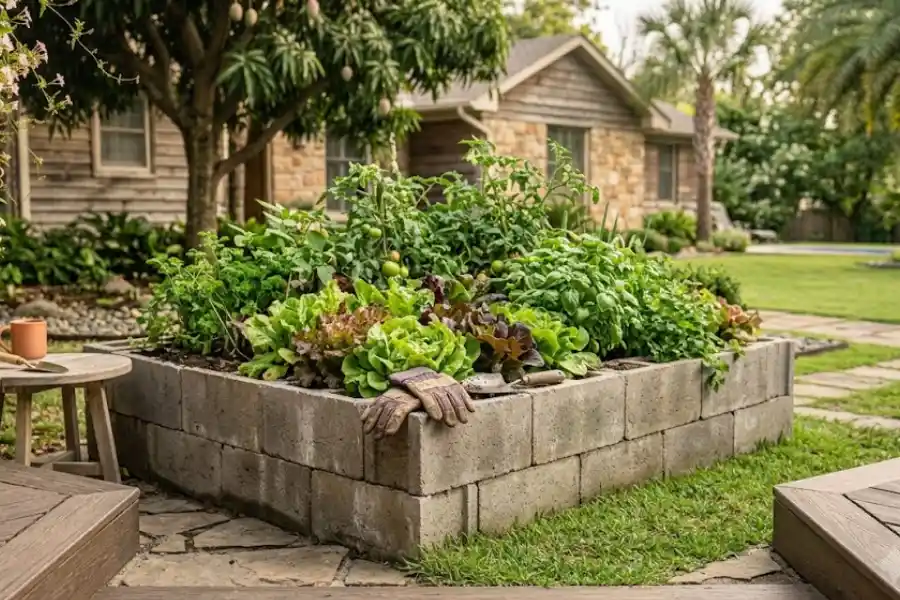
Lay blocks end to end in a rectangle, two rows high, and fill with quality garden soil. This is the simplest cinder block raised bed you can build and it works for almost any vegetable.
2. L-Shaped Corner Bed
If you’re working with a small yard, an L-shaped bed tucks into a corner and uses space a straight rectangle would waste.
3. Tiered Herb Bed
Stack blocks in shrinking layers, like a small pyramid, so each tier gets full sun and easy reach for cutting herbs.
4. Three-Row Bed for Root Vegetables
Stack blocks three rows high for carrots, potatoes, and other root vegetables that need extra room below the surface to grow properly.
5. Keyhole Garden Bed
Build a circular bed with a small notch cut out, like a keyhole, so you can reach the center compost basket without stepping on your soil.
6. Accessible Waist-High Bed
Stack blocks to knee or waist height so gardeners with back problems or limited mobility can tend plants without bending down.
Planters and Vertical Growing
7. Hollow-Cell Strawberry Planter
Fill the holes of a single row of blocks with soil and plant strawberries in each cell. The fruit hangs over the edge and stays clean off the dirt.
8. Herb Wall Planter
Stand blocks on end along a sunny wall and fill each cell with a different herb, basil, thyme, chives, for a living spice rack.
9. Staggered Tower Planter
Stack blocks in a tower, rotating each layer 90 degrees, so plants can spill out from every side. This is one of the most striking cinder block garden ideas for small patios because it grows up instead of out.
10. Succulent Display Case
Lay a single block flat and fill each cell with a different succulent for a low-maintenance outdoor display that barely needs watering.
11. Hanging Basket Stand
Stack three blocks and rest a sturdy branch or metal rod across the top opening to hang baskets at eye level.
12. Vertical Pallet and Block Combo
Prop an old wooden pallet against a low block wall for climbing plants like peas or cucumbers, using the blocks as an anchor so the pallet can’t tip.
Walls, Edging and Pathways
13. Simple Garden Bed Border
A single row of blocks laid flat around the edge of any bed keeps mulch in and grass out, no digging required.
14. Sloped Yard Retaining Wall
For yards with a slope, a stacked block wall holds back soil and creates a flat, usable planting shelf on the hillside.
15. Curved Pathway Edging
Set blocks on their side in a gentle curve to frame a walking path through the garden.
16. Painted Block Stepping Stones
Lay individual blocks flat as stepping stones, then paint each one a different color for a playful path kids love.
17. Privacy Screen Wall
Stack blocks several rows high with the holes facing outward and thread climbing vines through them for a living privacy screen, a durable addition to your list of DIY outdoor privacy screen ideas.
Furniture and Outdoor Extras
18. Cinder Block Bench
Stack two short columns of blocks and top them with a painted wood plank for an instant garden bench.
19. Outdoor Side Table
Stack blocks into a small column and top with a concrete paver or tile for a weatherproof side table beside your favorite chair.
20. DIY Fire Pit Ring
Arrange blocks in a circle, cell side facing in, to build a simple and safe fire pit border for cool evenings.
21. Outdoor Bar or Grill Station
Build a U-shaped counter from stacked blocks topped with a wood or concrete surface for an outdoor cooking and serving station.
22. Garden Tool Storage Cubby
Stack half-blocks to create small open compartments perfect for stashing gloves, trowels, and plant labels within reach of your beds.
23. Water Feature Basin Stand
Use a short stack of blocks as a hidden base for a small basin or bowl fountain, running the pump cord through the hollow center.
24. Compost Bin Walls
Build a three-sided block enclosure to contain a compost pile neatly while still letting air flow through the open cells.
25. Mailbox or Sign Post Base
A short stack of blocks makes a sturdy, wind-proof base for a mailbox post or a garden welcome sign.
How to Build a Basic Cinder Block Raised Bed
If this is your first project, start here. Building your own cinder block raised bed is easier than most people expect.
- Pick a flat, sunny spot and mark out your rectangle with stakes and string.
- Remove grass and level the ground so your first row of blocks sits flat, framing the bed nicely if you plan to surround the perimeter with a clean river rock landscaping border.
- Lay the first row with the holes facing up, leaving no gaps between blocks.
- Add a second row if you want extra depth, staggering the joints for stability.
- Line the inside with landscape fabric or a liner if you’re growing food and want extra peace of mind.
- Fill with a mix of quality garden soil and compost.
- Plant the hollow cells along the top with herbs or trailing flowers so no space goes unused.
A raised bed doesn’t need to be perfect on day one. Start with one section, see how it grows through a season, and expand from there. Most gardeners end up adding a second or third bed within the first year anyway.
Tips to Keep Your Cinder Block Garden Looking Great
- Paint smart. Use exterior masonry paint, not standard wall paint, so it holds up through rain and frost.
- Watch the pH. Concrete can slightly raise soil pH over time, so test your soil once a year and add sulfur or compost if it drifts too alkaline for your plants.
- Improve drainage. Add a layer of gravel at the bottom of any bed built taller than one row to stop waterlogging.
- Mind the heat. Cinder blocks absorb sun and can warm the soil near the edges, which is great in cooler climates but may stress tender roots in hot regions. A little extra mulch near the walls helps.
- Reinforce tall walls. For anything above three rows, add rebar through the hollow cells for real structural strength.
Frequently Asked Questions
Are cinder blocks safe for a vegetable garden?
Modern concrete blocks sold today are generally considered safe, since fly ash hasn’t been used in production for decades. If you want extra caution, line the inside of the bed with plastic sheeting or seal the blocks with non-toxic paint.
How many cinder blocks do I need for a raised bed?
A standard 4 by 4 foot bed, one row high, typically needs around 16 to 20 blocks depending on the size of the blocks and whether corners overlap.
Can I stack cinder blocks without mortar?
Yes, for garden walls under three rows tall, dry stacking is usually stable enough. Taller walls should use mortar or rebar for safety.
What can I plant in the holes of a cinder block?
Shallow-rooted plants work best, think herbs, succulents, strawberries, or small trailing flowers like lobelia and sweet alyssum.
Do cinder block garden beds need drainage holes?
The open bottom of a bed set directly on soil usually drains fine on its own. If you’re building on concrete or pavement, add a gravel layer at the base first.
Final Thoughts
The best part about cinder block garden ideas is how forgiving they are. You don’t need carpentry skills, a big budget, or a weekend of hard labor to get something that looks intentional and lasts for years. Start with one small project, a border, a planter, a single raised bed, and let it grow from there. Once you see how far a handful of blocks can go, it’s hard to look at a plain concrete block the same way again.