Outdoor Garden Furniture Paint That Won’t Peel or Crack
Here’s something most guides won’t tell you. Your garden furniture is probably not just one material. It’s wood legs, a metal frame, maybe some resin trim, or wicker woven through the arms. Most “how to paint outdoor furniture” articles treat your whole patio set like it’s made of one thing. That’s why the paint peels off one chair while it holds fine on another.
This article breaks it down by material, shows you the prep steps people skip, and tells you which mistakes cause paint to crack, bubble, or flake within a single season. By the end, you’ll know what outdoor garden furniture paint to buy and how to make it stick for years, not months.
Why Garden Furniture Paint Fails So Fast
Paint doesn’t usually fail because of a bad brand. It fails because of what happened before the paint went on. Three things cause almost every peeling, cracking, or bubbling paint job:
- Painting over dirt, grease, or old flaking paint. Fresh paint can’t grip a dirty or unstable surface, no matter how good the paint is.
- Skipping primer on metal or bare wood. Primer is what bonds to the surface. Topcoat then bonds to the primer.
- Painting in the wrong weather. Direct sun, high humidity, or a surface that’s still damp from morning dew all stop paint from curing properly.
I learned this the hard way on an old iron bench I painted one spring. I skipped the rust-inhibiting primer to save time. Six months later, the paint lifted off in sheets right where the rust had been. The topcoat looked fine going on. It just had nothing solid to hold onto underneath.
What You Need Before You Touch a Paintbrush
Gather these before you start. Running back to the store mid-project usually means your surface dries at the wrong stage, and that costs you a clean finish.
- Mild soap and water, or a deck cleaner for stubborn grime
- Sandpaper (120 to 150 grit works for most jobs)
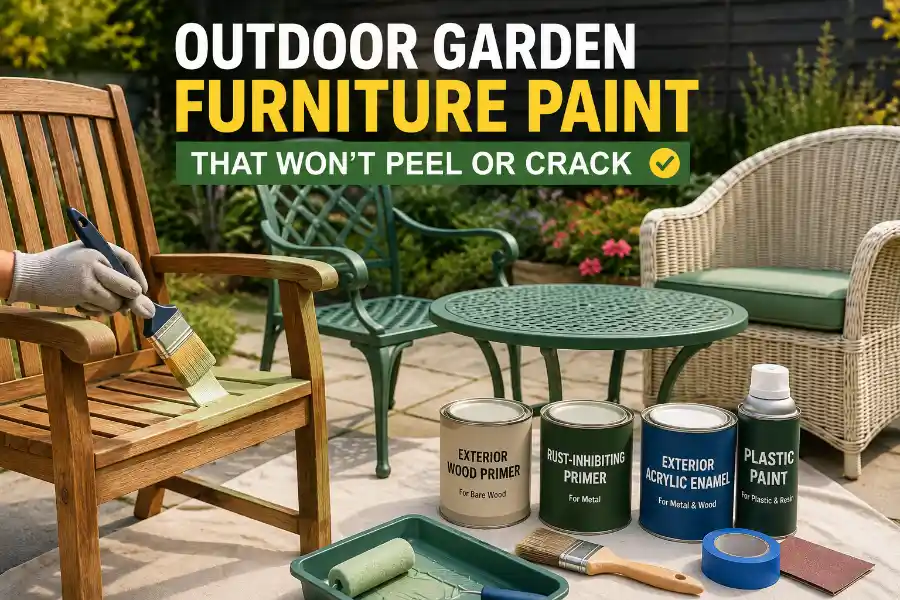
- A primer matched to your furniture’s material
- Your chosen paint for patio furniture, in a formula built for outdoor use
- A synthetic brush or foam roller, or a spray paint made for outdoor furniture
- Painter’s tape and a drop cloth
The Right Paint for Each Material
This is the part that determines whether your paint job lasts. Skip this section at your own risk.
Wood Furniture
Wood expands and shrinks as temperature and humidity change. A stiff, brittle paint will crack at the joints within a year. Look for an acrylic latex exterior paint. It stays flexible, resists moisture, and is one of the easiest options for a beginner to apply evenly. If the wood has never been painted, apply an exterior wood primer first and let it dry fully before adding your topcoat.
Metal Furniture (Iron, Steel, Aluminum)
Rust is the enemy here, not the weather itself. For iron or steel, use a rust-inhibiting primer before any topcoat, even if you don’t see rust yet. For aluminum, which doesn’t rust the same way, a self-etching primer helps the paint grip the smooth surface. Once primed, an exterior enamel gives the most durable finish for outdoor garden furniture paint on metal, matching the long-term weather resistance you get from materials like corten steel garden edging.
Plastic and Resin Furniture
Plastic and resin release a thin waxy layer that stops most paint from sticking at all. You need a spray paint labeled specifically for plastic, which is formulated to bite into that surface. Skip sanding here; it can dull the finish without helping adhesion. A light, even coat works better than one thick layer, which tends to bubble.
Wicker and Rattan
Wicker has hundreds of tiny gaps and curves that a brush can’t reach evenly. A flexible spray paint made for outdoor furniture is the only realistic option. Plan on turning the piece several times and spraying from multiple angles to avoid bare patches hiding inside the weave.
Step-by-Step: How to Paint Garden Furniture That Lasts
- Clean thoroughly. Scrub off dirt, mildew, and grime with soap and water. Rinse well and let the piece dry completely, ideally overnight.
- Inspect for damage. Fix loose joints, rust spots, or splintered wood before you paint over them.
- Sand where needed. Light sanding on wood and metal helps paint grip. Skip this step on plastic and resin.
- Wipe away dust. A tack cloth or slightly damp rag removes sanding residue that would otherwise sit under your paint.
- Apply primer. Match it to your material and let it dry fully, following the time listed on the can.
- Apply the first coat. Thin, even coverage beats one thick coat every time. Thick coats trap moisture and take far longer to cure.
- Let it dry, then apply a second coat. Most outdoor furniture paint needs two coats for real durability, not just even color.
- Cure before use. Painted furniture often feels dry within hours but needs several days to fully cure. Keep it out of use, and out of rain, during this window so you don’t ruin the finish on a main seating piece like an outdoor loveseat.
Mistakes That Ruin an Outdoor Paint Job
- Painting in direct midday sun. The paint dries too fast on the surface while staying wet underneath, which causes cracking.
- Ignoring the weather forecast. Rain within 24 hours of painting can wreck an entire coat.
- Using indoor paint outside. It’s not built to handle UV rays, rain, or temperature swings, and it will fail fast.
- Rushing between coats. A second coat applied too soon can lift the first one right off.
- Using furniture before it’s cured. Sitting on a chair too early leaves permanent marks in soft, uncured paint.
A good paint job on outdoor furniture isn’t about the fanciest can on the shelf. It’s about matching the paint to the material and giving it time to cure properly. Rushing either step is the single biggest reason people repaint the same chair every year.
How Long Does Painted Garden Furniture Last?
With the right prep and paint, most outdoor furniture holds a solid finish for three to five years before it needs a touch-up. Furniture in full, direct sun tends to fade faster than pieces in partial shade. A yearly rinse and a quick check for chips can stretch that timeline even further, since small chips left alone tend to spread once moisture gets underneath them.
Frequently Asked Questions
Do I really need primer for outdoor garden furniture paint?
Yes, in almost every case. Primer is what the topcoat bonds to. Skipping it is the single most common reason paint peels within a year.
Can I use regular spray paint on outdoor furniture?
Only if it’s labeled for outdoor use. Regular spray paint isn’t built to handle UV rays or moisture and will fade or peel much faster.
What’s the best paint for outdoor furniture made of more than one material?
Treat each material separately. Prime and paint the wood, metal, and plastic parts with their own matched products, even if the final color looks the same across all of them.
How long should I wait before sitting on painted furniture?
Most paints feel dry within hours but need several days to fully cure. Check the can’s instructions, and avoid heavy use during that window.
Can I paint over old, flaking paint?
No. Scrape or sand off any loose or flaking paint first. New paint applied over an unstable layer will fail at the same spots.