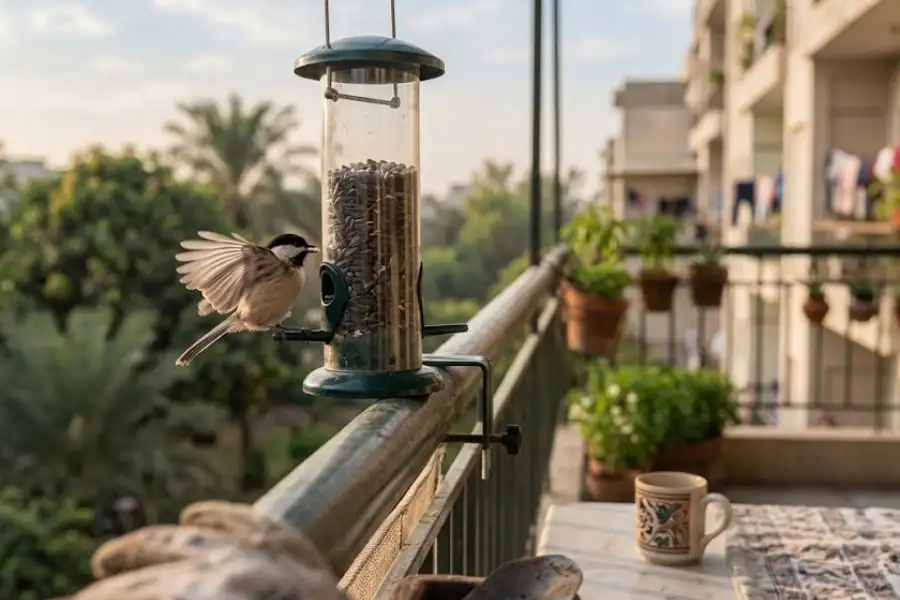
Best Bird Feeder for Apartment Balcony (No Pigeon Problems)
You want birds on your balcony. Not pigeons on your neighbor’s balcony. Not a note from your landlord. Just a few finches or chickadees while you drink your coffee.
Here is the problem. Most articles just list random feeders and call it a day. They skip the part where a bad setup goes wrong. A bad setup can attract pigeons. It can upset your neighbors. It can even get you a warning letter. That happens more than you think.
This one is different. It covers the best bird feeder for apartment balcony spaces. It also covers the parts nobody else mentions: how to avoid pigeon problems, how to keep things clean, and how to stay on good terms with your landlord.
Step One: Check Your Lease Before You Buy Anything
This sounds boring. Do it anyway.
Many leases do not mention bird feeders at all. But most leases have a “nuisance” rule. That rule can cover noise, mess, or pests. Say your feeder starts drawing pigeons or mice. Or say it leads to a flood of droppings. Your landlord can use that rule against you. This can happen even if feeders were never named.
Real renters have faced eviction notices over bird feeding, especially when pigeons got involved. Courts have often sided with the renter when there was no real proof of harm. But that process took time and stress. It can also cost money for a lawyer. Better to avoid it from the start.
Quick tip: If your lease says nothing about feeders, ask your landlord in writing first. A short note that says “I want to add a small bird feeder to my balcony, is that okay?” can save you a big headache later.
Also check the rules on drilling, hooks, or screws. Many apartments ban anything that harms the railing. Good news: most feeders today are made for renters, and once you know what is allowed, the rest of your setup gets easier to plan, right down to how you use the floor space around the railing. Our notes on how to make a small balcony garden for beginners cover the layout and safety basics if you are starting from zero.
Which Bird Feeder Type Works Best on a Balcony?
Not every feeder fits every outdoor space, whether it is a full balcony or a smaller terrace. Railing size matters. View matters. Your neighbors matter too. Not sure which one you have? Our comparison of terrace vs balcony breaks down the difference in under a minute. Here are the four main feeder types, and who each one fits best.
1. Window Feeders (Suction Cup)
These stick right to your window glass with strong suction cups. You get a close-up view of every bird that visits, sometimes just inches from your face.
Best for: apartments with no railing, high floors, or renters who cannot attach anything outside.
Watch out for: weak suction cups. Cheap ones fail in heat or wind. Look for a model with at least three cups. It should also have a drain hole, so rain does not pool inside.
2. Railing Clamp Feeders
These clip right onto a flat railing using a screw clamp. No drilling. No glue. You can take them off in seconds for cleaning or storage.
Best for: standard balcony railings, which is most apartments. This is often the easiest and most flexible pick.
Watch out for: railings that are too thick, too thin, or made of glass. Measure your railing width before you buy.
3. Hanging Pole or Hook Feeders
A clamp holds a small pole, and the feeder hangs from a hook at the top. This lifts the feeder above railing height, which some birds like.
Best for: balconies with open floor space and a sturdy railing. Also good if you want to hang more than one feeder.
Watch out for: wind. A hanging feeder can swing hard in gusts, especially on higher floors. Pick a heavy base or a short pole if your balcony gets windy.
4. Tray or Platform Feeders
A flat, open tray that holds seed. Some clamp to railings. Others sit on a small table.
Best for: watching many bird species at once, since the open design fits birds of all sizes.
Watch out for: mess. Open trays spill more seed than covered feeders. They also draw pigeons faster than any other type, so use them with care.
How to Pick the Right One: A Simple Checklist
Before you buy, run through this list.
- Does it fit your railing size, or do you need a window model instead?
- Can you install it without tools, screws, or glue?
- Does it have a tray or catch net underneath to cut down on spilled seed?
- Is it easy to take apart and wash?
- Is it small enough that it will not block walking space on your balcony?
- Can it handle wind, rain, and sun without falling apart in a season?
If you can check every box, you found a solid balcony bird feeder. One that will last.
The Seed That Keeps Your Balcony Clean
Most balcony mess does not come from the feeder. It comes from the seed.
Cheap mixed birdseed is full of filler grains. Most birds toss these bits aside while they search for the seeds they really want. Those tossed bits pile up below the feeder. They sprout, rot, or draw pests.
Switch to a “no-waste” seed instead:
- Sunflower hearts (hulled sunflower seeds): no shells, no mess, and loved by most songbirds.
- Nyjer seed: tiny and thin, great for finches, and rarely wasted.
- Suet cakes: solid blocks of fat and seed, good for cold months, and almost no spill at all.
Yes, no-waste seed costs more per bag. But you use less of it. You waste almost none of it. And you spend far less time sweeping your balcony. Most renters find it pays for itself within a month.
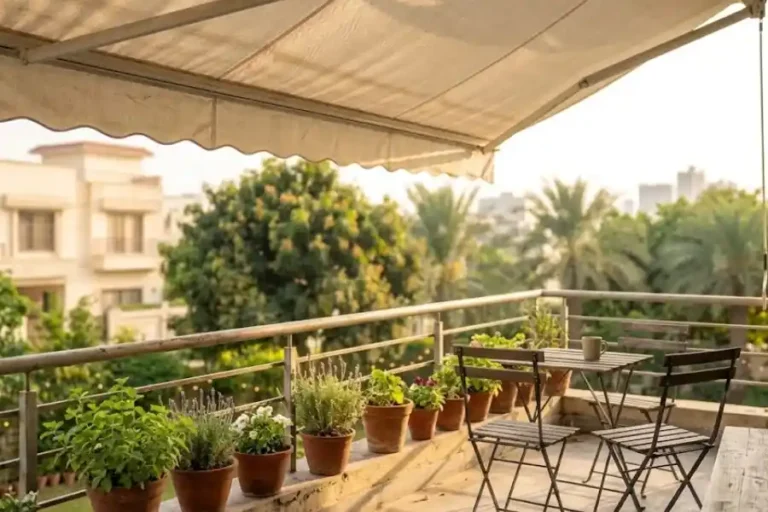
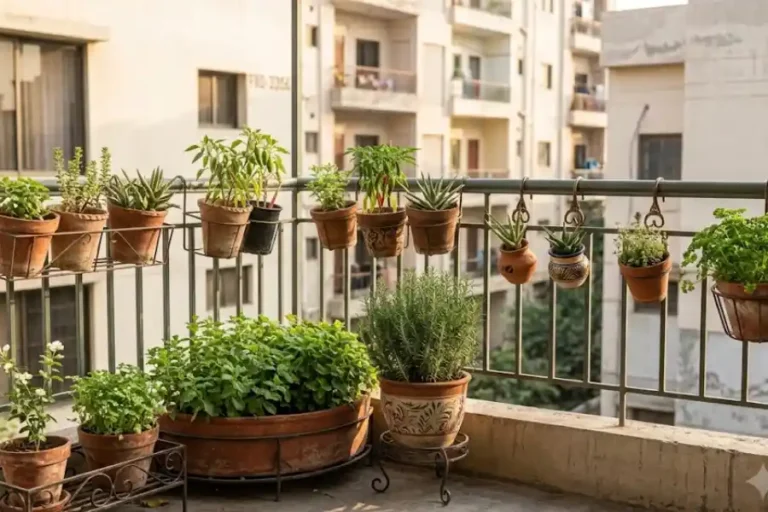
A little greenery near the feeder helps too. Shy birds often perch in nearby plants before they land to eat. If you want to add some, growing an herb garden on a balcony is an easy way to bring in more greenery without needing much space.
The Pigeon Problem Nobody Warns You About
This is the single biggest reason apartment bird feeding goes wrong. Almost nobody writes about it well.
Pigeons are strong, bold, and drawn to spilled seed on the ground. Once a few pigeons find a steady food source, they tell their friends. Within weeks, you can go from “a few finches” to “a flock on the ledge.” That is when neighbors start to complain. That is also when landlords start sending letters.
Try these steps to keep songbirds coming without inviting pigeons:
- Skip tray feeders and cheap mixed seed. Both are pigeon magnets.
- Use a tube feeder or a feeder with small perches. Pigeons are too big to perch on most small feeder ports.
- Use nyjer seed or sunflower hearts only. Pigeons prefer corn, milo, and wheat, which are common filler in cheap mixes.
- Clean up spilled seed every day. Ground seed is what pigeons want most.
- If pigeons already found your balcony, pause feeding for a week. They usually move on once the food stops.
This one change, picking the right seed and feeder style, solves most of the pigeon problem before it even starts.
Keep Birds (and Yourself) Healthy: A Simple Cleaning Schedule
Bird feeders can spread disease if they are not cleaned. Damp, moldy seed grows germs. Those germs can make visiting birds sick. Old droppings near your feeder can carry health risks for you too.
A simple routine keeps everyone safe:
- Every week: Empty leftover seed, rinse the feeder with warm water, and let it dry fully before you refill it.
- Every month: Wash the feeder with a mild bleach mix (about one part bleach to nine parts water), then rinse well and let it air dry.
- After rain: Check for clumped or moldy seed and remove it right away.
- Always: Wash your hands after you touch the feeder or the seed.
If you ever spot sick or dead birds near your feeder, take it down for a couple of weeks. This helps stop disease from spreading to other birds nearby.
Clean water matters just as much as clean seed. A garden bird bath placed a few feet from your feeder gives visiting birds a safe place to drink and rinse off, and it is just as easy to keep clean.
Protect Birds From Window Strikes
Apartment balconies often sit close to big windows or glass doors. This creates a real risk that most buying lists never mention. Birds cannot see clear glass. A feeder placed too near a window can lead to a bird hitting the glass hard.
Two easy fixes cut this risk a lot:
- Place feeders either very close to the window (within about 3 feet) or well away from it (over 10 feet). A feeder in the middle distance gives a bird room to build speed before it hits the glass.
- Add simple decals, tape strips, or a screen on the glass near the feeder. This helps birds see the glass as a wall, not open sky.
A few minutes of setup here can prevent a lot of harm to the birds you are trying to enjoy.
Best Time of Year to Start Feeding
You can start anytime. But fall and winter tend to bring the most steady visitors. Natural food shrinks in cold months, so birds search harder for balcony feeders.
Spring and summer bring different guests, including hummingbirds if you add a nectar feeder. But seed feeders may see fewer visits, since natural food is easier to find.
New to this? Start in fall. You will likely see results faster.
Frequently Asked Questions
Can I have a bird feeder on my apartment balcony?
In most cases, yes, unless your lease says no. Still, check your lease first. Send a quick note to your landlord if the rules are unclear. This small step protects you later.
What is the best bird feeder for a small balcony?
A railing clamp feeder or a window suction feeder works best for small spaces. Both take up little room. Neither one needs permanent hardware.
Will a bird feeder attract rats or mice?
It can, but only if seed piles up on the ground. Spilled seed is what draws rodents, not the feeder itself. Use no-waste seed. Sweep up any spill. Store your seed in a sealed bin instead of a torn bag. These habits remove almost all rodent risk.
How do I stop pigeons from taking over my feeder?
Switch to a tube-style feeder with small perches. Use nyjer seed or sunflower hearts instead of cheap mixes. Clean up spilled seed every day. Pigeons struggle with small ports and do not want these seed types, so they tend to move along on their own.
Do I need a permit or my landlord’s approval?
Most renters do not need a formal permit. But checking your lease, and getting written approval when the rules are unclear, is a smart habit. It takes five minutes and can prevent a much bigger issue later.
Final Thoughts
The best bird feeder for apartment balcony living is more than the prettiest one online. It is the one that fits your railing, keeps your space clean, and does not turn into a pigeon party on your ledge.
Start simple. Pick a railing clamp or window feeder. Load it with sunflower hearts or nyjer seed. Clean it every week. Within a few days, you will likely see your first visitor. Within a few weeks, you may have regulars who show up every morning, right on time for your coffee.